The Bin-son Boy, Part 3 (of 4)*

Part 1

Part 2

I thought I’d read Noriyuki’s calligraphy instructions wrong. There were no transports to anywhere near the destination, but the directions stayed the same no matter how many times I read them.

There was only one way to find out if I was right. So I tucked the paper into my zippered pocket and hopped on my bike.

My confusion continued to grow as I pedaled farther and farther into vast dirt plains. Dust blew into my face and eyes, and stuck to the sweat on my body. Soon, random piles of abandoned scrap metal and machine parts and wires and circuits cropped up.

I pedaled until my eyes burned, my mouth dried out, and my legs tired. Then I pedaled some more.

The piles of old electronics and metals grew in size and number until I was surrounded by mountains of the stuff. And suddenly, without quite realizing it, I rounded a bend into a green-soaked paradise.

Trees with leaves so green they seemed synthetic. Wildflowers and dandelions and overgrown bushes. Coconuts falling from towering palm trees. The variety of flora was so varied that it was almost like a larger version of the JSS Atria. Not as colorful, but the vibrant greens and yellows more than made up for the limited color spectrum.
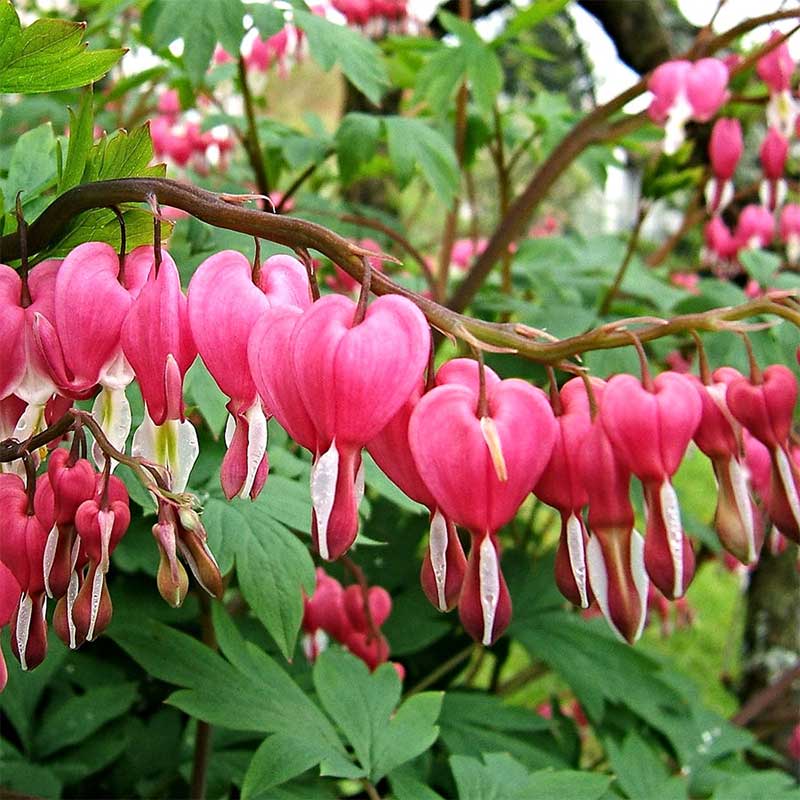
I hopped off my bike and wheeled it through the outdoor atrium. The dirt paths eventually became lined with wide stones, and the bushes revealed rows of hanging pink flowers that looked like inverted hearts. Something about these flowers captured my attention—their melancholy, their precise shape, their color.

Every building I’d seen in the city was made of concrete or metal or some other dull synthetic substance, but the one in the middle of this atrium appeared to have grown organically out of the ground. Built out of dark wooden slats and only one story high, the garden building had a sharply peaked roof over a rectangular ground floor. I couldn’t even imagine what the inside might look like; there couldn’t be more than four compartments inside even without a community space.  

“You like the bleeding hearts?” Noriyuki’s voice came out of nowhere. I nearly knocked my bike over.  

I realized he was talking about the flowers I’d been staring at moments before. “They’re beautiful,” I answered honestly.

Noriyuki nodded and smiled. “They are fragile but strong. As long as they get the right care, they will grow and grow.”

“Just like real hearts, huh?” I joked.

Noriyuki nodded solemnly. “Yes. That is why I grow them.” Then he placed his hands on my bike’s handlebars, wheeling it in front of him so I would follow.

After propping my bike against the side of the building, underneath a window I tried to peek through—I could only see vague shapes through the thin curtain—Noriyuki led me around the building and to the back, where a miniature version of the electronics mountains were waiting.

Noriyuki placed his hands on my shoulders and forced me to look him in the eye. “Now it’s time to begin your Bin-son training. Are you ready?”

I nodded, but when he continued to stare at me, I gave him a verbal confirmation. “Yes, I’m ready.”

“Good. Now, first lesson: Why do we learn Bin-son?”

“To fight,” I answered.

Noriyuki lightly slapped my arm. “No,” he said sharply.

“Um… to stay in shape?” I braced myself for another smack, but this answer seemed to be at least somewhat correct. Noriyuki dropped his hands from my shoulders.

“Bin-son is for two things: to connect your mind with your body, and to protect yourself. Understand?” He punctuated the word mind by poking my forehead, and body by poking my chest.

“I understand.”

Noriyuki smiled. “Good. Follow me.”

Underneath a small tent-like structure in the middle of the piles of metal and wires, Noriyuki showed me an old clunky machine with a screen and buttons. “This is a computer,” he said, and lifted up a heavy, rectangular box. He pried it open to reveal a green panel and what looked like a couple fans. Did they not have cooling systems or temperature control in the past?
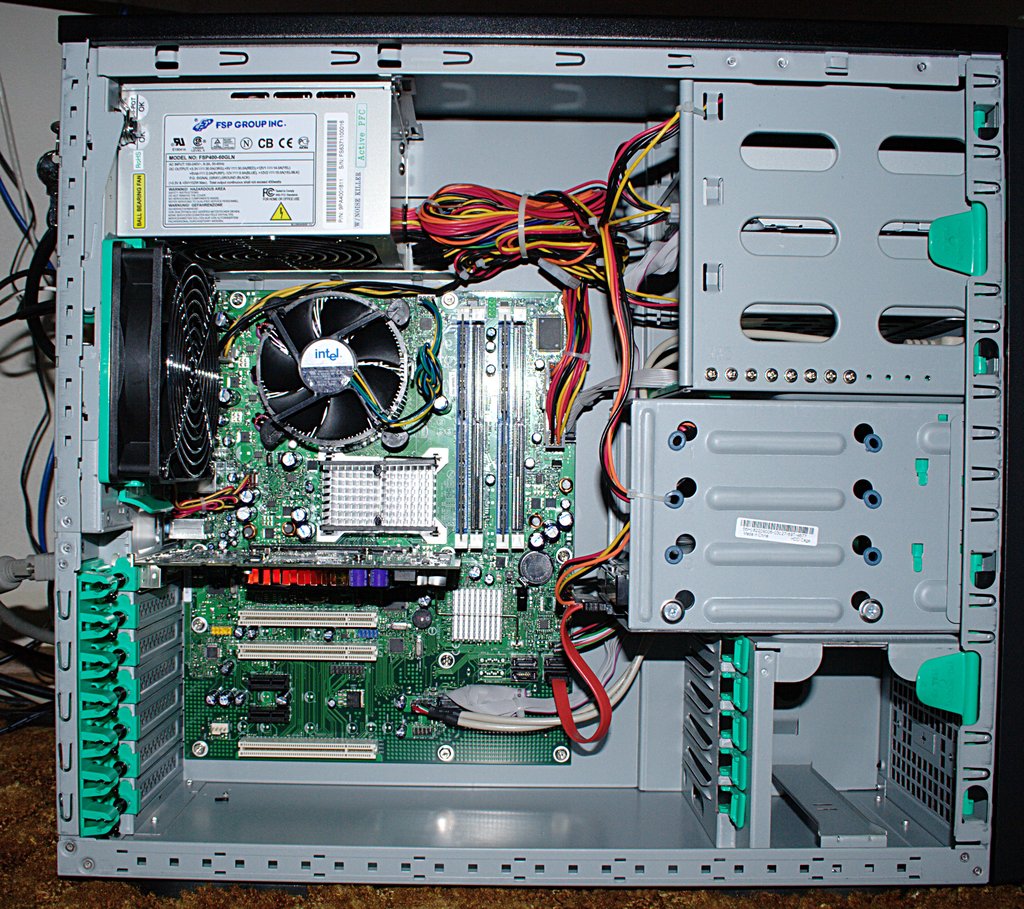
“In between lessons, you will put it together.”

The more I stared at the computer, the more complicated the inside looked. Lots of planet-bound people collected old machines and electronics, but unless you went looking for it, they never really showed the fixing process. Or even the insides. Just the final product. “But I don’t know how it’s supposed to work,” I pointed out.

“No, you don’t,” Noriyuki agreed, but didn’t provide me with a blueprint or specs or even the names of each archaic part. Instead, he told me that all of the spare parts in his back garden would be enough to fix the machine, but I wouldn’t need them all. Then he showed me the tools at my disposal—a variety of thin screwdrivers, small forceps, a headlamp, adjustable wrench, and vise. Not to mention the old-fashioned power-source that could be connected to the computer via a long, thick wire. When turned on, the power-source rattled like it could barely contain the energy it housed. Not exactly reassuring.

Back in the front garden, Noriyuki handed me a wide blade and showed me to a row of overgrown bushes. He placed his hand over my wrist and guided my arm so that the blade started over my shoulder and then swung down and chopped off a small piece of bush. My arm ended outstretched at a downward angle. “All the bushes, like this,” Noriyuki said, gesturing to the four long rows of similarly overgrown bushes.

“Wouldn’t it be easier to use shears?” I asked. “Or to chop off bigger chunks?”

“Maybe,” he answered honestly. “But you do it this way. Switch arms every bush.” Noriyuki mimed the slashing motion he’d just shown me with both arms. “Breathe out when you swing down. After, work on the computer for one hour.”

Noriyuki wandered back to the wooden building, leaving me to assess the rows of bushes. How was I supposed to get those all done in one day? And then work on some clunky old machine? I reasoned that Noriyuki probably just wanted to see if I was dedicated enough. So the sun rose higher, and I slashed inefficiently at the bushes.

As the sun began to reverse its progress, I finally reached the end of that last row of bushes, exhausted and sweaty and sore. My arms hung at my sides, the blade dragging on the ground when I turned around to assess my work—four rows of perfectly rounded bushes. I had to admit, I did feel a sense of accomplishment. I’d never done labor like that with such immediate and tangible results. I even felt up to tackling the computer. My body was tired, but my brain hadn’t done much work all day.

Then I actually stood in front of the thing, staring at all those wires and circuit boards and other small parts I didn’t even know the names of. What was worse, when I retrieved my bag and the tablet inside it from my bike, I couldn’t access the net. I couldn’t remember ever not having access to the net. It was always there to answer any question, to distract me, to help me out. I felt oddly bereft without it.

Once the discomfort subsided, I unclipped my tablet’s stylus and spent the next hour and a half alternating between drawing or taking notes and poking around the machine and metal piles. If I couldn’t do any research now, I would do it later.

Satisfied that I’d taken note of all I could, I knocked on the wooden building’s door only to find it unlocked. I carefully stepped inside, noting the pairs of shoes next to the floor mat by the door. I unbuckled my own and slipped them off.

“Noriyuki?” I called, looking around for my instructor. Like the outside, the inside of the building was like no space I’d ever seen. The inside was made up of the same dark wood as the outside, and though the walls were bare, the floor was covered in patterned rugs. Almost the entire building was just made up of one room, with the “community space” leading seamlessly into the kitchen and dining space, where a low table was surrounded by cushions instead of chairs. In fact, even though the peak of the ceiling soared overhead, all of the furniture was close to the ground, including the bed in a little nook near a door that I assumed led to a bathroom.

In that same nook, Noriyuki knelt in front of a small table, head hanging down and hands on his knees. I crept over as quietly as I could to peek over his shoulder. On the table were a picture frame and a box. In the picture frame was a physical photo of a young man. It wasn’t Noriyuki—the young man was strawberry blond and had a Califan tan. He wore a soldier’s uniform from the Wars of Lost Faiths era. A shiny, round pin sat comfortably in the cushioned box next to the photo. Small text etched into the gold read “Faithful Star” and then the name “Jedrzej Kaczmarek.” At least, I assumed it was a name. I had no idea how to say it. Nor did I know what a “Faithful Star” pin meant.

Noriyuki appeared to be sleeping despite his somewhat upright position. His chin rested on his chest, which rose and fell evenly. I decided to leave him alone to finish his ritual. Or his nap.

Back at home, after dinner and a shower and a brief conversation with my mom, I collapsed onto my bed and pulled out my tablet, still itching to learn more about the computer’s insides. A message icon from Hannah easily diverted my attention. After making the deal with Johnny and his Bin-son instructor, we’d been able to talk freely, even after she saw what they’d done to me. Luckily, with the help of Noriyuki’s magical stinky salve, I was practically fine after a week.

Hannah with an H: Do you want to meet tomorrow?

She’d never asked me to hang out outside of school before. So I immediately responded.

Slim: Sure. What do you want to do?

Hannah with an H: How about the Arcade?

Slim: What’s an arcade?

Hannah with an H: 😆 Meet me at my building. I’ll take you there. 19:00?

Slim: Intrigue… I’ll be there.

Hannah with an H: 😄

I spent the rest of the night attempting and failing to focus on my computer research in order to prevent myself from looking up what an arcade was. I woke up the next morning cradling my tablet like a pillow and had to unstick my face from it.

With aching arms and sore shoulders, I hauled myself out of bed and to my bike in order to make the long journey to Noriyuki’s strange house again. The ride felt even longer than the day before; my legs complained the entire time. The morning breeze did nothing to cool me down.

Noriyuki greeted me with a chipper smile and wave before handing me a cup and leading me back into the garden. As I followed, I sniffed the liquid in the mug and wondered if Noriyuki had just put some grass in boiling water. Then I sipped it and, oh, it didn’t taste that bad. Kind of earthy but… sharp. It woke me up, like a caffeine pill.

Around the back, several ropes hung from a line connected on one side to the building and on the other to a tree. Each rope was connected to a bunch of tiny, unlit lightbulbs. Noriyuki turned around and gestured toward the opposite side of the back garden where an identical line hung, except this one was already adorned with strands of hanging lights. “All four sides,” Noriyuki said, pointing to the two other lines—one across the back of the house, one across what I assumed he marked as the back of the garden. “I will show you how to string the fairy lights.”

“Fairy lights?” I asked as he reached for one of the ropes.

“Yes,” he said. “The small lights.” Noriyuki demonstrated the particular form he wanted me to take when pulling up the lights—arm raised, knuckles facing back, pulling up with my elbow as a hinge instead of my shoulder. Like the day before, I was instructed to switch arms between each strand of fairy lights.

“Why these lights?” I asked as I gripped the first strand and began my exercise.

“They light the garden well. Like stars.” Noriyuki sounded a bit wistful as he spoke, gazing at the already strung lights.

“You kind of get to make your own constellations,” I said, returning my attention to the lights I was in charge of.

“Yes,” Noriyuki responded. His shoes shuffled away through the mostly dead grass.

As I awkwardly pulled up on the fairy lights, my mind wandered toward my meeting with Hannah later. With my mind distracted from the monotony, my arms worked at double speed. I finished quickly and went to work on the computer right away, rummaging through some of the piles and sorting parts according to the notes I’d taken the day before. I spent two hours doing that, along with making a few more notes and drawings based on the unknown bits and bobs I found. The sun had barely started to go down by the time I came out of my productivity fog. There was something about this kind of labor—the kind that involved both my mind and my body—that made the time pass super quickly. Even when the labor was something like stringing lights or sorting old metal bits.

This time, when I knocked on Noriyuki’s door, it swung open right away. An intoxicating smell wafted out—that fishy scent I’d come to enjoy along with a spiciness that made my eyes sting. And something else, almost like fresh water or noodles or… noodles made of fresh water? I couldn’t tell.

“Finished?” Noriyuki asked.

“Yeah,” I said, shoving my hair off my sweaty forehead. “Can I see the fairy lights turned on?”

Without answering, Noriyuki stepped out and closed the door behind him. The shoes he wore were like outdoor slippers, one of the pairs that had been next to the door inside. I’d never understood the idea of slippers—shoes just for the indoors. If you were that sensitive about your foot hygiene, why not just wear socks? Or clean your floors? So I really couldn’t understand the idea of slippers for the outdoors.

I followed behind Noriyuki like a schoolkid, nervous and excited to hear what he had to say. Others’ approval had never mattered too much to me, so it came as a surprise that I cared about what Noriyuki thought of my work.

He studied the lights and nodded solemnly before peeking into the computer tent to assess my progress there. He looked back at me with the same solemn nod. “Very good. You are taking your time to prepare first.”

I smiled. “Well, I have to make sure I know what the end goal is before I start.”

Noriyuki returned the smile and led me back to the front door. “Would you like to come eat? You have worked hard.”

“Oh, uh, I have plans later. I don’t want to stay too long.”

Noriyuki waved an arm dismissively and opened the door. “You still need to eat. No need to stay long.”

After I unbuckled my boots and stepped out of them, I hovered awkwardly by the table and its cushions, listening to the hissing and steaming from the kitchen. The same fishy, fresh, and spicy aroma filled the entire compartment. Soon, Noriyuki carried two steaming stone bowls over to the table and set them down. He knelt on the cushion, sitting back on his heels and gestured for me to do the same across from him. The small white grains—what Noriyuki called “rice”—in the bowls were still sizzling, topped with fish and steamed vegetables covered in a reddish sauce. He handed me two small sticks and, holding his own in one hand, began to mix his food and grab mouthfuls with the sticks. I stared at him, unsure what to do. I’d never eaten with two sticks before.

Looking up from his own food to see me awkwardly gripping the sticks and failing to pick anything up, Noriyuki finally realized I had no idea how to use them. He seemed amused at my attempts, watching for a moment before offering to show me how.

Even after Noriyuki literally placed my fingers in the right places and moved them, it still took me almost the entire meal to get the hang of it. Despite how hot the food was, I scarfed it down as quickly as I could with my strange utensils. Right down to the crispy rice at the bottom of the stone bowl.

A bike ride, shower, and transport ride later, I stood in front of a building made entirely of stones, like the ones in Noriyuki’s garden but cut more uniformly. I’d never seen anything like it. Not even in old pictures of Earth. Maybe these types of buildings were common on the Golden Planet, just not in the city.

There were trees surrounding the building despite the dry dirt ground. On either side were equally as strange buildings—one made of a shiny white substance that somehow didn’t reflect the sun, and a metal one with flaps on the side that rippled like water despite the stillness of the air. I’d had to walk from the nearest transport stopover even though all the buildings had rails connecting to public transport.

On the screen next to the door, I clicked on Hannah’s family name next to the compartment number she’d sent me and began typing a message. Before I got past “Hannah,” the door swung open.

“Hi, Slim!” Hannah greeted, stepping forward for a hug. I hugged back on autopilot. Hannah looked so different than the last time I’d seen her only two days ago. Instead of long blonde curls, her hair was pin-straight and cut into a blunt bob just below her ears, bangs across her forehead. She wore a sleek tank top that revealed even more freckles across her shoulders and white pants as clean and shiny as the building next door, which made her look even tanner.

Meanwhile, I was still paler than almost everyone else despite being as tan as I could get, my hair had grown out into an accidental and uneven mullet, and my clothes were colorful and baggy. Everything about me was a far cry from the smart look Hannah was sporting.

“You have a new look,” I pointed out, suddenly unsettled by the stark difference between the two of us.

“I thought the occasion called for it. Shall we?” She linked her arm through mine, oblivious to my discomfort, and led me into the building. We entered a long hallway at the end of which were some stairs leading down to a private stopover. Hannah pressed her wrist to a small round receiver on the wall and her ID chip summoned a transport vehicle almost immediately. There was no one else in the single-car transport despite it being late on a weekend.

Hannah noticed that I was looking around at the unfamiliar setting. Calif was already so different to JSS, but all of this seemed like an entirely different thing altogether. “My parents are having dinner with some friends, so they won’t need the family transport until later,” she explained, misreading my curiosity. I nodded and sat down next to her. “You’re gonna love the Arcade. Everyone hangs out there. They really didn’t have one on the Jersey Space Station?”

“No, JSS only had room for essential spaces. Unless ‘arcade’ means ‘oxygen bar’ or ‘temperature control,’ I doubt any space station has one.”

She laughed, and I was able to relax a little bit.

When the transport stopped, Hannah took my hand and led me into an explosion of noises, smells, lights, and people. The Arcade was a community space full of virtual and physical games and dining spaces. Every game made unique sounds—shooting games, driving games, something called “laser tag” that involved fake mini battles, and a thousand others—and at each game, you won points called “tickets” that could be traded in for food or prizes.

Hannah beat me in almost every game we played and racked up thousands of tickets, but I unlocked a new skill when we played Air Hockey, a game based on an old Earthen sport that was played on ice. I used my winning tickets to buy her a small purple bear. Then she used her own tickets to get us a veritable feast of both nutritious and non-nutritious foods and drinks. We sat across from each other at a small booth and shared all the food between us.

“So?” Hannah said through a bite of fried coconut shrimp. “What do you think of the Arcade?”

I swallowed my own sip of carbonated water and said, “It’s crazy. But a lot of fun.” Despite my earlier misgivings, the night had been one of the best I’d had since moving to Calif. I was still smiling.  

“Good,” she said, studying my face. I cocked my head to ask what she was looking at and Hannah just smiled in return. She picked up her little purple bear and waved its arms. “So next time, I’m going to beat you at Air Hockey.”

I laughed. “Yeah, and I’m going to beat you at… anything else.”

“Hey, Hannah! What’s up?” One of Hannah’s friends approached our table, followed by a group of people that, of course, included Johnny and his goons, along with several others I recognized from Hannah’s regular group.

“Hey!” Hannah greeted, tapping her ear. “Nice earpiece.”

The friend had an earcuff alteration in the shape of a dragon with a tail that led into their inner ear. “Thanks, I’m still getting used to it but it’s been helpful with my music studies already. Speaking of, a bunch of us are heading out to catch the Angry Spritez concert. Wanna join?”

“No, thanks. Next time, though,” Hannah responded, glancing over at me. I was getting increasingly uncomfortable, shrinking back into the booth.  

After shushing the protests of a few others, this friend offered Hannah their wrist. “I’ll give you the info in case you change your mind.” Hannah reached over to tap wrists before the friend turned to me with their wrist still outstretched. “You, too, Slim. The more the merrier.”

“Oh, um, I don’t have my tablet.” I’d left it at home, assuming I wouldn’t need it. I was beginning to learn that tablets and ID chips made the Golden Planet go round. Even so, the Arcade had let Hannah use her ID chip for both of our tickets; apparently this wasn’t an uncommon practice between friends and on dates.

Hannah’s friend faltered, unable to hide their discomfort with the social faux pas. Johnny and a few others snickered in the background. “Okay, well, see you later maybe.”

“Nice bear,” Johnny sneered, rapping his titanium knuckles on the table as he walked by.

Embarrassed by the whole interaction, I crossed my arms and slumped back even further into the booth. “You could’ve gone,” I said, even though I knew I sounded like a kid throwing a fit.

“I didn’t want to,” she said pointedly.

“Well you could have,” I repeated.

“Fine. Let’s just finish our food.”

The rest of the meal was slightly awkward, but not an entirely lost cause. Hannah insisted on taking her family transport to the station nearest Reseda Complex. The door opened and I moved to step out, but Hannah caught my arm. She stretched her neck up to kiss my cheek. My entire body buzzed with joy despite how exhausting the past couple days had been.

With the type of grin that was so big she felt the need to bite her lip to make it smaller, Hannah let go of my arm. “See you at school.”

“Yeah, see you,” I said, stepping forward so the door could slide shut. The transport whizzed past. For the short walk home, I felt so light I wondered if the planet’s gravity had shifted.

The rest of the week, however, was anything but light. Every day was full of schoolwork, long bike rides, various chores for Noriyuki, and computer-building-related frustration. I could barely stay awake in school, let alone focus, and my mom kept hounding me about where I was all day and what I was doing. Hannah let me borrow notes when I needed them, otherwise I would have failed the two exams I had. I even hung around my mom’s workplace, Moses’ Used Tablets, one afternoon to see if I could learn anything about repairing old technology. Unfortunately, Moses had only ever worked with tablets, and the insides of the tablets he showed me had very little in common with the computer in Noriyuki’s yard. Even though some parts seemed to be cohering into some kind of mechanism, there was no way to know how much progress I’d made until I put enough together to plug it in.  

By the last day of the week, I was exhausted and fed up. Two of my teachers had reprimanded me, I slept through lunch three days in a row, and despite having only six more weeks until the Bin-son tournament, Noriyuki had me doing odd jobs around his garden.
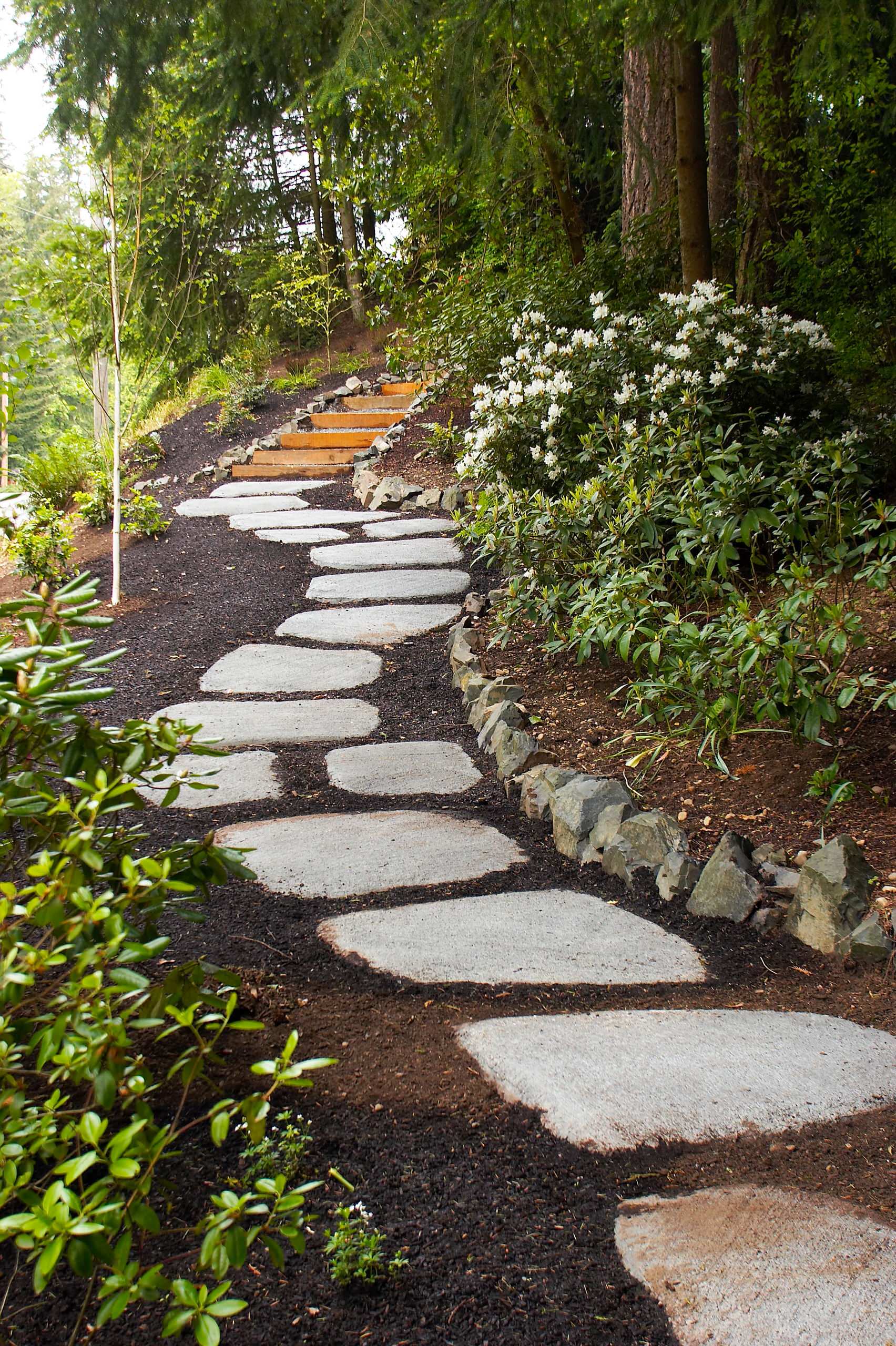
When I reached Noriyuki’s home to find a calligraphy note on the door asking me to wash the stone paths all over the garden in a very specific way, I crumpled up the paper and threw it on the ground, shouting in frustration. But ultimately, I picked up the sponge and filled the bucket with water. The sky darkened gradually, and I scrubbed the stones even though they would likely be covered in dirt by the morning.

My only little act of rebellion was to skip computer time and instead sit in the garden with some water to admire the fairy lights. They were like extra stars that floated in the garden.

Right when I was about to get up and leave, I heard a vehicle approach Noriyuki’s house. When I walked around front, Noriyuki was dismounting an autobike I’d never seen before. He smiled when he saw me approaching.

“Where were you all day?” I asked, trying not to sound as annoyed as I was.

“Went out for a swim. Spent some time on my surfboard.”

“You surf?” I really only knew what surfing was because of the amount of kids at school who partook in the activity.

“Only small waves,” Noriyuki said with a laugh. “I am not as young as I once was.”

“Well, maybe I wanted to go surfing. Did you ever think of that?”

Noriyuki shook his head. “No, Slim, you have no time to surf. You are training!”

“I’m not training!” I exploded, gesturing to the clean stones on the path between us. “I’m cleaning your garden and fixing a computer all day! Forget this. I’m going home.” I kicked some dirt onto the stones and started toward my own bike.

“Slim,” Noriyuki said firmly. When I didn’t respond, he repeated my name in a small shout. “Slim! Come back.”

“What?” I turned around to face him.

“Show me how you trim the bush.”

“What?” Was he really asking me to resume my chores after this?

“Show me!”

I made the swinging motion from my shoulder down. At the same time, Noriyuki let out a sort of battle cry and threw a low punch. My arm blocked his punch from landing. He wound up for another punch, and I did the same with my other arm.

“Now, show me how you string the lights.”

Again, I did the motion, this time blocking high punches. And each chore he’d had me do ended up being a blocking move. Noriyuki then began throwing random punches, and the muscle memory of doing these moves a thousand times kicked in as I frantically blocked each hit.  

Then he stepped back, allowing me a moment to catch my breath and thoughts. And to feel bad about doubting his intentions. Before I could say anything, Noriyuki put a hand on my shoulder. “Go home. Get rest. Take tomorrow off. Then we start your training again. Okay?”

Having the next day off from training left me feeling a bit aimless, so I reached out to Hannah. I still felt bad about the way I’d acted toward the end of our last date, even though Hannah had assured me she wasn’t mad. This time, though, I wanted to show her something that she’d never seen. Before she even responded, I went to work on my surprise. I was halfway through my second attempt when a message came through on my tablet.

Hannah with an H: I’ve gotta go to some thing for my dad’s work tonight. Meet me after?

Slim: Sure! I have something for you. 😉

Hannah with an H: Ooohhh…. Mysterious…

Hannah with an H: The building is near the beach. I’ll meet you outside. 22:15.

Slim: 👍🏻

Hours later, I stood anxiously outside of a nondescript building that abutted the beach, waiting for Hannah to come out of the door. Once it was twenty minutes beyond our meeting time, I began to pace back and forth between the windows on either side of the door. At 22: 54, I shoved aside my fear of being seen lurking outside and peered through the window, hands cupped around my eyes to get rid of the reflection. Inside were dozens of circular tables laden with food, at which sat nicely dressed adults and presumably their children who had been dragged there.

Hannah’s new haircut made her easy to find, and it was easy to recognize who was seated at her table. None other than Titanium Fist Johnny. He was leaning over and whispering something in Hannah’s ear, and even though she looked annoyed, she was letting him do it.

Then, just like at the Bin-son Boxing Chamber, Johnny’s eyes locked onto mine uncannily fast. He grinned and, when Hannah turned her head to respond, planted a kiss on her lips. Hannah’s head jerked back, hitting the girl next to her squarely in the nose, which immediately gushed blood. Instead of watching the chaos, Johnny looked up at me with a sneer. People were shoving napkins under the girl’s bleeding nose, which was probably in the process of being healed by her healthcare alterations, but Hannah followed Johnny’s gaze to the window and saw me waiting there.

Rage kindled in my chest, fueled by an entire day of laying low, and I stepped away from the window, my hand balling up the paper I was holding. Hannah burst through the door moments later, Johnny on her heels begging her to wait.

“Slim!” she called, out of breath. I continued to walk away, and she didn’t catch up to me until I stopped at the shore, waves lapping at my boots. The waves sounded more like rolling thunder than relaxing white noise. “I didn’t realize what time it was. I’m sorry.”

“Whatever,” I mumbled. “You were busy.”

“Hannah, come back in,” Johnny said from behind her in his whiny voice. I wanted to punch his stupid face and rip off the titanium coating on his fist.

Hannah whirled around to face him, pointing her finger in his face. He stepped back with his hands raised despite their size difference. “Just leave me alone, Johnny.” Then she turned to me. “Is it too late to hang out now? You said you had something for me.”
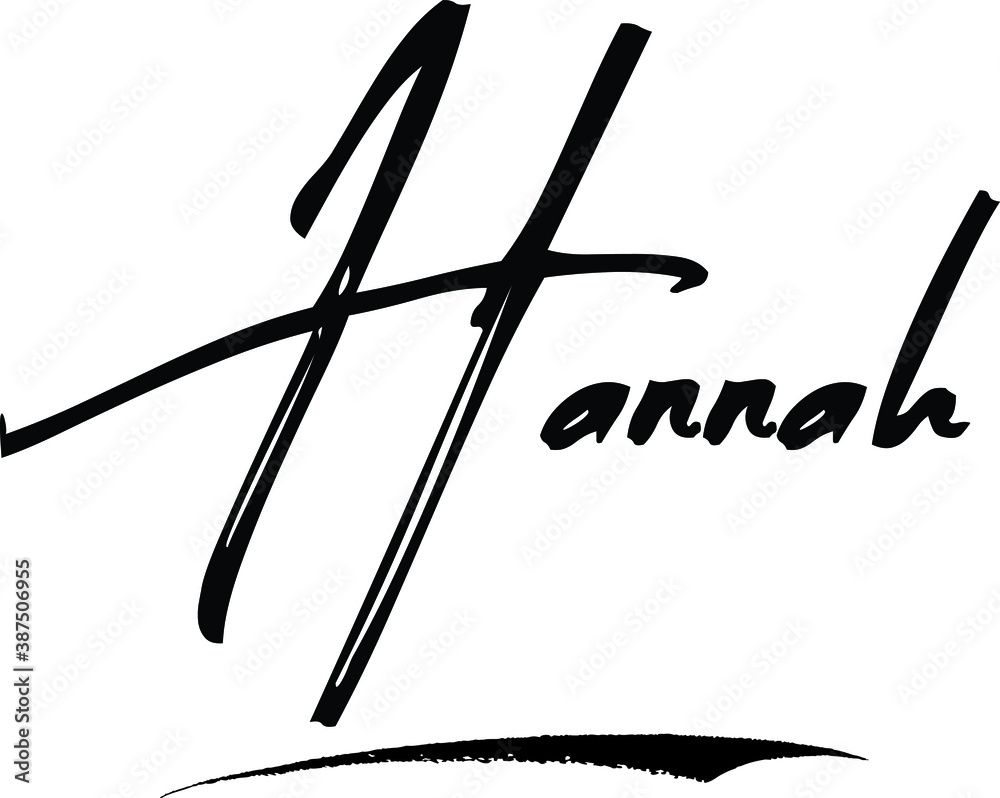
I tossed the ball of paper to her but kept my eyes on a still hovering Johnny. The paper crinkled as she straightened it out. I’d written her name in my best calligraphy yet; it had taken six tries. Hannah looked to me for an explanation.

Still incensed by what I just witnessed, I shook my head and headed back in the direction of Reseda Complex.

“Slim, wait! Can I walk with you?”

“I’d rather be alone,” I snapped. I couldn’t stop seeing her lips locking with Johnny’s, but I knew she wasn’t the one who deserved my ire. I took a deep breath and faced her more calmly.

My body reeled backward from a strong force. I lost my balance, falling into the water. “Don’t talk to her like that,” Johnny spat, towering over me. He hadn’t even punched me, just shoved my chest. Hannah looked on in shock, hand over her mouth, as I got to my feet in my now sopping wet clothes. But the worst of it all was the tablet resting heavily in my pants pocket. A tablet made in a space station, with no reason to be waterproof.

I swiped my hair off my forehead and pressed my lips together. My eyes stared straight ahead and I marched forward, ignoring Hannah, ignoring Johnny, ignoring the adults who were gathered at the door of the building we’d just fled. I didn’t respond to Hannah’s incessant questions, because even though none of this was Hannah’s fault, she hadn’t done or said anything when Johnny pushed me in the water.

As if to rub in my misfortune, Noriyuki had me meet him at the beach the next day for our training. “After we learn defense, we must learn balance. Your balance is for a space station, but you will be defending yourself on a planet. So you must relearn balance.”

He handed me what looked like the surfboards some of the kids at school had, only wider. He called it a “wake board.” I was to balance on it in increasingly deeper and choppier water. “When you can balance on moving water, you can balance anywhere, okay?”

“Okay,” I agreed, disappointed that we wouldn’t be learning punches or kicks. I really wanted to kick something. I’d learned my lesson, though, and knew that Noriyuki always had a reason for making me do something. So for the rest of our training session, I balanced and fell and balanced and fell, reliving yesterday’s humiliation each time. Each tumble was another shove from Johnny’s titanium fist.

I couldn’t focus. I couldn’t focus. I couldn’t focus.    
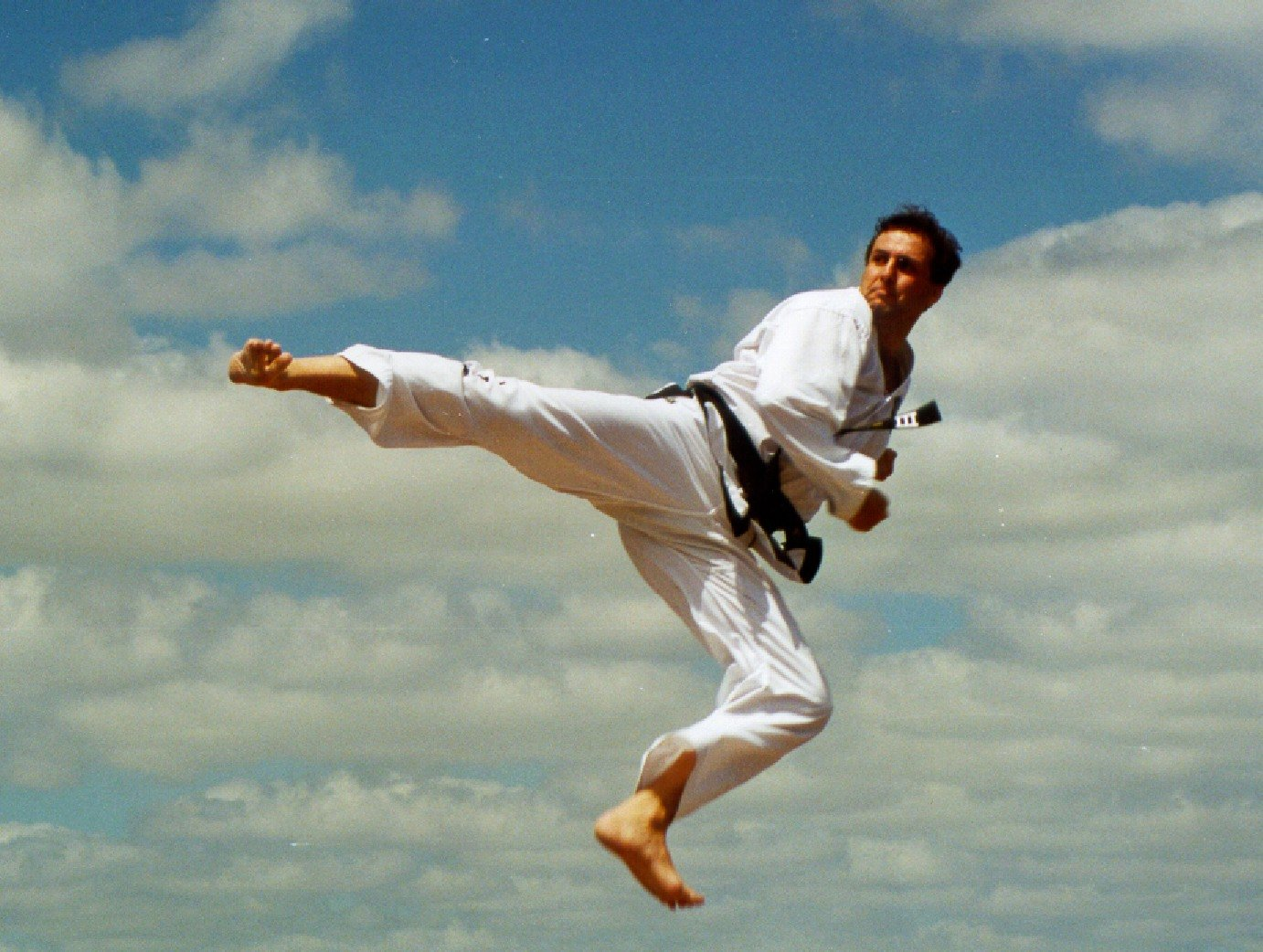
Shit!

I fell hard on my side, scraping my knee and slamming my hip into the packed sand. I choked on a mouthful of seawater. When I was done coughing, I looked over at Noriyuki to see what he had to say about my failure to keep my head in the game.

But Noriyuki wasn’t paying attention to me. No, he was… he was flying.

TO BE CONTINUED

-Ryn PB

*This story is a retelling of The Karate Kid (1984).*

Note: I decided to keep the name Johnny from the original film because I love the name. I think it fits the character so well.

Posted in Another New Era, Fiction Short Stories, stories | Tagged , , , , , , , , , , , , , | 1 Comment

“Doubt Comes In”: On Hadestown, Turning Around, and Living with Doubt*

The dog you really got to dread

Is the one that howls inside your head

It’s him whose howling drives men mad

And a mind to its undoing…

I’ll tell you where the real road lies

Between your ears, behind your eyes

That is the path to Paradise

Likewise, the road to ruin

-Hermes, “Wait for Me (Reprise)”, Hadestown

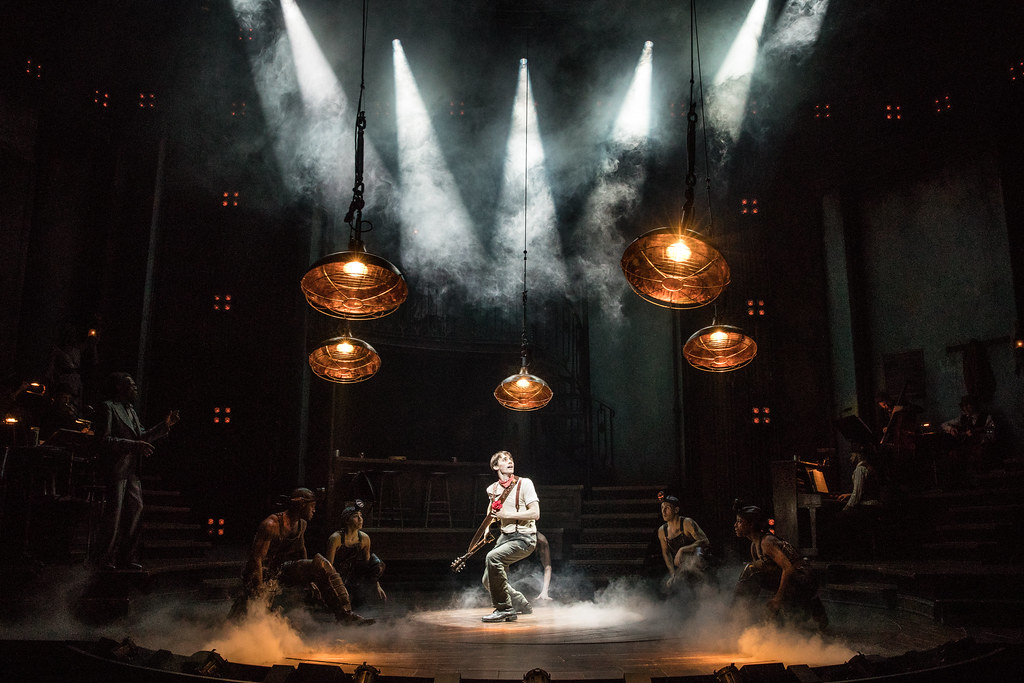
Lillias White as Hermes in Hadestown

The dog in my head—what I like to call the Hydra monster—has been howling at full volume for about two months straight. And Hadestown’s Hermes really wasn’t kidding when he said that this dog can drive you to your undoing. Especially when you let that dog’s howling dictate the road—mental or otherwise—that you take.

A couple months ago, I was offered the opportunity to move to the East Coast where my best friend lives. I had an okay job lined up, a place to stay (albeit not one I was super excited about), and most importantly, an opportunity to get out of the rut I’ve felt stuck in. I just needed a big change, I told myself. For as long as I can remember, there have been people around me who say they can’t wait until I get out of Nebraska, that I’ll flourish somewhere else, that Nebraska will keep me limited. And even though I often declare how much I love the Midwest, deep down I believed those people. I believed that I could never push boundaries and make big moves unless I was somewhere else physically.

Which is why, even though I had reservations, even though I wanted to discuss options with a third party instead of making my decision alone, I said yes to my best friend. And I kept saying yes, even as the situation changed. Even if, as time went on, I didn’t mean it anymore.

Part of the reason I doubled down is because my independent decision-making tore a huge hole in the fabric of my sibling relationship. My sister, who I usually trust with the things I don’t trust others with, became the person I projected my internal doubts onto. I was afraid she would convince me to stay. At least, that’s what I said out loud. Truthfully, the howling in my head knew I might convince myself to stay if I talked through it.

Reeve Carney as Orpheus, with the Chorus, in Hadestown

For a while, I felt like the decision to move had ruined my life. I indulged in some (old and new) bad habits over the course of a couple weeks because I thought I was losing someone I care about more than myself. I thought, like people insinuated, that I was choosing one best friend over another best friend. And I was doing it on a whim. On near-sighted (but not quite blind) trust in someone else. “I’ve done it twice,” that friend said over and over. Which I took to mean, “You can do it, too.”

My sister and I had a big messy to-do about trust (or lack thereof) that eventually ended in apologies and productive conversations that made our relationship as friends stronger, yada yada, all those cliches are true.

In the end, though, this situation gave the howling dog a megaphone. “Who are you? Where do you think you’re goin’?” the Fates whispered into my thoughts.

In between making this big life decision and actually following through on it, my family and I traveled to NYC for the US Open. (Side note: Go, Coco!)

The night before this trip, my best friend revealed another twist in the road to the East Coast. It was a twist that meant the entire path I was on was about to change immediately, and no map could predict the outcome.

Even though I hate to admit it, relief flooded through me. I was relieved that I didn’t have to go through all of the stress of moving halfway across the country. I could stay in place physically, but because I’d had the courage to say yes to a big change already, I could be sure of my ability to make other changes in life. I could start moving forward at a slower pace, like I usually prefer to do.

I was upset, but not as upset as I thought I’d be. So I went to New York, unsure of what was waiting for me when I got back home, but kind of hoping for one outcome over the other.

Reeve Carney and Solea Pfeiffer as Orpheus and Eurydice in Hadestown

While there, we saw a couple of Broadway shows, one of which was Hadestown, a jazzy retelling of the myth of Orpheus and Eurydice a la Natasha, Pierre, and the Great Comet of 1812 (another great musical adaptation, by the way). I’d never seen Hadestown before, and in fact didn’t love the soundtrack that much. But while watching and reflecting on it, I was startled by how much it resonated with me.

It’s a story about love, doubt, trust, and hope. Loving someone with all your heart. Trusting that love to get you through. Breaking that trust and sewing the seeds of doubt. Telling the same story again in hopes that the ending will change.

The stories we tell ourselves are equally as important as the reality we find ourselves in. Orpheus believes stories are the most important, and Eurydice sits firmly on the side of reality mattering most. For a while, they are able to reconcile these viewpoints. Until the story and the reality inevitably drift apart. Or, more accurately, are hurled apart by the winds of a “great storm.”

When my best friend told me about the changing circumstances, that was the “great storm” of my situation. There’s no blame to be had for this. It was just a force of Fate. Still, that moment was the fork in the road at which reality and story diverged.

Doubt comes in and meets a stranger / I used to see the way the world could be

Walking on the road below / But now the way it is is all I see

The Fates and Orpheus, “Doubt Comes In”, Hadestown

I’ve never been a very trusting person. I keep a lot to myself and I open up slowly. I go back and forth on almost every decision I make, no matter how permanent it is. No matter how much it affects me and/or the people around me. I don’t even trust myself. I don’t think I’ve ever trusted anyone fully, because I don’t believe in unconditional trust. There will always be conditions. That’s just what it means to exist in the world, at least for me.

An unhealthy dose of misgendering and gaslighting in NYC just reinforced that belief.

Reeve Carney as Orpheus in Hadestown

My friend called again after the trip, explained that things maybe weren’t as iffy as they’d originally thought. At first I thought, hey, I already went through all this emotional turmoil so I might as well go through with it. Then I began to more fully doubt myself and my best friend, and by that point, it was already over. The floor beneath me no longer held me up and I fell and fell and fell some more. The trust was no longer there.

So when my friend called again to check in on me, when I was so close to just doing the hard thing anyway, I backed out. Despite all of the effort and emotion that was put into the whole journey, I turned around, leaving the person I claimed to trust, along with the people behind that person, to deal with the consequences. I let them down, and that in turn bled into other people’s lives. Now I have to live with my decision and pick up the pieces of a potential life I had the biggest hand in shattering.

‘Cause here’s the thing

To know how it ends

And still begin to sing it again

As if it might turn out this time

I learned that from a friend of mine

-Hermes, “Road to Hell (Reprise)”, Hadestown

Though I’ve never been trusting, I’ve always been hopeful. Because here’s the thing: I’m not a myth. I’m not a story. My life continues on after this whole thing blows over, and my humanity goes deeper than any story can capture. You can’t change the end to a story that’s already been told, no matter how hard you try or hope, but each time the story is told, you can learn something new from it. And that’s what I’m trying to do. I’m trying to change because of what I’ve already done. Bad experiences don’t have to be bad stories.  

In Hadestown, Orpheus gives into his doubt and, at the end, appears to have lost hope. However, the others involved in the narrative have been touched by his story and life. People, gods, the world—he gave all of them hope just by having and sharing his own hope for the world. He changed how they see the world even if his own story didn’t actually work out.

Some past Ryn had enough self-trust to decide to move all the way across the country without anyone else’s input. He fed the howling mental dog a canine-friendly CBD pill to quiet it down and listened to some other voice inside his head. Which means that some future Ryn can do this again with the hope of things turning out differently.

Maybe next time, I’ll get just as close, and instead of turning around, I’ll trust myself and those around me enough to take that last step forward. For now, though, please excuse me while I listen to the Hadestown soundtrack on a loop.

The Hadestown Tiny Desk Concert is so fun!

*We’ll be back to our regularly scheduled blog posts and stories after this. 🙂

-Ryn PB

Posted in Another New Era, mental health, polysyllabic spree | Tagged , , , , , , , , , , , , , , , , , , , , , , , , , , , , , , , , , , , , , , , , , , , | 1 Comment

The Bin-son Boy, Part 2 (of 4)*

Part 1

With one final smash against the dirt, my body jerked to a stop. I curled onto my side to throw up, nearly blind with pain. Through blurry vision, I saw that my bike had landed nearby—or at least what was left of it. The metal was dinged and dented. The chains hung off the front gear. One of the brake lines had snapped.

Once I’d managed to push myself to my feet, I shakily wheeled my bike the rest of the way to Reseda Complex. Littering was a cardinal sin on JSS; I couldn’t leave the bike there to rust.

With each limp and pang, my frustration grew—at Johnny and his goons, at Hannah, at my mom, at Fern, at this place, at my bike, at the sand and sea and fish and planet. At the tiny Free Space and the loneliness of losing my home.

Muttering angrily to myself, I shoved my way through the gate into the Free Space and stormed over to the disposal unit to throw my bike in, but I was too weak to lift it high enough and ended up just chucking it against the wall.

“Whoa, Slim, what’s going on?” My mom was rushing through the Free Space toward me, probably just getting home from work. I kept my body turned away to hide the scrapes and bruises and tears. “What happened to your bike? Why aren’t you talking to me, honey?”

She reached over and grabbed my arm to turn me toward her. I jerked away, wincing, but faced her anyway, clutching my side. Her eyes widened and panic flooded them. “Oh, my stars, Slim, what happened? Who did this to you?”

“Nobody,” I grumbled, attempting to push past her. But Ma was too smart for that, too swift.

“Slim, talk to me. I can’t help unless you tell me what’s going on.”

Everything exploded out of me, all of my ire now aimed at my mom. I banged my fist against the side of the building, the pain barely even registering through everything else. “You don’t care what’s going on!” I shouted. “You just want to hear that everything’s fine! That I love the sun and I’m making friends and never want to leave!”

“That’s not fair.” Ma’s voice was not as loud as mine, even though her lungs were not currently recovering from a beating.

“Yeah, and it was fair bringing me here? It was fair dragging me away from home with no way to go back? Real fair, Ma.”

My mom didn’t answer right away, but when she did, her voice was quiet and calm. “You’re right. It wasn’t fair. I’m sorry. But I want to help you, tell me what you want me to do.”

My yelling devolved into sobs, through which I said, “I just want to go home,” over and over again until my mom led me up to 5B and forced me to shower and then sleep despite the sun’s presence in the sky. I left my miraculously in-tact tablet in our two-person community space, knowing that Hannah would probably try to get ahold of me.

In the morning, my tablet still neglected, I dragged my sore body out of bed and drank some juice with Pain-Gone powder mixed in. If we had money like that rich kids group Hannah and Johnny were a part of, my body would have the invisible healthcare alteration that could immediately deploy certain medicines and vaccines when prompted. I studied my face in the bathroom mirror, and it wasn’t as bad as I’d thought it would be. My body had taken the majority of the fall—my ribs and arms the worst—but I had a couple long scratches on my cheek and a huge dark bruise on my forehead where I’d hit the rock.

When the Pain-Gone kicked in, I left our family compartment to finish disposing of my bike, which I’d just left on the ground. I had to do something to distract myself from my foggy mind and painful memories, things that Pain-Gone couldn’t fix.

I didn’t have to go far to get to my bike. Still dinged but now cleaned and repaired, my bike leaned against the wall next to our door. Huh.

Instead of typing in a request or message on the touchscreen, I knocked on the Fixer’s door. I heard a gruff voice invite me in, so I cautiously swung the door in and took a step. The room was small, full of tools and various tech parts, and cut in half by a clear sliding door which was partially opened. The Fixer faced away from me behind that partition, hunched over his desk and surrounded by thin sheets of something stiff and off-white—a type of cloth? On them were black markings I couldn’t make out from where I stood.

“Did you fix my bike?” I asked the back of the old man’s head.

“Yes,” he answered with a sharp “ess” sound.

“Well, thank you, Mr…?”

“Noriyuki.”

“Mr. Noriyuki,” I repeated slowly. “Thank you. I’m surprised you had parts to fix something so old.” I strained my neck to peer at the Fixer’s task more closely without intruding.

The Fixer shook his head and finally looked over his shoulder at me. “No ‘mister’, just Noriyuki.”

“Oh, sorry. Hey, what are you doing with that cloth?”

“Not cloth,” Noriyuki said. “Paper. Come look.” He waved me over with a friendly look on his face. He was holding what looked like a stylus, but the end was sharpened to a point and was dripping something black. On the top right corner of the desk was a small vial of the same black liquid.

The sheets of thin white material were decorated with rows of symbols, some of which looked vaguely like the letters on a screen. Most, though, were foreign to me—curly and with varying thicknesses. Some were long and loopy, others were small and compact. “What are these symbols?”

“Calligraphy. Words made by hands and ink.”

“How are these words? I can’t read them.”

Noriyuki gestured to a second chair pushed against the wall, which I dragged over to the desk. Noriyuki dipped the sharp stylus into the black liquid—“ink”—and drew the symbols nimbly with a few flourishes of his hand. He drew the calligraphy alphabet with the screen equivalents next to them and set it in front of me with a blank paper and my own sharp stylus. “Smooth movements. Trust your hand to finish the line without hesitation. Decide the start, journey, and finish before you start.” Then he returned to his own calligraphy.

After watching him for a moment, I dipped my stylus into the ink, clumsily dripping on the table as I brought it over to my paper, and began drawing calligraphy letters haltingly. The ink bled every time I paused, making my alphabet splotchy and rough. I glanced over at Noriyuki again. The only time he ever hesitated was before he began to draw. Once he’d pressed the stylus to the paper, his hand moved fluidly, connecting the letters of a word together to create one long symbol.

Turning back to my paper, I took a deep breath, used my eyes to trace the path my stylus would travel to draw a calligraphy S, and then put the stylus to the paper. My hand followed that path smoothly, because I’d already decided where it was going to go. Before I knew it, I was engrossed in the calligraphy. My mind slowed down, focused only on drawing the letters.

When Noriyuki leaned back in his chair, I straightened out my back and stretched, surprised how stiff I was. “What time is it?” I asked.

Noriyuki patted his stomach with a small laugh. “Late enough for food. You should go home, so your mother doesn’t worry, yes?”

“Yes,” I agreed reluctantly. I didn’t want to break the peace I’d found in this small room over the past few hours.

Noriyuki capped the ink vial and placed it in a delicate black box along with a fresh stylus, blank papers, and the alphabets I’d already drawn. He held it out to me.

“Are you sure you want me to take this?” I asked, reaching out with both hands. It seemed like something sacred, something I shouldn’t be trusted with.

“Practice,” Noriyuki said with a nod.

And I did. I spent the next month avoiding Hannah and Johnny at school, and hiding out in Noriyuki’s room after school. He let me stay there even if he was out fixing something. Over those weeks, he told me about his mom, who had taught him how to draw calligraphy. How it was a family tradition passed down from his Earthen ancestors. How his family had been forced to emigrate to Calif when the Wars of Lost Faiths started because Earth became too dangerous. I hadn’t realized people lived on Earth so recently in the past. Historical information made it seem like Earth was a thing of long ago, but on a small pocket of land called an “isle,” a small population of humans stayed until the United Human Federation forced them to relocate to the nearest habitable planet—Calif.

I didn’t offer much in return while I practiced drawing calligraphy—which I learned was called “writing”—and read what Noriyuki had written. Now that I knew what each symbol meant, I could read the papers he left around. They all had small poems of three lines, some with just the one poem in the middle and the rest of the paper decorated with swirls and flowers and other patterns, some with several poems linked together, and others with different versions of the same poem. All had nature imagery, and all talked about some mysterious “she.” Noriyuki offered no explanations, and I didn’t ask for them.

Soon enough, the Festival of Falling Stars was coming up, and the school was putting on a huge event complete with music, food, and decorations. We spent an hour the Thursday before the Festival folding origami stars to hang from the gymnasium ceiling. The school had decided that an outdoors activity was too much of a liability, so there would be no taking advantage of the citywide power-down that allowed for Quadrant-wide stargazing. Though there was usually no meteor shower the day of the festival, it was still tradition to look up at the stars and remember where we came from, and where we were yet to go.

I was sitting in Noriyuki’s room, watching him fix up someone’s tablet with the same deftness he brought to his calligraphy, when he commented, “Lots of excitement right now, no?”

“Yeah, I guess,” I said noncommittally. I hadn’t really been taking part in anything except the mandatory star-making. The Festival of Falling Stars wasn’t really celebrated on JSS, though we acknowledged it as a holiday. It was hard to watch for “falling stars” when your entire home was falling through the stars.

“Are you going to participate in the festivities?”

I sighed, miffed that Noriyuki had brought my school world into this space. Hannah had asked me to go with her, and I’d declined, on account of her ex and his goons itching for a reason to beat me up again. “No, I don’t think it’s a good idea.”

“You don’t want to go?” He stopped his tinkering and looked up, pushing his magnifying glasses up to his forehead.

“No, it’s not that.” I knew I couldn’t lie; Noriyuki was like a human lie detector. “I just wish I could go without anyone knowing.”

“Like in disguise?”

“Yeah, like in disguise.”

“Hm.” Noriyuki glanced at the ink on his desk and then over at my face.

I soon learned two things that I never thought would be pertinent to my life: 1) The organic ink Noriyuki used for calligraphy was safe to use on human skin, and 2) the Golden Planet had a very special tradition for the Festival of Falling Stars.

Despite my worries, when I arrived at the school Lunchroom, I was far from the only one with a painted face. Though I suspected I was the only one who had used calligraphy ink.

Noriyuki had practically painted me a new face. It was as if my entire face was made up of the same intricate swirls that adorned his poetry. On my forehead were three stars.

Through the noise and crowd and dim lights, I craned my neck to find Hannah. Someone tapped me on the back, and I spun around with the expectation of seeing an unfriendly face. Instead, I saw a beaming smile and face decorated with small stars and glitter around the eyes.

“Interesting take on face paint,” Hannah said, taking my hand and leading me into the crowd. I let her pull me along, smiling dumbly. Most people had either subtle or colorful decorations on their faces. Many faces shimmered with metallic paints. I was the only shadow.

Hannah dragged me to a table on one side of the decorated Lunchroom. Containers of shiny face paints sat on top, the black tablecloth underneath absolutely covered in splatters of the stuff. Hannah made sure I stayed put and dipped two fingers into the gold face paint. Then she traced those two fingers in a shape that I assumed was a star around my left eye, trailing down my cheek to create the tail of a comet. Then she used one finger to make dots underneath my right eye.

“There. Now you look more like a star than the night sky.”

“Why thank you,” I said mock-formally. “Whatever would I have done without a native Califan to show me your ways?”

She laughed at my lame joke, like she usually did, and gestured to the crowd. Everyone danced to a beat that I couldn’t find in a song I’d never heard before, but I still followed Hannah through the crowd. On the way, I saw Fern, and raised a hand to wave hello. They quickly turned the other way. Ouch.

“Hey, I’m sorry about Johnny and his friends,” Hannah said, arms around my neck and lips near my ear. “I wish we could do something.”

With a small shake of my head, I leaned back so she could see my mouth. “Let’s not talk about him.”

I took advantage of the pause in our conversation to spin her around, rewarded by her radiant smile and giggle. When she spun back, Hannah stumbled a little. She grabbed my shoulders and I tried to steady her with my hands on her waist. My mouth opened to ask if she was okay, but then I glimpsed a sly smile on her face. Hannah had more moves than I did. And better ones.

After a surprisingly fun hour of attempting to dance with Hannah and her friends, she leaned in and shouted in my ear, “Want to go outside? The power-down starts soon!”

I nodded and then pointed to the bathroom, indicating I needed to stop there before leaving. Really, I just wanted to see what she had painted on my face before it started flaking off. The metallic paint had a completely different feel to it than the calligraphy ink—drier, rougher.

As I looked in the mirror, I realized I hadn’t felt what she’d drawn correctly. The shape around my eye was a heart in the middle of an explosion of light rays, the “comet tail” an arrow shape. My hand wandered up to my cheek but I stopped myself before I ruined anything.

The door burst inward and two guys wearing obnoxiously large star costumes barreled toward a locked stall in the corner of the bathroom. One star pounded his fist on the door until it opened, revealing none other than Johnny, who was also in a star costume. The two guys were his goons. All three of them looked ridiculous. “Hey, man, what’s taking so long?”

“Relax, I’m almost ready. Just give me a second,” Johnny answered impatiently.

“Okay, but hurry up, man.”

I ducked my head to keep the two stars from recognizing me, but they were too caught up in shoving each other for trying to go through the door at the same time. As I looked down, I noticed a large tub of dark metallic gray face paint.

It was a bad idea. I knew it was a bad idea. I also knew that Johnny deserved it.

Lifting the bucket was difficult, and as I quietly climbed up on a stool there were several moments it nearly tipped onto me instead of my target. Using my belt and the knowledge I’d gained on the trip to Calif by watching the recent remake of an old movie called The Parent Trap, I rigged the bucket over the stall door.

Stepping down on the balls of my feet to keep quiet, I heard the lock click on the other side of the door. I had just enough time to duck behind the sink as the door swung open.

Whoosh! Johnny’s blonde hair and face and stupid puffy star costume were now the gunmetal gray color of the JSS’s outer walls, a color only meant to be seen by the stars and the Fixers. When he opened his mouth in shock, the paint dribbled onto his white teeth.  

“What the—?” Johnny was cut off by the sound of my belt snapping, sending the bucket itself clanging onto his head for a grand finale. I snorted a little too loudly, and Johnny’s eyes darted over to me. He shouted what I assumed was some sort of slur or curse, and I jumped up from my spot, giving up on my attempt to hide.

Johnny slipped and slid on the shiny paint, giving me a head start out of the bathroom. Focused on trying to keep my pants up as I sprinted haphazardly through the thinning crowd, I didn’t notice Hannah until she grabbed my arm and used my momentum to swing me around. Before she could ask, I yelled over the noise, “As you wish!”

I didn’t get a glimpse of her expression but I knew she saw the three stars chasing me, shoving their way through the crowd. There was no time to get on my bike, but I knew the hilly path to Reseda Complex like the back of my hand. And the absolute darkness of the power-down meant they were as blind as I was.

The pounding of feet and heavy breathing and vague threats got closer and closer as I ran. The delight of seeing that bucket thump Johnny on the head waned as my energy lagged. There was no way I could beat them to the front of Reseda Complex, so I headed to the easily climbable fence around the back of the Free Space.

Once I was close enough to see the fence by the light of the stars, I was near collapse. I launched myself up onto the woven metal, fingers hooked through the lattices, and pulled up the rest of my body only to be yanked back down.

I sprang up from the ground, fists raised to protect my face. But it wasn’t my face that needed protecting. Johnny’s metal fist connected with my gut before I even saw his face. All of the air whooshed out of my lungs, leaving me gasping for breath. Banking on the element of surprise, I straightened up and hit him square in the eye before Johnny sent me flying with his expert kick. How could someone in such a cumbersome costume move with such dexterity?

Before I could push myself to my feet, Johnny’s goons lifted me by the arms, holding me in place as Johnny landed punch after kick after punch. Each one hurt more than the last until the pain overtook my entire body. My legs and arms went limp. Another punch to the gut and I flew back against the fence. My body hit the ground chest-first. A wheeze squeezed itself out of my lungs.

A towering gray star kicked me in the side. A black boot hovered over my face, about to stomp down on me. Suddenly, the boot was gone. Something hit the ground near the fence.  

My mind stuttered through the scene. A gray-haired figure singlehandedly fought off the stars. Easily using their own momentum and weight against them, blocking their expert kicks and punches. A chop to the back of the neck. A kick to the knee. A puffy star with arms and legs fleeing back up the hill.

A stinging sensation on my forehead jarred me awake. My entire body felt bruised and battered, but the sting on my head persisted. I sucked in a breath and blinked my eyes open. The ceiling was low and textured, and it smelled familiar—like ink.

Noriyuki leaned over me, rubbing something on my head that stung. It smelled like coffee. “Good morning,” he said. “How do you feel?”

“Like I fell down five hills,” I answered honestly, pushing myself into a slouched sitting position. The previous night’s attack was still fresh in my mind and I remembered—no that couldn’t be right. Could it? “Was that you, last night? Who beat up those three guys?”

“There was no beating,” Noriyuki said calmly, dipping his fingers into a small container and rubbing the coffee-smelling ointment onto my heavily bruised elbow.

“Except for the one on me.”

Noriyuki chuckled. “True.”

I reached over to touch the shiny balm on my elbow and Noriyuki slapped my hand away. “Don’t touch. It speeds up healing.”

I did as he said. “So you know Bin-son?”

Noriyuki nodded, continuing to rub that salve onto my wounds, even forcing me to lift my shirt to expose the black-and-green bruises on my ribs. This time there was no question—the bruises looked as bad as they felt. “I wish I could fight like Johnny and his friends. They deserve to get a taste of their own medicine.”

“No,” he said as screwed the lid back on the ointment container and set it aside. “You need to learn to defend yourself. Then the problem is solved.”

I snorted and swung my legs over the side of the table I’d been perched on. “Well, the only place to learn around here teaches offense, offense, and more offense.”

“Sounds like there’s no good places to learn, then.”

With an inkling of an idea forming in my mind, I turned back toward Noriyuki. “You could teach me. Right?”

“No,” Noriyuki said firmly.

“How am I supposed to ‘defend’ myself, then? If there’s nowhere to learn?” I threw my arms up in the air and immediately regretted it, holding my bruised arm against my stomach. “Should I just march down there and tell their instructor that he’s teaching wrong?”

With no hint of sarcasm, Noriyuki nodded again. “Now you’re using your head as more than a target.”

“Oh, come on. I was joking.”

“Hm,” Noriyuki said, standing up and going to the sink to wash his hands. “Not very funny.”

After drying his hands, Noriyuki opened his mini icebox and handed me a cold pack to hold to my elbow. The cold burned at first but soon started numbing the injury. “You could come with me,” I suggested. The scary-looking soldier guy who led Johnny’s Bin-son class was unlikely to listen to a scrawny kid, but Noriyuki was his equal, maybe even his elder. We didn’t really care about that kind of thing on JSS, but Calif seemed slightly more traditional. It was worth a shot. “Maybe he would listen to another instructor.”

“I’m not an instructor.”  

“Yes, you are! You instructed me how to draw—I mean write—calligraphy. You could instruct me in Bin-son, too.” I saw Noriyuki begin to shake his head again and interrupted. “You fought them off. You could at least see it through with me.”

With a sigh, the older man patted his gray hair anxiously. “Okay, Slim. I will see it through.”

Late the next morning, Noriyuki and I hopped on a shuttle transport to the Community Center. He had given me a small amount of the salve to reapply, and even though I was still sore, the bruises and scrapes were significantly less irritated.

My tablet had informed me that the next high-level Bin-son class took place just before midday, which is when the two of us arrived at the Community Center. My heart pounded as we walked down the hallway. Noriyuki was poised as always, back straight and head high. He stayed that way even as he opened the door and entered the Bin-son Boxing chamber. I slunk in behind him, not even attempting to stand up to my full height. Hunching over was the only way I could stand without my ribs screaming at me.

Every single head turned toward us as the door clanged shut. Despite the discomfort of all those eyes, it was satisfying to see Johnny’s black eye and the knee brace on one of his goons.

As Noriyuki studied the fighting words displayed on the wall, Johnny pointed at me and whispered to his instructor. The instructor then crossed his gigantic arms over his chest, a tattoo of an angry-looking hawk on his bicep. I hadn’t noticed it the first time because it was faded, as if done the traditional way decades before. Lots of soldiers had similar markings, usually realistic renderings of constellations. There was a bird constellation visible in the Calif sky, but it was an owl, not a hawk. I wondered if it was a constellation he’d seen somewhere else—from a planet or ship on which he’d fought, maybe.  

Hawk Guy marched over toward us in his black Bin-son suit. Bin-son suits were typically a light gray. “My students tell me you beat them up last night,” he said to Noriyuki.

“They are mistaken. I was merely defending Slim.”

Hawk Guy turned his head to appraise me. He towered over me, now close enough that I could read the name stitched onto his suit, near his heart: Kive. “You certainly are slim. You have to have an old man pick your fights?”

My jaw clenched and I stepped forward to respond, but Noriyuki put an arm out to hold me back. “Only to even the odds. Three against two is much more fair than three against one.”

“If the odds are your problem, why don’t you let the boy fight his own fight this time? Jonathan, front and center!”

Like a soldier in training, Johnny marched up to the line painted down the middle of the chamber, meant to bisect the fight space, and also where opponents bumped knuckles as a sign of respect before the fight. If you were fighting for sport, of course, and not your life.

Johnny slapped his hands to his sides and stood at attention, staring at a spot past my head. Then his eyes shifted to lock onto mine, a smirk lifting the corners of his mouth.

“The odds are not fair still. Your students fight in this chamber every day. This is not neutral territory.” Noriyuki blinked twice, the only indication that Kive intimidated him at all. I could do nothing but stand behind Noriyuki and watch the conversation.

“What do you suggest, little man? Name the time and place.” Kive was no longer barking out these orders. He seemed amused.

Noriyuki pointed to a screen on the wall next to the door, which was displaying an advertisement for a Calif Quadrant 3, Division 1 Bin-son Boxing Tournament. “Tournament. No fighting between students until then. Deal?” Noriyuki held out a fist, offering his knuckles.

I wanted to protest but risked looking even more cowardly than I already did. I’d never done any formal boxing. Our class had been run by a Community Coordinator on JSS, not an official instructor. We sparred with each other, but never actually fought or competed. There weren’t enough people on JSS to fill a tournament roster. But an entire planet quadrant? That could be hundreds or thousands, depending on population density.

Kive bumped knuckles with Noriyuki with a slo-mo punching motion as if a casual fist bump were beneath him. “Deal.”

My eyes wandered back to Johnny. The bruise made his one eye seem to glow a brighter blue, and his smirk was full of arrogance. He was looking at me like I was a fish on his plate, and he was ready to pluck out my bones from his teeth after eating me. This was an expression he must have learned from his instructor; no student had any reason to hate someone that much.

I had three months until that hatred was unleashed in front of thousands of people, with no defense beyond what I could learn from a book and vague memories.

Well, shit.

TO BE CONTINUED

-Ryn PB

*This story is a retelling of The Karate Kid (1984).*

Note: I decided to keep the name Johnny from the original film because I love the name. I think it fits the character so well.

Posted in Another New Era, Fiction Short Stories | Tagged , , , , , , , , , , , , , , , , , , , , | 2 Comments

The Bin-son Boy*, Part 1 (of 4)

I didn’t want to move to the Golden Planet in the first place. Sure, the Jersey Space Station was cramped and had lots of mechanical issues, but it was home. We had a view of the Ocean Galaxies through our windows all day, every day. Granted, those windows were scratched and dirty from age, but the Ocean Galaxies were magnificent even through fingerprints. The faulty temperature regulation system made it feel like we had seasons, like on a planet. Sometimes the Atria were even covered in fake snow, which falls from the sky on some planets.

Traveling between JSS and Calif was expensive and time-consuming, but when Mom got some low-level tech job at a big name rocket repair factory, we packed up our meager belongings and hopped on the next ship to Calif, otherwise known as the Golden Planet on account of the two suns that assured temperate-to-hot weather all year long on the whole planet. Something my mom reminded me of at least a billion times on our journey to the planet’s surface, along with the rumor that the most of the residents of Calif had golden tanned skin and sun-streaked blonde hair. They didn’t have to rely on sun lights or Vitamin D enhancements. Apparently, natural sunlight was irreplaceable, no matter how hard the space station engineers tried.

“We’ll have so much space,” my mom reminded me for the umpteenth time as the shuttle took us from the port to our new house. “Our own kitchen and community space for just the two of us.” I mumbled something about how two people didn’t make enough of a community to garner their own space. Ma gave me the side eye but continued talking. “And no more Atria. Just real nature.”

“I like the Atria, Ma,” I argued. Because everything was bioengineered or synthetic, the Atria could have palm trees next to cacti next to roses next to pine trees. There were no seasons or different biomes to limit the greenery we could have. There were daily community classes in the Atria, too, where I’d met most of my friends. Friends that would move on and forget about me.  

“Oh, you like flickering sun lights? You like having just one lawn for everyone?”

There was no reasoning with her when she was like this.

We finally got to our building, so I helped unload our stuff onto the ground so we could carry it in. Even though it cost extra, my mom had let me bring along my old-fashioned bike. It didn’t have an engine, just pedals so you moved the wheels on their own. They weren’t common anymore, but a few people on JSS still had some from their planet-bound ancestors. There was not enough energy to filter air from autobike exhaust or to charge electricycles, so they were the only types of bikes on the station.

Opening the gate into Reseda Complex confirmed my suspicions—rickety stairs led to several floors of tiny rooms with attached tiny community spaces. The elevator was blocked off with an “Under Maintenance” sign that, judging from the rust and fading letters, had been there for a while. The Atrium, which was called the Free Space, was barely an Atrium—the trees and plants were half-dead, brown and crumbling. The air felt soupy and heavy, immediately making my skin sticky. Inside, our personal community space was grim—shabby couch and screen and wobbly kitchen table. The appliances, though meant only for the two of us, were rusted and barely working. Were we supposed to eat alone, just the two of us? Where was the nearest food dispensary? The amount of machines in the space indicated that we would have to do a lot of work to prepare our own food.

We lived in Space 5B, which was basically just a family compartment in poor condition and housed in a building with the other compartments rather than a space station quadrant.

As I hauled in my mom’s clothes and my bike, my anger built up into a kick at the gate to the Free Space. “Hai-ya!” I shouted, my foot connecting with the metal, throwing both unlocked gates flying inward.

“Oof!” I heard someone cry out as I pushed through the gate.

“Oh my stars, I’m so sorry!” I said, grabbing the victim’s hand and pulling them up.

“It’s okay! I’m Fern. Space 3A. You must be the new family in 5B!” Fern was a short, stocky, and dark-haired masculine person with a friendly smile. They insisted on helping me carry in the bag full of my mom’s clothes, leading me up the stairs to 5B.

“What was that kick?” Fern asked, setting the bag down by the door to 5B. “Some kind of self-defense?”

“Yeong Bin-son,” I answered, though technically the planet’s gravity made that untrue. The Eastern Earthen Countries had a self-defense technique called “karate” and the Western Earthen Countries had one called “boxing,” and Bin-son was a mix of the two. Yeong Bin-son was the same training in zero or near-zero gravity.

“Cool!” Fern continued to jabber about everything and nothing—the end of Q3 school break, volleyball team, the crazy lady in 4B. As I looked up and typed in 5B’s door code, Fern convinced me to join them in a gathering at the shore that night. I’d only ever seen pictures of shores, so it didn’t take much convincing.  

“Make sure you find the Fixer before you leave,” my mom said, pointing to our stuttering air filtration system. It was spitting out stale air at odd intervals.

When I found the Fixer’s space, there was no answer to my knock on the door, so I typed a maintenance request and greeting onto his door’s touchscreen message board and met Fern at the gates. They led me through wide pathways full of concrete and brick buildings in drab colors until the horizon suddenly expanded beyond anything I’d ever seen. Kilometers of white sand in both directions. Endless sparkling blue water that made a soft crashing sound. It was like a giant, undulating topaz gem.

The suns’ heat beat down on me with a force I’d never felt. Why had Fern told me to bring a sweatshirt? I was beginning to think that every day on Calif would involve sweating through my clothes. When the warming system malfunctioned on JSS, it got downright freezing. There there had never been a danger of too much warmth.

I didn’t have much time to think about that. A deluge of names were thrown at me as I met all of Fern’s friends, and then we launched into a game of sand volleyball. I was used to playing on a solid surface with less gravity, but I adjusted quickly to how my feet slid and sunk into the sand. It was a fun afternoon, even though my skin burned until it was bright pink. I didn’t know you had to reapply sunscreen for it to continue working. I also made the mistake of jumping into the water with my eyes open, because I didn’t know the sea’s water was salty and would sting. No one made fun of me for it, though. They just helped me cover my shoulders and wash the salt out of my eyes.  

A few meters away was a group of fellow school-aged people with stereotypical Calif looks—blonde and tan and in swimsuits that couldn’t possibly be for speed in the water. They all had expensive alterations, like the small metal implants near their eyes for enhanced vision, identification chips in their wrists, and probably one of those invisible health alterations that monitored vitals and administered some medicines. One girl in particular, with blonde curls pulled back into a ponytail and a smattering of freckles on her nose, caught my eye. Her only alteration was a wrist ID chip and sparkly earrings that could have had a purpose or just been for looks.

Soon the sky was dark, the familiar stars now reflected on the water. The breeze coming from the sea was cool enough that I needed the jacket.

Another first for me that night: bonfires. We gathered around the flames, the smokeless logs making it easier for us to sit in a full circle without anyone being in a worse spot. Real fires weren’t allowed on JSS, for obvious reasons, but sometimes the screens in community spaces would project a fake fire during holidays.

The freckled girl and I made eye contact, and Fern leaned over, “Think she likes you?”

“Nah, no way,” I said, staring into the fire.

With a sly smile, Fern pointed behind me, where the freckled girl was approaching. “Hey,” she said to me. “You’re new, aren’t you?”

“Could you tell by how pale I am?” I joked lamely. I was the palest person there by a long shot, courtesy of living in deep space my entire life.

The girl giggled like I’d actually said something funny. “I’m Hannah. With an ‘h.’”

“I’m Slim… with an ‘m.’” A common enough name on JSS, but her raised eyebrows made me think it was not as normal on Calif.

All of a sudden, Fern began hitting my arm. “Dude, careful. Look who’s coming.” Everyone else in the group stiffened uncomfortably, whispering to themselves. The girl spun around and quickly tried to distance herself from me, but not before a group of “tough guys” marched over, a tall blond guy in the lead. His left hand was completely robotic, or at least encased in metal, and all of them had some sort of similar flashy alteration with no real purpose except to show off.

“What’s going on here, Hannah?” Blonde Robotic Hand Guy said, getting up into Hannah’s face.

“Nothing, Johnny. Just leave me alone,” she spat back at him. She brought her fist out of her pocket and tossed some sort of powder into the fire and it flared up green right behind Johnny. The flames licked his jacket without it catching on fire, but the small defiance had already done its job.

Johnny snatched a water bottle out of one of his friends’ hands and doused the flames. They went out with a hiss and sizzle.

“Hey!” she shoved him, and he shoved back.

I stood up to keep Hannah from stumbling over her feet and offered, “You can join us if you want.”

“Who the hell are you?” Johnny turned his attention to me, flexing his metallic hand while chucking the water bottle to the ground with his other one.

“Come on, use your Bin-son!” Fern cheered at me.

Stars, I swore in my head. I only knew Yeong Bin-son, and the very basics at that. Gravity made a difference in, like, everything to do with self-defense. JSS didn’t have a lot, but it did have a good anti-gravity chamber. I found myself wishing that we’d had better temperature control or air filtration rather than that one fancy room. Yeong Bin-son was pointless now that humans had no reason to go out into space and fight. Just a relic of the past, really. But now I was expected to use it to fight this guy with a literal iron fist.

Well, it was probably titanium, if I really thought about…

Not the point, I reminded myself, rolling up the sleeves of my jacket. Deep breath, center balance, find where your opponent is located relative to you in space, and—

Pow! Blinding pain exploded on my jaw. My head whipped around so fast I felt my neck crack. I slammed chest-first into the ground, the soft sand now like a slab of solid metal. As I lay on the ground, listening to the gasps and jeers, I closed my eyes, pretended I was floating and that my clothes were an anti-gravity jumpsuit, and tried to feel where my opponent was located in space relative to me. The sand shifted just like the air.

I sprang up from the ground and launched my body at Johnny’s, my fist connecting solidly with his nose. But I was used to the ricochet that came from colliding with something in a vacuum, leaving me off balance enough for Johnny to kick up, his heavy boot smashing my jaw in the same spot. So hard that when I hit the ground again, I couldn’t get up. I groaned, ignoring the derisive comments of Fern’s friends and the jeers of Johnny’s goons, listening only to the person who crouched next to me.

“Are you okay?” Hannah asked.

“I’m fine,” I groaned, embarrassed, my face still pressed to the sand.

I heard one of her friends convince her to leave and waited until everyone had abandoned the shore to drag myself to my feet and back to the compartment my mom and I now called home. Ma was already asleep when I got back, and I managed to hit the sweet spot between her departure for her new job and my departure for school, thus avoiding the interrogation about the dark purple and gray splotches on my jaw. The bruises stood out even more because my skin was so pale. I hooked a medical mask around my ears, hoping to pass off my “I feel shitty” vibe as a mild illness.

On my way out the door, I came face to face with an older man holding out a hand to knock on the door. A toolbox sat at his feet and a new filter sheet leaned against it. “Are you the Fixer?” I said, my hand flying to my now pounding chest.

The man nodded. The hair left on his head was mostly gray with some sparse black strands. He was short with a small gut, but he was still as tan as everyone else on Calif.

“Okay,” I said after an awkward moment of silence. “I’ll leave it open for you, then.”

“Thank you,” the Fixer said gruffly as I stepped back to open the door for him. As he entered and flicked the light back on, the Fixer glanced toward the table in our community area, where I’d left the Yeong Bin-son brochure from the JSS community class. It was open to a page on kicks; I’d wanted to see if I could find something like what Johnny had used on me the day before.

With a little too much perceptiveness, the Fixer gestured toward my jaw. “What happened there?”

I knew he would probably talk to my mom about the air filtration system if there was something wrong, so I tried to come up with a quick and believable lie. “Uh, I ran into the doorframe in the dark last night.”

He nodded again with an uninterpretable grunt, but I got the sense he didn’t believe my story. Especially after he said, “Good thing you were looking up, so you didn’t hit your temple and faint.”

How did this random guy suss my lie out so quickly? My head would have to have been tilted at a weird angle to get a bruise on the bottom of my face. “Yeah, I guess so,” I mumbled. The door swung shut behind me and I hurried down to the Free Space to unlock my bike.

When I rode onto the school campus, I was out of breath from the hill I’d ridden up. Space station pathways were always flat; the burning in my calves was a new sensation.

I quickly realized that my old-fashioned bike was not going to be the point of pride it had been on JSS. On a planet, even a small one like Calif, there was room for everyone to have their own transport. The cheapest mode of transport I saw was an autobike—mine was ancient compared to even those.

“Hey, it’s the Bin-son Boy!” someone called, and when I looked over, who did I see dismounting the shiniest, slimmest, and quietist electricycles? Johnny and his gang. It shouldn’t have surprised me that he was trained to fight. No one could kick like he had if they hadn’t been taught.

The goons took the opportunity to tease me, trying to rile me up as I locked my bike in by the autobikes. They didn’t have to lock theirs up, because electricycles used ID chips to start them up.

I couldn’t keep my hands from shaking but managed to withstand their bullying words until I made it inside and yanked the mask down to breath more easily.

I ran smack dab into Hannah. Just my luck. But hey, after getting punched out and bullied without fully losing it, I was due for some good luck, right? So I smiled and greeted her after we steadied ourselves. “Hey!”

She sucked her teeth and reached out her fingers toward my face as if she wanted to touch my jaw. “That looks painful.”

“It looks worse than it feels,” I lied, shifting the mask so it covered the bruise again.

“Good, because it looks bad,” she laughed. Hannah peeked at my class schedule and led me to my first lecture hall, warning me about which teachers would be difficult, which would let you eat in class, and which would give you extra time on assignments if you asked. As the first warning tone sounded through the hallway, Hannah put a hand on my arm. “So I’ll see you at lunch?”

I smiled, unable to stop my mouth from twitching at the sharp pain. “Sure thing.”

When I made it to the Lunchroom after an overwhelming first half of the day, Hannah immediately spotted me and waved. I raised my hand to wave back but was shoved aside into the doorframe, as if in punishment for my earlier lie. But it wasn’t karma. It was an egotistical asshole.

“Oh, man, I saw right through you. You’re like a ghost.” Johnny feigned concern before sauntering off to join his crew with a proud smile on his face.

My jaw clenched. The pain made me angrier. Then my eyes wandered back to Hannah. Her own jaw was clenched, hand frozen in the air. Despite my better judgment, I joined Hannah with my meager lunch. Though, to be honest, it was only meager compared to everyone else’s. The fruits on my plate were so colorful, and the meat on the plate was delicate and almost salty and had little tiny bones I had to pick out of my mouth. Hannah informed me that it was not meat at all, but fish. I’d never eaten fish. I’d never seen a fish.

When I admitted this to Hannah, her eyes bugged out. “You don’t have fish on the JSS?”

I looked up from my inspection of the light-colored dessert that smelled like a lemon. “How do you know where I’m from?”

She smiled boldly, no hint of embarrassment. “I asked around.” And then she dropped the bomb I’d been dreading. She confirmed that Johnny was her ex. Clearly no one had told Johnny—he was staring at us with murder in his eyes. Still, I made it through the next couple weeks with no other physical encounters with Johnny and his goons. Just verbal bullying, graffiti on my bike that I could easily scrape off, and one incident in which an “accidentally” dropped plate splattered dark brown sauce all over my shirt.

Unlike the astute Fixer, my mom bought the story about my jaw, responding simply by telling me to be more careful. I felt a little bad about the lie until she revealed that she had lied to me, too. It turned out that only a few days into her new job, Ma had “quit”—which I assumed meant she’d gotten fired for lack of knowledge—and now worked a worse-paying job selling used tablets. She only admitted it to me when she had to bring me there after school one day, but I did get a free tablet out of it to use for school.

Across the street from Moses’ Used Tablets was a Community Center—a whole building of just community space. The directory on the wall inside listed what each room in the building housed, and I was delighted to see Bin-son Boxing on the list. I wandered down the hallway, marveling at how low the ceiling was. Yeong Bin-son was done in a vast chamber. What was the home of its gravity-bound alternative?

My hands cupped around my face, I peered through the window into a two-story high room with puffy red mats on the floor. The students wore facsimiles of Yeong Bin-son anti-gravity suits with the tell-tale colored armbands that marked their level of expertise. Everyone in the room had at least a brown or black armband, the top two levels. They were lined up in rows like the soldiers in pictures from the Wars of Lost Faiths, which had ended a decade before I was born.

On the wall in big, bold black letters were the words: “Hit hard. Kick harder. Don’t let the enemy rebound.”

The instructor called for attention and invited a student up to lead a punching exercise. As the class bowed, both the teacher and the student were revealed. The teacher looked like a soldier—buzz cut, muscly, old-fashioned alterations, spine erect, hard glare. But it was the student’s face that scared me the most. Bowing in front of the class was none other than Johnny. He locked eyes with me and smiled that evil smile.

My heart dropped straight into my stomach. Why couldn’t I escape that guy?

I straightened up and beelined for the door. I would rather hang out at my mom’s lame job than there. I’d been doing some exercises from my community class brochure just in case Johnny tried to come at me again, but I’d never anticipated using the skills to actually fight someone. With Johnny around every corner, that was becoming more and more likely.

My sour mood continued through until the next day, the only bright spot being that the next day was the weekend, which meant I didn’t have to be on high alert for two whole days. The end of the day couldn’t come fast enough.

“Hey, Slim!” Hannah sidled up next to me in the hallway as classes let out and everyone headed for their transport home. Her blonde curls were pulled up into two high pigtails held by purple scrunchies, revealing a small birth mark behind her ear. I smiled at her despite my mood, and even though I was glad to see her, I couldn’t help but glance around for Johnny. “I’ve been looking for you all day,” she said.

“Oh?” We exited the building and stepped to the side, out of the way of the horde of students charging headfirst into the weekend.

“Yeah,” she said, leaning against the lockers and biting her lip nervously. “I was thinking, since you haven’t really seen any fish besides the ones you’ve eaten, we should check out the aquarium.” I tilted my head to indicate I didn’t know what the word meant. “It’s like a zoo for fish.”

“A zoo?” I couldn’t guess what that meant even with context clues.

Hannah laughed like my ignorance of Calif slang was endearing. “So… do you want to go see some fish? Tonight?”

Now that I understood. That sounded like a date. “Sure, sounds great.”

She tapped on the ID chip in her wrist and held it out to me. If I’d had my own ID chip, she could have tapped hers to mine and immediately transferred her information—name, address, citizen number, contact code. Instead, I retrieved my tablet from where I’d tucked it underneath my arm and she tapped that with her wrist instead. “Pick me up around 20:00?” 

“See you then,” I agreed, wondering if she would be okay with public transport. I wasn’t nearly deft enough on my bike to have a second person on it. Still, my heart felt lighter than it had since school started. At least not everything was going wrong.

Aw, crap. When I turned around to head for my bike, Johnny and his goons were unlocking their own bikes, looking at me with enough dislike that I knew they’d heard our entire conversation. My previously light heart was now pounding, and my pulse threatened to run away entirely. I scratched the itchy skin that was peeling off on my arm—apparently a side effect of sunburns, one that was irritating and kind of gross—and acted casual, like I wasn’t afraid of them at all.

As I rode home, my legs pedaling faster than usual to burn off my nervous energy, I tried not to think about the retaliation that awaited me on Monday, and instead wondered what I should wear to a place that sounded like a fish museum. Was it just a walled off part of the sea? Were the fish on display dead or alive? Did they make cages for fish?

I was too preoccupied to notice my surroundings, navigating home on autopilot. Three nearly silent electricycles easily snuck up behind me. One darted in front of me, one stayed behind me, and the other sidled up next to me, boxing me in.  

“Hey! Let up!” I shouted, tires wobbling as the electricycle in front of me jerked to an impossibly fast stop at the same time the one on my side boxed me in, pushing my bike closer to the side of the hill. The sudden stop and jerk of my bike to the left threw me off the bike, over the handles, and off the path. Time seemed to slow down as I flew through the air. Even though their tinted shades hid their faces, the electricyclists’ helmets were the same ones I saw Johnny and his goons wearing every single day. They were whooping and high fiving, speeding away faster than any transport I’d ever ridden.

My body slammed into the dirt with just as hard of an impact as on the sand. My body bounced off the ground like a volleyball bouncing off a hitter’s fist. Once, twice, three times. I tumbled down the hill, trying to curl up into as small of a ball as possible. No opportunity for my lungs to replace any of the breath that had been forced out on initial impact. My head hit a rock at some point, sending black spots through the greens and browns and grays of Calif that whirled around me. Would this hill ever end?

TO BE CONTINUED

-Ryn PB

*This story is a retelling of The Karate Kid (1984).*

Note: I decided to keep the name Johnny from the original film because I love the name. I think it fits the character so well.
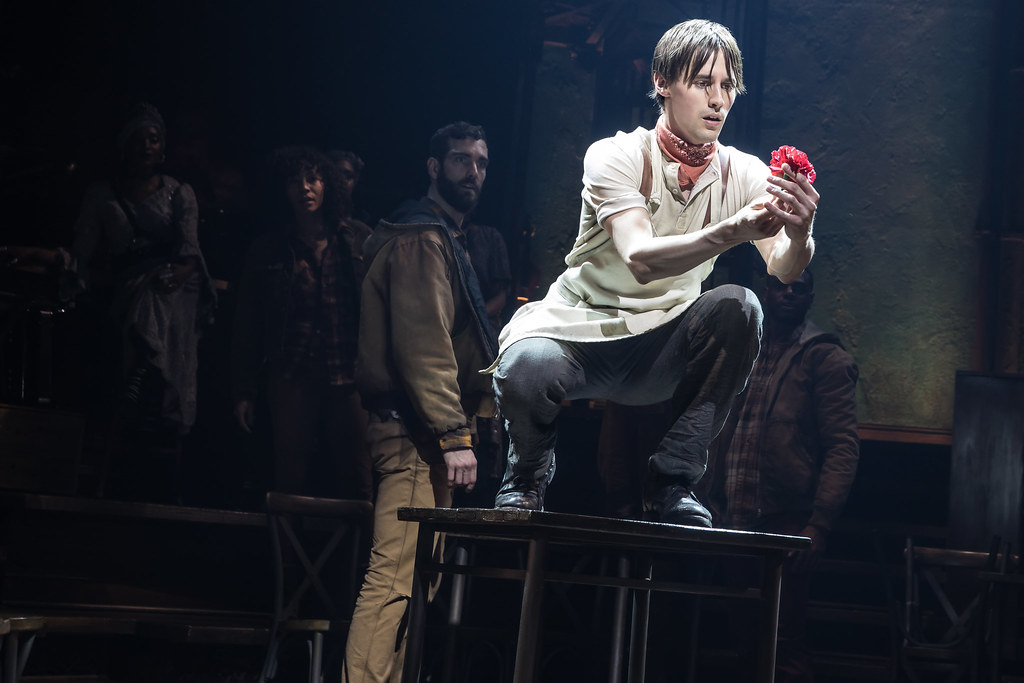
Posted in Another New Era, Fiction Short Stories | Tagged , , , , , , , , , , , , | 4 Comments

Stand By…

I’m working on a story, but life has thrown me some curveballs lately, so it’ll be a little late!

Sneak peek: What if The Karate Kid happened in space?

-Ryn PB

Posted in Uncategorized | Leave a comment

Maximum Angst: YA and Pop Punk

Paramore

This blog post will come as a surprise to no one, but I tend to save writing these regular blog posts until the last minute, so I needed something that would be quick for me to think about and get onto the page. (I rarely procrastinated while I was in school. I think this is my mind’s way of rebelling about ten years too late…) Plus, I figured a shorter post might be a nice change from my tendency to write longer than absolutely necessary. Only the bare bones today, my friends!

YA is one of those labels that started as a mere descriptor but then became its own thing, like pop music. Technically, the “pop” in “pop music” stands for “popular,” and that’s still what it is, but pop music has really become its own genre. It has its own tropes and attributes. Technically, YA stands for “young adult,” and that’s still what it is, but YA has become its own genre as it has evolved, much like pop music.

YA has its own attributes that other book genres don’t, namely that palpable brand of teen angst. The only other place I’ve been able to find this unfettered angst is in pop punk music.

They both have that sense of “us/me against the world,” and are mainly about friends and romantic misadventures. There’s the mindset of having fun despite the struggles of adulthood and feeling like you’re not a full part of society.

Like pop punk, YA isn’t taken seriously just because it’s mainly for adolescents. And anything for teenagers can’t possibly have any merit. Including teenagers.

But as a queer person who didn’t get to live out his teenage years as he wanted to—and, in fact, doesn’t remember a lot of them because of mental illness—I can’t help but want to see what could have been, the good and the bad. I can’t help but want to know how other people went about becoming their own person, developing personalities and preferences and talents.

I didn’t really become my own person until my early twenties, but most people go through this in their teens. The coming-of-age story has always been one of my favorites, whether it takes place in a fantasy world, during a dystopian political uprising, or just a regular high school in an American town.

Meet Me @ the Altar

There’s something really refreshing about how close to the surface emotions are in YA literature. No matter what’s happening, it feels so important. That near-constant intensity is how life feels a lot of the time, even as an adult, when you’re neurodivergent. Life is volatile, and YA leans into that, because teenagers are “allowed” to have intense emotions and experiences, whereas adults are expected to rein those emotions in.

Most importantly, both pop punk and YA have become spaces for diverse voices to be heard and stories to be told. Both genres are in that weird liminal space between the underground and the mainstream—not taken seriously, but still widely known. More POC and LGBTQ+ artists and writers have carved out a space in these angst-ridden, emotionally expressive corners of the media world. Books, authors, and bands are becoming more representative of the community surrounding these genres, rather than just being controlled by cishet white men, as is “tradition.” This is the most beautiful thing about both YA and pop punk. Voices that have previously been ignored or suppressed are now able to shout and write honestly about their difficulties with all of the emotion they feel, rather than reining in their passion just for a chance to be taken seriously.

Fall Out Boy

Reading and writing YA still brings me joy as an adult, because the genre has so much to offer the world. Younger generations are often known for being more accepting, and that is a quality to be commended. This openness and acceptance allows young adult stories to go in many different directions while still tapping into the universality of human emotion—much like many 2010s pop punk songs reach near universality with their specificity. It seems like an oxymoron, but giving the details can make a story hit even closer to home than something vague. And these types of universal yet specific stories make it easier for us to relate to others who are vastly different than us.

So, my friends, now that I’ve given you a somewhat coherent rant about my love for YA and pop punk, I’ll end with some YA book recommendations based on some of my favorite pop punk songs. Get ready for maximum angst!

  1. “In Too Deep” by Sum 41: The Last True Poets of the Sea by Julia Drake
  2. “Fake Out” by Fall Out Boy: Dreamer Trilogy by Maggie Stiefvater
  3. “Good As It Gets” by Little Hurt: Solitaire by Alice Oseman
  4. “High School Never Ends” by Bowling for Soup: Brooding YA Hero by Broody McHottiepants & Carrie Dirisio
  5. “You’d Be Paranoid Too” by Waterparks: Even If We Break by Marieke Nijkamp AND One of Us Is Lying by Karen M. McManus (I couldn’t pick one… They both are equally related to this song! And they’re both great audiobooks!)
  6. “God Must Hate Me” by Simple Plan: I Hope You Get This Message by Farah Naz Rishi
  7. “Beverly Hills” by Weezer: This Is What It Feels Like by Rebecca Barrow
  8. “A Little Less Sixteen Candles, A Little More ‘Touch Me’” by Fall Out Boy: This Savage Song by V.E. Schwab
  9. “Kool” by Meet Me @ the Altar: The Summer of Jordi Perez (and the Best Burger in Los Angeles) by Amy Spalding
  10. “Caught in the Middle” by Paramore: I Wish You All the Best by Mason Deaver

-Ryn PB

Posted in Another New Era | Tagged , , , , , , , , , , , , , | 1 Comment

Pierre-Auguste Salvatici

His parents set him up for failure when they named him Pierre-Auguste Salvatici. Even if he hadn’t grown up with a persistent speech impediment and severe respiratory problems, Pierre-Auguste Salvatici could never live up to the grandiosity of the name. He was small, unable to play any sport except ping pong, and couldn’t swim. He got straight Bs, played no instruments and, in fact, had been officially diagnosed as tone deaf by a former piano teacher after playing an entire song without noticing four of the keys were out of tune. Pierre-Auguste Salvatici had no interesting hobbies, no desire to go to parties, nor any grand aspirations for life. Very little made him stand out from the crowd besides his imposing name, which he always gave in full.

What Pierre-Auguste Salvatici did have was the ability to gather people. No one could really articulate why they were drawn to him. He wasn’t charismatic or attractive or a particularly interesting conversationalist. His stutter frustrated many an impatient person and he eschewed contact with any animal on account of his allergies. But when he started his own club, people clambered to get in. Among those rejected were Amanda Lyn Case, Jennifer F. Ravenswood, and Anders Hjelmstad. 

Even though JoJean Jones-Jones had been turned away, Sigmund “Ziggy” Broadhurst convinced Pierre-Auguste Salvatici to let David David Davis join on the condition that people stop calling him “Triple D” because Pierre-Auguste Salvatici did not care for crude humor.

I have to admit that my name had never made me feel particularly special, until Spider, Sequoia, and SweetPea Moondance, a set of triplets born into a hippie commune, pointed out that my parent-given alias was the shortest in the club, and when only using my first initial, my name was B. Short. And Pierre-Auguste Salvatici always called me “B.”

Growing up with a name next in the alphabet to Pierre-Auguste Salvatici meant I was never far from his family’s eccentricities. Perhaps his overt normalcy was in reaction to his parents’ oddness. His mother was a professional archer who taught lessons at a traveling Renaissance Faire. She wore fairy wings over her period dress—even outside of work—and sometimes pointy ears. His father, on the other hand, was covered in tattoos of varying styles, most notably a Japanese koi fish on his neck. Rumor had it that Mr. Salvatici used to rob banks, but now he worked with security companies to find holes in their systems. Some people believed that he still stole from the banks to fund his family’s large home, which was painted an ugly purple.

Along with being neighbors in the alphabet, Pierre-Auguste Salvatici and I were neighbors in the literal sense. The glimpses I got into his bedroom on the rare occasion he opened his curtains taught me very little. He had some books on a small bookshelf, a nightstand with a plain lamp and a notebook, some clothes on the floor, a desk full of homework supplies. No family photos or trinkets or posters.

The ugly purple house is where Pierre-Auguste Salvatici’s club met upon his whims. Though he’d capped the club’s membership at 31—the number of kids in his kindergarten class—a core group of us made it to nearly every meeting. We started with tea served out of a ladybug tea set and a plate of vanilla Oreos. Every time we drank a different tea—Irish breakfast, Sleepy Time, genmaicha, Earl Grey, lapsang souchong—and never iced, even during the 100-degree summer days.

Somehow the teamaking became my duty, as I was usually the first of the club to arrive. Pierre-Auguste Salvatici provided the tea of the day, access to the stove and kettle, and the ladybug tea set. The rest was up to me.

The ritual of teamaking became somewhat calming for me, and I began to look forward to watching Pierre-Auguste Salvatici take a sip and give me his nod of approval.   

We gathered in the Salvatici family’s partially finished basement. The floors and walls were still concrete, but the large space had a bathroom, furniture, and rugs in lieu of carpet. Tapestries hung on every inch of wall, some like those you might expect in a medieval castle, others with lotus flowers, and even more were tie-dyed or patched together like quilts. The only windows were the small rectangles near the ceiling that were only there for fire safety. A collection of floor lamps, fairy lights, and fake candles provided the rest of the light.

When we were all seated on rugs or cushions—everyone eschewed the lumpy chairs and loveseat—the talent show would commence.

Pierre-Auguste Salvatici had no special talents, but the people he collected all had at least one talent as strange or amazing as their names. David David Davis, who now went by “3D,” could throw playing cards so fast and accurately he could slice through some fruits. The Moondance triplets could speak eight non-English languages. SweetPea would sing in one or more of these languages while Spider and Sequoia played mandolins. Zdzislaw Pielucha was a pro at the 1998 version of the game Street Fighter. Ziggy Broadhurst could type 200 words per minute.

Sometimes, the talent show was more of a show-and-tell. Basil Berry and Ambrose Strawberry, “The Berries,” restored old music boxes. They would bring something in one meeting, play the broken tune, and then bring it back when it was fixed so we could all listen to the chimes of the Moonlight Sonata or some song from a Disney movie. Ophelia HaHa-Bumps could create near perfect postage stamp forgeries and would make everyone guess which were hers and which were real.

Despite being in Pierre-Auguste Salvatici’s club without a strange name, I also didn’t have any special talent. I was connected with quite a few local musicians due to my job at a local café, and one of my cousins was famous in the opera circuit in Canada, but none of this musical talent touched me. I could play chess poorly and was in an advanced math class. I had a birthmark in the shape of a lima bean on my shoulder. My voice had a slight southern twang because of my father’s Texas origins. None of these things made me stand out. Yet Pierre-Auguste Salvatici continued to invite me to the club meetings, never urging me to “show and tell.”  

I began to suspect that Pierre-Auguste Salvatici just needed someone even more average than him around.

So I spent my free time attempting to develop new skills, to at least earn half of my spot in the club. Spider Moondance tried to teach me French, and then German, but I could only remember that the word for lightbulb in German translates to “glow pear.” I played hours of Street Fighter with Zdzislaw Pielucha and read up on antiques restoration. I was not smooth enough to pull off magic tricks, even the simplest ones.

Then I thought that I should try something on my own, something no one else could do. That was the point, after all. Juggling a soccer ball—I tapped out at four. Making the perfect grilled cheese—too relative. Making my own snow globes—glitter everywhere except in an actual snow globe. I even had coworkers teach me how to do latte art, and all I could manage was a lopsided heart.

One day, I sat outside on my porch attempting to fold a piece of paper into a frog and failing on so many levels. My parents’ dog was chewing on a stick, ears pricking up every time and grunted in frustration. I’d just balled up the paper and chucked it at a tree trunk, causing Mister Miyagi to chase after it, when Pierre-Auguste Salvatici walked out of his front door and waved at me. I waved back with a sigh. “Are we meeting today?” I asked him, despite wanting nothing less than to face ten people more interesting than I was.  

“N-no meeting.” He pointed at the dog with an uncomfortable expression. “Should he be eating that pa-paper?” Even though he spoke slowly, his stutter still forced its way forward.

Mister Miyagi, a short-legged Shiba Inu, was tearing apart the origami paper and swallowing chunks. I shrugged, figuring it was harmless. He’d eaten stranger things without getting sick—a whole sock, an oatmeal cookie, liquid from a snow globe I’d dropped on the kitchen floor.

Shoulders hunched, Pierre-Auguste Salvatici turned to walk toward his garage when he paused and turned around. “Do you dr-drive?”

I answered in the affirmative, and Pierre-Auguste Salvatici admitted to needing a ride. This somehow led to me offering to be his chauffeur for the day. I led Mister Miyagi inside with a treat and met my neighbor in the garage.

“Where are you going?” I asked as he buckled his seatbelt. He insisted on buckling in before I even started the car. Apparently, carbon monoxide poisoning was a concern if a car was started two seconds too early inside of a garage, even though I’d already opened the garage door and would have backed out right away.

“Pulmonologist.” Pierre-Auguste Salvatici punctuated this announcement with an aptly timed coughing fit. He pulled out his red inhaler but ended up not needing it before his breathing returned to normal.  

What Pierre-Auguste Salvatici failed to mention were the four other destinations. After I waited around for almost an hour in a pulmonology clinic’s waiting room, we drove to CVS and waited another 30 minutes for a new asthma medication, which I was surprised to see came in the form of pills. Wasn’t asthma medication supposed to be inhaled directly? Then we got Chipotle, because he wasn’t supposed to take the medication on an empty stomach. The fact that he got meat in his rice bowl surprised me. He struck me as the vegetarian type. But he didn’t want to eat in the restaurant, so we took a pit stop at the park, where he spent more time sneezing and coughing than eating.

And lastly, we went to the library to pick up a book he had on hold.

The librarians had clearly been pulled in by that strange magnetism Pierre-Auguste Salvatici had. The two at the desk waved to him, greeted him by name, and one who was shelving books came over to show him a book.

The two books Pierre-Auguste Salvatici left with were old-fashioned, the kind with no dust jackets and titles in gold lettering on the leather spine, inevitably with a letter or two rubbed off. They were the kind that didn’t have stickers on the side with their Dewey Decimal number, the kind that you usually could only look at if you had access to Special Collections.

When I dropped Pierre-Auguste Salvatici off at his house, I insisted on actually pulling up to his house even though we were next door, because the more I saw him outside of school or his basement, the more fragile he looked. His almost constant cough and his stutter and his thick glasses, his small frame and birdlike appetite, his perpetually hunched shoulders.

“Thanks, B,” he said, waiting for me to put the car fully in park before unbuckling. “I hate driving.”

“You do?” I’d never taken note of how Pierre-Auguste Salvatici got around. Had I ever seen him drive? I’d certainly never seen him riding a bike.

My neighbor nodded and then got out of the car with his books, medicine, and leftovers in tow. I stared at him as he swung open the screen door, held it open with his hip, and unlocked the front door of his house. He waved goodbye before disappearing inside.

The next day, after I’d dragged myself out of bed and into the car, Pierre-Auguste Salvatici’s red inhaler greeted me in the passenger seat. It must have fallen out of his pocket. I decided to give it to him at school, where I was heading to learn how to write with my non-dominant hand from Jennifer F. Ravenswood. She was not in Pierre-Auguste Salvatici’s club, nor was her friend Cocoa Danvers, who was a competitive jump-roper and had tried to get me into speed jumping. Instead, I went home and watched Jump In! and admired Keke Palmer’s fast feet.

The red inhaler insisted on my vigilance in looking for its owner, but Pierre-Auguste Salvatici did not attend school that day. In fact, he did not leave his bed that day.

Despite never smoking a day in his life, Pierre-Auguste Salvatici suffered from chronic bronchitis and emphysema. Non-smokers with COPD sometimes have an alpha-1 antitrypsin deficiency to blame. A rare genetic disorder.

But Pierre-Auguste Salvatici didn’t even have a negative quirk to make him special. The blood tests had proven that. No, Pierre-Auguste Salvatici was just one of the more than 23 million minors in the United States who were victims of secondhand smoke.

All of this I learned when attempting to return the red inhaler and instead got sidelined by his very talkative and oddly dressed mother.

The corner of Pierre-Auguste Salvatici’s room that was hidden from view of my own bedroom contained the hidden parts of the room’s owner. Bed covers in a deep blue, stacks of musty old books including the two borrowed from the library, different types of breathing treatments and inhalers all around, binders and folders full of paper ephemera—old and new—and maps of all five Great Lakes on the walls with pushpins in them.

The books bore titles like The Night the Fitz Went Down or If We Make It ‘til Daylight. The binders were full of copies of old ship logs, newspaper clippings of shipwrecks that occurred on the Great Lakes, more maps, and cargo inventories.

At the center of this strange shrine to Great Lakes shipwrecks sat a boy coughing so loudly that the sound filled the otherwise unobtrusive room. After a couple restarts and some water, Pierre-Auguste Salvatici began to speak in wheezing voice.

“My p-parents gave me two things,” he said without prompting. I set the red inhaler down on top of a stack of books and pulled his desk chair over. As if on cue, he began to cough again. When his breathing returned to as normal as it had been, Pierre-Auguste Salvatici continued. “Bad lungs and a new f-f-family.”

Maybe his sickness had lowered his inhibitions, because Pierre-Auguste Salvatici spoke more than I’d ever heard him do. He stumbled and coughed through his past like he’d been itching to tell somebody but wanted to remain, well, Pierre-Auguste Salvatici.

~ ~ ~

Peter and Augusta were not good parents. They loved their son in theory, but they didn’t take good care of him. The trio always lived near the docks, not always in the same city, but always on the American side of Lake Superior.

Augusta played guitar in a punk band and spent much of her time touring the Midwest. Peter worked on a poorly supervised cargo ship and often smoked cigars to ease the stress of being a single parent half the time.

Rules on the cargo ship were lax. Workers often had family on the boat, especially those who could not afford childcare, and Pierre-Auguste was often one of those children. Toxic fumes from the unregulated boat and the cigar smoke seeped into Pierre-Auguste’s lungs and clung on.

He hated being on the cargo ship. Except when he knew it was ferrying him across the lake to one of his parents’ friends’ houses. These mini vacations were Pierre-Auguste’s favorite days. All of his parents’ friends were strange and interesting, and he loved watching them do strange and interesting things. Like the magician who could breathe fire. Or the two contortionists who could fold themselves inside of a suitcase. But his favorite people to visit were the archer and her heavily tattooed partner.

Though it was fun to watch the archer split an arrow with another arrow from yards away, he mostly loved watching how stable their life seemed. They were always in the same house. The tattooed guy would cook dinner every night. They didn’t make their beds and there were neatly hung family photos on the walls.

Peter and Augusta sometimes left their son with these friends so they could take a break from being parents. They took the cargo ship back to whichever city they were calling home and lived their lives without a child there. These separations became more and more frequent as their son became more and more sickly.

During one of these separations, Pierre-Auguste became sick with pneumonia and ended up in the hospital. When his parents finally showed up, he was already out of the hospital, and Pierre-Auguste found himself hating the two people who had failed to raise him properly. And he made this clear to them.

Peter and Augusta did not much care that their son hated them. Before this era of mutual dislike either ended or became permanent, the cargo ship sank in the middle of Lake Superior. Or maybe on one side. Because the ship was not formally recognized by the government or any legitimate company, no efforts were made to recover the ship or the bodies.

The archer and the tattooed man adopted Pierre-Auguste a year later, when he was eleven years old, and the newly formed family moved to an entirely new state. But Pierre-Auguste’s mind never left the Great Lakes. In his efforts to figure out where his parents may have died, he discovered the surprisingly long list of shipwrecks on the Great Lakes and a penchant for maritime research.

~ ~ ~

Even after this long story, one thing was still unclear. “Why don’t you show this to anyone?” The amount of information Pierre-Auguste Salvatici had dug up was amazing. He’d created his own mini archive in the corner of his bedroom. It must have taken years of extra effort to collect this much, and so much of that must have been difficult to discover. Yet we always gathered in the basement, where our host celebrated everyone else’s talents and kept his own hidden.  

“I d-don’t want to be the center of attention f-f-for something so n-negative.” That strange Pierre-Auguste Salvatici charm appeared even in this moment.

“But at least it’s something.” My jealousy spilled out even as Pierre-Auguste Salvatici lay in bed, unable to breathe properly and recounting his worst memories.

Before I had the chance to take back my words or ask more questions, Pierre-Auguste Salvatici spoke again while settling back into his pillows. “Would you m-mind making me some tea? You always make the perfect cup of tea.”

My spine straightened. “I do?”

He nodded.

“What kind do you want?”

Pierre-Auguste Savage smiled like he always did before a club meeting, as if in anticipation of something amazing. “You pick.”

Ryn Baginski

Sources:

Lung Diseases:

            –Secondhand smoke

            –History of lung health

Great Lakes Shipwrecks:

            –Great Lakes Shipwreck Museum  

            –Book titles used in this story

Posted in Another New Era, Fiction Short Stories | Tagged , , , , , , , , , , , , , , , , , , , , , , , , , , , , , , | 1 Comment

Mid-Year Book Freakout Tag

This is a tag I’ve seen on booktube and book blogs alike. Here is the original tag for anyone interested.

So far this year, I’ve read 27 books, which means I’m a tiny bit ahead of my 52-book goal. In the past, I’ve set really high yearly reading goals, but I figured this year I would keep it manageable so reading doesn’t add more stress to my life. I’ve already had about three reading slumps this year, so setting a lower goal seems to have been the right decision.

According to The StoryGraph, I’ve been reading mostly “reflective”, “emotional”, and “hopeful” fiction books of a medium pace. Unsurprisingly, my top genres are LGBTQ+, YA, fantasy, and contemporary. My average rating for this year is 3.74 stars, which is a pretty high average. Even though I haven’t read a ton and have been in a couple slumps, the books I actually have read were great!

Best book you’ve read so far: Tomorrow, and Tomorrow, and Tomorrow by Gabrielle Zevin

This is a new favorite book for sure. I can’t stop thinking about it and how I want to reread it and parse out the layers I probably missed the first time around.

This book is about video games, creativity, different forms of love, chronic illness, grief, traveling, collective storytelling, and so many other things. Amazing!

Best sequel you’ve read so far: Deathless Divide (Dread Nation sequel) by Justina Ireland

This book won by default because it’s the only sequel I’ve read this year. To be honest, I thought it was only okay. The pacing was off and the first book was much better than the second one, but it certainly was the best sequel I’ve read so far.

New release you haven’t read yet but want to: Darkhearts by James L. Sutter

I’ve become lax about keeping up on new releases, mostly because I don’t buy a lot of new releases, which is why I only have one on this list. This book was compared to Red, White, & Royal Blue and The Perks of Being a Wallflower, both of which I enjoy immensely. There’s music, queer romance, and parasocial relationships. I can’t wait!

Most anticipated release for second half of the year: Foul Heart Huntsman by Chloe Gong

When I read These Violent Delights, I knew Chloe Gong was going to be an auto-buy author. Since this is the sequel to the Rosalind spinoff of that duology, I can’t wait to get my hands on it. I just have to be ready for the inevitable emotional whiplash and heartbreak.

Biggest disappointment: Lakelore by Anna-Marie McLemore

This wasn’t a huge disappointment, but I’ve come to expect beautiful writing from Anna-Marie McLemore. Wild Beauty has some of the best imagery I’ve ever read, and their writing has been praised by many booktubers in the past. But Lakelore was just kind of lackluster. It’s told in two POVs, but they’re so similar that it’s hard to tell who is narrating. The imagery was nice every now and then, especially when describing the alebrijes, but there was too much info-dumping and not enough of the friend group.

Biggest surprise: The Last True Poets of the Sea by Julia Drake

Going in, I really didn’t know a lot about this book except that Jesse the Reader had recommended it at one point and grief was a big aspect of the story. When I finished the book, I thought to myself that this is the type of YA story I want to write one day. A lot of the novel-length stories I write are kind of dark. And though this book deals with a lot of dark topics—alcohol misuse, suicide and depression, difficult family dynamics, etc.—the overall tone is not as negative as you might expect. In fact, though there a lot of moments of hopelessness, the tone is generally hopeful. The thing I like the most, however, is that this is a story that deals with deeper themes through the lens of something very specific—searching for a mythologized shipwreck. (Plus, I almost always love a quirky small town setting. It’s why I’m currently watching Gilmore Girls again… gotta love the Stars Hollow townies.)

New favorite author: Gabrielle Zevin

I would have also added Julia Drake here, but as far as I know, The Last True Poets of the Sea is the only book she has published. Gabrielle Zevin, on the other hand, has quite a few books I’m even more interested in reading now, especially The Storied Life of A.J. Fikry. Her writing is absolutely astonishing, and it would be interesting to read the stories that got her writing to where it is now.

Newest fictional crush: Spider-Punk/Hobie from Spider-Man: Across the Spider-Verse

Art by LUUXIFER (deviantart)

I know this character isn’t from a book, but I haven’t come across any literary characters that are crush-worthy yet. Plus, the Spider-Verse characters are all based on comics, so it sort of works! Hobie is anarchist, punk rock, British, alternative, kind in his own way, bold, and a version of Spider-Man—how could I not have a crush on him?

Newest favorite character: Marx Watanabe from Tomorrow, and Tomorrow, and Tomorrow by Gabrielle Zevin

Marx Watanabe is that rich and charismatic character you want to hate because he seems to have no cares in the world. But you can’t hate him. It’s literally impossible. He’s selfless in the way that only a rich, charming person can be; he’s happy to facilitate his friends’ dreams and see his friends succeed without recognition. He is a wonderful friend and amazing partner. He’s kind to everyone, so much so that it’s a running joke in the book that he’s still friends with all of his exes. Marx wants to experience as much as he can in his life, and he’s one of those truly rare people who are completely present in the moment.

Marx is part of one of my favorite scenes in the book (no spoilers). Marx and his current partner are in Japan at the torii gates, which are supposed to symbolize a border between the secular and sacred worlds. Marx’s partner walks slowly through the red gates while Marx saunters through in his carefree manner. As she nears the end of the walkway, she sees Marx framed in the last red gate holding his hand out to her.

As I’ve said before, I don’t see a lot in my mind when I read, but this scene was vividly clear to me. It’s beautiful, even more so in the context of the story.

Book that made you cry: Tomorrow, and Tomorrow, and Tomorrow by Gabrielle Zevin

I know I keep mentioning this book, but I wasn’t lying when I said I couldn’t stop thinking about it! Not only did this book make me cry, it made me cry several times, and at a couple points, I had to set the book down because I was feeling so many emotions.

Book that made you happy: Legends & Lattes by Travis Baldree

And this is the book that almost made me cry happy tears, which is rare unless I’m laughing too hard. The back cover says this book is “high fantasy, low stakes,” which is a great summary of the book’s atmosphere.

It meanders at the perfect pace, like going for a walk to and from the library—your feet might hurt a little, but there’s a purpose to the outing and an overall sense of calm. Sunny with a couple of clouds shading the world every now and then. Basically, this book is any metaphor that conveys comfort.

Favorite book-to-movie adaptation you’ve seen so far: Spider-Man: Across the Spider-Verse

Again, comics count, right? I’m gonna love any Spidey movie by default, but the Spider-Verse movies are so good even someone who’s not a Spidey fan would love them.

Favorite post you’ve written this year: “25 Quotes for 25 Years” (February 28) and “Less Than Before” (March 15)

I picked a regular post and a short story for this one!

The “25 Quotes” post was really fun, because I got to revisit some of my favorite movies, songs, and books. I got to share some of the quotes that have informed the way I live my life.

“Less Than Before” gave me an excuse to get my internal obsession with Pluto out in the open. I’m not sure why I like Pluto; it’s just a planet, right? But there are so many metaphorical opportunities what with Pluto being demoted to dwarf planet and named after a god of the underworld. This is the story I’m the proudest of from this year. Let’s see if I can top it.

Most beautiful book you bought this year: Lakelore by Anna-Marie McLemore

The cover of Lakelore is gorgeous, which is unfortunate, because I didn’t love the book and will probably give it away.

Underrated gems you’ve read recently: Over My Dead Body by Sweeney Boo; Red Flowers by Yoshiharu Tsuge & translated by Ryan Holmberg; The Appendix by Liam Konemann, Violet Ghosts by Leah Thomas; Crema by Johnnie Christmas, Dante Luiz, Ruan Ferrier, & Atla Hrafney

Okay, this is a long-ish list, so I’ll give quick recommendations for each.

Over My Dead Body: stunning illustrations, smooth world-building, witchy found family

Red Flowers: traveling through rural post-war Japan, glimpses into the lives of a wide array of characters

The Appendix: a short study of transphobia, transmasculinity, and the possibility of a future full of trans joy

Violet Ghosts: trans teenager who can see ghosts of murdered women, finding friendship in unlikely places, uncovering unhealthy relationships

Crema: sapphic love story, evil ghost, haunted coffee

Books to read by the end of the year: Foul Lady Fortune by Chloe Gong, Waxing On: The Karate Kid and Me by Ralph Macchio, The Memory Librarian by Janelle Monáe, 5 Hardy Boys Casefiles books, These Violent Delights by Micah Nemerever

Save for the last one, these are all books I own that I want to get to. The first three I’ve been putting off for different reasons. Foul Lady Fortune because I know it’ll be amazing and emotional; Waxing On because I want to finish watching Cobra Kai first; and The Memory Librarian because I’ll have to refamiliarize myself with the world created in Janelle Monáe’s album Dirty Computer. I want to read the Hardy Boys Casefiles books while I rewatch Only Murders in the Building before the new season comes out.

The last book is one that I accidentally led one of my new coworkers to believe I read. It has the same title as one of my favorite books by Chloe Gong, so I reacted excitedly to the title, but she quickly segued into talking about characters I didn’t know. It’s one of her favorite books, so I figure that’s a good enough recommendation, and I want to be able to not feel guilty when she brings it up.

Here’s to no more reading slumps for the rest of the year! And if there are more, here’s to finding amazing books to pull me out when needed.

-Ryn Baginski

Bonus Favorites of 2023 (So Far)

Booktuber: How to Train Your Gavin

Book Title: Live and Let Chai by Bree Baker (I don’t read a lot of cozy mysteries, but they’ve got the best titles!)

Music Album: So Much (for) Stardust by Fall Out Boy

My sister & I before seeing The Mountain Goats!

Music Video: “해금(Haegeum)” by Agust D & directed by Yong Seok Choi

Concert: The Mountain Goats w/ Adeem the Artist opening (April 11)

Song I Can’t Stop Listening To: “Alaska” by Little Hurt

Thing I Heard at Work: “Dipped, tapped, and slip-slapped” (referring to the different ways you can charge a credit card)

Alcoholic Drink: green grape-flavored soju

Cold Drink: iced coffee, with or without oat milk

Hot Drink: Genmaicha (green tea & roasted brown rice)

Posted in Another New Era, polysyllabic spree | Tagged , , , , , , , , , , , , , , , , , , , , , , , , , , , , , , , , , , , , , , , , , , , , , , | 2 Comments

Addy Kraz and the Case of the Stolen Cookies

“Meet me at the Orange Julius” was the mantra of our junior high years. Before Dijon O’Reilly got a job at Juice Stop and Kiera Moore became a vegan, the three of us would come from our different middle schools—Dijon in his mom’s car, Kiera on the bus, and me walking the few blocks—and meet in the mall. All three of us would order Orange Juliuses from one of a rotation of bored teenagers behind the register, and then help ourselves to a cookie from the Auntie Em’s, the local Auntie Anne’s knock off run by two old lesbians and their grandnieces and -nephews.

One of these grandnephews, a boy named Joey who was two years older than us, was the object of Kiera’s desire. She’d had a crush on him since sixth grade, and she flirted with him every opportunity she got, but Joey never seemed to pick up on it. He always had a to-go cup of coffee in his hand and never got my pronouns wrong.

On one particular day, as we were sucking our sugary orange drinks through straws with the reckless abandon of twelve-year-olds who don’t need to “savor” to enjoy, we walked over to Auntie Em’s, waving at the friendly kiosk vendors—the three embroiderers, henna tattoo girl, probably-pirated video games guys—and ignoring the pushy ones—cell phone guy, caricature portrait couple, perfume lady. There was a new kiosk that day, and it was my turn to wave at the face of the new business; some of the kiosk locations constantly rotated ownership, and we took turns testing the waters. Dijon was the one who discovered the video game guys were friendly, and Kiera had alienated perfume lady by coughing as we walked by.

One side of the new kiosk was full of candy dispensers all requiring a quarter in exchange for a handful of Mike & Ike’s or jawbreakers or barely-unmistakable-from-jawbreakers gum. The two other sides unoccupied by the small checkout spot housed a bunch of random toys that you could get as prizes at an arcade or Dave & Buster’s.  

At the new kiosk was a goth girl—jet black but curly hair, black lipstick, intimidating boots. Between her shorts and tall socks, only a stretch of leg was showing, but she looked about 6-feet-tall. She was chewing gum and texting on a bright blue phone and it was at this point I realized she’d looked up and noticed me staring. I quickly formed that awkward, close-lipped Midwestern smile everyone did in greeting. In response, she offered a smile and a wink before returning to her phone.

Both of my friends stared at me, and at first I thought they could tell I was flustered, but they were just waiting for my verdict. I gave them a confirmation nod, but only Dijon intercepted it, because Kiera was suddenly distracted by something behind me.

The sound of shoes rapidly slapping the ground got louder until someone grabbed my arm and spun me around. “Did you see them?”

Joey from Auntie Em’s was panting heavily and pointing toward the JC Penney. “Who?” I asked, eyes darting around the clothes racks and checkout counters.

With a sigh of defeat, Joey let go of my arm and put his hands behind his head to catch his breath. “Someone has been stealing cookies from us and I finally caught them at it. But I was too slow.”

“That’s horrible,” Kiera piped up, wedging herself in between us to join the conversation. She tightened her already inhumanly shiny and tight ponytail. Joey took a small step back to avoid her elbow.

“What about security cameras?” Dijon asked.

Joey shook his head. “No good. We’re in a blind spot.”  

“Sorry,” I said out of habit, glancing back at the JC Penney one more time. Dijon rolled his eyes in disgust at the store. He’d been followed around and asked to leave there more than once, mostly when he had braids. It made a sort of cosmic sense that someone who would steal cookies from old lesbians would hide in the racist JC Penney.

A gaggle of alternative teens with piercings and dyed hair and ripped clothing loudly made their way over to the candy-and-toys kiosk and started a conversation with the goth girl. The one wearing red plaid pants picked up a monkey toy and draped its long arms around the girl’s neck while the one in pigtails knelt down for a handful of hot tamales.

The three of us trailed after Joey back to Auntie Em’s. We passed the kiosks, Claire’s, a couple boutiques, and one of those random hair salons pretending to be spas in every mall. As we passed the bathroom hallway, I noticed some black scuffs on the floor and wall, almost like the ones on the sidewalk from skidding bikes.

“So what’s the scoop on the new kiosk girl?” Dijon asked Joey through a mouthful of sugary orange slush.

“Who? Jessica? I don’t really know her. She goes to my school. She hangs out with the skaters but takes a bunch of AP classes.” Joey shook his head at his aunt when we got to the booth-like storefront. The clatter and noise of the nearby food court leaked into the hallways along with the smell of hotdogs. For some reason, that was the predominant smell—beating out pizza and Americanized Mexican food and Subway sandwiches.

Aunt Em smiled at the three of us. “Hello, dears. I’m afraid we have a limited menu today.”

“The guy got away with two whole trays’ worth today. Usually they only grab a few,” Joey explained, already reaching for Kiera’s usual (white chocolate macadamia nut). His hand brushed Kiera’s and she giggled, smiling at her cookie like a lunatic. Dijon nudged her in the side to get her to step aside. It was his turn to pay. He’d chosen a classic frosted sugar cookie. Dijon never cared when his mouth turned blue or green, but today the frosting on his cookie was yellow.

The display case had smudges all over it and grease stains on the wax paper of the empty trays from which the cookies must have been stolen. There were pale cookie crumbs and little bits of chocolate and nuts and even some cinnamon powder. The snickerdoodles were gone, along with half of the chocolate chip cookies. All of the double chocolate, the sugar cookies, and the white chocolate macadamias had been left alone.

“Addy, what do you want?” Joey asked me.

I pointed to the double chocolate cookies. “Does the thief always steal the same cookies?” I asked as Joey handed me the cookie in its little striped paper sack.

“Yeah,” he said, taking Dijon’s money. “They’re the easiest to grab.”

“Did you try switching around the display?” I bit into the cookie, the chocolate flavor taking over the Orange Julius taste. I let out an “mmmm” and shoved more into my mouth.  

Aunt Em and Joey stared at me like I’d suggested putting charcoal into the stolen cookies and finding the person who was throwing up. An unthinkable idea that would ruin the whole Auntie Em’s enterprise no matter if the thief were caught or not.

We began to wander through the mall without any real purpose, just to do something. A couple of kids in the play area were eating cookies, too, even though the sign said No Food in Play Area. I couldn’t tell what kind of cookies they were because half of them had become crumbs on the ground and the other half were stuck to the kids’ faces. I doubted any made it into the kids’ mouths.

“I bet it’s one of those weird people at the new kiosk,” Kiera said, taking a gentle bite of cookie so as not to hurt her teeth. She’d just gotten her braces tightened.

“Maybe it’s a JC Penney employee,” Dijon suggested. “They did run there after all.”

I nodded. “Or another food place.”

~ ~ ~ ~ ~ ~ ~

The next day, Kiera had to meet with her social studies tutor at the Panera on the bottom floor, so Dijon and I met alone until she could join us. We stopped at Auntie Em’s to ask Joey about the thievery, but no one had burgled the cookie stand yet that day. “Thank God I don’t have to take a pay cut,” Joey had said, revealing to us that the money lost to the stolen cookies was taken out of his paycheck. He’d insisted, so that his aunts and cousins didn’t have to suffer for his own negligence. Even though it wasn’t his fault.

Then, as usual, Dijon and I made our way to the Orange Julius on the edge of the food court. The cashier, who was there almost every day of the week—but not the day before—was a tall girl near the same age as Joey. When she turned to get our drinks, she bumped into the machine, slamming her foot on the corner with a clunk and a muttered swear word. She recovered with just a small stumble and hop.

I noticed that Orange Julius had some cheap one-dollar cookies in a basket on the counter. The basket label said that the sales from the cookies went straight into the cashier’s tips. I asked the cashier, “Do you know anything about the cookies being stolen from Auntie Em’s?”

The cashier, whose nametag read Petra, looked around furtively and then leaned forward. “Well, you didn’t hear it from me, but I’m friends with Em’s niece and she filed a complaint against the hotdog guy.”

“Why?”

“For the smell. Duh. All of us want to do it. What kind of hotdog smells stronger than Indian food?” Petra gestured toward Naan of Your Business, which always had at least two people in line no matter what time of day.

“Did NYB file a complaint too?” Dijon asked, rubbing his hand over his newly shaved head. It was almost summer, and he said he wanted to go one summer without a sweaty head.

Petra shrugged—“I dunno”—and turned toward the person behind us in line.

“Should we go ask around at JC Penney?” Dijon said. “I would love it if one of those jerks got in trouble.”

Pointing out that not everyone who worked at JC Penney was horrible wouldn’t get me anywhere, so I just steered Dijon in a different direction. “I don’t think they actually escaped through JC Penney. We didn’t see anyone pass us before Joey came over.”

“Where else could they have gone?”

“Into a crowd?”

“It was a Tuesday.”

“Okay, then into another store?”

Dijon considered this idea and then led the way as we popped into every store between Auntie Em’s and JC Penney. After we struck out with those, we were about to actually try the JC Penney when we heard Kiera call our names from a few yards away. Her ponytail swung back and forth furiously as she power-walked over to us.

“You’ll never guess what I learned,” she said, taking the cookie I held out to her. Without waiting for us to respond, she launched right in. “So my tutor goes to school with Joey, right? And they both go to school with that goth Jessica chick at the toy kiosk. Apparently Jessica wants to open a bakery at some point. She’s always making food, and guess what her specialty is?”

“Cookies?” I guessed.

“Cookies!” she agreed, waving her own cookie in the air. “And not just any cookies. Snickerdoodles. I bet she’s trying to pass them off as her own, or steal the recipe!”

“Isn’t that kind of a stretch?” Dijon said, but I thought about those scuff marks near the bathroom that could have been made by black shoes. And how she’d noticed me watching her, like she’d been looking out. But Jessica had been sitting at the kiosk already, not out of breath or sweaty, and there was nowhere for her to have stashed the cookies. Unless she hid them beneath her moneybox and then gave them to her friends.

All three of us spun around to stare at Jessica, who was letting a little girl admire her spiky bracelet. Jessica’s teeth looked extra white against her black lipstick as she smiled.

While I continued to watch Jessica interact with the little girl—using one of her own quarters to give the girl a free handful of Runts—Dijon explained our findings to Kiera. A kid slid between me and the kiosk on his bright blue Heelies, and I thought again about those scuff marks by the bathroom.

“Well, did you guys talk to the hotdog guy?” Kiera asked, one arm crossed over her chest and the other bringing the cookie to her mouth.

Dijon and I exchanged a glance. The people who worked at the hotdog stand weren’t exactly… inclusive. Being that Dijon is Black and I am nonbinary, neither of us had really considered talking to anyone over there. Kiera looked between us, expecting some sort of answer, before rolling her eyes and declaring, “Fine. I’ll do it.”

We returned to the food court and watched while twisting our fingers nervously as Kiera marched over to the hotdog place and began speaking with the man there. I readjusted my Green Bay baseball cap three times before Kiera turned and came back.

According to Kiera, the hotdog place had gotten a surprise inspection because of several complaints, not just about the smell, but about the food making people sick. They’d passed the inspection but were already about to leave the mall food court because the rent was going up. Unless they were extremely petty, the revenge angle didn’t seem to hold water anymore.

Out of ideas, we made our way to one of those benches near the massage chairs that no one ever sat in.

“Okay,” I said, taking a seat on the edge of a giant planter holding a fake tree so I could face my friends. I took my English notebook out of my backpack and flipped to the last page. “Let’s write a list of suspects.”

“Suspects?” Dijon laughed.

Kiera laughed along even as she handed over a sparkly purple pen for me to use. “They’re nonbinary Nancy Drew.”

“Addy Kraz,” Dijon said dramatically, shortening my full name to something catchier. I smiled, remembering the collection of original Nancy Drew novels in my grandma’s library. I wished I knew where the books had gone; Nancy Drew taught me to put effort into helping the people who needed it. She was why I’d invited Kiera over when her parents were getting divorced, and why I’d helped Dijon with his English homework, and why I’d stopped hiding who I was just to make other people happy. Sometimes, I was the person who needed the help. Today, it was Joey.

“And the Case of the Stolen Cookies,” Kiera finished for him.

I clapped my hands twice. “Suspects, guys. Hotdog Man, Jessica and her friends, who else?”

“Hungry JC Penney employees?”

I added Dijon’s suggestion to the list.

Kiera snapped her fingers. “Anywhere else that sells cookies.”

I added Cinnabon, Panera, and the original Auntie Anne’s that still had a booth on the other side of the food court. Though Auntie Anne’s was more of a pretzel place. In the same vein, I added Dippin’ Dots. Maybe any dessert place should be suspect. Which meant Jessica’s kiosk had two reasons to be on the list.

As we all stared at the sparkly purple list, a mall security guard walked up to throw something away in the trashcan next to me. “Excuse me, young lady, you can’t sit on the planters,” he said, tapping the side of the fake tree twice with his hand. I cringed at the “young lady” but still stood up.

Just as the security guard was about to walk away, I spoke up. “Wait, sir, can I ask you a question?”

“Yes, young lady?”

Double attack. I almost didn’t ask what I wanted to ask. But then I remembered Joey out of breath and Aunt Em’s disappointed look when he came back empty-handed. Dijon had followed me around half the mall and Kiera had talked to the grumpy hotdog man. She still smelled a little like hotdog grease.

“Do you know anything about who’s stealing cookies from Auntie Em’s?”

The security guard frowned. “I thought they sold pretzels.”

“No, that’s Auntie Anne’s,” Kiera piped up. But the security guard’s confusion answered my question.

“Do you know what’s replacing the hotdog place?” I asked instead.

“Ah, everyone’s been asking,” the security guard said, proud to be the keeper of this hidden information. “The Orange Julius is moving over here. They’ve been trying to get this spot near the hallway for years.”

“Who’s replacing Orange Julius?” I asked.

The security guard tapped his nose like some adults did to signal that you were on the right path. “Nathan’s Famous.”

Before we could interrogate him further, the security guard was distracted by a couple old ladies wearing shape-ups who asked him where the restrooms were.

I scribbled down Nathan’s Famous on our suspect list; a new, less smelly hotdog place. But why would they steal cookies when Auntie Em’s had filed a complaint against a rival?

“The bathroom!” I said, jumping up from my new spot on the bench.

“You have to pee?” Dijon asked.

“No, there were some weird marks on the floor and wall near the bathrooms yesterday. Maybe the thief hid in the bathrooms.”

My friends jumped out of their seats with as much enthusiasm as I had and we rushed after the old ladies to the nearby bathrooms. The scuff marks were still there, not even a little faded.

Kiera went into the girls, Dijon into the boys, and I into the single-stall family restroom. I always felt bad taking this bathroom from babies with dirty diapers or disabled people who needed the extra space. But no one else was waiting, and this seemed like the most likely bathroom for a thief to hide in.

Holding paper towels to keep my hands clean, I checked in the garbage can, even though it had probably been taken out since the day before. I pulled open the Koala changing table, but there was nothing out of the ordinary besides a couple of grease smudges. Similar to the ones on the cookie display case.

A surge of pride bubbled up in my chest. I was right. I was nonbinary Nancy Drew.

As I continued to look around the bathroom, I began imagining what the cover of Addie Kraz and the Case of the Stolen Cookies might look like. Me in the Green Bay cap I always wore that year, peering into the partially empty display case with a magnifying glass. Auntie Em behind the counter—because she would make a better cover character than Joey—in an old-fashioned stripey apron.

Oh! My eye snagged on the toilet paper holder, one of those fancy metal ones in lots of public bathrooms that held two rolls at a time. On top was something flat and rectangular. A smartphone. It was the same silvery color as the TP holder, easy to miss if you were just there to take out the trash. I picked it up and clicked the home button to light up the screen. Four missed calls, some text messages, the time of day, and the background photo. A selfie. Of course.

I burst out of the bathroom, startling a man pushing a double-wide stroller. I apologized and glanced around for my friends. Dijon was leaning against a wall and waved me over. Practically buzzing, I showed him the phone. He had the same reaction I did. And when Kiera came out from the girls bathroom a couple of minutes later, wiping her hands on her pants because she hadn’t dried them all the way, we practically pounced on her. She smacked her forehead with her newly dried hands. “Duh!”

I linked arms with my two best friends. “Let’s get an Orange Julius, shall we?”

We stepped up to the Orange Julius counter for the second time that afternoon and greeted Petra. “Back for round two?” she asked with a smile.

I shook my head and held out the phone. “We found this.”

“Oh, geez, thanks!” she said, taking the smartphone and pocketing it. “I lost this yesterday. Where was it?”

“The bathroom,” I answered.

When we didn’t walk away, Petra frowned in confusion. “Do you need something else?”

Mindful of the fact that her manager was somewhere in the back, I stepped forward to speak quietly. “We know you were stealing from Auntie Em’s.”

Her eyes widened. “What? Why would you—How did—where’s your proof?”

I pointed down at her feet. She wore thick black combat boots similar to the ones Jessica was wearing the day before except shinier and less scuffed up. “Are those new?”

“What does that prove?”

Again, I pointed down, this time at the bottom corner of the machine where Petra had to go get the premade Orange Juliuses into the orange and green paper cups. Near the floor were scuff marks similar to those by the bathroom hallway. The bathroom hallway between the food court and Auntie Em’s.

“You left some marks like that near the bathrooms when you hid.”

Petra opened her mouth to argue, again, that we couldn’t prove this. But then she glanced into the back room where her manager was tinkering with something. She sighed and rubbed her heavily mascaraed eyes somehow without smudging anything. I took this as a sign of defeat.

“You should apologize to Aunt Em. Or at least to Joey. He’s the one who takes the loss from the stolen cookies.”

Petra nodded. “I’m off in a couple minutes. Let me count my tips.”

Soon, Petra met us at a table. She wore a thick hoodie, had her hair pulled back into a bun, and towered over the three of us middle schoolers who hadn’t hit their growth spurts yet. Even if we had, she would have probably been a head taller than us.  

When we approached Auntie Em’s with Petra, Joey looked up and waved, seeming surprised to see us together. Jessica from the new kiosk was leaning against the counter with her legs crossed and an index card in her hand. She looked up from the words and seemed to recognize Petra, too. I forgot they all went to school together.

Kiera bounced over to Joey, practically bursting. “We solved it!” she told him, gesturing for us to go faster.

“Really?”

She nodded vigorously and turned to me. Instead of explaining, I made eye contact with Petra, widening my eyes to urge her forward. Always more direct than I was, Dijon pushed her forward a little. Joey looked at Petra expectantly, though he didn’t seem to suspect her at all. They were nearly the same height.

Petra hung her head. “I’ve been stealing cookies from you guys.”

“You?” Joey asked, finally shocked.

She nodded, fiddling with something in her sweatshirt pocket. Her finger poked through a hole in the pocket. “I’m sorry. I know you’re taking pay cuts so your aunts don’t have to lose money. I won’t do it anymore.”

There was an awkward pause during which Petra looked even more nervous and Joey nodded his head slowly. Then he made eye contact with Petra and said, “It’s okay. Thanks for telling me.”

“I still want to—” Petra started to say.

“What?” Kiera exploded, indignant in the face of the person who had wronged her longtime crush. Joey had forgiven Petra too fast for Kiera’s liking. “That’s all?”

“Yeah,” Joey said casually. “We’re cool.”

Kiera scoffed. Dijon watched it all with a knowing smile. To keep Kiera from saying something stupid, he butted in and asked, “Why’d you do it?”

Petra tugged on her hoodie strings, lengthening one side and shortening the other, then switching. Her face was flushed. Her shoulders hunched as if she was trying to make herself smaller.

Then it clicked. She’d just bought new shoes, but her sweatshirt was old and torn. She was working almost every day. She needed the tips. If the Orange Julius moved to the spot near Auntie Em’s, no one would want the cheap, factory-made cookies over the homemade, locally sourced ones. If Kiera knew this side of the story, she wouldn’t be so upset. She knew what it was like to have to squirrel away money if she wanted anything nice in a world of hand-me-downs and boring meals and crowded rooms. But saying any of this out loud wouldn’t help anyone, so I pressed my lips together and said nothing.

Instead of answering, Petra held out what she’d been fiddling with in her pocket. A wad of cash. “These are my tips from today. It won’t pay for all of them, but…”

Joey looked down at the money and made eye contact with me as a consequence. I shook my head a little, hoping to tug on the part of Joey that called me the right pronouns and was nice to Kiera even when she annoyed him and let Dijon hang out until his mom came out of the JC Penney where he’d been followed around. Joey nodded so slightly that I was almost sure I imagined it.

Then Joey turned back to Petra and held up his hand to refuse the offer. “No, it’s okay. Like I said, we’re cool.”

“I need to do something to pay you back,” Petra insisted, just like Kiera would have.

Joey thought for a moment. Then he said, “Give these guys free Orange Juliuses tomorrow. Then we’re even.”

Dijon, Kiera, and I widened our eyes, Dijon already opening his mouth to protest, but Petra was nodding and returning the cash to her pocket, so I grabbed his arm to silence him. I made a mental note to tip the amount of money the OJs would have cost.

“Nice kicks,” Jessica said, nodding toward Petra’s boots, reminding us all that she was there witnessing the whole thing.

“Thanks,” Petra said, looking at me to see if I was judging her for the compliment. I smiled in a way that I hoped was nonjudgmental, encouraging even. Everyone deserved a pair of nice shoes every now and then, even if they made a mistake.

“Listen, if you want a steadier paycheck, I’m only at the kiosk because my mom couldn’t find anyone else. I wanted to use the summertime to work on my baking.” Jessica waved the index card she was holding, which I could now see had a recipe written on it. A cookie recipe. “Maybe by the time school starts again I can have something new ready for my Baking Club friends.”

Again, I linked arms with my two best friends and steered them away from Auntie Em’s. It was rare that we walked away without cookies, but I felt better than if I’d had sugar. I was Addy Kraz, I’d solved a mall mystery, I could tackle any problem that came my way and have fun doing it with my two best friends.

~ ~ ~ ~ ~ ~ ~

“Addy! I’ve been looking for you. My friend Parker needs your help.” Jessica waved us over to her kiosk a few weeks later. We had just stopped by to see Petra on her last day as an Orange Julius employee and were slurping our sugary orange slush with relish. It was already gearing up to be a typical Nebraska summer—hot and humid. Kiera chugged hers with particular aplomb; her school’s AC was broken. Dijon was happy for his buzzcut, and I was just glad to be out of the sun. We were talking about our respective last days of school and the soccer team we’d all joined for the summer.  

“My help?” I asked, walking over.

She nodded and waved wildly to her group of friends hanging out at one of the massage chairs. The one who was always wearing the same red plaid pants saw Jessica pointing at me. He playfully jogged over, chains jangling loudly. “Hey, you’re the famous Addy Kraz?”

I nodded, still confused.

“I hear you can solve mysteries.”

“Only once,” I said, embarrassed.

“Well, it’s more than I’ve solved,” Parker pointed out. “Anyway, someone did this to my board earlier while I got some water from the drinking fountain outside.” He held up two parts of a skateboard that was snapped in half, splintered down the middle like someone had stomped on it. “This was next to it.” He set the skateboard pieces down and took a keychain from his pocket that depicted a cartoonish monkey eating a banana. It looked like a logo, but for what I couldn’t be sure. “Can you help?”

Dijon took the keychain from Parker and held it up in front of me. I nodded in agreement, and Kiera clapped excitedly, checking over her shoulder to see if Joey was listening to us.

“Addy Kraz is on the case!”

-Ryn Baginski

Thanks to my mom, Susan Baginski, for reading this before I posted it!

Sources:

Posted in Another New Era, Fiction Short Stories | Tagged , , , , , , , , , , , , , , , , , , , , , , , , , , , , , , , , , , , , , | 1 Comment

I’m Thinking About Moths

I accidentally killed a moth. I was sitting outside, crisscross applesauce, back against a brick wall, sweating under the late May sun; the moth saw the shadowy space underneath my legs and beelined for the shelter with inevitably misplaced trust.

When it disappeared underneath my legs, I moved to see where it went, and the next time I saw it, its guts were oozing out and it was flailing like dying-but-not-yet-dead bugs often do. I must have accidentally crushed it in my attempt to see what it was doing. In this case, curiosity killed the moth, but there was no satisfaction to bring it back.

Just a couple weeks ago, I was standing in my friend’s backyard, surrounded by some of my favorite people and a crackling fire, and holding a mystery drink. From my spot off to the side with a couple others, I watched a handful of grown adults fawn over a giant moth. One person even got the moth to crawl onto her fingers, proving again that moths trust humans for some reason.

It was one of those moments that, even while you’re in the moment, you know it’s a meaningful one.

Earlier that day, I had gotten a new job that I was starting in just ten days. This meant leaving a job that I mostly enjoyed, but more importantly, leaving coworkers that actually became my friends. Not “work friends,” but just friends, no qualifier. I was about to go work at a bookstore, back on track to where I wanted to be, which is basically “anywhere near the publishing industry.”  So I was a weird mixture of sad and excited and overwhelmed and hopeful.

Starting a new job (even one you’re excited for) is freakin’ overwhelming, especially when you have to drive 45 minutes to get there and you’ve got driving anxiety. So it’s not surprising that I was feeling overstimulated during my first week. (To be honest, being there is still overstimulating.)

However, on my third day, I actually felt comfortable enough to do something about it. I love hot weather, so as it is almost June in Nebraska, I decided to sit outside instead of in the breakroom during my break. Hence, the moth incident.

(Side note: It is an inherently good thing to see moths around, because it means the ecosystem is doing at least okay. So I guess that’s a point in favor of Nebraska!)

Being neurodivergent is always a rollercoaster, but that rollercoaster becomes a sky dive when life is also crazy. Like, for instance, starting a new job, dealing with the imminent death of someone in your life, realizing you might have to move back to a city where you were never comfortable being yourself, and seriously entering the dating world for the first time.

This is all to say that sometimes my mental illnesses give me good things, like being able to enjoy a nice day outside. But even these nice things are a little tainted by the thing that made me do them (e.g., inside being overwhelming) and sometimes the outcomes (e.g., dead moths).

Right now, I feel like the scales are tipping toward a net positive in my life, but I also know that this feeling can change at any moment. I’ll continue to think about the giant moth on my friend Julia’s hand, but I won’t forget the moth I accidentally crushed behind the Half Price Books I now call my workplace.

Like The Mountain Goats are “getting into knives,” I’m thinking about moths.

-Ryn Baginski

Posted in Another New Era, mental health | Tagged , , , , , , , , , , , , , , , , , , , , | 1 Comment