The Final Revival of Opal & Nev by Dawnie Walton is so freaking good. It’s Daisy Jones & the Six dialed up to 11.
Now, I’ll admit that this book already has a lot of elements I like—oral history format, plot centered around musicians, NYC setting—but this is an objectively superb novel. Dawnie Walton knows what she wants to say and how to say it in the most effective way possible. If this book were a PB&J, the peanut butter and jelly would be perfectly balanced and spread over the entire piece of bread. Each bite, pure satisfaction.
Opal Jewel is a badass Afropunk singer from Detroit who pairs up with Nev Charles, a white English singer/songwriter who is trying to find a musical partner. Thanks to the unique fashion style curated by her best friend, Opal becomes part of the avant garde scene in New York City. They team up after Nev sees Opal perform at an underground venue, and the duo signs to a label that, unfortunately, also signs an outspoken and racist band. Violence and chaos ensue, and readers get to see how two very close yet vastly different people react to the same racist experiences.
While reading, I never doubted that this was a real story. Part of this is to do with the oral history format (including “editor notes” that add a whole other layer), but a lot of it is to do with Walton’s writing and creation of a story and characters that feel incredibly real. The rock ’n’ roll scene in 1970s NYC already has so much atmosphere, but these characters really make it clear that it was individual people that made the scene what it was. Nev’s character is that of a white ally trying his best but not always hitting the mark, swept up in the excitement. Opal’s character is empowering and flawed and outrageous all at once.
“Looking the way I did, and as poor as we were, how did I not just let life run me over? I’m sorry, I don’t usually use this word, but it’s because fuck that” (page 37).
Opal’s boldness comes straight out of the 21st century and sometimes errs on the side of recklessness, but even when he disagrees with Opal, Nev tries to support her. He doesn’t always succeed, and they ultimately end up parting ways. Their eventual split creates the illusion that you are witnessing a finite moment in time that will never be repeated, but paradoxically has never really ended for the people involved. Their shared passion and experiences form a lasting bond between the two no matter how far their paths diverge. Because no one really knows what that moment was like except each other.
The Final Revival of Opal & Nev is a story that takes place in the 1970s, but its themes are still incredibly relevant. Artists still get exploited by industry professionals. Some Americans still fly the Confederate flag. Racism-motivated riots still happen. White people still perform their activism without communicating with those they are trying to support. (I am no exception to this, either. Communication about race is only just becoming a larger conversation, and I have certainly made mistakes in the past.)
I cannot truly attest to the relatability or actual reality of this story as I haven’t experienced racism directed toward me, but I don’t always read to relate. I read to think and become more empathetic. This book has value in many ways—as a story, as a statement, as a piece of art—and the rush of Opal and Nev’s tumultuous music career sucks you in like a strong undertow you can’t swim away from. To paraphrase a certain forgetful fish, you’ll want to “just keep swimming.”
We Are Not Like Them (ARC) by Christine Pride & Jo Piazza
As You Were (ARC) by Elaine Feeney
Grievers (ARC) by adrienne maree brown
Yusuf Azeem Is Not a Hero (ARC) by Saadia Faruqi
Roll with It by Jamie Sumner
The Starless Sea (UK cover version) by Erin Morgenstern
You Are the Everything by Karen Rivers
Taking on the Plastics Crisis by Hannah Testa
What I Read:
CS Pacat’s Fence: Striking Distance (old ARC) by Sarah Rees Brennan
Cheer Up!: Love and Pompoms by Crystal Frasier & Val Wise
Bingo Love, Vol. 1: Jackpot Edition by Gail Simone, Marguerite Bennett, & Tee Franklin
Counting Down with You (old ARC) by Tashie Bhuiyan
I Will Judge You by Your Bookshelf by Grant Snider
Bloom (reread) by Kevin Panetta & Savanna Ganucheau
The Heartbreak Bakery (ARC) by A.R. Capetta
Out of the Basement: From Cheap Trick to DIY Punk in Rockford, Illinois, 1973-2005 by David A. Ensminger
The Starless Sea (reread) by Erin Morgenstern
Skate for Your Life by Leo Baker
I’m not gonna lie, I think it’s going to be difficult to write about books this month without addressing the elephant in the room: I was fired from my job as a bookstore manager for addressing the owner’s racism and standing up for a friend.
I might write a longer post about all of this later, but for now I’m going to do my best not to let this dampen my enjoyment for books because it has dampened my mood enough already. As my favorite Welsh king seeker would say, Excelsior! Onward and upward!
Reading Sarah Rees Brennan’s YA Fence spinoff novel was delightful. I already loved the characters from the graphic novel series, and I went into this knowing only that it was going to be a cheesy, queer YA book. The writing wasn’t profound or perfect, the plot was not without holes or random conveniences, and the characters were a bit too clueless for it to be realistic, BUT the charm and wit of the story overcomes all of these. Not every book needs to be a masterpiece. Sometimes I want to read just to have fun with some characters I enjoy.
The story explored how different kinds of love manifest, how people show love differently, and how friendships can be just as messy and important and emotional as romantic relationships.
The whole thing with Aiden and Harvard being friends and both liking each other but not saying anything was a bit frustrating. There were so many times that simply communicating would have solved the problem. And to be honest, I expected the story to end with them together, but it did not. I mean, Brennan strongly hints that their relationship has potential, but still…
Seiji and Nicholas’s friendship is one of my favorite frictional friendships ever. Logically, they should not work as friends, but because Nicholas doesn’t take anything personally and Seiji is so straightforward, they complement each other well. Nicholas doesn’t overthink Seiji’s social quirks because that’s just Seiji. And Seiji considers Nicholas a friend because Nicholas treats him like a regular person instead of making it seem like his only worth is in his fencing prowess.
Learning about the boys’ families and backgrounds adds so much to their characters. Showing how some families aren’t super loving adds to the theme of different types of love and their importance to different people.
Basically, this book made me smile, I love these characters, and gay fencing stories are the best.
Since that was a pretty long review for one book, let’s do a speed round with graphic novels and one collection of illustrations.
One of my favorite quotes from Bloom.
In Cheer Up!, two queer girls join their school’s cheer team. They used to be friends, and now that they’re both on the squad, their friendship rekindles and they fall in love. This was very cute with some surprisingly difficult scenes to read pertaining to one girl’s trans identity. I have the same critique that I often do with shorter stories—I wish it was a bit longer so it could really delve into the issues it dealt with.
Bingo Love, Vol. 1 was another sapphic love story involving a second chance romance. Two queer Black women who got outed when they were younger run into each other at church bingo, where they first met as young women. The illustrations are beautiful and the plot doesn’t shy away from the fact that both women had lived full lives before their reunion, that just because this love has returned doesn’t mean their whole lives were a lie. It’s a bittersweet romance and, again, very cute.
I reread Bloom by Kevin Panetta and Savanna Ganucheau because I am currently writing a queer love story that partially takes place in a bakery, and this is a queer love story that mostly takes place in a bakery. As with every time I read this book, I loved it. It made me emotional, and for a moment (a very short one), made me want to bake something. Then I remembered I don’t like baking and came back to my senses…
I Will Judge You by Your Bookshelf is a collection of bookish illustrations. I’ve seen a few of Grant Snider’s illustrations floating around the internet, so when I was cat-sitting for a friend and saw it on her shelf, I thought I would flip through it. The book was relatable and funny, but not anything super special. I enjoyed the ones that were a bit more poetic the most.
Alright, back to the books with the words.
Illustration from I Will Judge You by Your Bookshelf.
Counting Down with You was such an adorable and nuanced YA romance. Both parties in the romance felt like fully fleshed out characters, there were so many cute and heartbreaking moments, and the amount of cheesiness was perfect.
I love that Ace and Karina make each other better. They build each other up without worrying that confidence will make the other not want to be in the relationship. They have conversations about boundaries that are respected even when the other may not understand why the boundary was set. Karina and Ace also acknowledge their incredibly different life circumstances and make sure to address them (especially when they become an issue) instead of pretending they have no bearing at all on their relationship.
This book actually kinda made me tear up. I one hundred percent do not know what it is like to be a Bangladeshi Muslim teen girl, but some of the issues Karina faces with her parents felt incredibly similar to issues I’ve had. I wish I could have been as lionhearted as Karina in high school. Regardless, lionheart is one of my new favorite words.
Really I only have nitpicky complaints about the book. Though there were a few gems, I didn’t find Karina’s poetry particularly engaging, but the poetry always added to the story or the atmosphere. There were also a few phrases that popped up over and over again that didn’t feel as purposeful (like writing tics), which bothered me a bit.
But give me a soft-hearted, broody “bad boy,” a couple of fiercely loyal friends, an anxious yet incredibly brave main character, and great siblings and I will read the story any day!
Right after I had to leave my job, my dad and I took a trip to Chicago to go to a concert at Wrigley Field that was part of Weezer, Fall Out Boy, and Green Day’s Hella Mega Tour. Immediately going on this trip after a huge upset in my life gave me emotional whiplash. But even though my emotions were swinging like a pendulum, I still had to bring a book with me. (I actually brought two but I didn’t get to the second one. I like being prepared!)
Green Day at Wrigley Field
The Heartbreak Bakery ARC found me at the perfect time. I was losing a place that I previously thought was a queer oasis, and it was nice to see the dedication these characters have to the Proud Muffin bakery—how they want to save this safe space not just for them but for the whole community. (Yes, this is another bakery romance. Even though I don’t like baking, bakery romances make me happy. I’m not sure why, but hey, I’m not gonna fight it!)
I love that the recipes interspersed between chapters add to the story, too. They sprinkle in extra details and emotions before and after they appear.
This book is delightfully queer and shows so many different ways to be queer and be in relationships. The conversations surrounding pronouns are so amazing, especially because Syd (the main character) hasn’t figured out pronouns yet. That’s representation you don’t see very often, and it’s important rep. It often feels like you need to have pronouns and labels figured out immediately, or at least to have it figured out before you can start enjoying life fully. But Syd is still happy and able to connect even if Syd is still exploring what feels comfortable.
The love interest is in the he/they club, so I could sort of see myself, too, instead of just learning about how others might experience queerness. I loved this book and all its Great British Bake Off references and baking metaphors and sappy flirting. I definitely recommend reading this when it comes out if you need something wholesome in your life.
Out of the Basement is a short nonfiction book that promises a lot in its title that it didn’t fully deliver on. As always, I enjoyed reading about a punk scene, and I particularly liked that this depiction was not as cynical as many pieces I’ve read about punk. In fact, I would say this one is hopeful. Sure, it documents the disillusionment when faced with punk idols who disappoint you, but it also documents the community-centered and family-driven underground. The ever-evolving scene is not put down for changing but is instead praised for its resilience.
This book could have been so much more interesting if it had been written a bit better. The chapters were choppy and didn’t flow into each other, and because it was so short, I still don’t think I could tell you much about the Rockford, Illinois punk scene.
Honestly, though, the choppiness and more personal approach (David A. Ensminger was a part of this scene and has seen it grow and change) fit with the DIY scene depicted in the book. As a reader, I would have liked more cohesion. But as a fan of punk, I didn’t mind the DIY feel at all.
Next up is another reread! Giving myself a break from trying to shorten my TBR and just letting myself mood read? Who is he?
Alternate universe Ryn decided to reread The Starless Sea because he got a new copy of it with the UK cover (another rarity—buying a second copy of a book for a better cover). Bad covers don’t bother me, but sometimes when a favorite book has a better cover out there, I give in to the urge to get pretty books.
I love this book. It’s so beautiful and the characters are lovely and everything is so complex and confusing in the best way possible. Rereading allowed me to more fully appreciate how artfully these stories are put together from the very beginning.
This book is contemplative and storyful (which might be a word I just made up). It just feels like home. I don’t think I’ll ever get tired of it. This is my first reread, and I can’t wait for many more in the future.
Skate for Your Life (a book in the Pocket Change Collective series) is another short and small nonfiction book about something I always enjoy reading about—queer people’s successes! Leo Baker is a nonbinary pro skateboarder, and although I don’t know a ton about skate culture, I do know that it overlaps a bit with the punk scene. It’s supposed to be for the outsiders and “weird” kids, but just like punk, can sometimes be incredibly exclusive. And like any professional sport, it can be incredibly gendered, too.
Watching Bojack Horseman with Star to distract myself.
It’s so awesome to see queer people follow their dreams and create spaces for non-cishet men in the communities they love. Nonbinary people are underrepresented already, so seeing one in the pro sports arena is especially cool. As I said before, I’m not super familiar with skateboarding as a hobby or sport, but Leo’s writing makes me feel their passion and love for it. I mean, to keep pushing through in an industry that is not made for you is tough, let alone carving out spaces for yourself and others like you.
So despite the shitty second half of my month, I read a lot of hopeful and interesting books. And I was able to spend a little bit of time writing something fun rather than the heavy novel I could be editing. I suspect that the only change my job loss will have in my bookish life is that my “What I Got” lists will be a lot shorter without access to free ARCs and damages.
In an effort to avoid carrying over the shittiness of this month, I’ve made sure next month is going to be an epic reading month. My sister and I are participating in the Magical Readathon: Orilium—The Novice Path (which is an amazing and creative reading challenge I highly recommend you check out if only for its backstory). I love a themed TBR, and being able to do it with my sister is gonna be so fun! I just have to say goodbye to any extra free time and fill it all up with books. And that sounds magical to me!
Juliet Takes a Breath (1st Edition) by Gabby Rivera
Can I Say by Travis Barker
Rolling Stone, July 2020, Issue #1341
Transgender History: The Roots of Today’s Revolution (Revised Edition) by Susan Stryker
What Storm, What Thunder (ARC) by Myriam J.A. Chancy
Things Are Against Us (ARC) by Lucy Ellmann
Eat Up! by Ruby Tandoh
All the Wrong Questions #1: “Who Could That Be At This Hour?” by Lemony Snicket
What I Read:
We Are the Weather: Saving the Planet Begins at Breakfast (audiobook) by Jonathan Safran Foer
Intimations by Zadie Smith
The Unbeatable Squirrel Girl, Vol. 1: Squirrel Power by Erica Henderson, Ryan North, Wil Moss, Maris Wicks, Kyle Starks, Chris Giarrusso, & Rico Renzi
The Hilarious World of Depression by John Moe
Wow, no thank you by Samantha Irby
Self Care by Leigh Stein
Make Time: How to Focus on What Matters Every Day by Jake Knapp & John Zeratsky
How to Be Ace: A Memoir of Growing Up Asexual by Rebecca Burgess
The Girl from the Sea (old ARC) by Molly Knox Ostertag
Things Are Against Us (ARC) by Lucy Ellmann DNF
All the Places In Between by John Cei Douglas
Started Because Internet: Understanding the New Rules of Language by Gretchen McCulloch
Concrete Kids (Pocket Change Collective) by Amyra León
Does anybody else find it incredibly strange that it’s August already? Wasn’t it just March? Anyway, as promised, a lot of my reading this month has been no-bullshit nonfiction, with a few graphic novels thrown in there and one novel.
I have to admit, by the end of this month, I became a little burnt out from all the nonfiction, which is why I wasn’t able to finish Because Internet. I don’t do this often, but it’s a book that I’m still interested in, so I’m going to take a break and come back to it when I’m ready to actually learn some shit about linguistics. (Because, yes, I am a word nerd…)
I got quite a few of these book titles from this article that pairs books with songs from Bo Burnham’s Inside, and because I wasn’t in a good headspace, I figured some of these books might mirror what I was actually feeling at the moment. And you know what? Most of them did.
Jonathan Safran Foer has written a different book I’ve heard of called Eating Animals about vegetarianism, but I was more interested when I saw that he had a book about the environment and how our lives can help and hinder the healing of the planet. I was surprised to find that it was very similar to John Green’s book of essays in many ways.
And because I read this so soon after reading The Anthropocene Reviewed, I couldn’t help but compare the two. Both are introspective and existential and use specific details and stories to make points. A lot of times while listening to this book, I would think, “Oh, this sounds like a John Green quote.” And because John Green’s book hit home more often and JSF was telling me a lot of things I already knew, I liked John Green’s better. But that isn’t to say I didn’t like this book. I just wasn’t as engaged.
I appreciate the argument that JSF is making, but he gets there in ways that I sometimes disagree with. Like that obesity is a “trend” or that low-income families should still be able to eat a healthy diet just because it is affordable in some ways. Or comparing climate change and our lack of collective action to suicide. He oversimplifies things at the same time that he complicates things, which makes it seem like he just picks and chooses convenient facts.
Also, there’s a point in the book when he says that his point is to convince people to eat less meat because factory farming is bad for the environment, and then the entire book is not that. I am kinda glad it ended up being a more comprehensive guide to being more environmentally conscious, but that short little moment threw me off.
The best part about this book is its changing narrative styles. A lot of it is written like a regular nonfiction book of connected essays. Part of it is a conversation with himself. Part of it is addressed to his kids. He brings back facts and stories that he has already told at great moments to punctuate his arguments. So… not a bad book, but not the best book, either.
Alright, I promise all of these reviews won’t be that long. I just apparently had a lot of thoughts on this book!
A book of pandemic essays was just what I needed while stuck in a depression rut. In Intimations, there was no skirting around the truth or forced hopefulness. The essays are not hopeless, far from it actually, and discuss life as it is being experienced rather than one big reflection on life. When Zadie Smith talks about people, she makes them full and vibrant; she attributes meaning to their lives without making it seem like their meaning is to be a side character in her story. She reminds us to constantly and reflexively imagine the whole, complex life behind a person and their behavior.
My favorite essays were “Something To Do”—because it discusses art, creating art, and the idea that we have to fill time, while also addressing that everyone feels the effects of isolation differently—and “Suffering Like Mel Gibson”—which confronts the tendency to compare suffering when, in fact, a person who is suffering is always just a person who is suffering. Smith urges readers to have patience with those whose suffering may seem minimal or less important.
I have to admit that I was a bit disappointed with The Unbeatable Squirrel Girl. It was cute, but I found myself just wanting to be done with it, even though it’s about a queer and quirky Marvel superhero that, you guessed it, has squirrel powers. Nice idea, but didn’t quite hit the mark.
The Hilarious World of Depression is exactly what it sounds like—a funny recounting of John Moe’s life with depression and his interviews with celebs (mostly comedians) who also have depression. This book was relatable and funny and sad all at the same time.
This book based on a podcast in which Moe interviews comedians about their depression, which sounds interesting, but the book didn’t hook me enough to make me want to listen to it. Partially because media with heavy themes of suicide, suicidal ideation, and/or severe mental illness can be incredibly difficult for me to consume. There were parts of this book, mostly the ones when he discussed his brother’s suicide or his own suicidal thoughts, that were hard to get through as well.
Weirdo sittin’ like a human…
But it is nice to read about such a serious mental illness in a way that doesn’t romanticize it or, on the opposite end of the spectrum, completely ignore its gravity. The jokes and stories normalize the ridiculousness of depression and makes it less scary.
After this heavy read, the sass and sarcasm of Samantha Irby’s essays were a breath of fresh air. I enjoyed wow, no thank you a lot. As someone who also has chronic GI issues, I appreciated Samantha Irby’s stark honesty about her own GI issues. I was the kid who didn’t find it embarrassing to talk about poop or pee cuz it was normal for me and it’s nice to know that the embarrassment vs. fuck-it attitude war goes on inside someone else’s mind too.
The essays are very meandering, though generally stick with their themes, and also fully lacking in bullshit. No bullshit detected here. She talks about serious things in a way that makes it clear these are normal things for her, not cries for help or pity. Life is just like that sometimes. It can suck and be great, often at the same time.
The only thing I really didn’t vibe with was the repetition that she uses in some of the essays where every sentence/paragraph starts with the same thing. It either really worked for me or really didn’t. For example, I really enjoyed “Hello, 911?” immensely. It is an essay about anxiety, essentially, and how everything feels like an emergency when you are anxious all the time. And, like, MOOD. My “is this something to be anxious about or is this ridiculous?” meter is horrible. But the essay that started every sentence with “Sure, sex is fun, but have you ever..?” didn’t really have enough of a unified theme for me to understand the point it was really trying to make.
This is the first Samantha Irby book I’ve read (even though it is her most recent), but it did make me want to pick up her other books just for the no-bullshit humor and real talk about human bodies.
When I finished these no-bullshit essays, naturally I decided to pick a book that satirizes the self-care industry. Naturally, I wanted to go from no bullshit to purposeful bullshit. Naturally…
Self Care by Leigh Stein is a satire of the self-care/wellness industry and how it manipulates users by monetizing health and weaponizing trauma. Some of the blurbs on the book say that the reader laughed, but I didn’t find this book funny at all, really. Yes, it is ridiculous at times. But that just made the whole wellness industry seem more horrifying.
The dichotomy between the two main characters didn’t make sense at times, though I can see why it was done. It just never really made sense to me why they were friends except maybe because Maren is the only person who offered to help Devin after her dad died. And maybe that’s the point—only one person reached out, so only one person truly knows Devin. By the end, they’ve kind of switched roles, which is really clever.
I loved that Khadijah’s point of view was added. She had less of an emotional investment in the Richual brand than the other two, which gave her a mixture between an insider and outsider POV. She offered a much-needed break from Devin’s obsession with being perfect and Maren’s intensity in her job role.
Because I’m not very business or finance savvy, there were many points during which I wasn’t entirely sure what was going on and only understood the gist of it. This also might be because I don’t participate in online self-care culture and don’t understand the lingo.
The best part of this book is that it criticizes the self-care industry while also showing how it can help some people. It explores how wealth gives you both the power to change your situation and the ability to step away from a situation that isn’t healthy. I wish I had more insight to add to the topic that this book is in conversation with, but I just don’t know the wellness/self-care industry that well.
Then I picked up a book that I really could step into rather than feeling like I was looking through a window.. Like Loveless by Alice Oseman, I could see a lot of myself in Rebecca Burgess’s How to Be Ace. It was especially nice to see someone who is ace and has OCD, too. And to see two ace people end up in a loving relationship. The best kind of romance! And it’s a memoir, so it’s a real-life thing I can hope to have one day that’s not just in my imagination!
Burgess’s story would be good for people who want to learn more about asexuality and for those who want to feel less alone in their ace identity. The little informative pages at the end of each chapter reminded me of the asides and definitions in Jackson Bird’s memoir Sorted in that you could skip them if you already knew the info, but they were there if you needed them to learn more. Plus, the illustrations are so soft and comfortable that it truly feels like Burgess is inviting you in and bringing you a mug of hot chocolate to drink while she tells you her story by a crackling fire.
Now I just need more ace masc people and ace trans people to show up in the stories I read (or maybe those are the stories I need to write)!
Now, swinging back on the pendulum (this month was really a rollercoaster of mediocre reads punctuated by ones I related to hardcore), Make Time did not really give me a whole lot of advice that I found myself amenable to. To be fair, I probably shouldn’t have read this after a book satirizing the self-care industry, but alas, this book was meh.
The writers make a lot of assumptions about their audience, like that they’re neurotypical. Or have financial flexibility. Or do not live with disabilities. There’s also a pervasive use of “him or her” and “her or him,” which without exception gets on my frickin’ nerves.
I can see how this book could be helpful, and it’s nice that both authors have insights on technology from their time in Silicon Valley, but a lot of these tactics I either already do (at least sometimes), have tried before but didn’t work for me, or were things I would love to do but sometimes can’t because mental illness drains a lot of energy. That being said, some tactics I might use. Like reorganizing my phone apps and deleting a few, or making more time for like ten minutes of just moving around every day (which I already knew I needed to do).
The tone is very conversational and the authors do their best to make things as simple as they can. This advice is by no means bad advice (and actually is often good and well-intentioned), but I am a cynical person with multiple chronic illnesses and anxiety, and this book was not written for people like me. For someone who is looking to be more mindful of how they spend their time and has the mental capacity to do so, this is the book for you!
The Girl from the Sea is a cute queer love story between a selkie (which is kind of like a mermaid except they are akin to sea lions) and a closeted girl on an island. I do plan to re-read this in the future in full color because the ARC was mostly black and white, but it was still cute and whimsical and fun, as Molly Knox Ostertag’s stories usually are! I wanted something fairly uncomplicated, and that’s what I got. Sometimes you just need a story in which everything ends up okay (especially after a month of serious books).
I don’t have much to say about All the Places in Between. It was very clever in that there were practically no words and it was very meta, not shying away from the fact that this is a graphic novel, on paper, following certain formatting standards. The art style is sometimes hard to “read” and the narrative confused me, but it is a beautiful idea and explores mental health in a way I’ve never seen before.
Last and smallest, but not least, is the book from the Pocket Change Collective series, Concrete Kids. This is a poetry-esque, genre-defying small book that explores Amyra León’s experiences with race, foster care, daughterhood, and tragedy. This book is beautiful and insightful and heartbreaking and empowering. I find it hard to review anything akin to poetry, especially when it discusses experiences I’m not familiar with, so I’ll keep it short. I love this Pocket Change series because though the books are small, they really pack a punch. This one is no exception, and in fact has the most innovative format of all the ones I’ve read. Delightfully creative.
In complete defiance of the general seriousness of my reads in July, I’m starting off August with a queer fencing romance based on a light-hearted graphic novel series (Striking Distance by Sarah Rees Brennan). My brain needs a break, so I’m giving it what it needs. Hopefully, I’ll have enough brainpower to return to the Inside reading list soon, but until then, I’m going to happily stay in YA-land!
Good luck to everyone going back to school this month (teachers, students, school staff, etc.)! The world is still weird, education is still weird, but hopefully you can find some meaning and joy in getting back at it.
L’arbre généreux: l’école de loisirs by Shel Silverstein
Honing Your Craft: Developing Your Writing Skills on a Budget (zine) by Lydia Rogue
World War Z by Max Brooks
is5: poems by e.e. cummings
The New Jim Crow by Michelle Alexander
Continuum by Chella Man
Skate for Your Life by Leo Baker
Wings of Ebony by J. Elle
What I Read:
The Anthropocene Reviewed by John Green
Super Late Bloomer by Julia Kaye
Elatsoe by Darcie Little Badger
The Tea Dragon Tapestry by K. O’Neill
Freshwater by Akwaeke Emezi
Loveless (ARC) by Alice Oseman
Go Tell It on the Mountain by James Baldwin
Mister Impossible by Maggie Stiefvater
Started We Are the Weather (audiobook) by Jonathan Safran Foer
Even though we’re already over a week into July, I still really want to discuss all the queer books I read during Pride Month! (Plus one non-queer book.) So I hope you don’t mind the delay and enjoy my somewhat disjointed reviews.
Comic from Julia Kaye’s Super Late Bloomer
Lately, life has felt so incredibly real and heavy that reading can sometimes feel a little like bullshit. And I’m finally bullshitted out. Life sucks, and I’m reading about this fake life that looks nothing like life after a huge collective trauma and I can’t connect.
The Anthropocene Reviewed turned out to be the book I needed to read. (And if you feel the same way, stay tuned for next month’s post, because I’ve continued my “I want what I read to feel as heavy as real life” mood into July…)
This book isn’t a remedy for that feeling, and in fact was often so honest and raw that I fell deeper into that feeling, but it was what I needed. Because what John Green is good at is finding meaning while still being existential and offering glimmers of hope even when despair is all around. Because sometimes I need to know that I’m not alone before I can start processing my emotions. Because when all the heads you’ve cut off the Hydra monster are now piled on top of you, it can seem impossibly dark and heavy.
The Anthropocene Reviewed podcast was what I used to listen to when I walked to work, and I always marveled how John could turn something small and seemingly insignificant into something with importance and weight. The human condition is hard to live in, let alone comprehend, but the essays in this book (and the podcast) helped me accept and embrace this.
My sister and I read this book together this month and discussed each essay in depth, marveling at how much this book was a pandemic book while also being something we could read and relate to many times before and probably many times after.
I feel bad that this review isn’t very specific and is just me saying that books can be a form of therapy for me, but my only notes on The Story Graph are “*cries in existential*”, so… past me didn’t give current me a lot to work with. I can say that my favorite essays were “Scratch ‘n’ Sniff Stickers,” “The Hall of Presidents,” and “Penguins of Madagascar” because the facts were interesting, it made me understand John’s fiction better, and I can’t stop thinking about it, respectively.
Super Late Bloomer: My Early Days in Transition by Julia Kaye follows Julia as she goes through the process of accepting her transness and starting her medical and social transition. A lot of these were super relatable, often pointing out the ridiculousness of life and gender roles. Even while pointing out this ridiculousness, Julia acknowledges that the fear and consequences that come from this strangeness are very real.
Everyone can get something valuable out of this, whether you’re a trans person or you have a trans person in your life that you want to better understand. While these comics chronicle Julia’s unique story of transitioning, many of the themes and emotions she discusses are universal, especially to other trans people. It’s one of those comics that makes you feel less alone if you need that, and I always do.
The illustrations are simple yet effective, which really makes it feel like a diary in comics. Also, if you don’t follow her on Instagram, you totally should.
I’ve been meaning to read Elatsoe by Darcie Little Badger since it blew up on booktube, and I have to admit, I only found it okay. This book has a really compelling plot and the integration of the Lipan Apache mythology and grieving processes was superb. However, I found some of the dialogue a bit clunky and it was hard for me to care about some of the main side characters (if that makes sense?). They didn’t feel super well-rounded. But the language is beautiful, there’s great on-page ace rep, and there’s so much layered allegory/metaphor to this story in terms of white supremacy, colonialism, and the mistreatment of the earth. Plus, there’s a ghost dog. Ghost dog! Gotta love a ghost dog.
The thing I liked the most about this book was the family relationships. A lot of times, family gets left out or boiled down to one or two people in novels, but this book really explores the different types of relationships within a family and amongst friends. And because there are ghosts, ancestors, and lost loved ones involved in the story, it complicates these relationships even further. Just like real life, the relationships are complex and imperfect and important and life-giving. This is a perfect example of how your biological family and chosen/found family can intersect.
Illustrations from The Tea Dragon Tapestry by K. O’Neill
I don’t have much to say about The Tea Dragon Tapestry that I haven’t said before about this series. It’s cute and colorful, there’s amazingly diverse rep in so many different directions, and it is hopeful without ringing false (even in my current cynical state of mind). The illustrations are always top notch in K. O’Neill’s books. I often wish I could hang them up on my wall.
Freshwater is unlike any book I’ve ever read before, and I’m so glad I read it even though it took me a minute to get into. It is about Ada and her selves and the gods living inside her. It is about identity and spirituality and trauma. This is a book that is worth the thought it takes to read it. Akwaeke Emezi has written a book that is challenging emotionally and in form, but it is a story that, again, feels very true and almost viscerally so.
Ending the story in Ada’s voice was super powerful, and the essay included at the end of this edition made me appreciate the form of the novel even more. This book challenges all sorts of things that are accepted as normal and real. It made me confront things I believed to be true that I only believed because they were my experience, like that only one self lives in a singular body. Selfhood is different for everyone and this is a glimpse into one character’s (and author’s) journey into embracing their own version of selfhood.
Loveless by Alice Oseman was a pleasant surprise. For some reason, I had convinced myself it wouldn’t be as good or relatable because I don’t identify as asexual anymore. But just because I don’t always want a label for my sexuality doesn’t mean I can’t experience similar things to those that claim the label do.
Georgia’s exploration of her identity struck a chord with me. She talks about mourning a life that she should want to have, a “normal” life, and that’s something I’ve definitely gone through when accepting my different queer identities.
I feel weird reviewing this book because anything I say will be influenced by the fact that I saw so much of myself in Georgia. It’s definitely not a perfect book. It can get a little slow at times, and there’s not always a ton of detail, but it’s still a very poignant and heartwarming story. This book explicitly explores the fact that friendships are just as valuable as romantic relationships and can be just as intense. I’m not aromantic, but romance has never been a huge priority for me, so I love reading books in which the friendships are the most important relationships to the story.
Star’s new nap spot… precarious
All of these books I read for the Queer Lit Readathon (which I always drag out over the whole month), which is why this random classic by James Baldwin is on my list. It’s not a book about a queer person, per say, but James Baldwin is a gay man and the premise of the story is that a teen raised in a Christian Harlem home is exploring his sexuality for the first time. So I thought this would still fit for the “vintage” category for the readathon.
This is a gorgeously written book. I wrote down a ton of quotes, often just to stare at them a bit longer and contemplate what they mean to me.
The themes of this book are very heavy—domestic abuse, religious trauma, substance abuse, racism, violence, etc.—but I like that Baldwin still shows simple moments in which the kids are just being kids. Like when two boys are cleaning the church before the next day’s service and have a little play fight. James Baldwin reaches into the heads of these characters and pulls out their thoughts for all of us to see even when not much is happening in the outside world. (Aunt Florence is my fave—a badass old lady who takes no shit and doesn’t take herself too seriously.)
I just wasn’t super absorbed by this book for some reason. The POV jumped around a little bit too much and I wasn’t always sure what was going on. I think it just felt a bit too much like a Virginia Woolf book for me, and her style isn’t my cup of tea.
I do appreciate the skepticism with which some characters approach their faith, and the depictions of both good acts and bad acts committed by those who claim to be Christians. It complicates the idea of a spiritual rebirth and forces readers to see the significance and ultimate inconsequentiality of a single moment of saving.
Okay, confession: I didn’t finish Mister Impossible in June. But since I’ve already finished it and it’s the last on my Queer Lit Readathon TBR, I wanted to include it here. Plus, it’s the second book in Maggie Stiefvater’s Dreamer Trilogy, and I can’t wait all month to talk about it!
Cool dust jacket I got with my preorder of Mister Impossible
This trilogy so far is just… wow. The number of curveballs thrown at me in just this one book has got to be a record. I’ve got bruises from many of them (emotional, yes, but still bruises), and the twists all make sense in the story. Maggie seamlessly switches between different perspectives, and the book still feels very cohesive while maintaining the integrity of each character’s individual voice.
The characters all evolve in surprising yet believable ways. Matthew’s character especially. His personality and importance to the story increases the most, and he’s an interesting person to follow. Just like Declan, he seems like a boring stereotype on the outside, albeit a different one, but inside of him is a whole frickin’ human. *Next sentence contains mild SPOILERS.* I bring up Matthew in particular because the increase in his thoughts and individuality adds to the idea that as the ley line is getting cleared, dreamt objects are becoming more “real.” Matthew has more depth as this book progresses, because the ley line can jump into his body unencumbered. *End of SPOILERS*
The ending, as all of Maggie’s book endings so far have done, shocked me and hurt me and made me super excited for the next book. Blown. A. Way.
All of these books, with the exception of The Tea Dragon Tapestry, deal with the heaviness of life in different ways. But the most important thing to me while reading was that they didn’t ignore it. They faced it more-or-less head on, whether “it” was grief or pandemic life or guilt or the follies of self-discovery. Basically, right now I would like my reading list to have a Bo Burnham’s Inside level of honesty and reality. Which is to say, probably a bit too much but also just the right amount.
If you need a giggle but also the existential weirdness of life, watch this!
Sigh, Gone: A Misfit’s Memoir of Great Books, Punk Rock, and the Fight to Fit In by Phuc Tran
Bird Uncaged: An Abolitionist’s Freedom Song (ARC) by Marlon Peterson
The Poppy War & The Dragon Republic by R.F. Kuang
Loveless (ARC) by Alice Oseman
Mister Impossible by Maggie Stiefvater
The Anthropocene Reviewed by John Green
The Vile Village & The Hostile Hospital by Lemony Snicket
Haunted Rock & Roll by Matthew L. Swayne
Inside the Dream Palace: The Life and Times of New York’s Legendary Chelsea Hotel by Sherill Tippins
Where the Rhythm Takes You (ARC) by Darah Dass
The Dating Playbook (ARC) by Farrah Rochon
CS Pascat’s Fence: Striking Distance (old ARC) by Sarah Rees Brennan
What I Read:
The Travelling Cat Chronicles by Hiro Arikawa & translated by Philip Gabriel
Banned Book Club by Kim Hyun Sook, Ko Hyung-Ju, & Ryan Estrada
Patron Saints of Nothing (old ARC) by Randy Ribay
Call Down the Hawk (re-read) by Maggie Stiefvater
The Way of the Househusband, Vol. 1-4 by Kousuke Oono
The Poppy War (re-read) by R.F. Kuang
Heartstopper, Vol. 3 by Alice Oseman
Sigh, Gone by Phuc Tran
One Million Tiny Fires (zine) by Ashley Robin Franklin
Welcome to My Panic (audible original, includes music) by Billie Joe Armstrong
Rice Boy by Evan Dahm
I made grand reading plans for this month, and I ended up exceeding them not because I was having fun (though it is fun to read) but because my anxiety was hard on me. My goals become expectations when my anxiety is bad, so no matter if I didn’t want to, I forced myself to read all month long. Very little of my free time was spent on non-reading activities, and even when I took a break by watching something, I would often read a little at the same time. I don’t know about you, but when I read while half-paying attention to a show, neither experience is great. (It’s a whole different story if I can tune out the show/video/music and make it background noise, though.)
Nonetheless, I did read some amazing books this month and I am glad that I got around to all of them!
Thanks to the Asian Readathon, I was able to focus on the diversity of my reading more this month than I normally do when my brain is working at 200% speed on unimportant tasks. One of the challenges of this readathon is to make sure every author is of a different Asian ethnicity, which made constructing a TBR even more fun. (The Asian Readathon Storygraph page has a long list of different Asian ethnicities and I’m now inspired to try to read a book by an author with each one.)
Instead of discussing every book I read, I’m only going to discuss the books I read for the Asian Readathon, except for a quick sentence here about The Way of the Househusband: This is a hilarious manga, and I recommend it if you want some humor and wholesomeness in your life.
A scary man trying his best to be nice
The first book I picked up for the Asian Readathon was part of my sister’s Travel Through Books Christmas Gift. So this month, I “went” to Japan! My vacation included touring popular cherry blossom tree locations and the Shukkeien Gardens, watching a couple Miyazaki films, reflecting over a cup of tea, and treating myself to some sushi (which I’m actually doing next month… oops). I’m loving the Google Maps tours my sister has sent me on and am bummed that this is the last “trip” she put together for me. She’s the best!
The book paired with this virtual vacation was the English translation of The Travelling Cat Chronicles by Japanese author Hiro Arikawa (readathon prompt: not U.S.-centric). This book reminded me why I haven’t read a Pet Book since The Art of Racing in the Rain by Garth Stein. I read this in junior high and it wrecked me so much that I’ve steered clear of Pet Books since then.
Just to clarify, I define a “Pet Book” as a book centered around the life shared by a pet and an owner, usually ending with the death of one of them.
The Travelling Cat Chronicles follows Nana, a street cat who gets taken in by Satoru after a serious injury. The impetus of the story is that Satoru starts driving Nana to old friends’ and acquaintances’ homes, asking them to take him in. Nana, of course, sabotages these attempts in order to stay with Satoru. Nana is a hilarious narrator with just the right amount of sass and sarcasm I would expect a cat to have. But he also shows how perceptive and loving and loyal he is in many small ways.
I started hardcore crying during the last 50 pages of this book. It absolutely wrecked me (as predicted) because I love Satoru and his kindness and the deep connection he has with Nana. Not to mention that it was easy to picture my own cat (who funnily enough, also gets mistaken for a female cat because of his name, though I’ve never gotten why people care so much being that animals don’t really have a concept of gender, but I digress…) in Nana’s place were something to happen to me.
Onto the graphic novel of undetermined genre, Banned Book Club (readathon prompt: by an Asian author, Korean authors), about a secret book club that reads material that had been outlawed by South Korea’s Fifth Republic. I had a hard time finding out if this was nonfiction or fiction and concluded that it’s a mixture. From what I understand, it’s basically a conglomeration of many stories shoved into the narrative of Hyun Sook’s discovery of an underground book club and political activism.
This book makes you see how important literature is and can be during times of extreme censorship. The art fits perfectly with the story, too. The thing I like most about this book, however, is that there’s two sides to everything; nothing is black and white. No one is just good or just bad. Every decision has nuanced and varied consequences. Not everyone who tells a (for all intents and purposes) true story shows the humanity of the opposing group, and I admire that a lot.
Next up: The Patron Saints of Nothing (readathon prompt: in your favorite genre, Filipino-American author). It was at this point that I realized how lucky I’d been with books this month, which I take as the universe giving me a silver lining during my relentless reading rampage. This is a fantastic book about loss and identity and family and belonging, told through the story of Filipino-American teen Jay going to the Philippines to investigate his cousin’s death, which his father refuses to talk about.
Randy Ribay is the king of beautiful metaphors and complicated characters. There were often moments during which Ribay describes something that I understood subconsciously and brings it out with a perfect metaphor.
I loved that Jay would admit when he was wrong or didn’t understand something, even if it took someone else to call him out on it. He eventually would notice these things himself. (Though it sometimes took a lot of examples.) Jay’s simple view of his cousin as only one-dimensionally good is challenged in a way that doesn’t erase the good, only adds to the many-sidedness of Jun as a human.
My main issue was that a lot of things were repeated and reversed several times. I do think this adds to the story in some ways but it also takes a little bit away for me. The reversal of major plot points generally annoys me (which is odd because I love Marvel, the franchise in which everyone dies more than once), and though I probably could have let it slide, it just happened too many times.
But in the end, this book is a beautiful exploration of hope, the many layers of grief, and how we can become closer to others when a mutual loved one dies.
The Poppy War (readathon prompt: features an Asian protagonist, Chinese-English author) by R.F. Kuang was the book my sister and I chose to read together this month. It was a re-read for me, but it’s been a while since I first read it. Re-reading a book that I don’t remember well is not like reading it for the first time again. It’s more like remembering something I thought I’d forgotten. Even having read it before, it took a lot of emotional and intellectual labor to get through.
Before reading, my sister and I read this amazing blog post about the true history that this series is based on. The context adds another layer to the story, though I don’t think it was less impactful when I read it without the context. Nonetheless, I highly recommend reading up on the context, because it’s just important history to be aware of. I also encourage you to look up content warnings before you pick this up, just to be prepared.
My sister visited me and this is what came of it.
This is not the type of book I would normally pick up as I’m not a fan of war stories, but this one is so well-written and well-researched that it doesn’t feel like any other war story I’ve encountered. Kuang does not shy away from the realities of fighting a war face to face with other humans. War is incredibly equalizing to those who are fighting. Status, money, and political power mean nothing on the battlefield. You will fight and suffer and die the same, whether you are filthy rich or the poorest of the poor.
Kuang explores the necessity for soldiers to dehumanize the opposing side in order to feel better about mass atrocities, or even just killing other human beings that look like you. She also dives into trauma and its different effects on different people. Especially its effects as said trauma is still actively being experienced.
When your mind has been so twisted by propaganda and trauma and loss, it is easy to become someone you don’t recognize anymore. This happens with Kitay (my favorite character), who is a generally optimistic and cheery person before the war. When Rin (the main character) and Kitay reconnect during the way, he seems broken to Rin because he can no longer tap into that optimism. The light she remembers seeing inside him has dimmed, but in Kitay’s case, it’s not all the way gone. The same happens later on when Rin commits a horrible act that changes what she thought she was possible of doing and being okay with. And Kitay cannot overlook this change in his friend.
If none of that makes sense, it’s because I’m not sure how to analyze this book without reading the rest of the trilogy. After Pride Month, I plan to pick up the next book in the trilogy so I can hopefully discuss it more eloquently.
Last but not least, Sigh, Gone (readathon prompt: nonfiction, Vietnamese author) by Phuc Tran. (This is an anglicized version of his name and is on the book’s cover.) A story about a person whose identity partially revolves around punk culture and reading sounded right up my alley. And it was.
Phuc immigrated to the U.S. from Vietnam as a toddler to a smallish town in which they are the only Vietnamese family. He struggles to connect with his parents as he gets more entrenched in American culture and deals with being an obvious outsider by aligning himself with the other outsiders—the punks.
Phuc’s comparison of segments of his life to classic novels was a really effective way of tying different memories and stories together. It adds so much to the reflective tone of the whole novel. However, though the metaphors and language are all great, there were some details that were a bit jarring. It is easy to tell that some stories were cut when a person’s name or a fact about Phuc’s life is briefly mentioned in a different story with the what feels like the assumption that the reader knows about it.
Something that I look for in a story involving punk rock is a nuanced discussion of its practical limits. Phuc didn’t only discuss these limits, he lived them. As he pushes against these limits and sees others push them, Phuc begins to realize that the only thing that is punk is being yourself. His friend group holds onto their cynicism and disenfranchisement but also cheer each other on as each friend grows up and out of the simplistic punk-not punk dichotomy.
This is one of those slow-paced books that needs to be that way, even though it took me a while to get into. It’s incredibly honest and vulnerable while also being funny and well-written. His story has very little in common with mine, but the way he tells it made me feel what he’s feeling in that moment. He proves his point over and over again that literature can connect people.
Connection is something that I (and many others, I’m sure) am worried about in these coming months. No, I think I will bump that up to “anxious” status. In many places, mask mandates have become like a ghost with unfinished business. They have officially died, but the shadow of them still sticks around in “masks encouraged” signs and residual pandemic anxiety. I don’t believe their purpose has quite been completed. I don’t think everyone should relax just yet, especially with many kids (and adults, honestly) still unvaccinated. Not to mention that those who aren’t wearing masks are often those who won’t get vaccinated. I’m both scared and relieved to be able to do some “normal” things, like sit in the library and read for more than an hour or go to the farmers market without fear of getting sick or infecting someone else.
Reading Phuc’s book reminded me that this connection is a good thing, even if it’s scary and hard to reach right now. I miss being in physical spaces with my friends and just spending idle time in public areas. I miss feeling like a part of the human masses going about their lives in so many different but ultimately intertwining directions. I like being alone, but I miss not being lonely. (And I have to admit, I miss concerts a lot. There’s nothing like being uncomfortably close with other music enthusiasts and shouting along to the lyrics I only half know without being able to hear how off key I am.)
Good luck getting back out there, if you can. If you can’t, I hope that the time comes for you soon.
An oldie but a goodie. Good luck out there, my friends.
Part of my quarantine coping strategy has been to watch a lot of YouTube, of which a large chunk has been booktube. There’s this tag I’ve seen that is similar to the Playlist Book Tag but is specific to Spotify. It’s called the Repeat Rewind Book Tag (original video here). Basically, you play the Repeat Rewind playlist that Spotify makes for you based on songs you’ve recently listened to a lot.
Since I read a ton of graphic novels this month, I decided that I couldn’t do them all justice in one blog post without making it miles long, so I decided to do a written version of this tag instead! I’ve always thought it would be fun to do something like this tag, so I gave myself an excuse and here we are. I hope you enjoy!
1. “Now or Never” by Sunset Curve/Julie & the Phantoms: The Final Revival of Opal & Nev by Dawnie Walton
Julie and the Phantoms is one of my new favorite shows and The Final Revival of Opal & Nev is one of my new favorite books. Imagine my excitement when I realized my favorite song from this show paired well with this book!
Plus, they’re both bands that I wish were real. Sunset Curve is a fake ’90s pop punk band, and Opal & Nev are a fake ’70s rock band, a.k.a. two of the best genres.
I mostly put these two together because they’re each about a music act rising to fame. These bands are so full of hope and excitement only to face tragedy at the top of their game. The tragedies come in different forms, but they are tragedies all the same. “When all the days felt black and white / Those were the best shades of my life” because their best days were those that occurred before tragedy brought everything into sharp color.
Both bands also start off with this unbridled optimism (well, Nev does… Opal is a bit more jaded). The general feeling is “Don’t look down / ’Cause we’re still rising / Up right now.” But when each band “hit[s] the ground,” they react to the tragedies differently.
Both definitely face big changes in their music careers going forward. Each band reunites (sort of) decades later to try again, but their sound and lineup have morphed into something new, whether literally or in atmosphere.
The boys of Sunset Curve take the aftermath of the tragedy to start anew, but Opal and Nev have been much more affected by the traumatic events they face. They can no longer continue on with the same enthusiasm. Their fame is “still fly[ing],” but their passion has been dampened.
2. “Youngblood” by 5 Seconds of Summer: These Violent Delights by Chloe Gong
“Youngblood” is a pretty straightforward song about a guy and a girl in an on-off, love-hate, push-pull relationship. These Violent Delights, on the other hand, is an incredibly nuanced and complex book. So what do these two things have in common? A romance in which both people want to be together but also don’t want this because of extenuating circumstances. Along with the fact that they both sound absolutely beautiful. The language in Gong’s book is so beautiful and poignant and lyrical; the vocals in “Youngblood” are beautiful and far-ranging and raw.
On the romance side of things, let’s talk about lyrics. Verse 1: “Remember the words you told me / ‘Love me ’til the day I die’ / Surrender everything / ’Cause you made me believe you’re mine / Yeah, you used to call me baby / Now you’re calling me by name … You beat me at my own damn game.”
If someone turned this book into a poem, at least part of it would sound like that. Roma and Juliette were in love in the past, made and broke promises to each other, and are now distant to the point of unfamiliarity. They spent so long apart that they no longer truly know each other. Roma’s nickname for Juliette, “dorogaya,” is no longer applicable to their relationship. And Roma “beat [Juliette] at [her] own damn game” before they split. (I would be more specific, but spoilers!)
Basically, Roma and Juliette’s relationship and these lyrics are a perfect match. I could probably write an entire essay just about this pairing, but we’ll move on.
3. “Beautiful Anyway” by Judah + the Lion: Legend series by Marie Lu
If Day were a songwriter, he could have penned this song. I mean, his whole reason for choosing the name “Day” was, “Each day means a new twenty-four hours. Each day means everything’s possible again. You live in the moment, you die in the moment, you take it all one day at a time.” I mean, he has the mind of a poet.
The song’s feeling of melancholy hope matches many of the moments in Legend, especially those moments before June’s betrayal and after they reunite.
Though the song could fit with the entire series, it especially fits with the first book because this one is the least bleak of the series. It is the one in which the characters themselves believe things can be worked out and the beauty in life restored to prominence. There is still the feeling that that they can be “known and loved,” that they can “take a second and breathe in” without the pressure and immediacy of saving the entire country.
June and Tess keep trying to make Day “try to see it clearer / How crazy and amazing you are, and then let it inside,” while Day tries to convince June that “They told you it’s clinical … I wish I could convince the thoughts / That you keep on believing were a lie.”
“Beautiful Anyway” is all about how life can suck, and right now it kinda sucks a lot, but it’s also a beautiful thing. Your life, life in general, being alive—you have to believe they’re still beautiful and that there’s still hope. This is one of the main themes of the Legend series. Day has been through and is going through a lot of shit. He definitely has moments of wanting to give up during this series, and he also has moments when he feels secure in his life’s purpose. He can find beauty in his friendships, in June, in his family, and even in his rebellion. His life can be “wonderfully awesome / And horribly awful” but he still believes that “somehow it’s beautiful anyway.”
4. “Heathens” by twenty one pilots: Six of Crows by Leigh Bardugo
While the first comparison I made was between two new faves, this one is between two old faves. I feel like anyone who has read the Six of Crows duology will get this comparison, but I love analyzing lyrics and literature, so I’m going to explain anyway!
First of all, “Heathens” was written for Suicide Squad (a not super great movie), which is about a group of criminals working together. The characters in Six of Crows are all criminals of some sort, most of whom are in the gang called the Dregs. I imagine this song from Kaz’s perspective, especially with the lines “All my friends are heathens, take it slow” and “You don’t know the half of the abuse.” Kaz knows that he runs with a rough crowd, and he keeps his traumatic past a secret from most people, yet he cares about them as friends.
The reason that I think this song fits better with SoC than Crooked Kingdom is because the line “Just because we check the guns at the door / Doesn’t mean our brains will change from hand grenades” could clearly describe their break-in at the Ice Court. They have to go in with fewer weapons and protections than they’d prefer, but that doesn’t make them any less cunning and lethal.
Each of the SoC crew has reasons for feeling depraved and cruel, each of them is keeping a secret, each of them has some sort of dangerous ability, and each of them would probably not argue if you called them a “heathen.” (Except maybe Matthias… he’s very uptight about that kind of thing.)
And they’ll all be the first to stand by their crew and warn others to “watch it” if any of them are wronged.
5. “What’s Up Danger” by Blackway & Black Caviar: Call Down the Hawk by Maggie Stiefvater
My first instinct when this song came up was to pair it with Miles Morales: Spider-Man by Jason Reynolds, but that felt like a cop out. (Although, I do highly recommend Jason Reynolds’s take on Spidey.)
When I brainstormed more, I couldn’t help but think about Ronan Lynch, especially Ronan in the new trilogy. Ronan basically has superpowers in Lindenmere (and outside of it, if you count being able to bring things back into the non-dream world), and we all know he is a reckless, gay punk who would just love to chill on a farm forever but gets too involved in sketchy things to bring that into reality. Basically, danger is not a stranger to Ronan. They are frenemies at best.
Art of a Kavinsky & Ronan dream. Click for artist credit.
I could also link this song to Ronan in The Dream Thieves with his strange relationship with Kavinsky and the dangerous car races and parties they both find themselves at. Kavinsky is the embodiment of recklessness, and the subtext of this entire book is that Kavinsky is a bit obsessed with Ronan. They both have the ability to bring things out of their dreams, which makes Ronan the “superhero” and Kavinsky the “villain” in this comparison. (Ronan would hate being called a hero, but he’s not quite an anti-hero. I truly think many of his actions are heroic in one way or another, even if he would deny it.) Ronan indulges this obsession because his hatred of Kavinsky is an important relationship in his life, even if it’s a negative one. Just like the relationship between Spidey and his villains.
And the end of the song, “I said, ‘I got you now’,” could totally be about Declan and Ronan’s relationship in Call Down the Hawk. There’s always the possibility of one of them exploding at any moment. However, they’re finally looking out for each other, even if they don’t quite like each other yet.
6. “Mad World” cover by Gary Jules: The Phantom of the Opera by Gaston Leroux
Okay, so I cheated a little bit on this one. Technically, the version of this song that popped up was the cover by Palaye Royale, but they already made an appearance in this list. I’d come up with this comparison already and didn’t want to let it go. Then I thought I could switch to the original by Tears For Fears, but that does not have the correct tone for The Phantom of the Opera. So I settled on the hauntingcover by Gary Jules (the version that most people know).
If you didn’t know, the Tears For Fears album that features “Mad World” is all based on primal scream or primal therapy, which is basically the idea that neurodivergence is caused by repressed childhood trauma. (From what I understand, this has been widely debunked.) Knowing the background of the song’s lyrics make this comparison even more perfect.
The Opera Ghost, of course, has a traumatic childhood of neglect, abuse, and bullying because of his facial deformity. He keeps himself hidden and is a very repressed man in many ways, because he hasn’t dealt with his childhood trauma in any healthy way. The song literally has the line “Hide my head, I wanna drown my sorrow.” Tell me that’s not an Opera Ghost thought. I dare you.
Whoa, there, pre-editing Ryn. Chill out.
The Opera Ghost is obviously an incredibly troubled person with a twisted view of death and life. “And I find it kind of funny / I find it kind of sad / The dreams in which I’m dying / Are the best I’ve ever had.” The Opera Ghost is torn between his superiority as an intelligent and creative person, and his inferiority as a neglected and “deformed” monster. He wants control. He also wants to be put out of his misery, either through true love or death. He’s “waiting for the day [he] feel[s] good” with Christine as his romantic partner, but it never comes because his “monstrous” outside has leaked inside.
7. “100 Bad Days” by AJR: You’ll Never Believe What Happened to Lacey by Amber Ruffin & Lacey Lamar
You know when something bad happens and someone tells you that it’ll make a good story later? That’s what “100 Bad Days” is about.
Amber and Lacey’s book takes that idea one step further, embodying the lyrics “When all is going wrong and you’re scared as hell / What you gonna do? Who you gonna tell?” Well, they’re gonna tell all of us. The two sisters take incidents of racism that they’ve experienced or witnessed and laugh at the ridiculousness of some of them. They still address racism and sexism seriously, but they sprinkle a little humor in there. The “laugh through the pain” method. We’re all familiar with it.
Sharing embarrassing or horrible stories can make them less heavy. You don’t have to face them alone anymore. Amber and Lacey can take these misfortunes and turn them around to make everything feel a bit lighter despite the gravity of the topic.
AJR say, “A hundred bad days made a hundred good stories / A hundred good stories make me interesting at parties.” Lacey and Amber’s “hundred good stories” make them interesting in essays.
8. “Fucking with My Head” by Palaye Royale: Mockingjay by Suzanne Collins
I mean.. the whole “real” or “not real” thing? The Capitol literally brainwashing Peeta? Need I say more?
Probably not, but I will!
The “you” in this song who is “coming around / But you act so cold … You show them wrong / ’Cause you just say no” could arguably be the Capitol or Katniss. Katniss and Peeta do act cold toward each other for a time because they have been through extreme trauma at the hands of their government and society. Peeta believes that this torture and head-fuckery is Katniss’s fault, but it is actually due to the Capitol’s manipulation. So for the first two verses and choruses, the “you” is actually the Capitol even though Peeta believes it is Katniss.
And if we’re going on the assumption that the song is from Peeta’s perspective, this would mean that the song is directed at Katniss and therefore includes some things that can accurately be said about Katniss and how she has also fucked with his head. “You scream in my ear / But can’t hear a thing / Oh, I take you down / But you just won’t hate.” Peeta tries so hard to make Katniss love him only to face this only partially true betrayal. It breeds an intense distrust between the two and flip flops their roles. Katniss is now trying to convince Peeta that she loves him, but Peeta’s feelings toward her have swung back and forth so much, he has been brainwashed so completely, that it hurts when she won’t accept his version of reality. A reality in which the two of them hate each other.
On the brighter side, I imagine that the last bout of “You’re fucking with my head” repetitions, which are bookended by “Stop” and “Fuck you,” are when he has finally begun to heal from the Capitol’s torture. He takes a pause to work some things out and can finally aim his rage in the correct direction.
9. “Reptilia” by The Strokes: Looking for Alaska by John Green
This comparison partly came about because both are from the mid-2000s and are slightly problematic because they are borne out of this era. (For those of you who don’t know, I’m a fan of both 2000s rock and pop punk music and slightly problematic but realistic literature about high schoolers.)
A still from the Hulu adaptation of Looking for Alaska
I almost chose Paper Towns for this song, but Alaska just has way more destructive tendencies than Margo Roth Spiegelman. Alaska is a deeply troubled person who presents herself as the stereotypical manic pixie dream girl. The phrase “The room is on fire as she’s fixing her hair” immediately made me switch my choice to Looking for Alaska. That lyric fits Alaska’s vibe so well. Her life crumbles around her, but she has to keep up appearances.
Alaska is the elusive and attractive girl who makes an immediate impression on a person, both for her looks and her personality. “He seemed impressed by the way you came in / ‘Tell us a story, I know you’re not boring’” illustrates Miles’s relationship with Alaska. Most of the time, he treats her as an oddity, someone to amuse him and make his life interesting. And Alaska performs.
When Miles finally realizes how troubled Alaska is—when he has already lost her and needs to know why—he is no longer amused. In the “Before” section of the novel, Alaska feels that she is not “drowning fast enough.” In the “After” section, when “the wait is over” and Alaska has “tak[en] over” the trajectory of her life, Miles is “no longer laughing.” Alaska has popped the bubble around her; her death exposes how incredibly human she is.
10. “Steady as She Goes” by The Raconteurs: The Seven Husbands of Evelyn Hugo by Taylor Jenkins Reid
A sarcastic narrative about trying to pigeonhole someone into a traditional lifestyle. Which one am I talking about? The song or the book? Both, of course!
The Raconteurs’ song is from the perspective of a man being told this, and Evelyn Hugo is from the perspective of a woman being forced to model this behavior for the outside world. You can’t be single, because people will talk. You need to have a mainstream life, even if it means marrying men you generally don’t love over and over again. Change who you are, find yourself a hetero relationship, and then maybe you can be successful in Hollywood.
SPOILERS BELOW
In a literal (rather than sarcastic) interpretation of the lyrics, all Evelyn wants at this later point in her life is to “find [her]self a girl / And settle down / Live a simple life / In a quiet town.” Celia is the “friend / That knows [her] well,” but for her entire life, Evelyn feels like she “tripped and fell” into and then right out of this relationship she really wants. She tripped and fell into almost every single one of her husbands, especially the first one from her small town. She tripped and fell in a direction that society approved of. But when she tripped and fell into Celia’s life, the effortlessness became dangerous.
(Also, there’s a go-kart crash in the music video. Just another little connection…)
SPOILERS END
That was so fun! I love any excuse to mix together books and music. I will probably do something like this again in the future, either as a stand-in when I don’t want to write a wrap-up or just as a fun little extra post.
I’ve made a playlist of these songs on Spotify just in case anyone is curious about what they sound like or what the full lyrics are.
Now, go have a wonderful day and listen to some of your favorite songs! Dance party!
Shake It Up: Great American Writing on Rock and Pop from Elvis to Jay Z ed. by Jonathan Lethem and Kevin JH Dettmar
Tr*nny by Laura Jane Grace
Libertie (ARC) by Kaitlyn Greenidge
These Feathered Flames (ARC) by Alexandra Overy
Wild Women and the Blues (ARC) by Denny S. Bryce
This Poison Heart (ARC) by Kalynn Bayron
Lycanthropy and Other Chronic Illnesses (ARC) by Kristen O’Neal
Boyz ’n’the Void (ARC) by G’Ra Asim
Hola Papi!: How to Come Out in a Walmart Parking Lot and Other Life Lessons (ARC) by John Paul Brammer
Don’t Hate the Player (ARC) by Alexis Nedd
Under the Rainbow by Celia Laskey
Harlem Shuffle (ARC) by Colson Whitehead
Sexuality: A Graphic Guide by Meg-John Barker and Jules Scheele
+ other ARCs from Winter Institute (booksellers conference) that would make this list too long
What I Read:
Take a Hint, Dani Brown by Talia Hibbert
On the Books by Greg Farrell
Middlegame by Seanan McGuire
Top: A Comic About Gender and Surgery (zine) by Rainer Bloodgood
Kiki’s Delivery Service, Vol. 1 by Hayao Miyazaki
Don’t Hate the Player (ARC) by Alexis Nedd
Our Stories Carried Us Here: A Graphic Anthology (ARC) by Green Card Voices
“Rapunzel” and “Snow-White and Rose-Read” by the Grimm Brothers
Lycanthropy and Other Chronic Illnesses (ARC) by Kristen O’Neal
Walking On Cowrie Shells (ARC) by Nana Nkweti DNF
The Legend of Auntie Po (ARC) by Shing Yin Khor
Start of Nobody Likes You: Inside the Turbulent Life, Times, and Music of Green Day by Marc Spitz
Mid-March hit me with a sledgehammer. The beginning of the month was fairly normal, nothing particularly out of the ordinary. And then BAM! The IBS head of the Hydra monster bit me, and I felt not great until a couple days ago. Plus, some work drama reared its head. This is all to say that my memories of March are a bit clouded. Most of these reviews are almost straight from my Goodreads because I can only remember vague thoughts like “so good!” and “uuuuggghhhh.”
Now, onto the cuteness that is Take a Hint, Dani Brown! Dani Brown is the witchy, bisexual workaholic I knew I would love. And Zaf is the emotionally in tune, romance novel loving ex-rugby player I had no idea would be so wonderful.
This book has lovely sarcastic banter and, just like Chloe Brown’s book, boatloads of important representation. It took me awhile to get through just because Zaf’s anxiety triggers are really similar to mine, but his mental health is dealt with really well. I fall into the trap of needing a before and an after when it comes to healing from past events, and seeing Zaf struggle to lean into the gray areas was really validating. It’s not seen as a horrible character flaw but instead something that he just has to breathe through and accept.
The plot of this one was a bit slower than the first Brown sisters book, but it was still delightful. And I actually found the little bit of drama at the end right after admitting their love (which I’m beginning to think is a staple of the romance genre) was actually quite plausible considering the characters’ baggage from past relationships and trauma.
Again, the three star is mostly because romance isn’t my usual genre and sex scenes still make me uncomfy, and partly because the plot didn’t pull me in as much as the first book.
The graphic novel On the Books is about the Strand workers’ union strike that took place at the same time as the Occupy movements. To be honest, it was a disappointment. The illustrations weren’t all that interesting, the text was dry and factual, and even though the author gave other workers a voice, the narrative felt very impersonal. I wanted to know more about the actual goings on with the workers rather than the politics surrounding unions and management.
Middlegame (cw: suicide attempt, blood, murder, abuse, gaslighting, etc.) by Seanan Maguire was another one that I thought would be much better than it actually was. Middlegame was by no means bad. In fact, parts of it were incredible. But then parts of it were cliché and unexciting. It tells the story of Roger and Dodger, twins who were created in a lab in order to embody “the Doctrine,” aka the ability to change reality at a whim. They are raised separately but their lives keep crossing until they begin to realize the damage they can do with their “powers.” Of course, their creator wants to either control them or kill them.
The other book I’ve read of Seanan McGuire’s (Every Heart a Doorway), which is highly loved by many people just like Middlegame, was also just meh for me. Many characters were walking cliches, the creepy underground laboratory where Roger and Dodger were “born” isn’t really explored, lots of the plot gets reversed and repeated (which is part of the time fuckery aspect, but instead of adding to the narrative, it lowered the intensity) and the ending seemed like it belonged to a different book. I’m usually a fan of the bittersweet ending, but there was a bit too much sweet in this ending for such a dark book.
The book started off so strong; it was like a mix between The Starless Sea and Frankenstein. But it devolved into something mediocre. That being said, the premise is super interesting and I can see why people might love it.
After those two letdowns, Don’t Hate the Player (ownvoices Indian rep) was a lovely surprise. I liked this book way more than I expected to. Emilia clings to her perfect student/daughter/athlete façade even though her true passion is a roleplaying game, and she is on one of the best teams who play this game. Then the company who put out this game hosts an in-person tournament, where Emilia runs into an old gaming friend, Jake, who just transferred to her school. This threatens to expose her hidden identity as a nationally renowned gamer.
I’ll admit that I don’t know much about gaming, but that didn’t hamper my enjoyment of the story. There were only a few times I was confused, and Google helped out in those instances. Of course, if you are a gamer, you’ll probably love the book even more.
This book is a wonderful example of how to make pop culture references that feel natural instead of forced. They add to the characterization and/or plot instead of being there only for “relatability.” (Plus, there was a John Mulaney reference. A surefire way to my heart.) This book is also a great example of how to use a group chat to add character depth. The Team Unity group chat added so much to the plot and characters even though they were just “dialogue.” Like the pop culture refs, they weren’t there just for relatability. The chats served a purpose for the characters and story. Two things that can really bug me in books were done super well here.
The plot started off pretty slow, but it picks up fast and I got completely caught up in what was happening. It feels action-packed because of the gameplay descriptions even though it’s a YA contemporary.
Our Stories Carried Us Here is a graphic anthology of stories by and about immigrants that are illustrated by and about immigrants. Absolutely beautiful and heartbreaking and hopeful. Since I read an ARC, all of the illustrations were black and white, but even then each illustration style stood out and matched the stories perfectly.
I don’t have much to say about the Grimm Brothers’ stories except that I read them because they were on the Rory Gilmore reading list and I love to check things off lists. J
Lycanthropy and Other Chronic Illnesses is a book that I enjoyed at the time I read it but should have done research on beforehand. The story is ownvoices for chronic illness, but the main character is Indian, and the author is white. I read some reviews by Indian readers and they point out stereotypes, appropriation, and racist imagery that I never would have noticed. So I don’t want to give this book much room on my blog. If you are curious about some of the issues, here is a comprehensive review I read.
The last book I want to discuss here is The Legend of Auntie Po, because it is delightful. This is another book that will be stunning in full color. The story itself shows how complicated friendships can be when navigating vast differences in privilege. It also explores how a myth and reality can both be true, can both be valid at the same time depending on how you see the world in front of you. And I love when authors explore the intersection between stories and reality.
The friendships, grief, discrimination, and families are all complex and real in their complexity. I knew nothing about Chinese immigrants in the 1880s logging industry, and learning about this was also a bonus to this already amazing story. The cast of main characters all want the best for each other, even if they make mistakes along the way, which warmed my heart so much.
I hope you had a good March, that you are in good health, and that you can get vaccinated soon. This is a small reminder to keep reading more diversely, especially now to stand in solidarity with AAPI folks. Enjoy the spring weather as the sun comes out and banishes this horrible winter!
Everyone in this Room Will Someday Be Dead (ARC) by Emily Austin
On the Books by Greg Farrell
Out of the Basement by David A. Ensminger
Monday’s Not Coming by Tiffany D. Jackson
Out of the Woods (ARC) by Luke Turner
The Crash Palace by Andrew Wedderburn
Baby by Annaleese Jochems
Permission by Saskia Vogel
Fauna by Christiane Vadnais
The Other Black Girl (ARC) by Zakiya Dalila Harris
What I Read:
You’ll Never Believe What Happened to Lacey by Amber Ruffin and Lacey Lamar
A Study in Scarlet Women by Sherry Thomas
The Nickel Boys by Colson Whitehead
Poorlier Drawn Lines by Reza Farazmand
War Girls (old ARC) by Tochi Onyebuchi
A Gift for a Ghost by Borja González
Even If We Break (audiobook) by Marieke Nijkamp
Started Take a Hint, Dani Brown by Talia Hibbert
Black History Month is at its end, but I want to take this opportunity to remind everyone that this is not the only month to learn and read about Black history and Black stories. Black history is important history, and Black stories are important stories. This is the month we focus more on those stories, but they don’t disappear after February.
Anyway, time to get off my soap box and step into my book fortress.
You might notice that this month’s list of books I’ve read is a bit shorter than the past months’ have been. This is because I decided to slow down with my reading. I was starting to feel emotionally detached from what I was reading because I was reading so many stories in such a small amount of time. The two aspects of reading I enjoy most—learning and empathizing—were becoming nonexistent in the face of a stupid competition with myself to check books off the list. I’ve still read a lot, but slowing down has made reading infinitely more enjoyable again. And now I can give more focus to the books in these reviews.
Amber’s book plus some others by Black authors
I first fell in love with Amber Ruffin’s humor in the segment “Jokes Seth Can’t Tell” on Late Night with Seth Meyers. One day, I binge-watched a ton of them and couldn’t stop laughing. Imagine my excitement when Amber Ruffin and her sister put out a book! The book is a funny yet honest look at the racism Lacey Lamar, who lives in Omaha, NE, has experienced on the daily for her entire life. It was eye-opening for me as a white person as it points out all sorts of racist attitudes and actions people let slide. It fired me up while making me laugh intermittently.
The fact that most of the stories happened in or near Omaha gave me valuable insight into the city I grew up in and that is still only an hour away from me. I knew Omaha is not the most progressive and a bit segregated, but it astounds me how blatantly racist people can be and the amount of microaggressions they don’t even think about. The only thing that I disliked about this book (besides the fact that people have been so horrible to the authors) was the conversational narration. The conversation seemed contrived a lot of the time, and it would distract me from what they were actually trying to say. Other than that, this book is wonderful and hilarious and valuable and I recommend it for all of that, along with its refusal to shy away from hard truths to make others more comfortable.
After that book, it was time to get away from Nebraska. London was the next stop on my sister’s traveling-through-books itinerary, which included watching BBC Sherlock and Mary Poppins, enjoying a “pint” with some salt and vinegar chips in place of fish and chips, an afternoon tea, virtual tours of The British Museum and The National Gallery, and the book A Study in Scarlet Women by Sherry Thomas. I’ve been a fan of Sherlock Holmes since I read the stories all the way through in eighth grade, and I’m picky about the Sherlock adaptations I continue with. A Study in Scarlet Women is the first in the Lady Sherlock series and was a pleasant surprise. It certainly wasn’t the best adaption of the character, but it was a unique and mostly well-written one. Unfortunately, Charlotte Holmes was like a watered down Sherlock in this first book. She makes quite a few emotional decisions, is motivated by things other than boredom/necessity, and of course there had to be a love interest. Ugh. I was not happy about that addition.
As the series progresses, I’m hoping that she acquires some of the weird skills that Sherlock has now that we’ve gotten the backstory out of the way. The plot was a bit lax at times because of the focus on Charlotte’s “scandal” and her subsequent creation of the false identity “Sherlock Holmes.” She does this in order to get taken seriously enough to make some money from her deduction skills. The actual mystery got pushed to the backburner a lot. Since this book did all of the setting up, I hope the next one will be more mystery-oriented. Because I do want to continue with this series and these characters. Charlotte is a strong woman who makes decisions to bring about the future she wants (like sleeping with someone solely so she’s undesirable for marriage and can pursue other paths), who cares so much for her sisters (one of whom writes out the mysteries, even though there is a separate character named Mrs. Watson, which confuses me a bit), and who embraces her intelligence in spite of judgment. Worth a second chance, wouldn’t you say?
My sister and I read The Nickel Boys by Colson Whitehead this month. Oh, boy, is this an emotionally difficult book to read. The fact that it’s based on the real-life Dozier School for Boys makes it all the more horrifying. Elwood has a promising future, supportive people in his life, and an almost naïve hope for the world. That is, until he has to hitchhike to some college classes and gets arrested because the man who’s driving stole the car. He gets sent to a “reformatory school” and endures horrors far beyond exhausting manual labor, such as debilitating corporal punishment, weeks-long solitary confinement, and threats of being “taken out back” (a.k.a. being tortured and then killed) if he alerts anyone of the goings on at the school. He makes friends with the pessimistic Turner, and they end up going through the months there together, trading viewpoints and looking out for each other.
Elwood had such a bright future and pretty much everything going for him, except for the fact that he was a Black person in the U.S. He was in the wrong place at the wrong time, and because the “justice” system is inconsistent and racist, he gets punished for that. No warnings or second chances or opportunities to explain.
There is one scene that tore my sister and me to shreds. After Elwood gets beaten for the first time, his legs are absolutely shredded and take a long time to heal. After they are healed, his grandmother comes to visit. All he wants to do is tell her what happened to his legs. Tell her what they did to him. Show her the scars. But he doesn’t, because he’s ashamed. And he’s scared. He gets this beating for trying to break up a fight. Yet his kindness doesn’t disappear after this. The school breaks him, but it doesn’t take away all of that kindness.
Don’t go into this book without knowing that it is a difficult read. I’ll probably miss some content warnings, but this book deals with racism, rape, torture, corporal punishment, beatings and fights, brutal deaths, injuries, corrupt leadership, absent parents, alcohol abuse, physical labor as punishment, use of the n word, and probably more that I’m missing. Having said all this, the writing is incredible and effective, the history is important to acknowledge, and the characters are fully fleshed humans. I heard Colson Whitehead speak in a panel titled “Novelist as Citizen,” and he made the comment that he doesn’t make any group of people all the way evil or all the way good; Black people aren’t the enemy nor are white people, because both can be corrupt and horrible and hopeful and kind and a thousand other things.
Instead of taking a break from heavy books to give my emotions a break, I decided to watch the Netflix documentary 13th (based on The New Jim Crow by Michelle Alexander) and pick up the book War Girls, which is a futuristic take on the Nigerian civil war that took place in the late 1960s. This book wasn’t as compelling as The Nickel Boys, though I am grateful for the focus on African history and the education I got from reading the story. The futuristic aspects added a lot to the story, especially with the concept of the abd, or slaves that are basically patchwork young boys with augmented brains trained to fulfill only the objectives of their “sisters.” I also enjoyed how the androids, Augments, and abd complicated the idea that it’s easy, even necessary sometimes, to see others as nonhuman during a war.
Funny page from Poorlier Drawn Lines.
Onyii and Ify are sisters, sort of. Onyii was a child soldier (for the Biafrans) who found and rescued Ify (a light-skinned Nigerian) and took her to the War Girls camp, which is basically a refugee camp for displaced girls. When the camp gets raided and the sisters separated onto different sides of the war, the dehumanization of the enemy gets further complicated. With the Western colonies literally being removed from the planet where the war is taking place but selling weapons to one side anyway, Tochi Onyebuchi was able to exacerbate the fucked-upness of the Western world’s tendency to further wars for their own gain at the expense of thousands (or millions) of lives.
The writing style wasn’t my favorite and the plot had sections that lagged or were repetitive. It was sometimes too easy to see what was going on with the characters, if that makes any sense. It was too clear to see what the author was trying to do before it happened. This is coming from someone who is usually horrible at predicting stories. The one thing that Onyebuchi did well, though, he did perfectly: using the book’s genre to add more depth to the story.
Speaking of predicting stories, I was actually able to predict the culprit in Even If We Break, which surprised me thoroughly! YA thrillers are the only thrillers I usually enjoy, and this one was no exception, especially with all of its wonderful representation (although a lack of racial and ethnic representation was gapingly obvious though addressed in the book). It was nice to see representation for different genders, sexualities, relationship types, ability statuses, and neurodivergent minds (though I can’t speak on the accuracy of all of these identities). Plus, the fact that there was a trans guy who doesn’t pass made me feel especially seen as a trans guy who doesn’t pass.
I enjoyed most of this book, but oh, boy, did the ending drag on. After the twist (which, again, I predicted!), there was way too much introspection and cheesiness, along with more attention given to a romantic relationship than needed. I don’t mind some introspection after a horrific event, and I’m not against romance, but it was just so repetitive and overly cheesy. I usually embrace the cheese in stories, but this much cheese will give anyone indigestion.
The basic plot of the story is that an already fractured group of friends decides to give their roleplay game one last hurrah in a remote cabin. Then it turns dangerous as someone who is familiar with the game begins to sabotage their experience. Of course, once the author pointed out the ghost stories that take place in the surrounding woods, it was clear that something horrible was going to happen. This part of the plot was fun to follow, even if the thrills weren’t constant, and the different characters’ points of view were distinct enough to add to the story, especially with characters keepings secrets and feelings to themselves. It was a fun book to listen to! What can I say? YA is just a great vehicle for mild thrillers.
Ghostly art by yours truly. 🙂
A Gift for a Ghost is a beautifully illustrated graphic novel following a gothic poet in 1856 and a punk band in 2016. All of the main characters are women, too. In fact, I think the only character that is not a woman is a skeleton. The two timelines cross each other several times and complement each other very well. This is a delightfully odd story with animated skeletons, a character who is always in costume, and a hidden candy box. The plot was at times hard to follow because I couldn’t get the characters’ names straight until near the end. There were moments that this confusion added to the story, and others when it took away from the story. But I enjoyed the book, and let me tell ya, I want to frame so many of the illustrations and hang them up.
Well, it turns out that I can ramble on and on about a specific book if I pay enough attention to it. No wonder I enjoyed being an English major… Remember to cut yourself some slack with your hobbies, otherwise they will become more stressful and less fun. Save yourself from my mistakes!
And, as another reminder, don’t forget to give Black voices a space in your reading life all throughout the year, not just in February. Here’s to hoping that the weather gets consistently warmer soon so we can all feel a little less trapped inside.
Some more books by Black authors. The Final Revival of Opal & Nev comes out March 30! I love this book so much! Also, Punch Me Up to the Gods is very highly anticipated by the publisher reps I’ve talked to.
The Mysterious Benedict Society (re-read, audiobook) by Trenton Lee Stewart
Alt Press Issue #386.1 (September 2020)
The Cybernetic Tea Shop by Meredith Katz
The Phantom of the Opera by Gaston Leroux
The Mysterious Benedict Society and the Perilous Journey (re-read, audiobook) by Trenton Lee Stewart
That Can Be Arranged: A Muslim Love Story (old ARC) by Huda Fahmy
Yes, I’m Hot in This: The Hilarious Truth about Life in a Hijab by Huda Fahmy
How Do You Live? (ARC) by Genzaburō Yoshino
The Mysterious Benedict Society and the Prisoner’s Dilemma (re-read, audiobook) by Trenton Lee Stewart
Pop Science: Serious Answers to Deep Questions Posed in Songs by James Ball
An Abundance of Katherines (re-read) by John Green
Brown Girl Ghosted by Mintie Das
Songbook by Nick Hornby
Friends, it’s been a wild couple of weeks for me. The only thing that’s relevant, though, is that this blog post is late because my laptop randomly decided to quit on me. But now I have my new laptop (which I’ve named Pierre) and I can tell you all about the books I read in January!
My parents’ new puppy, Charlie! He’s part of the craziness that I enjoyed.
The new year started out with me going back in time instead of forward with a re-read of The Mysterious Benedict Society, another one of my favorite series from grade school. I began to sense a common theme between this series and A Series of Unfortunate Events—smart kids that can overcome incredible circumstances. The main difference is that, in The Mysterious Benedict Society series, their intelligence is taken seriously by the adults in their lives and they are treated as full human beings. Anyway, this series has so many fun puzzles and interesting twists and intriguing characters. To be honest, I was surprised at how well this series holds up and would definitely still recommend it to grade school students. Next on my list of middle grade series to re-read is The Secret Series, which I’ve requested that my library get in audiobook form, so I can hopefully get to them soon!
The other middle grade I read this month was How Do You Live? by Genzaburō Yoshino. I picked up this ARC because the back boasted that it was Hayao Miyazaki’s favorite book as a kid. First published in 1937, it’s considered a Japanese classic, but it was just translated into English. Unfortunately, the translation is a bit awkward, which makes the descriptions less impactful. The detours into random histories (of Napoleon or Buddha statues, among others) were interesting but also, as I already noted, so random that I was jarred when the story of Copper and his uncle jutted back in. There’s not much of a plot because this is basically a philosophy book for kids. I have a feeling that only a small audience of middle graders will actually enjoy this book because go its abstract themes and topics. This is a special and intriguing book that had a less than smooth translation. It didn’t meet my high expectations, but do I still hope that Miyazaki will make a film out of it? Yes!
The Cybernetic Tea Shop, a very cute sci-fi novella, takes a closer look at AI and how we define personhood. I love books that use AI to explore our ideas of what constitutes true “human” intelligence. This book is also a love story between a human-like robot and a robot repairwoman. There’s ace and wlw rep. In order for me to care more about their relationship, the story would have had to be longer and the world more fleshed out. I would have liked more detail regarding the inner workings of the AI that Clara (the repairwoman) worked on as well as the seemingly post-apocalyptic world that is very anti-humanoid robot. The only glimpses besides the anti-robotism were subtle mentions of an earthquake and comments about Clara’s nomadic family. Despite these scarcities, this was really enjoyable, if simply written, and has perfect cold-day-hot-tea-and-reading vibes.
Oh, I forgot to mention that I travelled to Paris this month! Well… not actually, but I sort of did. My sister’s gift to me at Christmas consisted of three books, some activities, and movies/shows that combined to create “trips” to three different places. This month, I decided to “go to Paris,” hence reading The Phantom of the Opera. The first time I read Phantom, the translation was horrible (much like the awkwardness of How Do You Live?). This time, however, was much better! I’ve been really into stories with ghosts (or people posing as ghosts, in this case), so this was a perfect book to pick up.
Phantom is my favorite live musical, so I also watched the movie version (and pondered the ever-perplexing question of why Gerard Butler was cast as the Phantom…) as well as Anastasia, another awesome musical. I “toured” the Louvre and the Eiffel Tower on Google and enjoyed some bubbly! This was so much fun, and I highly recommend the Google tours if you’re feeling trapped inside.
My sister also has to do with three more of the books I read this month. Apparently, it was an Alisha month… The two books of comics by Huda Fahmy are based on her Instagram, Yes, I’m Hot in This, which my sister introduced me to. Fahmy’s hilarious! She illustrates her life as a Muslim trying to meet a husband and just daily life as a hijabi. Her sense of humor is sarcastic and honest; she shows the harsh and funny realities of living as a visibly Muslim woman in the Western world. I recommend her Instagram, too, because she dispels stereotypes and makes you laugh even if you have none of the same experiences.
The other book that has to do with my sister is An Abundance of Katherines. This was the first John Green book I ever read, and he has since become one of my favorite authors. We both remembered it being our least favorite of his books, and while that perspective hasn’t changed, it wasn’t as bad as I remembered it being. My sister didn’t feel the same, but she still rated it three stars on Goodreads, so it wasn’t horrible! However, it is still somewhat problematic with its pervasive binary thinking and teen boy stupidity. On the other hand, there is a fat and Muslim character who is not treated as a stereotype, or just there for the sake of “diversity.” John Green is unable to write anything horribly, no matter how boring the story, so it was impossible for me not to enjoy it overall. Plus, I love when fiction stories use footnotes as a part of the storytelling. (This is a narrative device that The Secret Series uses, too.)
The book Pop Science didn’t have much depth but it was hilarious! The author takes the selected pop songs’ questions way too seriously, citing research and interpreting them literally. It will definitely change how I listen to some of the songs, giving me a chuckle that will make no sense to anyone else.
Okay, so Brown Girl Ghosted was an unexpected delight. It was a pretty average book overall, but in a way that subverts the typical Western ghost story. The story uses Indian ghost mythology to tell the story of Violet, a descendant of women warriors, who is trying to solve the murder of the head cheerleader while also staying under the radar in her small, mostly white town. Naomi (the cheerleader) shows up as a bhoot (described as a spirit that has lost its soul) and the ghosts of Violet’s ancestors insist that she solve the murder. The dialogue was clunky, the emotional stakes weren’t very high, and the characters were pretty one dimensional, BUT it’s still a fun, somewhat nuanced ghost story full of death and YA tropes and a brooding hot guy (who’s not a love interest, by the way…). The ending was also a perfect conclusion to this story. I can’t wait to delve into more ghost stories, especially ones where the ghosts are actual characters in the story rather than just a spooky phenomenon.
(Peep Amber Ruffin’s book… gonna be in February’s post!)
The last book I finished in January is a book that I’ve been meaning to read for a while: Songbook by Nick Hornby. For some reason, I love Nick Hornby’s writing. He just has a way of using phrases and metaphors that are both unique and irrefutably true. This book of song reviews (well, more like commentary) is witty and honest. The fact that I wasn’t familiar with much of the music he reviews didn’t take away from the experience, and I didn’t even have to listen to all of them to enjoy the commentary. It’s like a little time capsule from 2003, with both the good (the music) and the bad (subtle prejudice) of the early 2000s. I was a bit disappointed at how mediocre I found this book, because Hornby’s The Polysyllabic Spree (basically the same thing but about books) is one of my favorite books about books and, in fact, is actually why I add those lists at the beginning of my posts!
Here’s to hoping that 2021 brings us good music, good books, and the ability to finally hug our loved ones. Cheers!
A Book of One’s Own: People and Their Diaries by Thomas Mallon
A Study in Scarlet Women (Lady Sherlock #1) by Sherry Thomas
The Exploits of Sherlock Holmes by Adrian Conan Doyle
The Cybernetic Tea Shop by Meredith Katz
The Phantom of the Opera by Gaston Leroux
The Travelling Cat Chronicles by Hiro Arikawa
Seeds of Spring #2: A Mi’kmaq Teen Discovers Kropotkin, Punk, and Her Place in the World by Christopher Coquard, illustrated by Sacha Ravenda
The Nez Perce Indians (Simple History Series #8) (zines) by J. Gerlach
The East Village INKY no. 62 (zine) by Ayun Halliday
TOP: A Comic About Gender and Surgery (zine) by Rainer Bloodgood
What I Read:
“The Cricket on the Hearth” from The Christmas Books, Vol. 2 by Charles Dickens, ed. by Michael Slater
Accepting Failure (zine) by Ana López
Shit Talk: what happens after it goes down the drain (zine) by Cindy Chen, Sam Haugh, et. al
Shards of Glass In Your Eye #11 (zine) by Kari Tervo
A Series of Unfortunate Events #10-13 (audiobooks) by Lemony Snicket
The Dark Matter of Mona Starr by Laura Lee Gulledge
Reading Quirks: Weird Things that Bookish Nerds Do! by The Wild Detectives, Javier García del Moral, and Andrés de la Casa Huertas
Dancing at the Pity Party by Tyler Feder
The Starless Sea by Erin Morgenstern
Goldie Vance: The Hotel Whodunit by Lilliam Rivera
The Princess Bride (audiobook) by William Goldman
Gender Queer by Maia Kobabe
Mr. Dickens and His Carol by Samantha Silva
Heartstopper Vol. 1-2 (re-read) by Alice Oseman
Seeds of Spring #2: A Mi’kmaq Teen Discovers Kropotkin, Punk, and Her Place in the World by Christopher Coquard, illustrated by Sacha Ravenda
Nick & Norah’s Infinite Playlist (audiobook) by Rachel Cohn
’Tis the season to read too much. And to read mostly easy stories. Winter always makes me want to re-read books or pick up cozy, fun new ones instead of anything that takes up too much brain power.
I tried to ignore this tendency at the beginning of the month by picking up The Christmas Books, Vol. 2 by Charles Dickens and planning to read all three Christmas stories throughout the month. Well, I only got through one before deciding I’d rather not spend the rest of the month reading domestic winter tales without much plot. “The Cricket on the Hearth” shows how a loving couple with a new baby can overcome a suspected (and false) affair by remembering the good times and love between them, all the while getting a presumed-dead man back with his fiancée and bringing out the kindness in a grumpy old man. Crickets, apparently, are little household spirits or guardian angels. Who knew the chirping had a purpose?
The other not-so-easy read of December was The Starless Sea, the book I read with my sister. This story is amazing and complicated and atmospheric. So many beautiful descriptions. My main gripe is that this book is all about atmosphere, sometimes at the expense of the characters. They feel mostly flat, and while this did bother me, it does emphasize how much life stories have when let loose. They can change and morph, sometimes in unexpected ways, but always move toward one fixed ending. Morgenstern is insanely talented at giving life to her stories and, by repeating plots and symbols subtly, make the stories feel familiar. She understands at a profound level how stories can be told in a thousand different ways, in a thousand different forms. Plus, and I never thought I would say this, I love the bees. The bees were my favorite. They were sincere and kind and powerful. (But not when they’re near me in real life. No, thanks, bees. Let’s keep our distance.)
The zine Accepting Failure ended up being an endearingly honest portrait of a daughter trying not to “fail” based on her parents’ standards. Just like me, Ana López contends with the high expectations of others and switches from wanting to pursue science to wanting to pursue something creative. For me, this meant becoming an English major. For her, it meant becoming a balloon artist. López discusses how we have to define what failure means on a personal basis, otherwise we will never feel fulfilled or successful. Even though it’s scary, because the blame falls on yourself, instead of being able to blame others. A line that really resonated with me was, “I’ve made myself a lot happier by accepting what I know about myself over what others perceive.” This is something I’ve gotten better at, but I definitely fall into the habit of obsessing over how others see me. We all deserve to be in charge of our own failures and successes.
I read three amazing graphic novels this month. First off is The Dark Matter of Mona Starr, which was so simple yet so emotionally intelligent. It gives concrete advice on self-care and living with depression. This story shows a nonlinear path to mental wellbeing; the depression doesn’t just disappear after Mona develops good habits and thoughts. She knows how to deal with it better and rely on friends when she needs them, but it doesn’t mean the mental illness has disappeared. The artwork captures exactly what it feels like to believe there’s a black hole of nothingness underneath everything. I’ve often made the connection between depression and black holes, but instead I have channeled this into an interest in actual black holes. Depression is a black hole for Mona, and anxiety is a Hydra monster to me. Sometimes metaphors are the only way to articulate a feeling. Anyway, I highly recommend this book to anyone dealing with depression, especially junior high and high school students.
Dancing at the Pity Party portrays grief, loss, and dealing with a sick parent with humor, honesty, and heartache. Beautifully illustrated and incredibly comforting, this graphic memoir will make anyone dealing with grief feel less alone in the world.
Another graphic memoir found itself in my hands thanks to my sister checking it out from the public library for me. I’ve been wanting to read Gender Queer by Maia Kobabe for a really long time, but I could never find it anywhere. And it was worth the wait. Maia’s story is different from mine in many ways, but a lot of it was still relatable. E talks about gender dysphoria, not knowing why certain rules were being imposed on em based on an assigned gender, and the ups and downs of coming out to eir family and friends. It was therapeutic to see feelings that I’ve often felt guilty for or confused about portrayed on the page. While I consider myself a genderqueer man instead of simply nonbinary, Maia and have a lot in common in our gender journeys. Plus, I love seeing different pronouns besides he/she/they out there in the world, proving everyone who says non-mainstream pronouns are “too awkward” to use.
Speaking of graphic novels/memoirs, I wish I would have read the Goldie Vance graphic novels before reading the middle grade mystery novel adaptation, Goldie Vance: The Hotel Whodunit. The characters felt a bit flat and I wish I could have gotten to know them better. Plus, I really want more Goldie and Diane content. Adorable. Goldie keeps saying how cool Diane is and it’s so wholesome to see her simp over the record store girl.
My main gripes with the book are that it relies on the comics to flesh out the characters and that Goldie rarely stops to consider how others might be affected by her actions. She acts like forcing her friends to help her is a Ferris Bueller thing, but it just comes across as inconsiderate. All in all, though, this was cute and fun, a more progressive and diverse version of Nancy Drew that takes place in a 1960s without racism, but still with sexism. Goldie Vance is the queer, biracial, Black Nancy Drew we all need when the uncomfortable 1930s bigotry gets to be too much. Highly recommend for middle grade readers!
Just before sitting down to write this post, I finished listening to the Nick & Norah’s Infinite Playlist audiobook. I wish I would have read it with my eyeballs because I found Norah’s narrator a little annoying. This story is awkward and punk and angst-ridden. Nick and Norah both work through feelings attached to emotionally abusive exes, and Rachel Cohn shows how the “slutty” and “mean” girl can have a compassionate and helpful side, too. It doesn’t erase her nasty actions, but it does show how complex everyone is on the inside. Nick and Norah are flawed and can’t seem to figure things out, but they end up meeting each other in the middle and accepting the enjoyment of being with another person. I have a lot of issues with how Norah and Triss (Nick’s ex and Norah’s frenemy) call each other “bitch” all the time, because it seems like they always (at least partially) mean it. Though Triss is not without good qualities, I felt like Norah needed to let Triss go as a friend until Triss is willing to change a little. I also don’t like how the narrative is so binary and gendered, even while most of the side characters are queer members of punk bands. My last issue is with Nick and Norah. Yes, though I loved how they got together and worked through shit together in the underground NYC punk scene, their relationship goes back and forth too much. I like that the relationship isn’t linear, but they have the same problem too many times in a row. However, I am a sucker for books about music, angsty romance, and college-aged characters, so I still really enjoyed it! Nick can write some killer lyrics and this is the first book in which I ever enjoyed a make-out scene. It didn’t just describe the actions, but also the emotions that are involved in physical intimacy. (I should add that the use of the word “breast” is incredibly unsexy to me and completely took me out of the scene every time it was used.)
My re-read of A Series of Unfortunate Events has come to a close, and as December is a time of endings, it felt fitting to discuss this at the end of the post. When I was in middle school, I never finished the series, and I don’t remember which book I left off with, but I have finally read ’til the end. Anyway, re-reading/reading this series was an absolute delight. These books hold up so well in 2020 and were beyond their time. Not only does Snicket prove that kids are human beings that should be taken seriously instead of second-rate citizens, he also includes many subtly queer characters: Sir and Charles, Mrs. Morrow who could now be “your sister, or your mother, or your aunt, or wife. Or even your husband”, the genderless henchperson, etc. Snicket also knows how to teach vocabulary words and phrases in his stories while letting kids know their experiences are valid and valuable. That their grief, hardships, opinions, and observances should be included in the conversation. I also love a good story that includes the “author” as a character in the story. (Another example is The Secret Series by Pseudonymous Bosch.)
Star got very into the game
Obviously, these books are not perfect, but they teach so many good lessons in such a whimsical way that it’s hard to remember them when reflecting on the series as a whole. In this world, no one is normal or freakish, they just are. No one is entirely good or evil, they are a mix of the two. The storytelling is inventive and snarky. The ending is uncertain yet hopeful despite the previous unfortunate events. Stepping back and thinking about all the things that happen to the Baudelaires (without the whimsy) made me really sad. Their grief gets compounded and compounded and compounded, but in The End, they find the will to survive and thrive after losing so many people and so much comfort. In the end, they are alone, but they are alone together. I’m a bit sad that I’m done with the series and have a feeling there is another re-read in the future for me.
Minus the incredibly horrible stuff looming over the world, this is one of the best Christmases I’ve had in a while—less drama with less family around, and my mom made the heartwarming gesture of repainting some ornaments with my chosen name. You know what, I wish I could just say “fuck 2020,” but while it has really been a horrible year, it hasn’t been entirely horrible. Just mostly horrible. And you and I, we survived. That’s not a small feat. I’m sure I’m not the only one who used humor to get through 2020, and I would like to leave you with the only Match.com commercial I’ve ever enjoyed. Here’s to hoping 2021 is better, if not great.

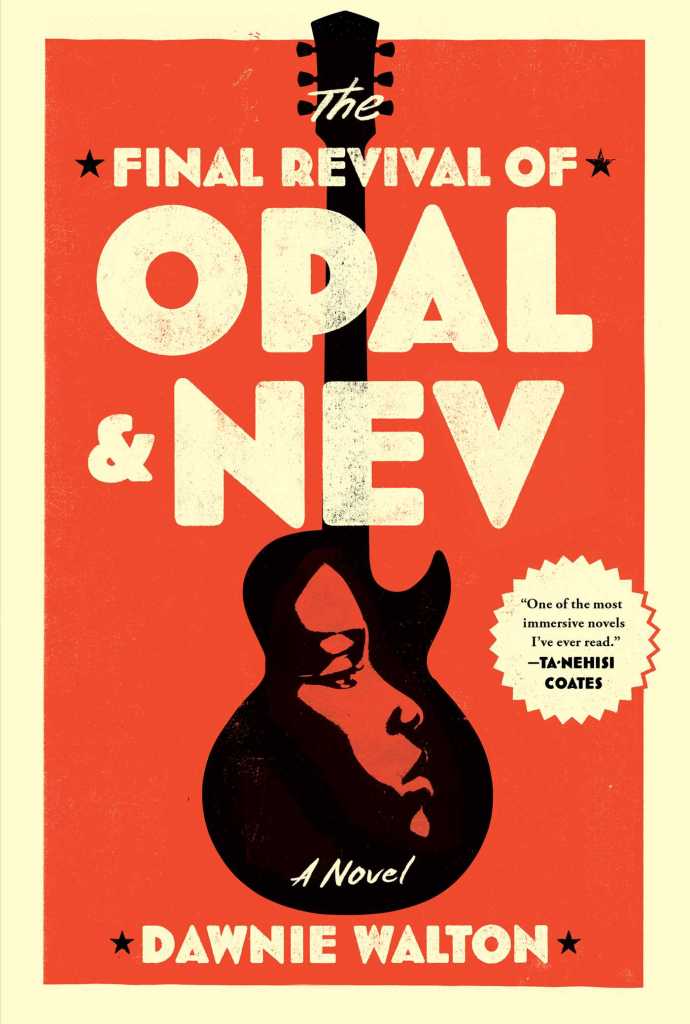

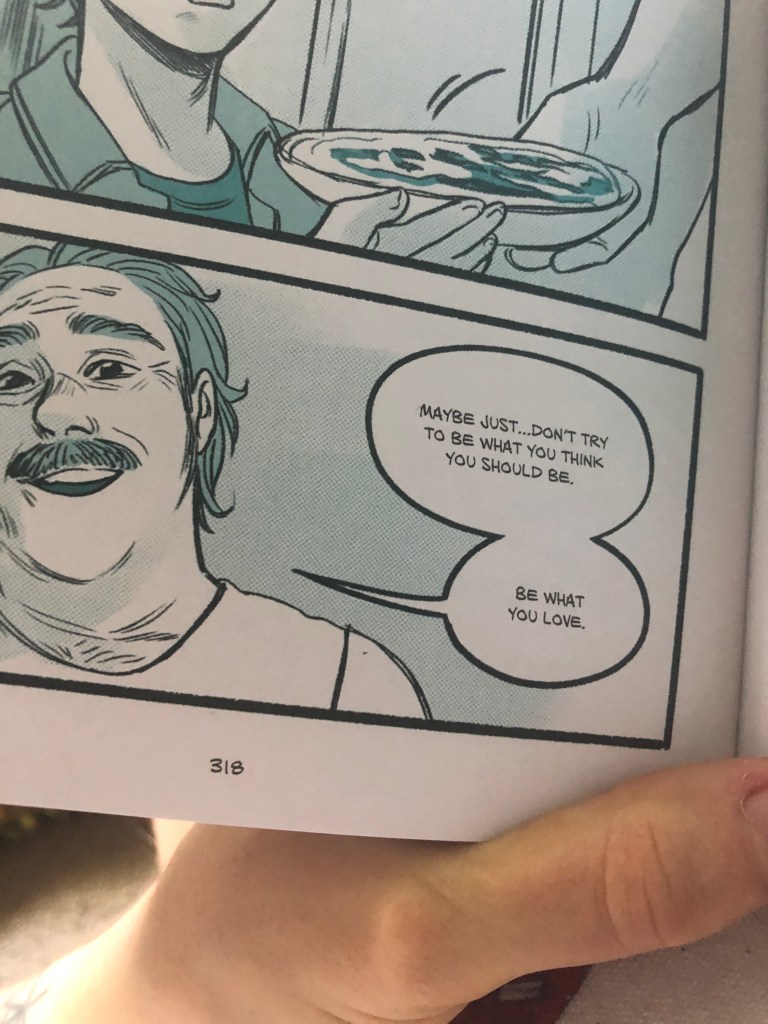
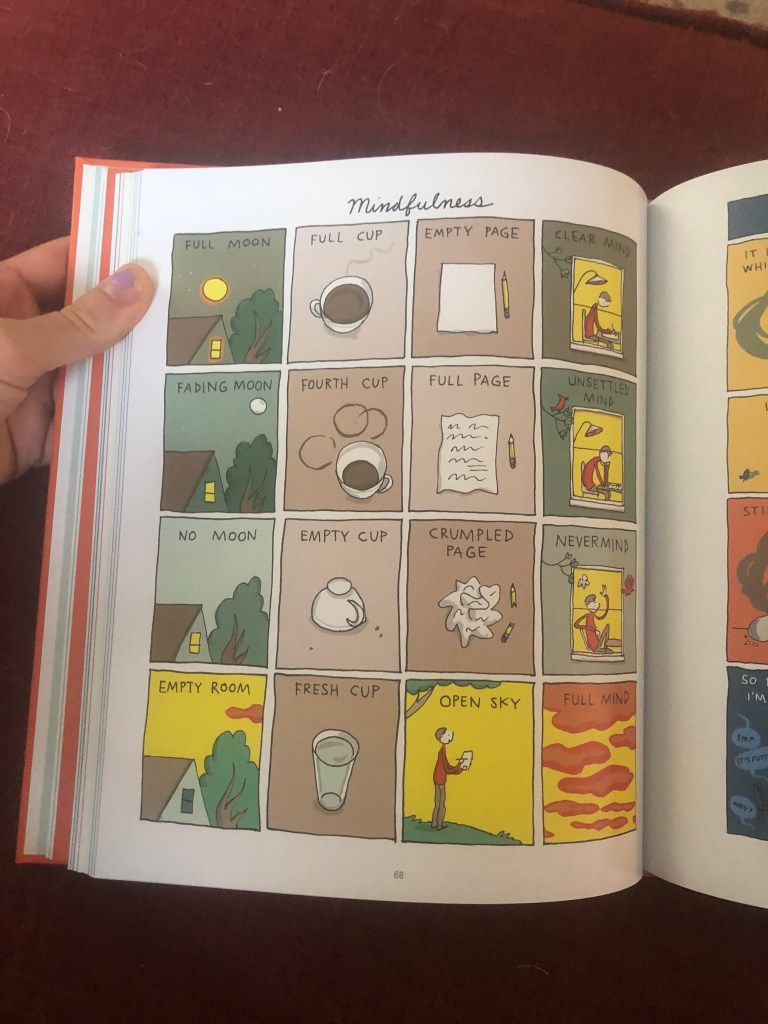
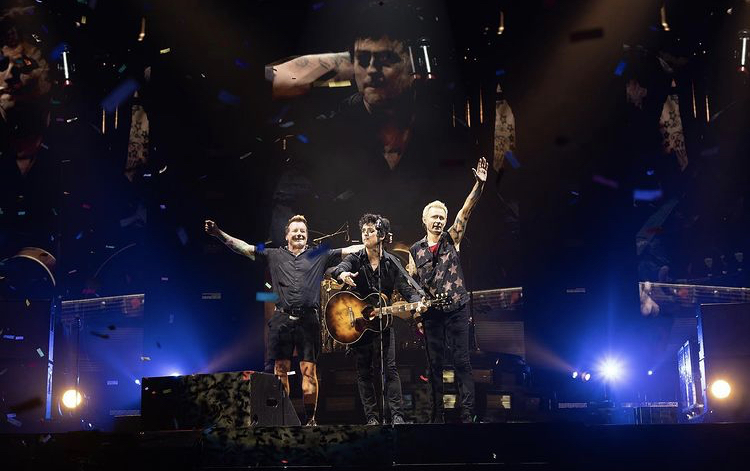

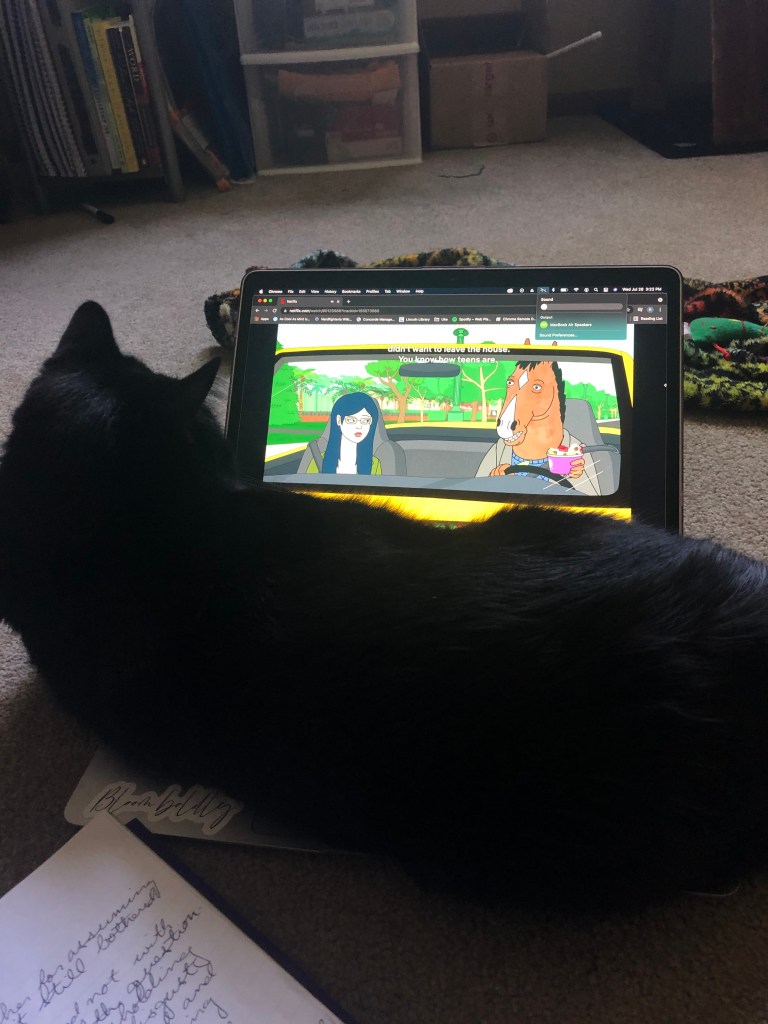
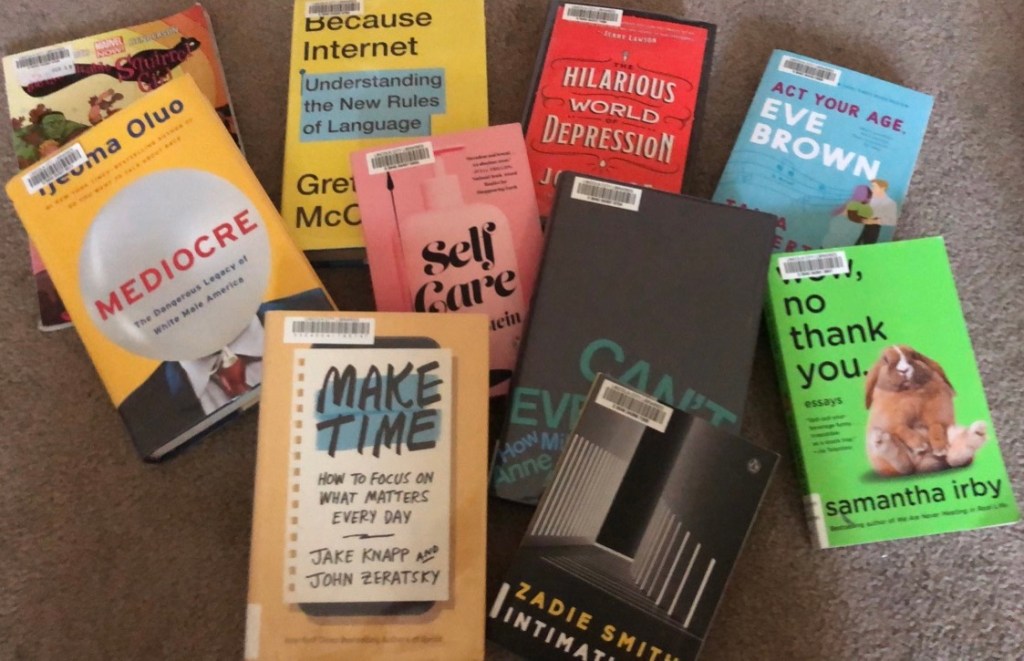

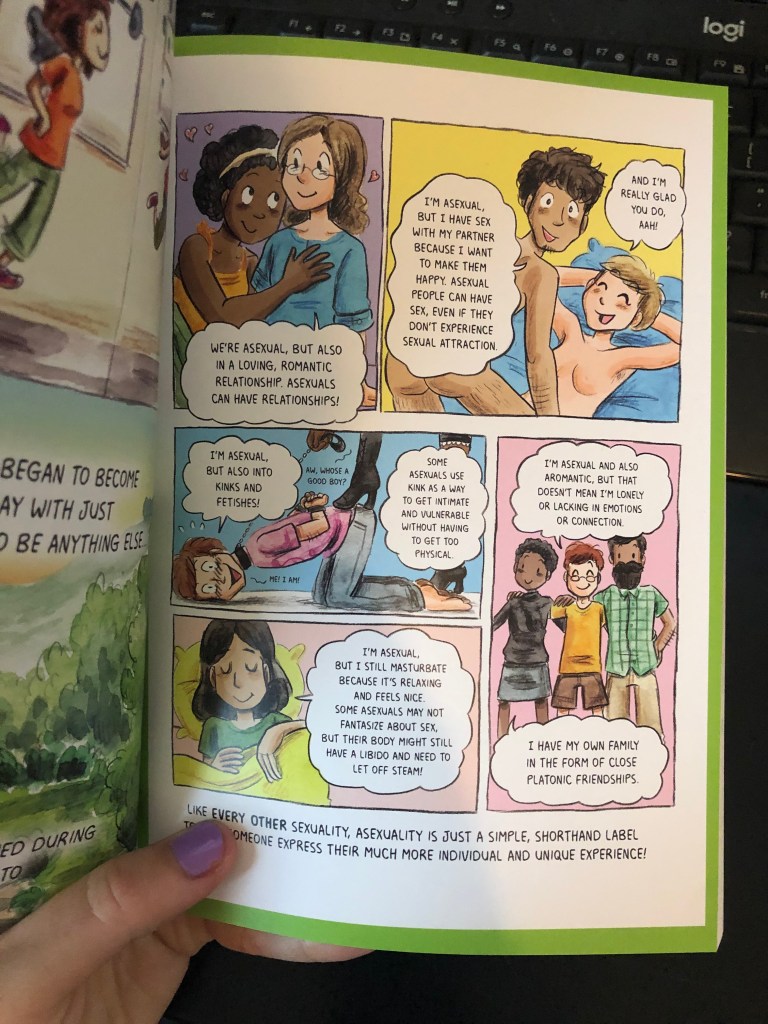


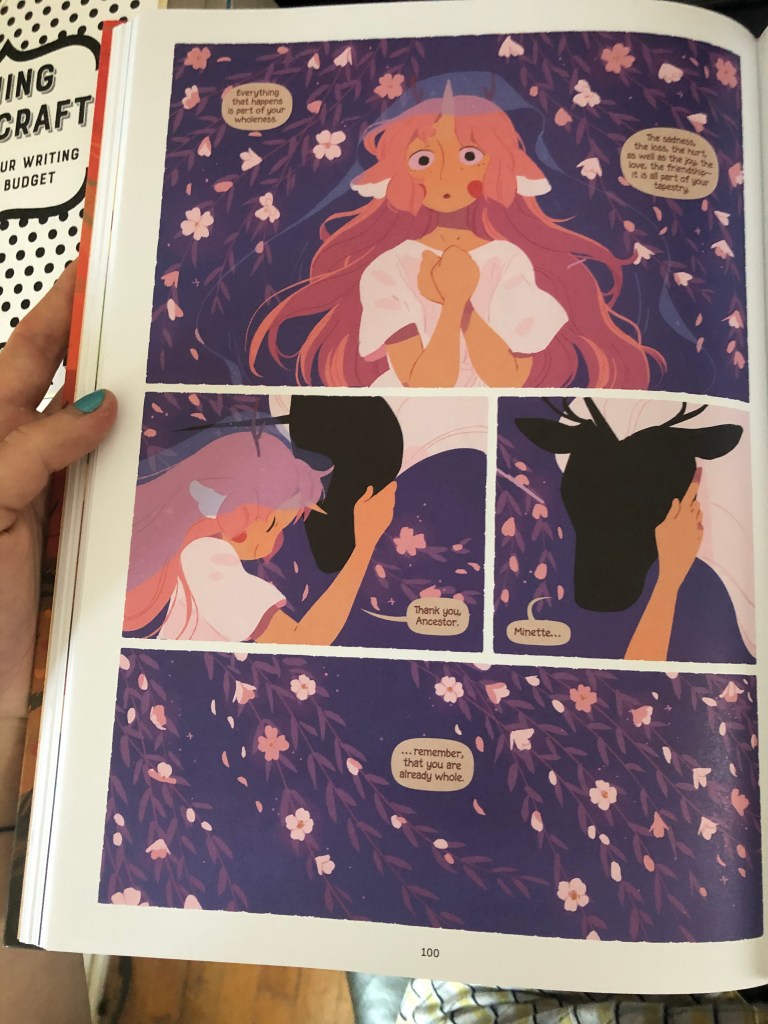
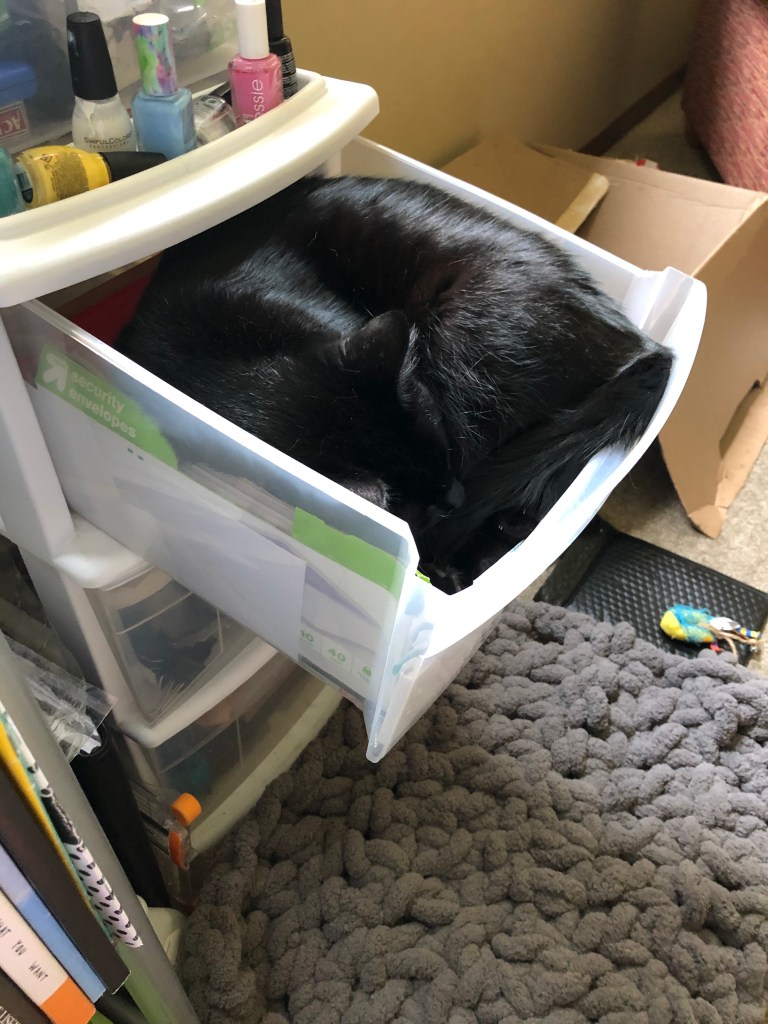
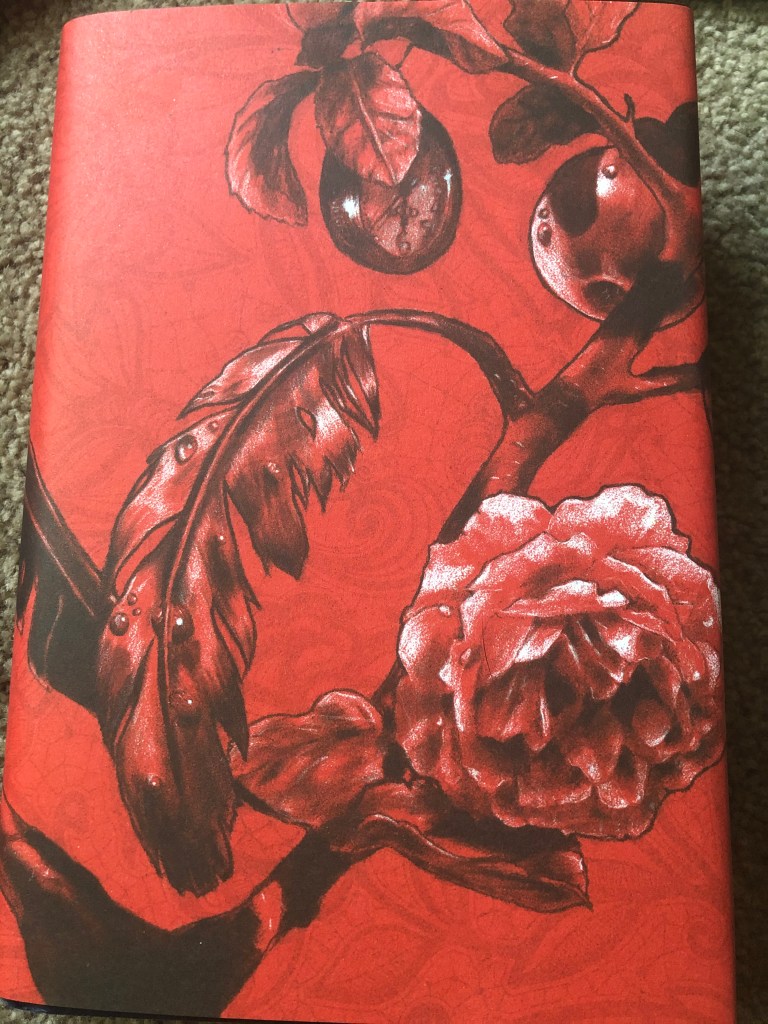


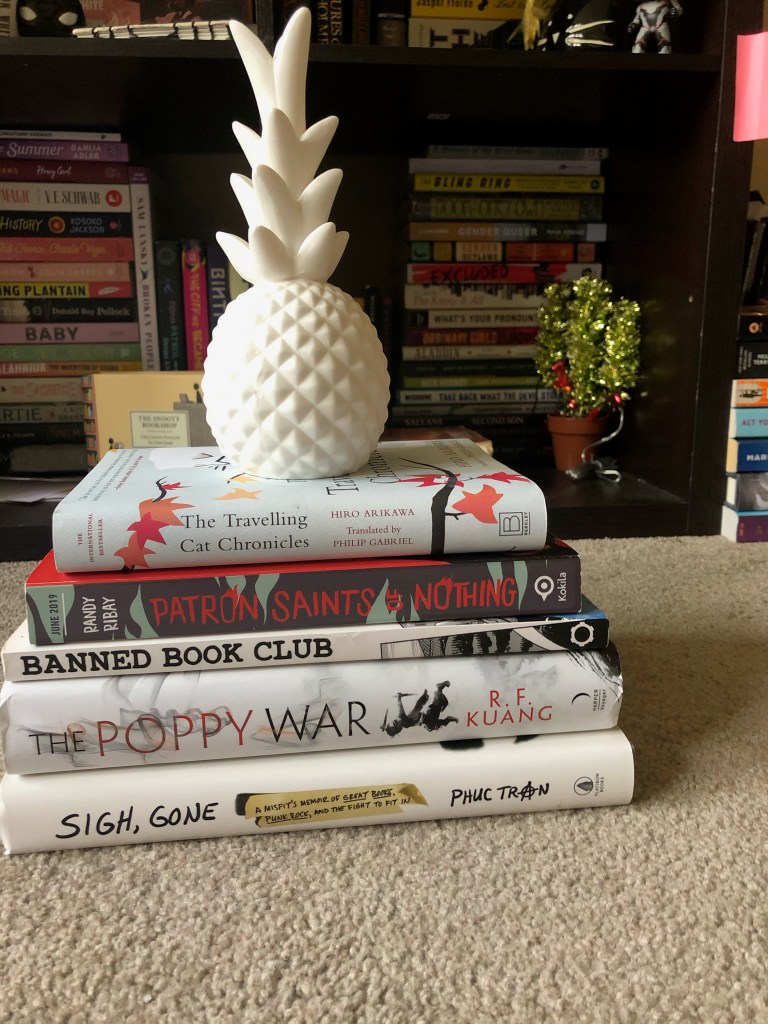

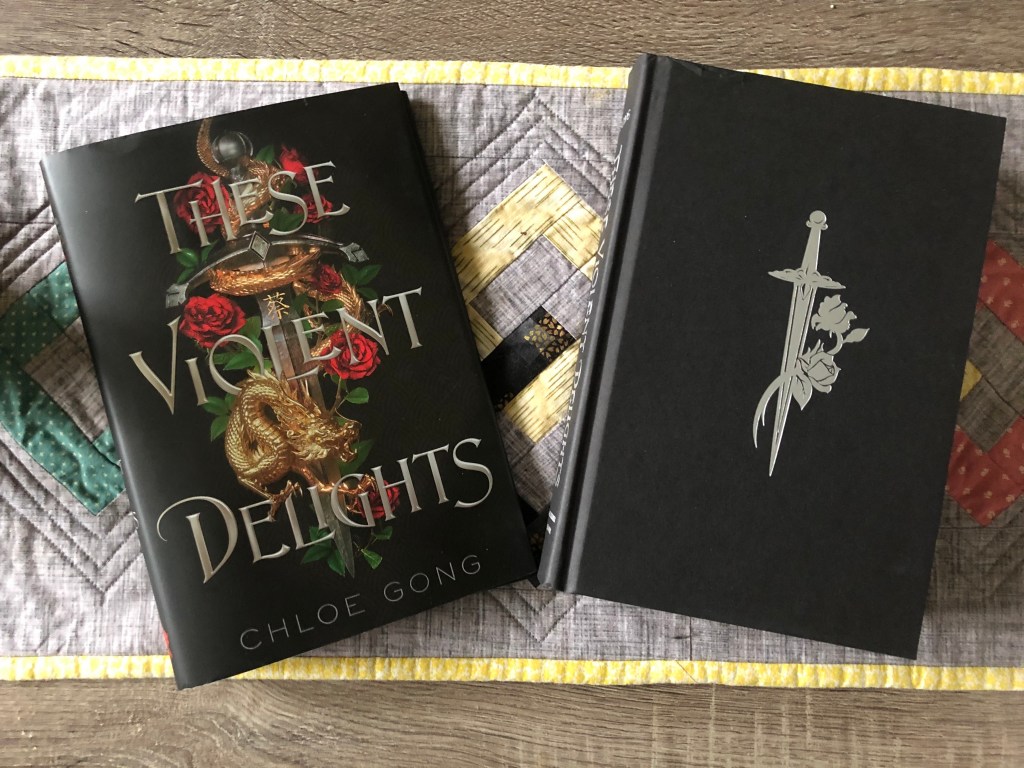
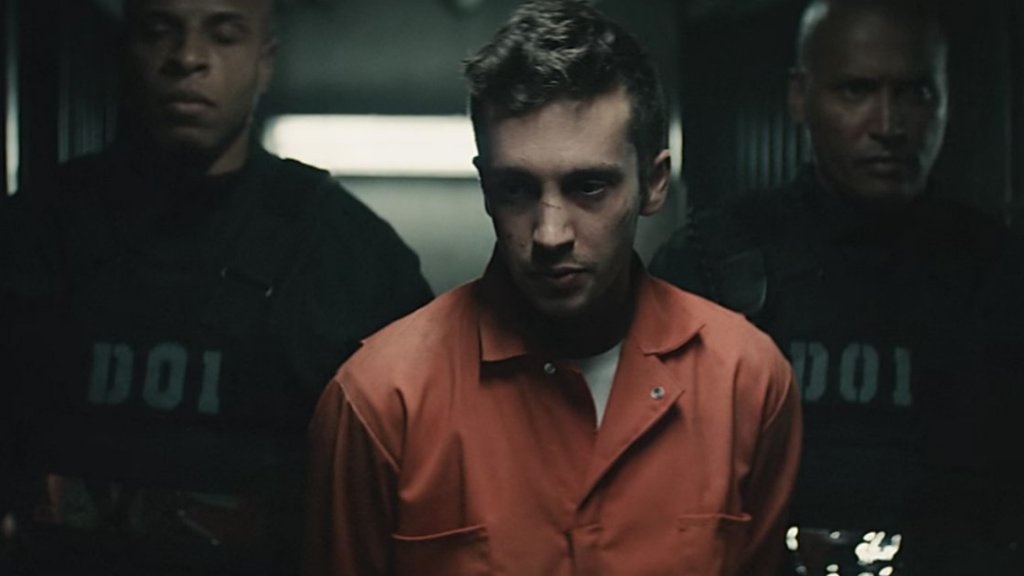
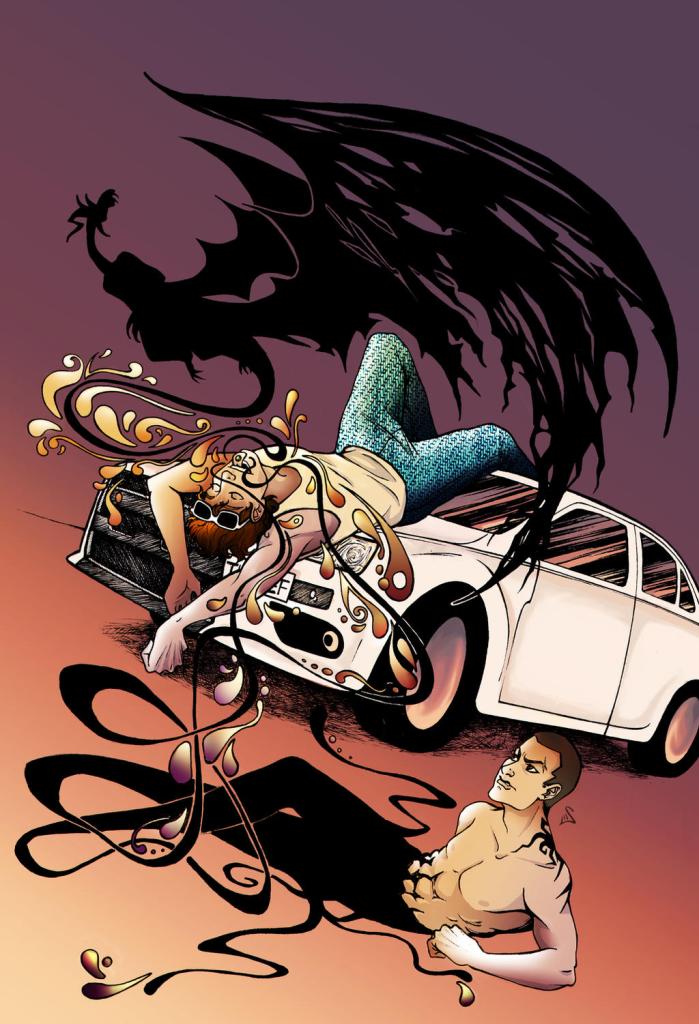

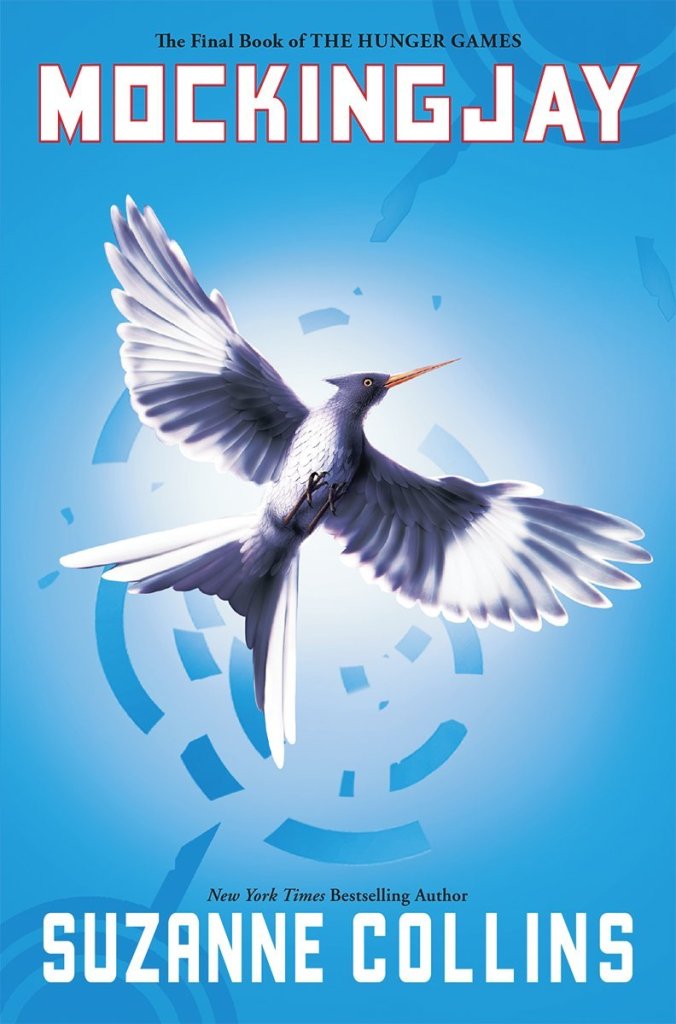
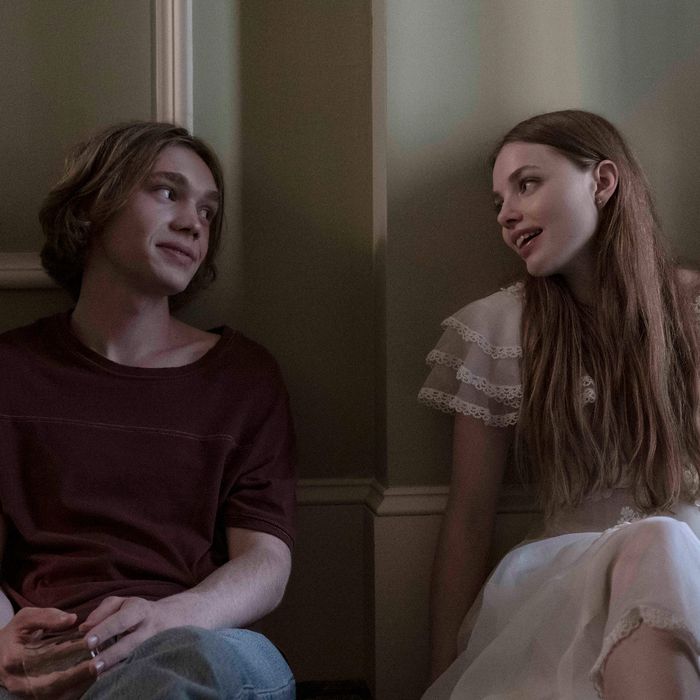
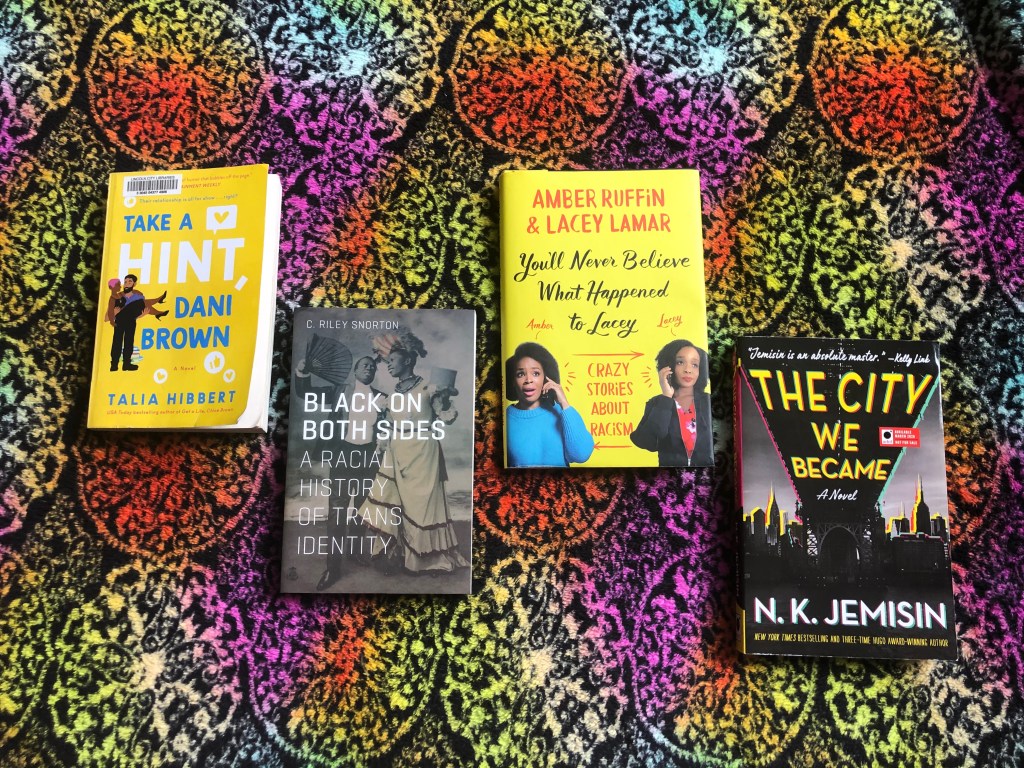
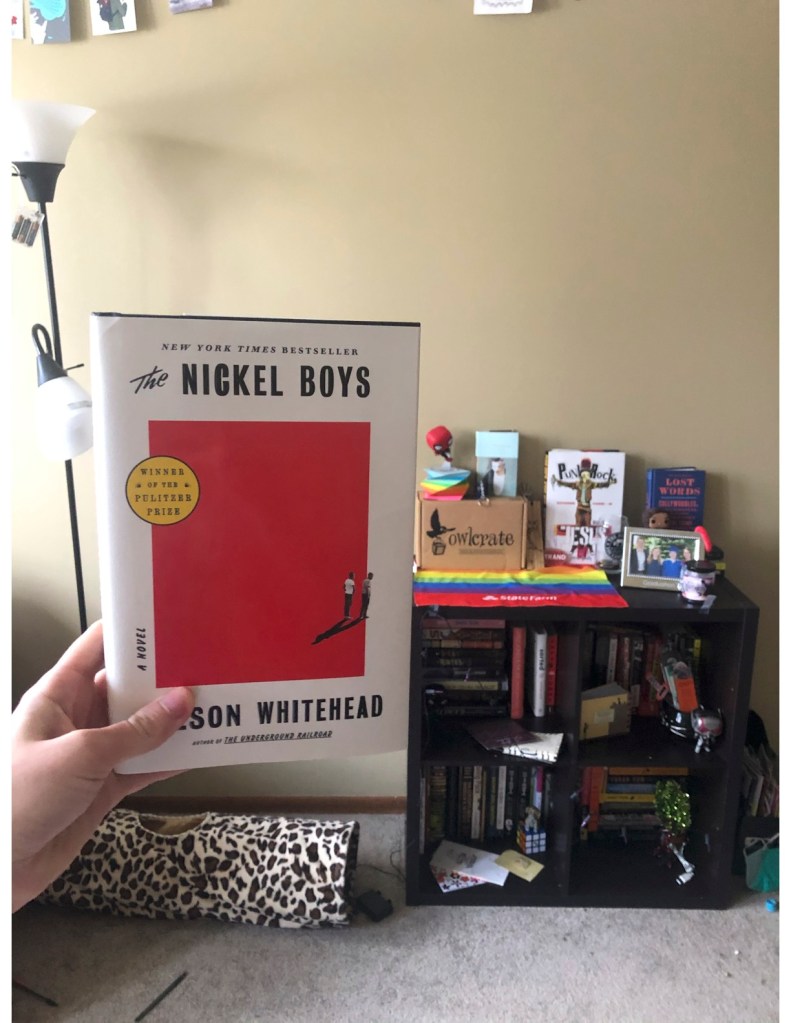
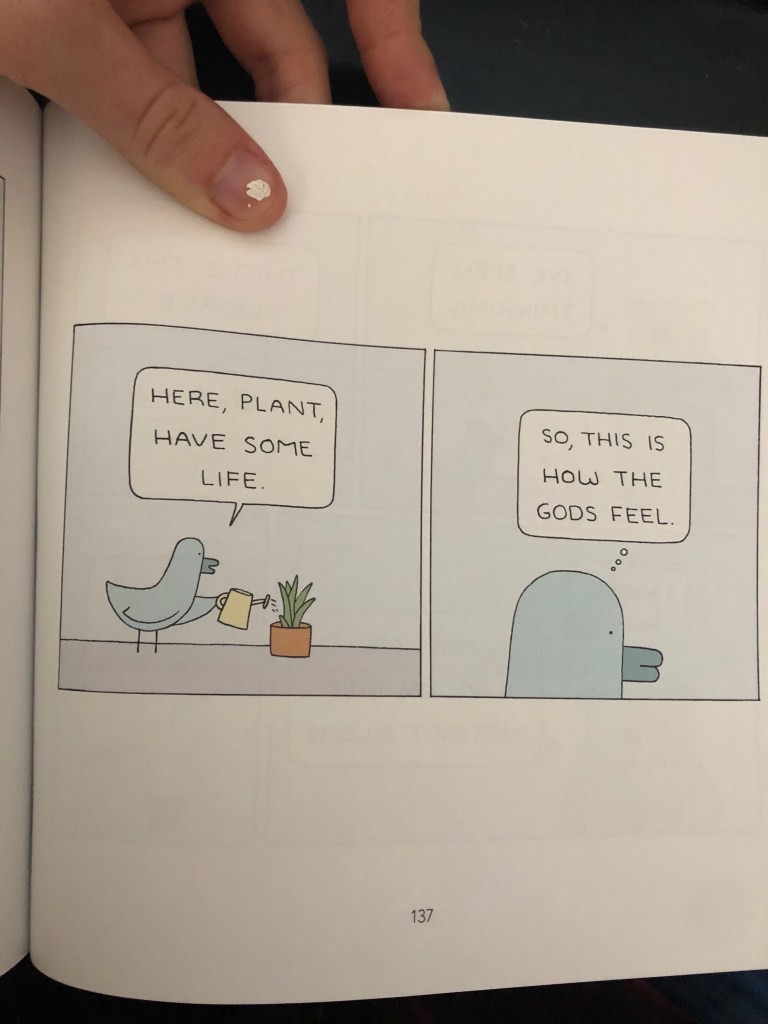
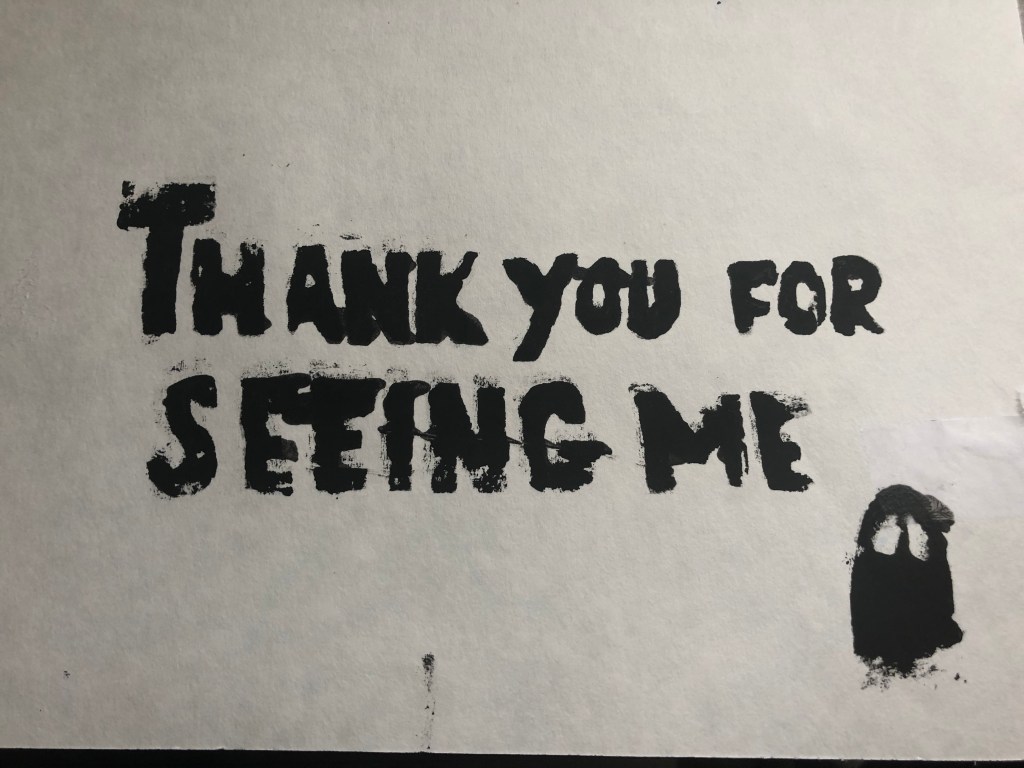
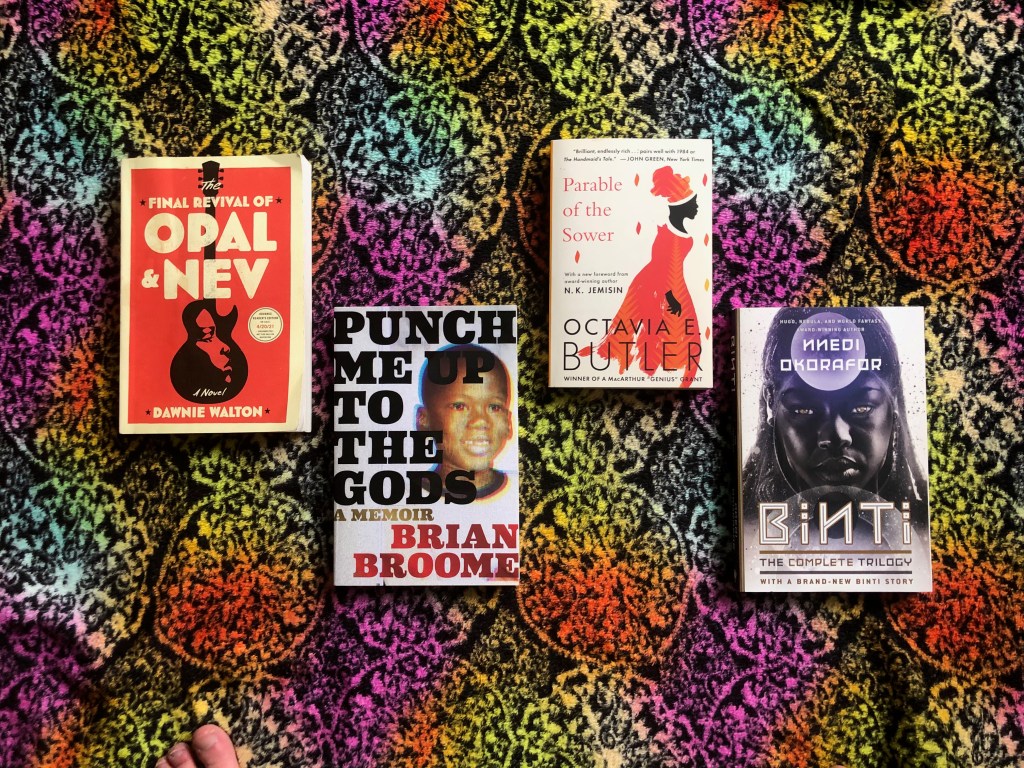
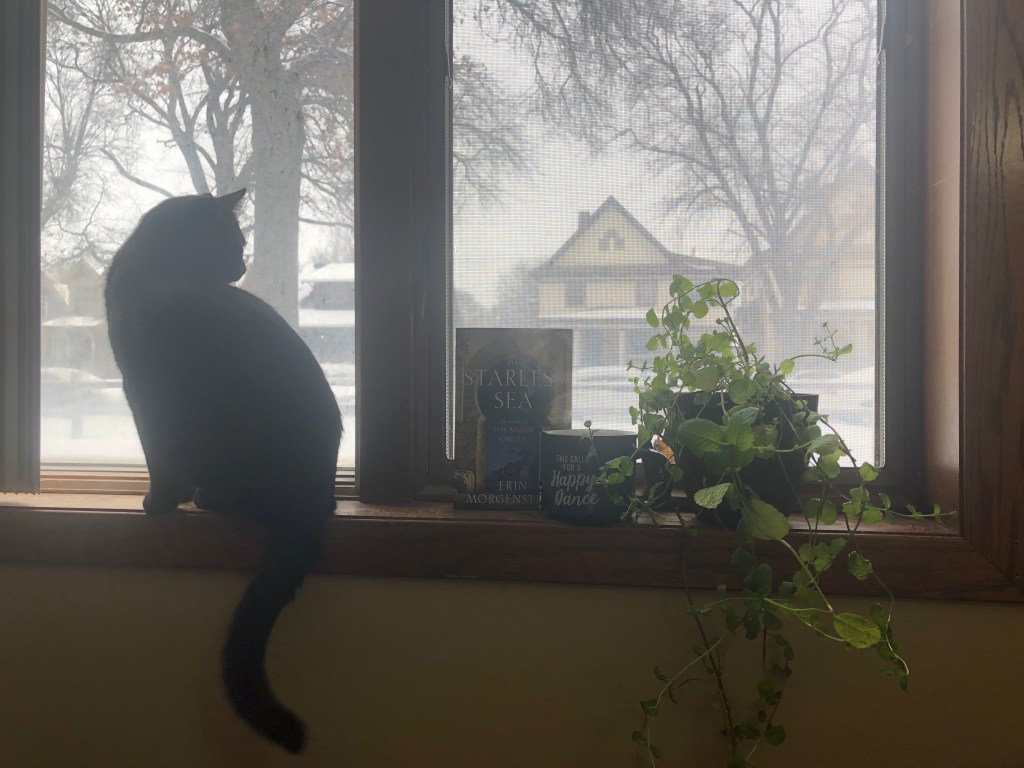
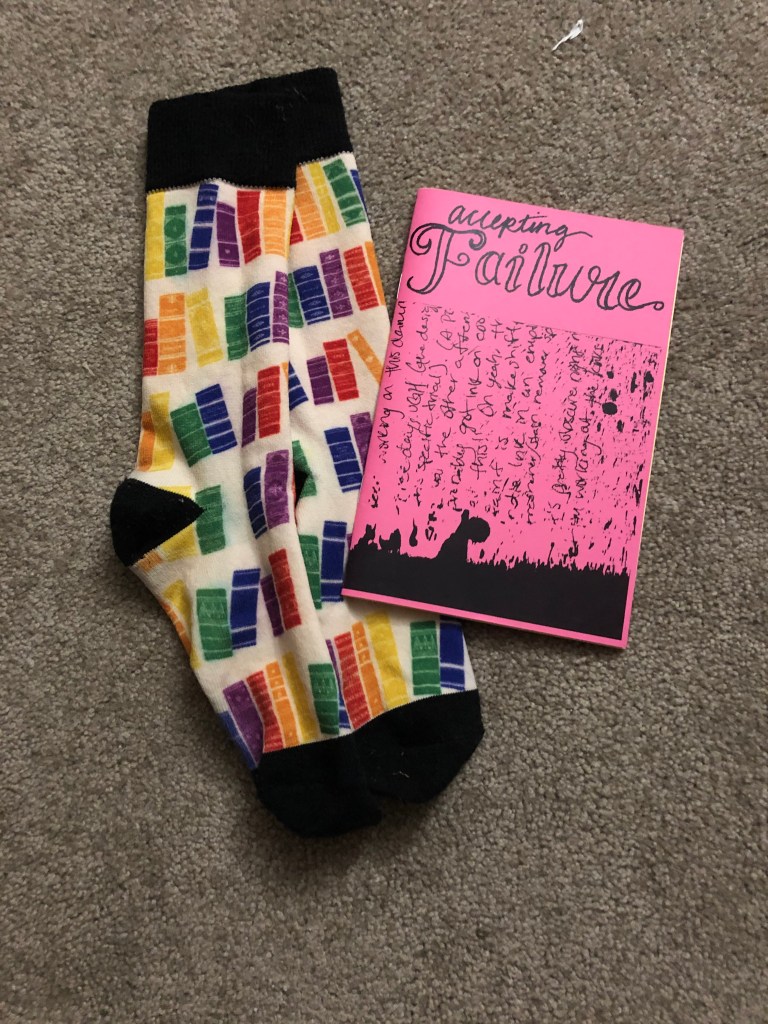


 As Cool As Mint Ice Cream
January 2021: How I started off the new year by reading about ghosts, music, and intelligent kids
What I Got:
What I Read:
Friends, it’s been a wild couple of weeks for me. The only thing that’s relevant, though, is that this blog post is late because my laptop randomly decided to quit on me. But now I have my new laptop (which I’ve named Pierre) and I can tell you all about the books I read in January!
The new year started out with me going back in time instead of forward with a re-read of The Mysterious Benedict Society, another one of my favorite series from grade school. I began to sense a common theme between this series and A Series of Unfortunate Events—smart kids that can overcome incredible circumstances. The main difference is that, in The Mysterious Benedict Society series, their intelligence is taken seriously by the adults in their lives and they are treated as full human beings. Anyway, this series has so many fun puzzles and interesting twists and intriguing characters. To be honest, I was surprised at how well this series holds up and would definitely still recommend it to grade school students. Next on my list of middle grade series to re-read is The Secret Series, which I’ve requested that my library get in audiobook form, so I can hopefully get to them soon!
The other middle grade I read this month was How Do You Live? by Genzaburō Yoshino. I picked up this ARC because the back boasted that it was Hayao Miyazaki’s favorite book as a kid. First published in 1937, it’s considered a Japanese classic, but it was just translated into English. Unfortunately, the translation is a bit awkward, which makes the descriptions less impactful. The detours into random histories (of Napoleon or Buddha statues, among others) were interesting but also, as I already noted, so random that I was jarred when the story of Copper and his uncle jutted back in. There’s not much of a plot because this is basically a philosophy book for kids. I have a feeling that only a small audience of middle graders will actually enjoy this book because go its abstract themes and topics. This is a special and intriguing book that had a less than smooth translation. It didn’t meet my high expectations, but do I still hope that Miyazaki will make a film out of it? Yes!
The Cybernetic Tea Shop, a very cute sci-fi novella, takes a closer look at AI and how we define personhood. I love books that use AI to explore our ideas of what constitutes true “human” intelligence. This book is also a love story between a human-like robot and a robot repairwoman. There’s ace and wlw rep. In order for me to care more about their relationship, the story would have had to be longer and the world more fleshed out. I would have liked more detail regarding the inner workings of the AI that Clara (the repairwoman) worked on as well as the seemingly post-apocalyptic world that is very anti-humanoid robot. The only glimpses besides the anti-robotism were subtle mentions of an earthquake and comments about Clara’s nomadic family. Despite these scarcities, this was really enjoyable, if simply written, and has perfect cold-day-hot-tea-and-reading vibes.
Oh, I forgot to mention that I travelled to Paris this month! Well… not actually, but I sort of did. My sister’s gift to me at Christmas consisted of three books, some activities, and movies/shows that combined to create “trips” to three different places. This month, I decided to “go to Paris,” hence reading The Phantom of the Opera. The first time I read Phantom, the translation was horrible (much like the awkwardness of How Do You Live?). This time, however, was much better! I’ve been really into stories with ghosts (or people posing as ghosts, in this case), so this was a perfect book to pick up.
Phantom is my favorite live musical, so I also watched the movie version (and pondered the ever-perplexing question of why Gerard Butler was cast as the Phantom…) as well as Anastasia, another awesome musical. I “toured” the Louvre and the Eiffel Tower on Google and enjoyed some bubbly! This was so much fun, and I highly recommend the Google tours if you’re feeling trapped inside.
My sister also has to do with three more of the books I read this month. Apparently, it was an Alisha month… The two books of comics by Huda Fahmy are based on her Instagram, Yes, I’m Hot in This, which my sister introduced me to. Fahmy’s hilarious! She illustrates her life as a Muslim trying to meet a husband and just daily life as a hijabi. Her sense of humor is sarcastic and honest; she shows the harsh and funny realities of living as a visibly Muslim woman in the Western world. I recommend her Instagram, too, because she dispels stereotypes and makes you laugh even if you have none of the same experiences.
The other book that has to do with my sister is An Abundance of Katherines. This was the first John Green book I ever read, and he has since become one of my favorite authors. We both remembered it being our least favorite of his books, and while that perspective hasn’t changed, it wasn’t as bad as I remembered it being. My sister didn’t feel the same, but she still rated it three stars on Goodreads, so it wasn’t horrible! However, it is still somewhat problematic with its pervasive binary thinking and teen boy stupidity. On the other hand, there is a fat and Muslim character who is not treated as a stereotype, or just there for the sake of “diversity.” John Green is unable to write anything horribly, no matter how boring the story, so it was impossible for me not to enjoy it overall. Plus, I love when fiction stories use footnotes as a part of the storytelling. (This is a narrative device that The Secret Series uses, too.)
The book Pop Science didn’t have much depth but it was hilarious! The author takes the selected pop songs’ questions way too seriously, citing research and interpreting them literally. It will definitely change how I listen to some of the songs, giving me a chuckle that will make no sense to anyone else.
Okay, so Brown Girl Ghosted was an unexpected delight. It was a pretty average book overall, but in a way that subverts the typical Western ghost story. The story uses Indian ghost mythology to tell the story of Violet, a descendant of women warriors, who is trying to solve the murder of the head cheerleader while also staying under the radar in her small, mostly white town. Naomi (the cheerleader) shows up as a bhoot (described as a spirit that has lost its soul) and the ghosts of Violet’s ancestors insist that she solve the murder. The dialogue was clunky, the emotional stakes weren’t very high, and the characters were pretty one dimensional, BUT it’s still a fun, somewhat nuanced ghost story full of death and YA tropes and a brooding hot guy (who’s not a love interest, by the way…). The ending was also a perfect conclusion to this story. I can’t wait to delve into more ghost stories, especially ones where the ghosts are actual characters in the story rather than just a spooky phenomenon.
The last book I finished in January is a book that I’ve been meaning to read for a while: Songbook by Nick Hornby. For some reason, I love Nick Hornby’s writing. He just has a way of using phrases and metaphors that are both unique and irrefutably true. This book of song reviews (well, more like commentary) is witty and honest. The fact that I wasn’t familiar with much of the music he reviews didn’t take away from the experience, and I didn’t even have to listen to all of them to enjoy the commentary. It’s like a little time capsule from 2003, with both the good (the music) and the bad (subtle prejudice) of the early 2000s. I was a bit disappointed at how mediocre I found this book, because Hornby’s The Polysyllabic Spree (basically the same thing but about books) is one of my favorite books about books and, in fact, is actually why I add those lists at the beginning of my posts!
Here’s to hoping that 2021 brings us good music, good books, and the ability to finally hug our loved ones. Cheers!