Everyone in This Room Will Someday Be Dead (ARC) by Emily Austin
Seven Brief Lessons on Physics by Carlo Rovelli and translated by Simon Carnell & Erica Segre
The Electric Kingdom by David Arnold
The Ones We’re Meant to Find by Joan He
The Raven Boys (reread) by Maggie Stiefvater
Baby by Annaleese Jochems
Meet Cute Diary (audio) by Emery Lee and narrated by Logan Rozos
Check Please! Book 1: Hockey (reread) by Ngozi Ukazu
Another month, another excuse to give myself fake homework instead of actually being productive. If you want the details of the Orilium: Autumn Equinox 2022 Readathon, I’ll link it here, but the basic facts are that certain “callings” (careers) require you to complete certain “classes” and reach a certain level of expertise (Ordinary, Qualified, and Distinguished). Each class has a reading prompt that you must complete to have reached that level. Tl;dr, it’s an RPG for readers.
The Magical Readathon is one of the few reading challenges I keep up with throughout its different stages, and the creator of this readathon, G, always exceeds my expectations. She even made an ASMR room for background noise—amazing! Okay, let’s get onto the books before I write an entire page about how cool this readathon is.
CALLING: Beast Master
RESTORATION (Qualified):
Single object as focus of cover (Object Restoration) —Baby by Annaleese Jochems
This book is… strange. That’s the word. Though the “single object” on the cover is a jam sandwich, this book has little to do with jam sandwiches. It’s about two women in New Zealand who run away from their lives to live on a cheap boat.
Absolutely none of the characters are reliable storytellers, which can work really well if the storytelling method adds to the plot, but I wasn’t really that interested in the characters nor did the narration add much beyond cementing that the main characters all lying to each other. I’m also not super into the storyline of one person being literally obsessed with another person who clearly does not reciprocate; they’re both using each other.
The moments I didn’t enjoy this book were similar to moments I didn’t enjoy while reading Virginia Woolf—nothing happens in an uninteresting way. The inner lives of the characters didn’t pull me in.
I will say that the writing itself has impressive moments. Though I wouldn’t say it’s full of dark humor, as the front cover boasts. The details Annaleese Jochems focuses on seem unimportant at first but take on new meaning, or add meaning, as the story progresses. Hence the jam sandwiches. She’s great at character-building through item description, something I find incredibly difficult to do in my own writing.
Though this book wasn’t for me, I don’t think it’s an inherently bad book. I just didn’t gel with it.
One of oldest books on TBR (Enchanted Scroll Mending) — Seven Brief Lessons on Physics by Carlo Rovelli
These lessons are definitely brief, I’ll tell ya that! I love bringing out my physics nerd brain every now and then, and though I did learn a little from Carlo Rovelli in this book, I knew quite a bit of the information already.
The most thought-provoking moments were the chapter on how time flow may not be a fundamental part of reality, because it doesn’t fit in a lot of the attempts at a “universal theory,” and the chapter on how the science behind human consciousness doesn’t negate the free will and humanity of a person. Reading about the nature of personhood from this perspective before reading The Ones We’re Meant to Find by Joan He ended up adding to that experience, because (as I discuss below) it challenges our ideas of consciousness and the essence of humanity.
ELEMENTAL STUDIES (Ordinary):
Start book with a drink (Water) — Meet Cute Diary by Emery Lee (with wine)
I absolutely loved reading Café con Lychee by Emery Lee earlier this year; it was an adorable hate-to-love queer romance. Meet Cute Diary is the book e wrote before that one, and I can tell that eir writing has evolved even just between these two stories.
Both stories have main characters who are queer people of color, though the story is not about their identities. Their identities obviously impact the plot and his character developments, but Meet Cute Diary is more about a teenager discovering who they are without the comforts of his regular life. The main character is forced out of a rut, and in contrast to the characters in Café con Lychee’s resistance to change, Noah in Meet Cute Diary goes into this new life with too many expectations—expectations to find and maintain the “perfect” relationship to prove that trans people are allowed to have cute romances.
This is one of those books that makes me upset at the main character for not seeing what’s obviously happening. The author makes what’s actually happening so incredibly obvious to the reader that it’s more frustrating than intriguing to follow his journey. I wish that the foreshadowing was a bit more subtle, or that its obviousness added more to the story than to make Noah seem oblivious.
The actual romance brewing behind the scenes during this story is super cute, as hinted at by the title. And though you’ll rarely hear me say this, I wish the denouement was a bit longer, explaining how life goes for Noah after he makes certain changes to his blog and relationships. I wanted to see more of Noah making smarter and more thoughtful decisions and how he continues to impact the online trans community.
Fancy latte I made at work
I’ll still read whatever book Emery Lee comes out with next because I can see that eir writing is getting better, eir stories are full of naturally diverse casts of characters, and eir books center trans joy (or the journey toward trans joy).
Like in Ana on the Edge by A.J. Sass, there’s a character figuring out eir pronouns during this book, and I love how normalized it was for people to switch pronouns for em. It wasn’t made into a big deal, even when eir pronouns changed quite a few times; e just had to ask someone to use different pronouns and that was that.
This was a fun read, and the audiobook narrator captured Noah’s manner of speaking perfectly, not sounding awkward while using slang words and reading tumblr posts. This book delivers the cuteness and drama everyone wants from a queer YA story without sacrificing realism.
ANIMAL STUDIES (Distinguished)
Involves a familiar or animal companion (Study of Familiars) —The Electric Kingdom by David Arnold
Unbeknownst to the Ryn who chose to read this book because of one character’s dog companion, I’ve actually read one other book by David Arnold: Mosquitoland. I remember enjoying that book in my early teen years, especially the road-trip aspect. The Electric Kingdom also has a traveling theme, which seems to be Arnold’s comfort zone.
Unfortunately, this book didn’t quite meet expectations, mainly due to the lack of exploration of the post-apocalyptic world, which makes little sense considering they’re all traveling. The whole time travel element could have been explored deeper than surface level. Time travel and the Flies (which are actually just mutant bees, proving that my fear of bees and wasps is completely rational considering how often they pop up in dystopian stories) were the most interesting parts of this world, along with the “geographical anomalies,” but none of these got a lot of page time. I’m not even sure I could explain what all of this means in a succinct way, so I won’t try.
But this post-apocalyptic world is full and interesting if not completely explored. I also love that David Arnold sets out to show how storytelling can be a means of survival, which is one of my favorite themes to think about.
Though the POVs don’t feel very different and (like Meet Cute Diary) the author fails at his attempts at subtle foreshadowing, the characters themselves are compelling and seem to beckon you into their lives. They’re not telling you a story, they’re living it. Kit, the special-golden-child-who-is-doomed-to-die-young-because-he’s-so-pure, was endearing and fun to follow. His manner of speaking and relating to the world is very interesting.
Oh, also, the dog doesn’t die. That’s definitely a bonus.
All in all, it’s a good book, but for me, it lacked enough depth to make me super invested.
Side Note: The countless Harry Potter references were super annoying. I could’ve done without those, especially since this was published in 20-effing-21.
Raven on cover or in title (Familiar: Raven) — The Raven Boys by Maggie Stiefvater
I’ve reread The Raven Cycle quite a few times, so I don’t have much new to say. I’m always surprised by how early the Gangsey learn about Noah’s death, and there’s always a few moments of foreshadowing that I’d missed during my other reads. Maggie Stiefvater is the Queen of Foreshadowing, let me tell ya. It makes rereading these books even more worth it.
These books are comforting and intricate and poetic every single time.
Rabbit on cover or in title (Familiar: Hare) Everyone in This Room Will Someday Be Dead by Emily Austin
If you could package up millennial existentialism into one neat package, it would be Everyone in This Room Will Someday Be Dead.
This month, I accidentally read two literary fiction books that follow sapphic women who are going crazy, though I enjoyed this book decidedly more than Baby. I mean, how can you not love an atheist lesbian who accidentally gets a job at the Catholic church because she’s too awkward to correct the priest who assumes she’s there for an interview? The dark humor is immaculate; I snorted so many times while reading this book.
Emily Austin’s depiction of a woman who has been dealing with mental health issues for years is highly relatable, and she shows how OCD can manifest in obsessive thoughts as well as obsessive behaviors. The main character worries constantly about her family dying, and taking over a recently deceased woman’s position as a receptionist doesn’t help mitigate those fears.
This book involves a main character with a captivating inner life, even if she kind of just lets things happen to her. Her family and girlfriend are supportive even if they’re not entirely sure what’s going on in her head, though her family does do the typical suburban “our life is perfect, nothing’s wrong, white picket fences” thing where they deny a family member’s alcohol misuse issues and instead blame the family member who points out the problem. Don’t rock the boat, but especially don’t point out when others are rocking the boat. Emily Austin points out all these hypocrisies people perpetuate in society, whether accidentally or on purpose.
The pacing of this book can be a little slow, which mostly works but at times makes scenes drag. The main thing I didn’t like about this book was how little the girlfriend’s character was explored. She’s so understanding and patient, but she mostly just shows up in text messages or vague descriptions of dates. This is almost definitely on purpose—an attempt to show how it’s hard to connect with people while involved in your own inner turmoil—but it did take away from the experience for me.
This is a book I went into with very few expectations and it ended up being a successful choice. Boy, am I glad there was a rabbit on the cover of this book, because I’m not sure I would’ve picked it up so soon if not for that.
ALCHEMY (Ordinary):
Book on someone’s “worst list” you think you’ll like (Basics of Poisons): The Ones We’re Meant to Find by Joan He
I can’t remember if I found this on one of Books and Lala’s worst lists or Jesse the Reader’s, but either way, I predicted I would enjoy this based on the beautiful cover, the sibling storyline, and the mysterious disappearance. I had no idea how sci-fi and post-apocalyptic it would be, though these two qualities would also have made me excited to read this book!
Sometimes I was underwhelmed by The Ones We’re Meant to Find and sometimes I was blown away. It turned out to be a story that explores what being human means and whether artificial intelligence has less humanity than naturally occurring intelligence. The human desire to separate ourselves from machines, even if those machines have a consciousness indistinguishable from our own, is very complex and interesting, especially when put into a narrative.
I think the pacing could have been better, and the world building a bit clearer. (These seem to be the two problems I’ve had with books this month. Oh, well!) I couldn’t immerse myself in the world because I didn’t fully understand how it looked and operated—similar to The Electric Kingdom, though this book executed the post-apocalyptic worldbuilding with slightly more finesse.
One of the main characters tasks herself with coming to a solution for human-induced environmental disasters, and what she decides to do actually surprised me a lot when it was revealed. And then there’s another reveal about a different character’s identity that adds a whole new level to both storylines. (This story is told in alternating POVs—one sister stranded on an island, and one sister stuck at home dealing with the disappearance of her sister months earlier.)
Anyway, this was an overall good reading experience even though it’s not a new favorite. Past Ryn saw the future, if only partially!
QUEST (Patreon)
Three-word title (Organized Cat Crime: Third Runaway) — Check Please!: Hockey by Ngozi Ukazu
Okay, so I cheated a little with this prompt by deciding “Book 1” isn’t part of th title, but I’m in charge of my readathon experience, so I’m counting it! I’ve already read Check Please!, and it was just as cute and wholesome as the other times I’ve read it. Bitty is sunshine embodied in a character, and this time around, I found a new appreciation for the character Shitty. (Yes, that’s his name.) Shitty reminds me of my best friend, just in hockey bro form.
Library haul!
Ngozi Ukazu’s art matches really well with the story she’s telling—it’s cute and detailed enough without being overwhelming. I love an accepting sports-related brotherhood, and I love baking/cooking in stories, so this is just the perfect recipe for my enjoyment! (See what I did there?)
Next month, I’ll be a bit busier than these past few months and have no plans for any readathons, so hopefully the next wrap-up post is a little shorter. More 5K than half-marathon. I read quite a few “just okay” books this month, but I’m proud of myself for reading as much as I did, and rereading a couple favorites definitely helped me “pass” all my classes.
Now that fall is coming up, I’m going to have the urge to reread more faves. Even though I developed a new appreciation for summer this year, I can’t wait to sit in my comfy reading chair with hot chocolate and a favorite book without overheating. It’s gonna be great!
I Want to Die but I Want to Eat Tteokbokki by Baek Sehee
The Old Curiosity Shop by Charles Dickens
Less by Andrew Sean Greer
At Swim-Two-Birds by Flann O’Brien
Dear Leader by Jang Jin-Sung
What I Read:
The Sky Blues (ARC) by Robbie Couch
A Snake Falls to Earth (audio) by Darcie Little Badger
I Was Born for This by Alice Oseman
Goddess of the Hunt by Shelby Eileen
Tinderbox by Robert W. Fieseler
Heartstopper, Vol. 1 & 2 by Alice Oseman
Ana on the Edge (ARC) by A.J. Sass
The Crash Palace by Andrew Wedderburn
I Want to Die but I Want to Eat Tteokbokki by Baek Sehee & translated by Anton Hur
Solitaire by Alice Oseman
She Memes Well (ARC) by Quinta Brunson
My motivation crash-landed into the month of July for some reason (okay, the reason is that COVID wiped me out for two weeks), so I’m sorry for the delay in getting this post out there! I’m still excited to talk to you about the queer lit I read during Pride Month as well as the few books I was able to get through in July. So buckle up for a long ride, because I still managed to read a little even though my brain was as smoggy as the Los Angeles atmosphere.
I did my own version of the Queer Lit Readathon like I do every year, meaning that I completed all the prompts over the whole month instead of the actual week of the readathon. It’s just not fun for me to cram all my reading into a few days, and I figured I would read queer lit all month anyway, so why not complete the challenges?
During June, I wasn’t the best at writing down my thoughts during and after reading these books. Maybe my motivation was already crashing… So I hope my reviews aren’t too scrambled, because my brain definitely feels a tiny bit scrambled still.
Now, onto the list! Let’s get it!
1.The Sky Blues (ARC) by Robbie Couch: New-to-you author
I saw that this book was compared to I Wish You All the Best by Mason Deaver, which is one of my favorite queer YA books, so I think I hyped it up a bit too much. Nonetheless, it was a fun read.
Sky Baker is planning a big ol’ gay promposal to his crush Ali, which is a huge statement in his small town, but these plans get leaked in a homophobic and Islamophobic schoolwide email. A book that seems like it’ll be a romance then turns into a friendship and community story, plus a little bit of a mystery in finding who sent the email.
I didn’t really like this story in the first two chapters because the writing style felt like it was trying to sound “teen” too hard (a la the “how do you do, fellow kids” meme). But the turn of this story from a promposal story to a story of friendship and acceptance and not-just-romance completely changed my opinion. I love that Sky doesn’t end up with the crush that started all of this, but he still has a happy ending. And I love that the small town in this book, though still very backwards and prejudiced, has a pocket of accepting and liberal people. Robbie Couch makes a point to show that, even in small towns where you might feel alone, there are more people on your side than you think.
This book is a great example of how many different issues can be explored in an organic way rather than feeling forced.
I also like that the whole plot didn’t revolve around figuring out who sent out the racist and homophobic email blast. Sure, it was part of it, but the focus was definitely on community and friendship and moving forward. They start a whole T-shirt stunt with the thought of revenge, but it ends up becoming something that brings people together and makes people more comfortable being themselves in many different ways. *Queues up “Stick to the Status Quo” from HSM.*
Plus, I have a soft spot for high school journalism classes in stories, because that was one of the few parts of high school I can look back on fondly.
Anyway, this is a great story that I’m excited to see exists in the world for teens who are grappling with identity and trauma in their many different forms.
2.A Snake Falls to Earth (audio) by Darcie Little Badger: Indigenous main character, science fantasy
I think I would have liked this book better in written form, though this was no fault of the narrators. In fact, they were both great. I just had a hard time focusing. The pacing is interesting; it meanders rather than walking at a steady pace.
It was really cool following Nina as she learns about Lipan mythology and searches for the truth behind these stories, but Oli’s story was more interesting. Oli is a shapeshifter who literally lives in an alternate world, and he is surrounded by fun characters. I did feel like the connection between Nina’s and Oli’s stories was a little tenuous, and the side characters didn’t get enough time in the limelight. This may have been by design, because of the mythological storytelling, but the coyote sisters and Oli’s frog friend made the story so much better for me.
This is a coming-of-age story like I’ve never read, because Nina and Oli come of age in such different ways despite the parallels. Oli’s POV was my favorite, and once I pick a favorite POV in a multiple-POV story, that’s usually not a great sign. Oli and his friends are funny and run into serious but humorous situations. Nina’s story just felt ignored and unnecessary except for certain plot points. Though the climate change problem that they need Nina’s help with is something I totally didn’t see coming but made complete sense (a.k.a. the best kind of plot twist).
3. I Was Born for This by Alice Oseman: Messy queers, neurodivergent main character
All I wrote on The StoryGraph for my review of this book was “Well hot damn that was amazing.” That about sums up my thoughts on the book.
This book explores the toxicity on both sides of a parasocial relationship involving a boy band and their hardcore fans. This book doesn’t ignore the good sides of this type of relationship—comfort, fulfillment, joy, friendships—but it mainly focuses on the darker aspects of intense fandom behavior.
This is kind of an unpopular opinion because of the popularity of Radio Silence, but this is now my favorite Alice Oseman novel. It’s got that “diverse but it feels natural instead of forced” feel that Alice Oseman is so good at. They have a note at the end of the story talking about the beta readers they had for the Muslim and trans guy rep (for the two POV characters).
Angel’s story is all about meeting her online friend for the first time in order to go to a concert for their favorite band, The Ark, together. Jimmy’s story is all about how his role as The Ark’s frontman, though it was his dream, has turned into something overwhelming and miserable. Both characters deal with the collision between the ideal and the real.
This book goes to some incredibly dark places, and it’s one of those books that has a difficult-to-describe plot, but the character development is incredible. The characters themselves are incredible. They’re all so real and well-rounded, even the side characters.
Alice Oseman doesn’t ignore any of the issues with parasocial relationships, including how they affect personal relationships, mental health, self-worth, decision-making skills, personal freedom, etc. Angel feels like The Ark is the only good thing in her life, that her future isn’t bright and her parents don’t understand her. She almost ruins her friendship with her online friend by focusing exclusively on this band instead of paying attention to what’s going on around her. Jimmy feels like The Ark is no longer a good thing in his life—their new contract will be too overwhelming, his paranoia is increasing as their popularity increases, and revealing his identity as an out queer trans man in the public eye was not entirely his choice even if it’s something he’s proud of. Tl;dr, something idealized turns into something a little bit harmful despite all the positive it has done (and might continue to do).
Side note: I absolutely love the relationship Jimmy has with his grandpa. It’s very wholesome and is important to quite a few plot points, which adds weight to its presence in the story.
This is a book I can’t wait to reread and learn from again and again in the future.
4.Goddess of the Hunt by Shelby Eileen: Asexual/aromantic main character, poetry, retelling
I knew I liked Artemis for a reason… Her choice to remain celibate always resonated with me as an empowering choice rather than a sacrifice, and this poetry collection explores that idea with nuance and emotion.
The integration of different goddesses’ points of view on and advice to Artemis add more layers to this character study. When reading a character study like this, I like seeing external points of view, because we all know that internally judging one’s own character is often not the most accurate portrayal of one’s personality and worth. Though Artemis seems pretty self-aware, I have to say.
“Artemis was a beauty, a terror, a force that nature bowed to, but only because she had bowed to nature first.” This poetry collection also explores the idea of mutual respect between nature and people, between people and people, between gods and people, etc. One of my mom’s biggest things growing up was being respectful in order to gain respect, and it’s definitely one of those lessons that I’ve carried with me into adulthood. Seems like Artemis got to that conclusion before the both of us.
Shelby Eileen’s poetry emphasizes the magic of nature and how a relationship with nature should be mutually beneficial rather than one-sided. It reminds me a little of how nature is portrayed in The Raven Cycle.
This is as close to nature as I got for, about 2 weeks.
5.Tinderbox by Robert W. Fieseler: Group read, nonfiction, LGBTQ+ history
Damn. This is an emotionally difficult book to read, but also a necessary one. Tragedy often precedes progress, unless that tragedy is buried under other stories. I think it’s important to note that this book was written in the context of the Pulse shooting in Orlando in 2016, which was a similar tragedy to this fire but one that the entire nation talked about instead of ignoring.
This story is rife with injustice and all sorts of tragedies. I like that everyone is humanized in this story, even the probable fire starter, which is not always the case in journalism. This book’s criticism of the media coverage’s purposeful ambiguity is proof of that.
It’s really disheartening to see that the world today (and in 2016) has so much in common with the world in the 1970s. Though different things are taboo now, there are still a lot of the same things people don’t and won’t talk about. And if they do, it’s usually in a roundabout and/or dehumanizing way.
The way this book is put together reminds a bit of The Library Book by Susan Orlean in that everyone and everything relevant get a backstory full of details, but the common thread of the story always comes back to the main theme, in this case the fire. It makes the history more engaging than a textbook-style, just-the-facts and no storyline book.
6. Heartstopper, Vol. 1 & 2 by Alice Oseman: Reread (choose your own category), graphic novel, seasonal vibes, romance, queer sports
I don’t usually talk about rereads unless I have something new to say, so this will be pretty short. I really enjoyed rereading these after watching the Netflix adaptation and seeing what they changed. I made it a game for myself to try to figure out why those changes were made and what they might mean for future seasons. And the bowling scene is always gonna be my favorite, no matter how many times I read these books!
7. Ana on the Edge (ARC) by A.J. Sass: just an extra book I read in June
A middle grade about a kid just starting to question their gender? Yes, please! So many stories are about kids who have things figured out but just aren’t accepted by others or open about their identity yet. It’s important for younger readers to see that it’s okay not to have everything figured out.
Nonbinary pride flag
Ana gets mistaken for a boy by a trans boy who takes lessons at the same ice skating rink, and Ana doesn’t entirely hate it. Ana spends time figuring out what feels comfortable, even after finding that the term “nonbinary” feels right. By the end of this book, Ana is still figuring these things out, but that does not make Ana any less nonbinary.
I love Ana’s friendship with Hayden. He allows Ana to explore a more masculine side while Ana’s skating program becomes intensely gendered. It even makes the story better when Hayden gets upset with Ana for not “lying.” Just because another person is trans or gender nonconforming, doesn’t mean they’ll immediately get what you’re going through. Everyone’s experience with gender is different, which can lead to miscommunication, but the two friends put in the effort to explain things to and support each other.
A.J. Sass shows how important it is to give someone space to figure their shit out, not to assume someone’s identity, to communicate even when it’s uncomfortable. This is the perfect example of a middle grade book providing nuance without feeling overly obvious or too complicated.
Plus, I love a good exploration of gender in sports, and I haven’t read anything that does this specifically with ice skating.
8. The Crash Palace by Andrew Wedderburn: July read
I started this book before I got COVID and finished it while I was sick. And I’m pretty sure that’s the only reason I got through it. My brain was too foggy to focus on how bad the book was, so I was able to power through.
This book is so obviously about a woman written by a man. Not the stereotypical way in which some cis men don’t really know how the female body works, but the way the character approaches her relationship with men doesn’t scream “this is my experience” or even “when I talk to women, I listen to them.”
There’s some (assumedly) unintended repetition and poor development editing, like when a character’s habit is described before that person does that action rather than just showing them doing it. The characters are 2D and everything is a bit too vague, except for random stupid details about settings that have nothing to do with anything. For something that feels like it should be a character study, there’s no character development or resolution or meaningful sort of ending. The idea (I think) was to make the story into a loop—everything repeats itself and whatnot—but it didn’t land.
I did like the link between music and geography, though. It’s pretty neat and is one of the actually interesting parts of the main character’s personality. She breaks up distances by time and time by songs, which gives an insight into her love of driving and the music she likes to listen to. I’m a sucker for music in books for some reason; this and the fact that the most responsible character was called “the Skinny Cowboy” were the most enjoyable parts to read.
9. I Want to Die but I Want to Eat Tteokbokki by Baek Sehee & translated by Anton Hur: July read
This was a pleasant surprise, like picking up a dollar bill off the ground and finding that it’s actually ten dollars. That is to say, I randomly ordered this book when I bought Solitaire because I want to read more translated literature, and luckily I ended up loving it.
The amount of vulnerability and honesty it takes to write a book like this is extraordinary. Baek Sehee transcribes parts of her recorded therapy sessions and then expands on them. She even has her therapist write a little comment at the end of the book, which I thought was really cool.
This book found me at the right time; it is refreshingly honest and allows the reader to see into someone’s insecurities and issues and traumas while that person is dealing with them. She offers insight and bares her imperfections without making excuses.
This is a quick but impactful read. Highly recommend!
10. Solitaire by Alice Oseman: July read
Yes, there’s more Alice Oseman on this list. What can I say? She’s super talented at writing angsty teen characters I want to read about.
So this is one of those books that I love but hit so close to home that I don’t have much to say unless I discuss my personal trauma, and I really don’t want to do that. It’s hard to see someone struggle with thoughts and issues you’ve had (or similar ones) when you’ve already reached the point in your life when you know that it’s just your brain lying to you and that those problems are temporary.
Solitaire is super well-written—there are a lot of moments when I could see how carefully Alice Oseman chose the words they use. But it’s a difficult book to read because of the heavy topics. Tori’s derealization makes you feel disconnected from the story a lot of the time, which is a testament to Alice Oseman’s writing but can also distance the reader from the plot and make books like this polarizing. Because Tori feels separate from what’s happening around her, it’s easy to feel like that as a reader, too. And if that’s not something you’ve experienced, then it can be off-putting.
Tori as depicted in Netflix’s Heartstopper
It’s an accurate portrayal of the mind of a struggling teenager who feels like her problems are not as important as her sibling’s. The references to The Catcher in the Rye were not veiled but also came completely naturally (minus one of the characters having the last name Holden).
I read the version that Alice Oseman revised a little bit after some of the Heartstopper comics came out (the main characters of which are side characters in this book), so I found some of the mentions of Charlie and Nick a bit jarring. Mainly in the way they were introduced—kind of like Alice added in extra details just to give more (or a different) backstory after creating the full story through the comics. Just a couple moments were strange.
In true Alice Oseman fashion, though, this book is diverse in a way that feels natural instead of forced. The side characters, though not as fully fleshed out as Alice’s other works, are fairly well-rounded.
This is not a book I would recommend to just anyone, so please look up content warnings if you think you’ll need them!
11. She Memes Well (ARC) by Quinta Brunson: July read
This book, unfortunately, was just okay. Quinta Brunson is hilarious and badass and emotionally intelligent, and the writing has nothing particularly wrong with it; I just wasn’t pulled in by her voice or story.
Part of this is because, in contrast to I Want to Die but I Want to Eat Tteokbokki, I read this book at the wrong time. A lot of the book is Quinta giving advice on making it in a creative industry based on her experiences doing just that. And as someone who would like to make it (at least a little bit) in a creative industry, someone who has been feeling stuck and uninspired and unmotivated lately, I just found the advice frustrating. Especially because a lot of it had to do with creating a community around you, which is a difficult thing for me to do even without a seemingly never-ending pandemic going on. So you can imagine how difficult it is now that there is a pandemic.
It’s aggravating to read about advice that you wish you could follow, but because you’re not the same kind of person or in a similar situation, you just can’t.
The meme referenced in the title
The parts I liked best are the chapters titled “Quinta’s Classics,” which discuss pop culture artifacts that have made Quinta who she is or remind her of formative moments/people. I love discussing how pop culture moments and items shape people and society, and since I’m not in school anymore, I don’t get a lot of opportunities to have these conversations. So these were the most interesting parts for me to read. She talks about Mario Kart and movies and music and other cultural outputs. I could’ve read a whole book of essays like this!
Maybe I would’ve liked it better as an audiobook, but alas, I read it with my eyeballs. Even though I found her memoir just okay, I still think Quinta Brunson is a hilarious and thoughtful creator.
Whew! We made it to the end! I would like to thank Gilmore Girls for providing background noise when I needed it, my cat for breaking my Wi-Fi router, and Jack Edwards for inspiring me to read more translated lit. Honorable mention to BTS for making me pick the book translated from Korean that turned out to be awesome. (Apparently COVID changed my music taste along with my food taste, and now I like K-pop…)
Stay healthy if you can, my friends, and make sure to look out for your fellow human beings when you can.
My Brother’s Husband: Vol. 1-2 by Gengoroh Tagame and translated by Anne Ishii
Written in the Stars (ARC) by Alexandria Bellefleur
Bloom (reread) by Kevin Panetta and Savanna Ganucheau
Sexuality: A Graphic Guide by Meg-John Barker and Jules Scheele
A Good Girl’s Guide to Murder by Holly Jackson
The Importance of Being Earnest & Other Plays by Oscar Wilde
Today Is the Last Day of the Rest of Your Life by Ulli Lust and translated by Kim Thompson
Café con Lychee by Emery Lee
“The Little Mermaid” (audio) by Hans Christian Andersen
The Complete Poetry of Edgar Allan Poe by Edgar Allan Poe
May showers are over! Even if there are more showers, they are now June showers, which are better. Because June is Pride Month, so every rainbow after the rain is even better in June.
My sister and I being adorable sibs.
This past month was overwhelming, though not without its good moments. I got a summer haircut that gives me gender euphoria and extra time in the mornings to spend on not my hair. My family took a trip to Half Price Books on my mom’s birthday. I hung out with my sister and dad for “bachelor’s weekend.” And, most importantly, I read a lot of good books, so let’s get started!
I ended up accidentally yo-yoing between queer romances and classics throughout most of the month, with only a couple of exceptions. I decided to discuss them chronologically rather than in groups, so please forgive any awkward transitions between reviews!
Because I’ve been obsessed with Netflix’s Heartstopper but wanted to consume some new media, I picked up another queer romance. Written in the Stars by Alexandria Bellefleur was not a YA romance like I thought, but instead an adult romance between two women—one a writer for a popular astrology social media account, the other a serious and resistant-to-love career woman. The romance involves character growth on both sides of the relationship—both partners have something to offer the other without undermining their personalities and pasts and traumas. The story starts with a disastrous blind date and makes many cute references to boxed wine. (I’m pretty sure I only noticed that because I’ve been listening to the podcast And That’s Why We Drink.) Plus, there’s a cute escape room scene.
This is a cute, grumpy-sunshine romance that includes some amazing friends and sibling relationships. If I knew more about astrology, I would have gotten more out of the lists Elle makes, but other than that, I didn’t feel like the author excluded those without astrology knowledge.
In full honesty, it took me waaaayyyy too long to make the Pride and Prejudice connection even with the names Darcy and Elle. And with the personality resemblances. Oops… Still, it’s a solid sapphic romance, fun and mostly light-hearted.
Still in the mood for some queer wholesomeness, I read the My Brother’s Husband graphic novels. Yaichi’s estranged twin brother has died, and now his brother’s Canadian husband Mike is visiting Japan to see his partner’s home. Mike stays with Yaichi and his daughter Kana. And Kana is absolutely enamored with her Canadian uncle Mike. Throughout these two volumes, Yaichi confronts his own homophobia and how that may have led to his weakened relationship with his brother.
Reading graphic novels/nonfiction at the public library
My favorite moment is when the dad is thinking about gay rights and starting to see the injustices all around him, realizing how he himself has acted in ways that support these injustices. He makes a comment like, “I’m turning into my daughter.” Kana shows how kids are just cool with anything because they haven’t been taught prejudice yet.
If possible, the second volume is even more wholesome than the first. It doesn’t skirt around the fact that being gay is unaccepted in a lot of places, but this story is mainly about someone learning about acceptance through collective grieving. They are an unconventional family in many ways, and they show affection with such genuine gestures, even between two men. (Hooray for deconstructing toxic masculinity in Japanese culture!)
Instead of just accepting queerness internally, Yaichi ends up arguing against a homophobe in defense of his brother’s husband. Yaichi even thinks and talks about what might happen if his daughter came out later in life; he doesn’t want his kid to feel like she needs to keep that a secret. It’s such a lovely thing to see a parent coming to the realization that their kids will grow and evolve and may not be entirely what they expect.
This second volume explores in even more depth how prejudice is learned and not innate. One of Kana’s friends even says that she knows some people don’t agree with certain marriages, but she thinks “when people love each other and can get married… it’s a beautiful thing.”
Sexuality: A Graphic Guide is a concise yet wide-reaching summary of a lot of research on sexology and sexuality. It’s for those of us who want to learn more about queer theory and sexology but don’t want to or have the resources to dig into the nitty-gritty details. This text made me think more critically about myself and society in ways that will be beneficial for myself, my community, and the world. The illustrations add an element of humor and simple examples of complex ideas. They also serve the purpose of making the text less daunting. The information feels more accessible because the illustrations add a human element to what could be a highly theoretical discussion.
“YA murder mystery” has become one of my favorite genres for when I need an easy distraction. (And I definitely needed distractions during May.) They make me feel so smart, and they’re fun, too!
Usually, I reach for a Karen M. McManus when I have a hankering for a YA mystery, but I’ve maxed out her current backlist. So I went for a book that many people have compared to hers: A Good Girl’s Guide to Murder by Holly Jackson. This book lives up to the hype, in my opinion, if you go into it with realistic expectations. It’s not anything groundbreaking, but I blew through it in only a couple days, and I’m usually pretty slow at getting started on books. Her writing just speeds you along through the plot, and before you know it, you’re invested.
The multimedia aspect of this book is really well done, too. It doesn’t feel forced, and Holly Jackson doesn’t repeat information between the text and the other media unless necessary. She allows the reader to imagine some scenes on their own and fill in blanks as the threads come together.
I agree with the book-internet that Holly Jackson has Karen M. McManus vibes, and I live for it. There are the unlikely friendships that come together while investigating a murder and/or mystery; the small moments of shock that show up even if you predict the outcome of the investigation; and the sketchy locations in small, quiet communities that somehow everyone knows about but never speaks of.
A lot of the media I’ve been consuming lately has been very similar in tone, so I decided that I needed to switch it up. What better way to do that than go for an Oscar Wilde classic? I’ve been wanting to read more of Oscar Wilde’s work, and The Importance of Being Earnest and Other Plays seemed like the best place to start. I love a good comedy of manners, so I knew I was in for a treat. And I was right!
All three plays were hilarious, if very focused on gender binaries. Lady Windermere’s Fan pokes fun at what high society determines to be the qualities of a “good” woman versus a “bad” one. There are, of course, funny misunderstandings and miscommunications, though it all ends as happily as it can. (Plus I discovered the origins of a lyric from MIKA’s song “Good Guys,” which is just a solid bop.) An Ideal Husband follows a similar idea but from the opposite side—women discussing the qualities of a good husband.
And then the pièce de resistance: The Importance of Being Earnest. A lot of this play seemed familiar to me, so I’m thinking I may have actually read this before and just forgot about it, but the play was still hilarious! Wilde takes the idea of a lie of convenience and turns it around, showing how inconvenient it can become. And then the plot twist of a lie becoming a truth when unknown facts are revealed—genius! Everyone in this play is connected, often in unexpected ways, and the revelations are comedic and genuine at the same time. I can’t wait to continue reading his work!
I picked up Today Is the Last Day of the Rest of Your Life by Ulli Lust on a whim at the library. And let me tell ya, it was a wild ride. Punks, hitchhiking, Italy, the mafia, free food, rampant sexism, hiking—the works! It’s an account of Ulli’s travels across Austria and to Italy with a punk friend, very little money or resources, and no plan beyond getting past the border. The illustration style is very casual and a little chaotic, which fits with the whole punk DIY culture, but also makes some of the illustrations difficult to read. I do like that Ulli doesn’t try to create a narrative for her story. She just tells/shows it as it is.
Even though a lot of the content in this book is distressing, I found myself emotionally distanced from what was going on. Maybe it was because of the black and white illustrations, or the translation, or any number of other things. Even so, this is one of a kind (not in a bad way); I’m not sure I’ll ever come across a book quite like this again.
It’s time to get back on the queer romance train! Choo choo, gays. Café con Lychee by Emery Lee was a totally random discovery—an impulse buy when Barnes & Noble had a sale on pre-orders. And it was pure serendipity. This book got me feeling #emo in the best way possible. Lee wrote an amazing piece of queer YA media that has so many elements I love. The characters are wonderful, and even the side characters grow as people throughout the story (minus Gabi’s friend whose only personality trait is being obsessed with planning Homecoming). I love a good enemies-to-lovers and grumpy-sunshine romance, plus there’s food involved, plus it’s gay, plus there’s sports, plus the title is a PUN. How could I not enjoy this book?
Bookmark that I used to read Café con Lychee b/c queer joy is wonderful.
Having been rivals for years, Gabi’s and Theo’s parents both own restaurants that offer foods from their respective cultures in a mostly white town. Now, though, there’s a new “world fusion” restaurant (run by white people) that threatens both family businesses. And when Gabi and Theo end up working together on an in-school delivery system, the rest is history.
The two things that bumped this wonderful story down from a 5 to a 4 star rating are the overly simple writing and the unresolved plot with Gabi’s love of dancing. I wish the writing had a bit more detail, especially surrounding the scenes in which Gabi, Theo, and Justin are making food. Those scenes just feel a little vague, like all of a sudden they’d have the food ready in the next scene. And Gabi’s dancing seems to only be there for the Homecoming parade scene and as an example of him doing something “feminine” that his dad wouldn’t like.
This story does such a good job of exploring the nuances of coming out and dealing with family as a queer person. How apologies and not-worst-case scenarios don’t erase everything, can still leave you feeling horrible. How you can have these feelings of betrayal and hurt while also being relieved and hopeful that more healing can come. (It has Heartstopper vibes in that it’s joyful without ignoring the difficulties of being a queer teen.)
Toward the end of the story, Emery Lee does a great job of showing that Gabi and Theo are realizing they can have a future as queer teens and adults. For a lot of queer teens (and twenty-somethings, tbh), it’s hard to picture a future in which they are openly queer, happy, and fulfilled at the same time. Lee showing eir characters saying they have time, there’s always the future, etc. is really heartwarming and powerful.
I can’t wait to read Emery Lee’s other book (Meet Cute Diary) and any other books e comes out with. E has potential to be a new favorite author!
Last month, I mentioned Geoff Castellucci’s amazing narrations, and this month I decided to listen to his reading of “The Little Mermaid” by Hans Christian Andersen. Even though The Little Mermaid is my favorite classic Disney film, this is the first time I’ve ever read the original story in its entirety, and I have to say, I really enjoyed this version despite its significantly darker tone. I was even surprised by the ending.
The original “Little Mermaid” involves more than just her desire to become human for the prince (or even just to experience land-living). The little mermaid’s grandmother tells her that, though humans’ lives are centuries shorter than mermaids’, humans have eternal souls, and mermaids do not. The little mermaid’s desire for an eternal soul is something that gave this fairytale a lot more depth than I’d expected. At the end, she turns into sea foam (which is the part I already knew), but there’s a hopeful finale involving a sort of purgatory in which souls like the little mermaid’s can stay, doing good for humanity and earning their eternal souls.
An a cappella medley of songs from the best classic Disney film!
Though there are no singing crustaceans, octopus drag queens, or cute fish sidekicks, this version is still one of my favorite fairytales. It has surprising depth and passionate characters, just like the movie adaptation.
Last but definitely not least, I went for another classic: Edgar Allan Poe’s poetry. I love me some Edgar Allan Poe. I think about “The Tell-Tale Heart” more often than I care to admit. It’s one of those stories that has stuck with me since I read it for the first time in high school. But I can’t say I’d read much of Poe’s poetry beyond “Annabel Lee” and “The Raven” before reading this book.
In his poetry, Poe focuses mainly on lost and/or unrequited loves, dreams versus reality (a.k.a. in-between lands), and the macabre details of death. His trademark melancholy is present in many of these poems, too, as well as many references to the Quran for some reason. I also noticed that he uses bodies of water, like lakes or oceans, as metaphors in many of his poems. Metaphors involving large bodies of water have always intrigued me, so I particularly enjoyed rereading “Annabel Lee” and reading “The Lake” for the first time.
Though I’m still a basic bitch and like “The Raven” the most of all Poe’s poems, “The Bells” is now one of my favorites, too. It’s a surprisingly fun poem that uses onomatopoeia and repeated sounds to create a sort of rhythm while describing different types of bells that we encounter in life. I feel like it would also be super fun to read out loud, too.
As I mentioned before, this month is Pride Month, which means I’m going to try to stick to a TBR based on Round 9 of the Queer Lit Readathon. I usually do the prompts throughout the whole month (one-week readathons are no fun for me), and I always enjoy myself with these challenges. Hopefully I can get to them all and discuss them with you next month.
Until then, have a gay old time, read lots of LGBTQ+ lit, and do what you can to support the queer people in your life and in the world. Ciao for now!
Hello! I’m back! My unplanned hiatus from blogging and bookstagramming was mostly a product of burnout, but this month I am fueled by visiting my best friend in Maryland, Razz-Cranberry La Croix, laughter from John Mulaney’s live show, and Nick-Charlie cuteness from Netflix’s Heartstopper adaptation—so I’m ready to talk books!
Side note: Heartstopper is the best adaptation I’ve ever seen. Shoutout to my sister for bullying me into watching this show because it made my gay little heart shiiinnneee. Queer teens playing queer teens on screen? Yes, please, always and forever.
I’m going to try a different format for this post to see if it helps me organize my thoughts better. Because I participated in the Magical Readathon: Orilium Spring Equinox 2022 in April, I’m going to list the books and their prompts together before talking about them. Basically, I love lists, they help me organize my thoughts, and I need any help I can get to make my thoughts coherent.
For this month’s Magical Readathon, I chose to do the prompts for the Beast Master calling, which is sort of like a magical vet/zookeeper in the world created by G from Book Roast. It’s sort of like D&D but as a readathon; you create a character and play a somewhat interactive game with a bunch of other booklovers. There are quests and everything! Here’s the readathon info if you’re curious. Now, onto the books!
Calling: Beast Master
Less than 100 pages (Elemental Studies: Basics of Air Dynamics) — Taking on the Plastics Crisis by Hannah Testa
I learned lots of useful and eye-opening information from this Pocket Change Collective book about how plastic in its many forms affects pretty much anything and everything. Like, there’s plastic everywhere—in the air, in your veins, in the ocean, in that bird who ate your plastic-infused French fry.
Every now and then, I need something like this essay to smack me back into being as environmentally conscious as I can be. I tend to become lax, especially in periods of burnout and poor mental health, and this type of informative essay offered the perfect jumpstart. Hannah Testa gives you the facts, but instead of leaving you feeling hopeless, Testa also gives you a call to action. Kind of like John Oliver does at the end of Last Week Tonight.
The ocean is super cool; I don’t want to let plastic ruin all the mysteries we still haven’t discovered. No one should feel comfortable with that.
Also, I discovered that “nurdles” is a word. Which is fantastic. (Even if actual nurdles aren’t so fantastic.)
A quick read (Animal Studies: Ways of a Pegasus) — Feelings: A Story in Seasons by Manjit Thapp
This illustrated book creates a vibe more than a story. The artwork is very soft as it depicts the ways in which the seasons affect Manjit Thapp’s emotional wellbeing. We can all relate to that on some level!
I can certainly relate, especially now that the days are getting longer and the temperature warmer, leading to my annual realization that winter generally makes me feel depressed. Who knew, right? It’s new to me every year.
This book isn’t groundbreaking or deep or amazing, but it is beautiful. It feels like a breath of fresh air.
Features romance (Alchemy: Potion of Infatuation) — Just Like You by Nick Hornby
Isaac is #iconic.
As usual, I love Nick Hornby’s wit and dry humor. He has this weird ability to write about the awkward and mundane parts of life without losing my interest.
The simple premise of this book is that a younger Black man and a slightly but significantly older white woman fall in love. The vote for Brexit is going on at the same time, so both characters must navigate the differing opinions their families and friends have about Brexit and their age-gap relationship.
I would’ve liked to know more about how Hornby prepared for writing from the POV of a Black character and the POV of a woman as a white man. Did he have Black and women beta readers? Is he actually qualified to comment on these issues from these POVs or just trying to capitalize on hot-button topics? Unfortunately, there is no author’s note so… Yeah. That sucks. Makes me take this book with a hearty sprinkling of salt. Like the salt shaker’s lid fell off and dumped a mound of sodium chloride all over the text.
Setting that aside, I like this brand of regular-people romance (i.e., no bells & whistles, just two people living two ordinary lives). Hornby writes about people who would normally seem uninteresting, but by taking us on a journey through their thoughts and emotions during an important moment in history, he makes them interesting. This is also the only fiction book I’ve read that involves Brexit as a backdrop, and it added a whole new dimension to the story. And honestly, without that addition, I’m not sure I would’ve found the book interesting enough. I would love to read more fiction having to do with Brexit.
Features healers (Restoration: Cure Wounds) — Blossoms & Bones by Kim Krans
I’ve always loved the idea of storytelling as healing, and this is quite possibly the rawest example that I’ve come across. Kim Krans takes a break from regular life and stays at a retreat in order to kickstart the healing process after a difficult miscarriage. She vowed to draw something every day, and according to the author’s note, made very few edits before publishing them.
The art and story and feelings and pain and healing all become one big thing, and they all need each other; otherwise, the story would be incomplete. Recurring “characters” in the form of skeletons and dimes (borne from a play on the word “paradigm”/“pair of dimes”). She has conversations with her drawings about the story, about her past, and about the reader. It’s very meta and incredibly coherent for something with such an organic origin story.
Inspired by mythology (Lore: Myths Most Known) — This Poison Heart by Kalynn Bayron *review based on an ARC
Going in, I only vaguely knew that This Poison Heart had something to do with mythology; it references the Medea story often, and I have to admit that I’m not super familiar with that one. (Something to do with killing her kids as revenge for something her husband did? Cannibalism, too, maybe? I’m still not sure.) I probably I missed some of the story’s nuance, but I still really enjoyed it.
Briseis has the mysterious ability to make plants grow and is discovering the depths of her immunity to poisonous plants. Then she inherits a home and apothecary business from her birth mother’s sister. She and her parents move to the small town, and classic small-town creepiness ensues—secret rooms and gardens, mysterious lineage, poisons and deaths, underground magic community, etc.
Delightfully, the town in this book has defunded their police and has a public safety office run by the community. It’s one of those books where queerness and Blackness are talked about when relevant, but aren’t the main topics. Both identities are generally just accepted by the people in the story.
The pacing in this book is super weird, but damn, that ending really pulled through! There was one character betrayal that I really didn’t see coming; it left me shook. I’m not sure if I like the random turn the cliffhanger takes, but there’s no denying it’s an interesting ending.
I expected this book to be a new fave, but it ended up just being a good book, which is perfectly fine. I’m not sure if I’m going to read the next book in the duology, but I’m certainly intrigued! Plus, I’m always down to read more diverse LGBTQ+ lit.
Extras
Set in the future (Psionics & Divination: Clairsentience) — Fauna by Christiane Vadnais *review based on an ARC
Speaking of storms and big plot points…
This book was kind of disappointing. I mean, there had to be one, right? I enjoyed the rest of what I read this month.
I didn’t know much going into Fauna except that it is set in future and has to do with climate change. The story is told in little vignettes following certain characters who deal with extreme weather caused by general climate change. Natural disasters often accompany main plot points, like one character giving birth during a huge storm.
There’s also a parasite spreading, possibly through the water. This part of the plot confused me to no end. Some people die from the parasite. Some people evolve in weird ways, like sprouting feathers for flying or growing scales for swimming. I don’t mind so much that it isn’t fully explained, because a story told in vignettes naturally leaves some details out, but the parasite seemed to have no logic attached even though one of the main characters is a scientist studying this parasite.
Overall, I wasn’t a fan. Fauna is very unique and creative, but it left too much out for how many sci-fi elements and characters the author introduces.
When I discovered these narrations by Geoff Castellucci (a talented bass singer), I couldn’t help but reread these Poe stories and poems. The narrations are perfectly eerie and well-paced, including sound effects that add to the atmosphere. There’s nothing better than listening to someone with a deep voice read a creepy story…
Anyway, “The Tell-Tale Heart” is still my favorite Poe story. It will always freak me out, no matter how many times I read it. The way Poe writes about madness gets me every time. The narrator tries to convince the reader he’s not a madman in the creepiest ways, like explaining how he dismembered the body before hiding it. Or that he killed the man for a reason—because of his “vulture eye”—rather than just random madness. The narrator’s paranoia infuses the whole story.
“The Masque of the Red Death” is the most vibey of all Poe stories. It, too, is creepy, but in a more atmospheric than visceral or psychological way. Another top-tier macabre masterpiece.
“Annabel Lee” is a morbid love poem about a dead girl from “a kingdom by the sea.” To me, this reads like a childhood crush that he’s romanticized as an adult. But still, it’s a good Poe-m. (Get it? I’m hilarious and definitely the first person to ever make that joke…)
I’m not sure why, but I always find “The Raven” slightly amusing. Don’t get me wrong, this is a beautifully written and clever poem. But the idea of a raven just badgering this lovesick twit when he’s trying to pine after Lenore is funny to me.
You think it’ll make you cry (Quest: Familiars) — Cemetery Boys by Aiden Thomas
Well, I was right. This book did make me cry. It’s partially because I read most of this during my comedown from the feelings I had watching Heartstopper, but also because the main character, Yadriel, is also a trans guy who loves his family and is hurt by their inability or refusal to treat him with the respect he deserves. And just like with Heartstopper, the cute and hopeful moments made me feel things just as much as the difficult and heartbreaking ones.
(And anyone who knows me well is aware that intense emotions freak me out, so it’s been a weird week for me.)
Yadriel is up against the traditionalism in the brujx and Latinx communities, so he performs a ritual to prove to his family that he is truly a brujo. Unfortunately, he accidentally summons the ghost of a murdered kid from his high school. At the same time, Yadriel’s cousin also goes missing, kicking off the murder mystery aspect of the story.
Oh, and Julian, the ghost, is super hot. So, of course, there’s a little romance between Yads and Julian. And it’s adorable.
I loved this book. The characters are lovable, the foreshadowing is wonderful, the language is beautiful. It’s an amazing piece of queer media by a trans, Latinx author. I can’t wait to read more by Aiden Thomas.
After many months of not feeling so great, April 2022 was like a walk through a sunny and verdant forest. Sure, there were some dark moments, some heavy foliage and logs to trip over, but it was an overall wonderful start to spring. Now, please excuse me while I go watch Heartstopper for the fifth time and bawl my eyes out… again.
A Little Tea Book: All the Essentials from Leaf to Cup by Sebastian Beckwith, Caroline Paul, and Wendy MacNaughton
The Thirteenth Tale by Diane Setterfield
Once & Future by A.R. Capetta and Cori McCarthy
The Importance of Being Earnest, and Other Plays by Oscar Wilde
Let It Snow by John Green, Maureen Johnson, and Lauren Myracle
Tell the Wolves I’m Home by Carol Rifka Brunt
The Fool Reversed by Susan Whitcher
Only the Dead Know Burbank by Bradford Tatum
What I Read:
The Disordered Cosmos by Chanda Prescod-Weinstein
Finished After (audio) by Anna Todd
Lemony Snicket: The Unauthorized Autobiography by Lemony Snicket
Rise to the Sun (ARC) by Leah Johnson
Percy Jackson and the Olympians: Battle of the Labyrinth (reread) by Rick Riordan
It’s 2022, friends! Unfortunately, my 2022 reading year started off with a reading slump. But it wasn’t for horrible reasons, and I’ve laughed a lot while watching old Whose Line Is It Anyway? clips on YouTube to satiate my current super-short attention span.
The two types of books I can talk about forever are the ones I really love and the ones I really don’t, so pull down the safety bar and keep your hands and feet inside the car. You’re in for a bumpy ride.
I got The Disordered Cosmos for Christmas and was loving it, but it’s the sort of book that takes a lot of thought. When you mix together race and gender theory, particle physics, and autobiography, it tends to require most of your brainpower. And I didn’t really have much brainpower left over while starting two new jobs amongst other life things. So it took me awhile to get through this one despite my enjoyment of it.
Let’s just start off with this: Chanda Prescod-Weinstein is a badass. I got the same feeling about her that I got about Michelle Cruz Gonzales when I read The Spitboy Rule, which is that I’ve found a new person to look up to. She writes intelligently and accessibly about so many subjects along with being a trailblazer in the physics field. I learned and got mad at society and held onto hope and generally just loved diving into the world of physics again from a new-to-me perspective.
Most people are surprised that I started out college as a physics major, but I did and I still love physics! I just didn’t like the atmosphere of the physics classes and labs I was in; I didn’t like that I would have to get a Ph.D. to have a career. It was incredibly affirming to read about someone else’s experiences with bigotry in the science community. (I mean, I had a bunch of non-cis men friends who were science majors, too, but it’s been a minute since I’ve thought about physics as it pertains to my own journey.)
Anyway, I love this book, and its author is super cool. It lives up to the hype, even if you’re not usually into science. If you don’t believe me, listen to John Green!
Now, put up your hands and get ready for a fast drop; we’re moving onto the other book that contributed to the reading slump: After by Anna Todd. I started listening to After because I was curious and because I thought it might be amusing. I was right, but oh boy, that book is long for a hate-read! Well, that feels harsh, because I was definitely entertained, but I really didn’t like the book.
All I knew about After going into it was that it was based on a Harry Styles fanfiction and there were a couple Netflix movies about it. Though I do feel like advertising it as Harry Styles fanfic is a bit misleading because the only thing Hardin has in common with HS is that he’s British and has curly hair. (Well, as far as I know.)
Library sale haul!
I’m sure there are many reviews pointing out things that didn’t work and/or were problematic in this book, so besides the obvious, the thing that bothered me the most was that Tessa always described Hardin’s lip ring as “cold.” Clearly Anna Todd has never interacted with a lip piercing before. My lip ring is only ever cold if I’ve been outside in the cold and or my face is cold. If his lips are always that cold, maybe he needs to get his blood circulation checked out.
Also, for two people who love reading and are supposedly fairly intelligent, they are rarely ever reading. (Wuthering Heights is Tessa’s favorite book, which makes me think that their love of reading was just a tactic to get this easy parallel in there.) And Tessa at one point makes a comment about not wanting to be left in her dorm with nothing to do, but, like, isn’t she a reader? Doesn’t she have books? And who gets paid for a publishing internship? I’ll answer that—no one!
I do have to give Anna Todd credit for making me curious enough to look up the synopses of the other books in the series, but that’s about it. This was an amusing experience but only because I had realistic expectations going into it.
To see more of my amusing thoughts, you can read a selection of my favorite notes I left on the audiobook here.
Okay, update from editing Ryn: I watched the first After movie and it’s much better than the book, though I’m not sure it would have made a lot of sense if I hadn’t read the book. The passage of time was poorly delineated in the movie and there are a lot of intense scenes that don’t make sense without more context for Tessa and Hardin’s relationship. But I did enjoy that the movie was more diverse, and that Tessa was more independent and self-sufficient. She grows more as a person and in a deeper way in the movie than in the book.
I also thought it was a good idea to introduce Jace earlier instead of tacking him on at the end for more drama. The ending was better, Noah was better, and the conversations about literature were better, but the plot, sadly, was not much better.
I rated the rest of these books over 3 stars and under 4 stars on The StoryGraph; I got the big rise and fall done at the beginning, just like a rollercoaster! (Those pictures of your scared faces going down the steep hill are hilarious…) Think of this as the part with small hills and that twists upside down for a second.
Lemony Snicket: The Unauthorized Autobiography was very Lemony Snicket. I really had to pay close attention to what I was reading to get the full experience, and I loved the insights it gave into ASoUE (the books and TV series). I especially thought it was funny that the reversible book jacket disguises the book as a delightful story that Mr. Poe is seen reading in the TV show.
I don’t have much more to say about Lemony Snicket’s writing that I haven’t said before. There were the usual parts where Mr. Snicket interacts with and manipulates the texts as he sees fit. It was cool to see how Mr. Snicket’s particular brand of storytelling combined with photographs and other paper ephemera in the file.
And now I can’t stop thinking about someone grabbing me by the ankles and pulling me somewhere… yikes…
Now, onto a less cryptic and more adorable story.
I love reading books involving music, so I picked up an ARC I had of Rise to the Sun for guaranteed enjoyment. This book is a Black Girl Magic, queer love story at a music festival… a.k.a. an amazing recipe for a rom-com! I guess it wasn’t super funny, but it has the feel of a rom-com.
This book had a slow start but I was crying by the end. (Good crying.) Toni and Olivia are so well-written that I didn’t even have a favorite narrator, which is hard to do when a book has multiple narrators. The concept of the Farmland Music and Arts Festival was really well thought out and added so many layers to the story; it was the perfect venue for this romance to blossom! (Okay, sorry, I’m being a little cheesy. But rom-coms are supposed to be cheesy, right?)
Olivia and Imani’s friendship is a great example of how having a crush on someone doesn’t have to ruin your friendship with them, how friendships and people change, how apologizing is sometimes enough and sometimes not enough. There are some heavy topics in here, but—with incredible finesse—Leah Johnson weaves them together with the lighter and more fun parts of the narrative.
I did sometimes feel like the characters’ thoughts were a bit too on-the-nose, like they were telling us verbatim what we should be getting out of a scene or moment rather than just letting us feel it. It doesn’t bother me when this is done a few times and purposefully, but towards the end, there were so many moments like this that it detracted from what was happening and slowed the plot down unnecessarily.
Oh, and Peter was such a great character, too. He was like a puppy dog and just the best dude ever. Everyone needs a Peter in their life to force them to look on the bright side (to an extent). Plus, his random US president facts were always delightful. Peter could fit in with the characters of a John Green book easily.
The last book I finished this month was a reread of the fourth Percy Jackson book, and I have to say, I enjoyed this one significantly more than the first three. I’m actually excited to read the next one for my two-person book club with my best friend!
Rick Riordan really stepped it up for this book. He’s got great comedic writing, which is something I’ve never gotten the hang of, and the ways he mixes modern life with Greek mythology often lends itself to that humor.
Nico di Angelo is my favorite character in this book. (But I still hope Thalia comes back in the next one. I don’t really remember anything about the last book.) The way he feels so outcast and his grief over his sister’s death broke my heart over and over again. He’s, like, eleven but seems like he’s eighteen. But he has badass powers and a good heart. And he deserves a hot chocolate by a warm fire with a puppy sleeping at his feet!
I wish I could have a hot chocolate by a warm fire with a puppy sleeping at my feet. Life still feels overwhelming and my brain still feels overworked, especially now that I have a cold. (I’m COVID-negative!)
Even if I haven’t gotten a lot of reading done this month, I’m really not feeling too bad about it. And I’m really good at making myself feel guilty about things. I’m trying to evaluate my reading less by amount and more by quality and enjoyment. This seems obvious, but it’s easy to get
One of my goals for diversifying my reading is to read more nonfiction, and I’ve already succeeded in starting that one. I also want to read more with disability rep, and I’ve started doing that, too.
Plus, the moments when I had time to read (and also felt like reading) were delightful, even when listening to After. Maybe my life will stabilize a bit now that I’ve been at these new jobs for a bit. Then I can spend less time on Sporcle memorizing the countries of the world and more time reading or writing or playing music.
As life continues to be difficult and amazing and strange and many more adjectives, I’m sending “hot chocolate, warm fire, cute puppy” vibes (or whatever the equivalent of that would be for you) to everyone!
2022 still doesn’t feel like a real year… and yet here we are! Like 2020, this past year was challenging, but some good things did come out of 2021. I got top surgery, my parents got an amusing new dog, and so many musical artists put out awesome music. Plus, I read some awesome books.
The books on this list are the ones that I’m still thinking about and keep suggesting to people. They’re the ones I wanted to reread right away (and I sometimes did). They’re in mostly chronological order. And now, without further ado, onto the books!
The Phantom of the Opera by Gaston Leroux
I’ve read Phantom before and seen the musical and watched the movie, but the first translation I read of the text was not good. This translation was much less clunky and lived inside a cute little Macmillan edition. I keep this edition on display on my bookshelf. And with my virtual “trip” to France planned by my sister, the experience was complete. One of my favorite classics, for sure.
The Nickel Boys by Colson Whitehead
It kind of feels weird to call this a “favorite” because of the brutal nature and history of the story, but this is a book that sticks with you forever. Not just because of how horrifying it can be, but because it’s written so well. There’s even a sort of twist at the ending that adds to the themes of identity and trauma—and how these two things are entwined forever. I recommend this book with caution, but it’s a necessary story to be told and to be read. And I’m super pumped to read some of Colson Whitehead’s other books.
In Waves by A.J. Dungo
In high school, I did a project on the history of ukuleles, which is part of Hawaiian history. It was a super fun subject to research, so when I randomly came across In Waves at the library and saw that part of it included the history of surfing (also part of Hawaiian history), I checked it out immediately. The illustrations are wonderful, the history backstory is informative, and the main story about the author’s wife’s illness is heartbreaking. But it was hopeful, too. I’ve been recommending this book to anyone who will listen, and I recommend it to you, too! A wonderful depiction of grief and loss and how you can move forward without fully leaving that part of your life behind.
Fence, Vol. 1-4 by C.S. Pacat & Johanna The Mad
I love me a good LGBT sports story, but the reason this series has stuck with me more than others is because of the friendship between Seiji and Nicholas. I love the “sunshine and bothersome” person makes friends with the “serious and antisocial” person trope. And being queer in this book is just a normal thing, nothing overromanticized or villainized. Plus, knowledge of fencing has really helped my crossword puzzle game.
These Violent Delights & Our Violent Ends by Chloe Gong
Chloe Gong really debuted with bang. (Well, multiple bangs, really. There’s a lot of shooting in this duology on account of the gang activity.) I would never have picked this book up normally because I’m not a huge fan of Shakespeare, but Chloe Gong made me appreciate Romeo and Juliet like I never have before. Her writing is incredible, her characters now live rent-free in the corner of my mind, and her plots are amazingly complex. And I have to say that the monsters really did freak me out, which is not common when I read. Literal shivers down my spine. And the romances and the villains and the city—ugh, it was just all so good.
I can’t wait to pick up more from Chloe Gong. These books are definitely new all-time faves!
The Poppy War by R.F. Kuang
Like Phantom, this was also technically a reread, but it was a whole new experience this time around because I did a little research about the history it’s based on. Violent historical fiction really had its moment in my reading life this year. (Should I be concerned about that?) I usually don’t like war stories, but this book is definitely the exception because it tells the story through the people and the trauma and the dehumanization instead of facts and statistics and the battle names.
The Poppy War makes you both love and hate its characters in an even more brutal way than Chloe Gong’s books. I haven’t read the rest of the trilogy because these books can be emotionally challenging, but I can safely assume they continue to be as amazing as the first. I just need to work up the mental energy needed to continue on in this series… Hopefully soon!
The Anthropocene Reviewed by John Green
John Green is one of my favorite authors, and this nonfiction is based on his podcast of the same name which rates things on a 5-star scale. I read this one with my sister, and let me tell ya, it is peak pandemic literature. John Green is the best at taking anything from scratch-and-sniff stickers to the first few minutes of The Penguins of Madagascar 2 and making it both existential and hopeful. I even got a tattoo loosely based on the essay about “Auld Lang Syne” and imperfect circle drawings. It’s one I’m excited to reread, because I feel like it will give me something new every time I read it. (And I can’t get the phrase “Gunther, give them a shove” out of my head. It’s in there forever. I never even saw the second Penguins of Madagascar! It’s all John Green’s fault, but I’m not mad at it.)
Mister Impossible by Maggie Stiefvater
Anything in The Raven Cycle universe is automatically a fave for me, but for good reason. I love Maggie Stiefvater’s writing and her characters and her weirdly specific knowledge of things like rare pigments and cars. Getting to know a new side of Declan in this series has been just as fun as continuing to follow Ronan’s story. I can’t wait to get bruised by the curveballs Maggie Stiefvater throws at me in the final book of the trilogy.
The Starless Sea by Erin Morgenstern
Man, I love this book. I love it so much. The atmosphere and the bees and the stories… I’ll let past Ryn take it from here: “It’s so beautiful and the characters are lovely and everything is complex and confusing in the best way possible. This book is so beautiful and contemplative and storyful (which might be a word I just made up). I don’t think I’ll ever get tired of it.” And I haven’t. The reread was just as wonderful.
The Magic Fish by Trung Le Nguyen
This is another graphic novel that snuck up on me. I love browsing the graphic novel section at the library and reading one before I walk back, but this one I took home with me to flip through again. The art was really stunning; it seemed alive. The illustrations not only added to the story, they were the story. Trung Le Nguyen shows how language barriers can be more than just language barriers. They can be cultural barriers, emotional barriers, communication barriers. But through fairytales and storytelling, the main character and his mom are able to communicate exactly what they need to communicate.
Rule of Wolves by Leigh Bardugo
Leigh Bardugo is the queen of bittersweet endings, and this book was no exception. A common theme amongst my favorite books of this year is that they explore the overlap between “human” and “monster.” This one does it even more literally than These Violent Delights, but it still works really well. To be honest, the first book in this duology wasn’t the best. The pacing was weird and parts of it were kinda boring.
But this sequel really picked up the torch and raced to light the fire. And the fire blazed. One particular character in this book grabbed my heart and held onto it tightly. I’m just glad that I didn’t give up on the duology after the first book didn’t fully impress me. Such a good ending! Plus, the cameos from some of my favorite Six of Crows characters made me smile.
Continuum by Chella Man & illustrated by Ashley Lukashevsky
I really enjoy the Pocket Change Collective series, and this is by far my favorite of the ones I’ve read. Chella Man discusses deafness and transness with such wisdom and insight into the world. Parts of his story were familiar to me and parts of it weren’t, but his is a story that I can definitely learn from and find strength in.
Well, there you have it! Here’s to many more great reads in 2022 for everyone. I’m hoping my 2022 is full of lots of cups of tea, hours of writing, good music, and conversations with the people I love. And I hope that your wishes for 2022 come true, too. Happy New Year!
Blue Lily, Lily Blue (reread) by Maggie Stiefvater
Your Guide to Not Getting Murdered in a Quaint English Village by Maureen Johnson & Jay Cooper
Incredible Doom, Vol. 1 (ARC) by Matthew Bogart & Jesse Holden
The Raven King (reread) by Maggie Stiefvater
The Cousins (audio) by Karen M. McManus
“A Very Declan Christmas” by Maggie Stiefvater
“300 Fox Way Holiday Piece” by Maggie Stiefvater
Zen Is Right Now (ARC) edited by David Chadwick
Gather Round Me: The Best of Irish Popular Poetry edited by Christopher Cahill
The History of England: By a partial, prejudiced, and ignorant Historian by Jane Austen & Cassandra Austen
Star looking radiant while I interrupt his nap…
The abundance of short books and stories I read this month is a product of my desire to prolong my reread of The Raven Cycle. I just didn’t want it to end. Most people read faster when they’re rereading something, but I always find myself reading even slower to notice new details or just to stay in a favorite story longer.
This time around, I found a new level of appreciation for Gansey. I mean, I love all the characters. I just always have a different favorite character each time I read the series. Last time it was Ronan, the time before that it was Noah, etc. The way Gansey becomes more self-aware throughout the series is so well done, and this time around it just hit me hard that Gansey cares so freakin’ much about his friends that it hurts. It’s easy to see how the trauma of his first death created this obsessed scholar and passionate friend. And, I mean, his crush on Blue is so cute. I’ve always been a fan of subtle flirting in books, and no one does it better than Maggie Stiefvater.
Another fun new thing about this reread was seeing Declan as he is portrayed in TRC after having read the first two books in The Dreamer Trilogy. Because we usually see Declan when he’s interacting with Ronan or Gansey, it’s easy to dislike him in TRC. But there are moments—like when he tries to get both his brothers safely to DC—that make it clear that he’s just as loyal as Ronan, and has just as much reason to act the way that he does as Ronan.
I also read two TRC short stories Maggie Stiefvater put out years ago one night when I couldn’t sleep. They were both delightful. “A Very Declan Christmas” was especially interesting to read, again because of the new series. It’s a scene that shows Declan and Ronan as young kids, acting like brothers in their complicated Lynch family way. Linking that youthful Declan with the Declan in the new series is surprisingly easy.
While I was staying with my parents and sister, I found a stack of books my sister had checked out from the library. On the top was Your Guide to Not Getting Murdered in a Quaint English Village. I was immediately intrigued.
This page made me think of the Steve Martin Pink Panther film…
I have to say, I’ve never been so entertained while almost being murdered.
This book has a definite Lemony Snicket feel to it, but it definitely has its own twist. It’s a very clever book, too, though it’s short. Can’t wait to go to a Murder Village when I finally take a trip to the English countryside (which is actually a thing I want to do.) This guide takes you on a tour of the Village and the Manor, introduces you to the residents of both, and explains the traditions/events that go on in an extremely amusing manner, especially if you’re familiar with the tropes of cozy mysteries. The illustrations are to die for. (Sorry, I’ll see myself out…)
Speaking of mysteries, I am finally caught up with Karen M. McManus’s books (besides the one that literally just came out). I love listening to her books on audio because they’re always so well done. And she never disappoints me. Her YA thrillers/mysteries are always fun to read.
I have three main things to say about Two Can Keep a Secret, which is about a pair of twins who are forced to move to their mother’s childhood home in a small town where their aunt went missing. And now another young woman has gone missing, and the main suspect of the last murder is back in town. Okay, onto my three comments:
1. Some things were easy to predict but the actual culprit I couldn’t narrow down to one person. But when they were revealed—damn I was shook and also kinda horrified.
2. There is one scene that I found a little over the top compared to other parts of the plot. But other than that it had good pacing and the atmosphere was perfect for the story.
3. Malcolm (the previous murder victim’s ex-boyfriend’s younger brother) is such a good character. He subverts the “teenager tries beer for first time and hates it” trope by just going for it. He asks a date to go to a clown museum with him. He’s horrible at sleuthing. He can forgive someone thinking he might be a murderer. And he really knows how to smooth over a conversation even if he’s super uncomfy.
P.S. Murderland, the name of the town’s theme park, is super on the nose but, like, was I mad at that? Not even a little.
Now, onto The Cousins, which is definitely my favorite KMM book so far. This had a definite We Were Liars feel to it–rich family, secluded island, deadly secrets, etc. But with KMM’s writing instead of e. lockhart’s. The vibes were pretty different is what I’m trying to say.
It took me a minute to get into this book, but once I did, I was hooked. Karen M. McManus has mastered the art of the end-of-chapter cliffhanger and it made me so furious but also, like, kudos to her for being able to do that several times throughout the story without it seeming like a gimmick.
A book I’ve read, a book I plan to read, and a bookmark from my sister.
Damn, I can’t say I saw that ending coming. Wow. Twist after twist coming at me like hail in a hailstorm. Although, I don’t spend a lot of time in hailstorms (that is to say that I don’t read a lot of mystery/thrillers), so my awe at the big twist should be taken with a grain of salt. I just thought it was so clever.
Also, this audiobook’s narrators were particularly good at bringing the characters to life, and their imitations of other people speaking weren’t too over the top, which is something that always bothers me.
I read a black-and-white ARC of Incredible Doom, Vol. 1 randomly one night. It was an alternative lifestyle, punk rock, early Internet story that actually had non-white characters. A miracle! The book was good, especially with its use of chat rooms to create community, but I can’t say I was intrigued enough to keep going in the series.
Zen Is Right Now is an ARC that was given to me with a note describing it as “approachable mindfulness and compassion. Yay encouraging the good.” I would say this book is more like a loose collections of stories and sayings involving and attributed to the Zen master Shunryu Suzuki. Some stories were funny, some confusing, some profound, and some all of the above. If I were a practicing Zen Buddhist, this would probably be a book I would reread or leave on my nightstand, but even though I’m not, I did get something out of the book.
The last two books I have to discuss were found in the nonfiction section of my favorite public library. I was enjoying myself and wandering around the British/Irish/Scottish/Welsh/English history section and grabbed a bunch of books, walking away with the two discussed below plus a book about the network of passages under London, which I haven’t read yet.
For some reason, I really enjoy reading Irish literature, which is why I chose Gather Round Me in my library quest. It was fun to read if difficult at times. I liked that the editor compiled the poems as if they were describing a day, from morning to night. It’s a clever way to put them together. For a random book of traditional Irish poetry I found at the library, I’d count it as a success!
I’m now also really intrigued by “dinnseanchas,” which the editor describes as “the lore of place-names.” Because I just finished rereading The Raven Cycle, I couldn’t help but think about the Welsh equivalent of this idea that is so prevalent in Gansey’s search for Glendower. It’s definitely something that I think would be fun to look further into.
Reading outside and library haul!
Jane Austen’s The History of England, as the subtitle suggests, is a cheeky take on an apparently popular series of books read by students at the time. This book offers a facsimile of teenage Jane Austen’s take on English history. Jane’s sister Cassandra drew some just as cheeky portraits of the Kings and Queens of England Jane discusses.
I think I would have found this funnier with a better understanding of British history, but nevertheless, Jane Austen’s sarcasm amused me to no end. It was also fun to read the text in Jane Austen’s handwriting (with the aid of the included transcript). It’s definitely the work of a teenager who was tired of school (for the moment, at least) and wanted to poke a little fun at the seriousness of it all.
This month’s reading felt dominated by The Raven Cycle even after I’d finished my reread, and I couldn’t help but try to group things together in my head. If it wasn’t a mystery (which included The Guide and KMM’s books), it was going to be grouped together with TRC—especially because this series can be profound (like Zen Is Right Now), poetic (like Gather Round Me), and historical (like Jane Austen’s The History of England). It even centers a tight-knit group of friends living “alternative” lifestyles (like Incredible Doom).
I always feel like TRC clings on longer than other books I read, which makes a lot of what I read next feel mediocre. In order to curtail this, I’m starting December with Our Violent Ends, which will be a new favorite if it’s anything like the first book in the duology. Let’s see what the last month of 2021 brings!
*This post was written quickly, so apologies for any errors!
I’m back with another Repeat Rewind Tag! After doing that first one, I’ve been pairing songs and books together in my head all the time. It’s so fun! So I decided to give myself another challenge and let Spotify choose the songs for me.
1. “Problematic” by Bo Burnham: Juliet Takes a Breath by Gabby Rivera*
White characters who are problematic in the way this song describes are definitely not hard to find, but the first one I could think of that has this particular brand of performative progressiveness was Harlowe Brisbane. She literally wrote the “book of white lady feminism.” In Bo’s words, she “wrote offensive shit, and [she] said it.” She doubles down on her book Raging Flower despite its obvious shortcomings. Plus, a lot of the book takes place in Portland, land of performative allyship.
GIF from Bo Burnham’s Inside, where this song is from
In the letter that Juliet writes to Harlowe, she gets straight to the point when she says, “Can a badass white lady like you make room for me?” Juliet shouldn’t have to ask this of Harlowe, or any white person for that matter. Throughout the book, Juliet has small moments of self-reflection when she realizes, “Shit, I’ve been complicit” both in her own ignorance and her own exploitation, but she also realizes that Harlowe made her think she had no choice but to participate. Juliet just never had the words or ideas she needed to understand her role in validating a feminism that doesn’t take people of color into account.
Harlowe takes a bunch of ideas from different alternative cultures (many of which were established by POC) and melds them together into something she claims as her own philosophy. Even as she claims to include trans women and POC, Harlowe is constantly talking about “pussy power” and indulges in microaggressions like touching Juliet’s hair without asking (among other things). She uses her hippie-esque philosophy to give her carte blanche when it comes to appropriation of others’ stories and invasions of privacy. Bo knows that dressing up as Aladdin “feels weird in hindsight” despite the fact that he “did not darken [his] skin,” but Harlowe is still at the point where she’s wearing a traditional Native American headdress and saying it’s a celebration of their culture (or worse, that she’s, like, 1/24 Cherokee).
Just like Bo sings about in this song, Harlowe eventually has a small moment of reckoning when Juliet leaves during a reading she gives while telling the audience that Juliet is basically a stereotypical Latina from the Bronx. But when Juliet comes back to Portland, she is no longer afraid to call out Harlowe’s hypocrisy and to forgive her and move on. She no longer feels responsible for answering questions of ignorance like “is burning [an Aladdin costume] bad? What should I do with it?” It’s not her job to educate Harlowe on how not to be racist.
When Bo sings, “I’ve done a lot of self-reflecting since I started singing this song / I was totally wrong when I said it / …for I did not realize what I did / Or that I’d live to regret it,” it makes me think of how Harlowe’s only sorry for being called out on her bigotry. She wants to have the high ground, and if apologizing is the way to stay there, she’ll do it. But she expects others to keep her accountable rather than doing the work on herself. And if she “did not realize what [she] did,” can she really be at fault? Isn’t is the fault of the people around her?
If these lyrics don’t describe Harlowe Brisbane, I don’t what does: “Times are changing and I’m getting old / …Isn’t anybody gonna hold me accountable?”
*Quotes from first edition.
2. “Just Like You” by Louis Tomlinson: Fence: Striking Distance by Sarah Rees Brennan and the Fence series by CS Pacat & Johanna the Mad
The chorus of this song could have been written by Seiji Katayama if he had the ability to put his feelings into words. All of the boys on the fencing team see Seiji as this untouchable talent—except for Nicholas. Nicholas finds it obvious that Seiji feels the “same stress, same shit” as everyone else, even if his “problems look nothing like [theirs] do.”
I’m going to take my quotes from the YA novelization of this comics series, because the main theme of the book is that we don’t always know what’s going on in someone else’s life to make them the way they are; we “only get half of the story.” No one knows why Seiji decided not to join Jesse Coste’s team; no one knows what he goes through as someone who seems larger than life, who has a bunch of expectations and perceived failures weighing on him.
At first, Seiji feels superior to the team, but through Coach’s endeavors to make the team bond and Nicholas’s refusal to treat Seiji any differently (“Nicholas walked back to their dormitory, bumping shoulders with Seiji companionably in the way nobody else ever did”), he eventually begins to feel like his team members are also his friends—especially Nicholas.
“Seiji couldn’t talk to just anyone, but Nicholas had said they were friends.” Nicholas saves Seiji a seat at breakfast and teases him like other members of the team, eventually gaining his trust because he never holds Seiji’s aloofness against him. He has a different value system that surprisingly aligns well with Seiji’s. He lets Seiji be a teenage boy with faults and worries like anyone else. He even goes so far as to pull a “prank” to get revenge for Nicholas after some boys spread rumors because of his scholarship status.
Nicholas listens to Seiji talk about his fencing relationship with Jesse Coste, and Nicholas assuages his fears that he’s only good because he’s Jesse’s mirror by pointing out, “Being rivals shouldn’t be about being someone’s mirror. Both of you get to be real.” Nicholas sees that “when [Seiji’s] down [he] need[s] somebody to talk to.” He sees Seiji as a person, not just a fencer.
I also think that Aiden fits this song well, because people see him as a shallow, pretty boy who doesn’t feel anything deeply for the boys he goes out with. People see his man-whorish ways, “the cash, and the cards, and the glory” of his wealthy background, but they don’t see that he does this to hide his loneliness. “The long line of guys wasn’t just to have fun but tied up in the cold, huge manor where Aiden had spent his childhood.” He learned early that “nobody cares when you’re boring” and, on the advice of one of his stepmothers whom his father treated terribly, decides never to care about anyone but his best friend Harvard.
As Aiden’s façade of indifference crumbles under the weight of scrutiny, he wants to “stay in these days” and “lay where [Harvard] lays.” It may seem like he has the “whole world in [his] left hand,” but he doesn’t have a regular relationship (or a regular life) with the person he loves.
3. “Truly Madly Deeply” by One Direction: Counting Down with You by Tashie Bhuiyan
Okay, so I’ve become a bit of a One Direction fan during Quarantine 2.0. And I’ve also fallen even more in love with YA romances. This romance is of the “fake dating” variety, which is why the main characters having feelings for each other is a bit foolish. Both of them, especially Karina, feel like they are “Truly, madly, deeply … Foolishly, completely falling.” Karina knows (or thinks she knows) that Ace is only faking this relationship to keep up appearances in front of his brother, but as her two best friends point out, she is falling for him anyway.
And Ace falls for her, too. He literally writes her a song on the piano. Ace is always pushing Karina to go outside of her comfort zone (to a point), and he encourages her to do what she wants. The more time they spend together and the more they share with each other, the more Karina realizes “somehow [he] kicked all [her] walls in.” He’s always doing really cute things for her, like some of the gestures described in this song, and doesn’t “act so cool like it was no big deal” despite his reputation as a “bad boy.”
For most of the book, it is understood that their relationship is a temporary thing, even once it becomes official. Like the 1D boys in the song wondering, “Am I asleep, am I awake, or somewhere in between?”, they spend a lot of time wondering if their relationship is real, fake, or something in between.
One of my favorite parts of this story is that Ace and Karina make each other better rather than relying heavily on the other’s love to validate their self-esteem. They build each other up and have conversations about boundaries, even if Ace doesn’t always understand the cultural implications of Karina’s boundaries. Karina and Ace acknowledge their incredibly different life circumstances and address them instead of pretending they have no bearing on their relationship at all. However, Karina is still risking much more than Ace for this relationship. “May not mean that much to you / But to me it’s everything” is literal for her.
Me pretending I’m reading something academic but it’s really YA romance (and yes, I did google “One Direction reading”)
But Karina is his “lionheart” and her happiness is worth the risk, so after some moments of hopelessness, she declares, “I don’t want to give up on us. I choose this. I choose us. I choose you,” and Ace replies, “Then I’m here to stay.” She is “lightning” and he is “thunder. I’ll follow you wherever you go.”
Alright, I’ll stop just including adorable quotes here, but I’m trying to hammer home the idea that this story and this love song are equally as cheesy and emotional and lovely. Both depict devoted partners who are brave and vulnerable despite the threats to their own well-being.
4. “Big Cat Judgement Day” by With Confidence: Station Eleven by Emily St. John Mandel
The most obvious link between this song and book are that they are both about an apocalypse and its aftermath on the surface level. The phrase “If we suddenly expired / Would we get some peace and quiet?” is the part of the song that made me think of Station Eleven. “Big Cat Judgment Day” imagines what might happen if everyone died—streets full of tigers or maybe peace and quiet. Station Eleven’s post-pandemic world has both quietness and wildness. Years after the sickness makes its debut, the world, which has largely been reclaimed by nature, “was for the most part tranquil now.” There is even the prophet character to link with the idea of a judgment day, though the judgment comes from a delusional man rather than wild cats. To be fair, neither is a great option.
When the Georgia Flu hits the world in Station Eleven, people assume it is temporary and count time by days. But then days become months become years until a new normal settles in. In the song, there’s a subtle difference between two similar lines in which the singer says, “I’ve been waiting for at least four days” which then changes to “at least five days,” just like everyone is stuck waiting longer than they expected for life to go back to normal.
Kirsten and August are part of The Traveling Symphony, a Shakespeare troupe, and this poem that August writes for Kirsten is also reminiscent of this song with the idea that two people would be willing to follow each other even past judgment and death: “A fragment for my friend— / If your soul left this earth I would follow and find you / Silent, my starship suspended in night.”
Kirsten spends a lot of time in the past, as does part of the narrative, and is always searching for little things to remind her of that life such as celebrity magazines about the man she saw die of the Georgia Flu. She also holds on to a paperweight—a “souvenir for [her] darkest day”—that a woman gave her to soothe her during that first death. Not to mention the titular comics that she holds onto.
In these comics, Miranda (the creator) recreates a dinner that she tried to slip away from and fictionalizes the people in her life. This along with the existence of the traveling actors makes the lyric “All I need is a read through / Not a redo” even more apropos.
Like the lyrics in this song, the characters in this book move on from longing for a bygone era to recognizing the good in their current lives. They are all “overflowing with reasons why / [They]’d hit the rewind,” but by the end of the book, you get the sense that life is returning to a new normal. They can reminisce about this former life, but it’s better to move on.
5. “The Outside” by twenty one pilots: The Dream Thieves by Maggie Stiefvater *SPOILERS
I know I talked a bit about this book in my last Repeat Rewind post, but I’m planning to reread The Raven Cycle soon, so is it any wonder that a book from this series was at the front of my mind? The lyrics of “The Outside” fit Ronan’s specific journey in this book surprisingly well. Ronan often appears bored with the world, going through the motions, when he’s really harboring a secret that makes him very different from everyone else—a.k.a. on “the outside.”
I mean, everyone in the Gangsey feels that way sometimes, too, despite also feeling an incredible sense of belonging. That weird mixture of belonging to the outcasts and feeling left out of ordinary life is a common theme between The Raven Cycle and much of twenty one pilots’ discography.
Art of the Gangsey (click for source)
One moment on which the plot hinges is when Ronan returns to the Barns for the first time. Ronan suffers from insomnia, and when he does dream, he dreams about the drive to his former home “again and again … But in his sleep he never made it home,” which connects to the lyric referencing a “long drive” during which the narrator will “tape my eyes / So I don’t fall asleep again.” Driving is something that makes Ronan feel alive, and by driving back to his home, he is able to connect that past Ronan with current Ronan.
Another big part of the book’s plot involves Ronan’s relationship with Kavinsky, another dreamer. Kavinsky ends up being the one who shows Ronan how to perfect his dreaming and the one to try to destroy him for that power. In the lyrics “I am a Megalodon, ocean’s feeling like a pond / … Meteoric rise … Now that meteor is coming,” Kavinsky is both the one who causes the meteoric rise and the meteor coming to destroy the world. Literally destroy the world, might I add. He sees himself as a historic and larger-than-life creature, and he expects Ronan to feel obligated to him for sharing this feeling. But Ronan is “Megatron,” who might sometimes be running “on fumes” but still belongs to the world of the future.
Through the events in this book, Ronan realizes that he is not always on the outside, especially when it comes to his core friend group. In order to keep this group, Ronan chooses to be on the outside of the duo Kavinsky wants to create with him—a destructive, godlike duo. Like Gansey says, “The difference between us and Kavinsky … is we matter.” Though Kavinsky could never see it, Ronan realizes he matters outside of his ability to dream. What matters is something he gets to decide for himself, just like the realness of his dreams.
Bonus: The lines “Everybody stand in line / One by one, take a hit, join the club / … / Or am I on the outside?” remind me of Gansey and Blue being at Kavinsky’s wild Fourth of July party and looking totally out of place.
6. “Easier” by 5 Seconds of Summer: Laura Dean Keeps Breaking Up with Me by Mariko Tamaki & Rosemary Valero-O’Connell
Laura Dean Keeps Breaking Up with Me is about an on-and-off couple, and on-and-off relationships are practically 5SOS’s specialty.
Laura Dean is the popular, charming girl, but isn’t the greatest girlfriend to Freddy. Laura Dean manipulates Freddy for her own gain, making Freddy doubt herself and her worth. “Every time you say you’re gonna leave / That’s when you get the very best of me” basically the reason Laura Dean screws with Freddy. Freddy is an easy target, and even when Freddy recognizes this manipulation and that Laura Dean “doesn’t want it any other way,” it’s still difficult for her to parse out the hate from the love in her relationship. It’s hard for her to see that Laura Dean isn’t going to change, and even if Laura assumes Freddy won’t either, she eventually builds up the confidence to endure the messiness of a clean break.
5SOS sing about how the ex in question is “hard to blame” because they’re “so damn beautiful.” Laura Dean’s charm and desirability keep Freddy from realizing she’s ignoring her friends and defaulting to this relationship because it’s easy. Like the narrator of the song’s lyrics, Freddy doesn’t want to explore if it’s “easier to stay” or “easier to go,” because she knows the answer deep down. She knows staying on as a passive participant is easier but eventually comes to the conclusion that they’re “only built to fall.”
A lot of 5SOS’s songs explore the idea that love and hate are not mutually exclusive. Relationships and breakups aren’t as clear cut as they might seem. This quote from Laura Dean could be a summary of several 5SOS songs: “It’s … true that you can break up with someone you still love. Because those two things are not distinct territories: love and not loving anymore.” Watching a relationship fall apart after so much emotion can be bittersweet, even if it might seem obvious to an outsider that this relationship isn’t making you happy. “…[B]eing in love and breaking up have a lot in common,” and no one expresses this better than boy bands.
7. “I’m Just a Kid” by Simple Plan: The Perks of Being a Wallflower by Stephen Chbosky
I can’t be the only one who has made this connection, right? These have the same brand of 1990s/2000s teenage boy angst that I know and love. Pierre Bouvier sings, “What the hell is wrong with me? / Don’t fit in with anybody / How did this happen to me?” which is basically the question Charlie is trying answer through his letters. He writes, “Something really is wrong with me. And I don’t know what it is.” That something is wrong with him is an idea he repeats throughout this book, especially when he accidentally hurts his friends or thinks about his now deceased aunt Helen.
Logan Lerman as Charlie in The Perks of Being a Wallflower movie
Although I don’t think Charlie would like this song very much, if he just read the lyrics as a poem he would connect to them on a deep level. Charlie spends a lot of his time observing rather than participating in life even when with people he considers his friends. When his friends are going through graduation and all that entails, he writes, “It all feels very exciting. I wish it were happening to me.” He knows he’s losing his friends, and right after he begins to feel like he belongs, he feels “alone” and like “the world is having more fun than [him]” yet again.
Before feeling that new sense of belonging, Charlie tries to “think about the last time [he] had a good time,” which often manifests in memories of Aunt Helen. He feels that his life turned into “a nightmare” when she died, that all of his issues started from that one moment. When overwhelmed emotionally, he often lays in bed with his head under his pillow, trying to drown out the world around him and pretend everything is okay. Until he can’t ignore it anymore.
Simple Plan, on the other hand, face the nightmare of reality head on and express their frustration that “it’s not fair” but there’s nothing they can do about it. They write this song to express their angst. When Charlie starts to feel like he “wanted to sleep for a thousand years. Or just not exist. Or just not be aware that [he] do[es] exist,” he begins to write notes to a friend. “I’m Just a Kid” sounds like the diary entry of an upset teenager, which is a bit like shouting into the void. Charlie’s letters are a kind of diary for him, and we never truly know as readers if Charlie’s letters reach their destination.
8. “Teenagers” by My Chemical Romance: Crooked Kingdom by Leigh Bardugo *SPOILERS
Pekka Rollins and Kaz Brekker (Source; sorry these are a bit blurry!)
Here’s the teenage angst from the perspective of mainstream society, or as Jack Black puts it in School of Rock, “the man.” I paired these two together not only because the Crows are teenagers who are constantly butting their way into “impossible” situations and thwarting adults’ plans, but also because the very last chapter is literally from the perspective of the man Kaz Brekker (one of the most terrifying teenagers in Ketterdam, which is saying something) has vowed to ruin “brick by brick.” Pekka Rollins hurts Kaz beyond repair, but as MCR say, “if you’re troubled and hurt / What you got under your shirt / Will make them pay for the things that they did.” And Kaz certainly wants to make Pekka Rollins pay for what he’s done.
Everything seems to go wrong for Kaz throughout this book, but by the end, he still manages to weasel his way into Pekka Rollins’s head and ruin not only his businesses, but also his peace of mind. Kaz smashes Pekka’s feelings of comfort and safety, especially in terms of his son’s wellbeing. “Pekka had … worn a thousand different faces. But Kaz Brekker had found him. He’d come for his revenge. If one of those fools could find him, why not another, and another?”
One could argue it’s an understatement to say that “teenagers scare the living shit out of” Pekka Rollins. Maybe not all teenagers, but certainly Kaz and all the teenagers now coming of age on the streets of Ketterdam. MCR make clear in “Teenagers” that adults have played their part in making teenagers the way they are, which is a realization Pekka has after coming face to face with the consequences of his actions. “The problem was that the creatures who had managed to survive the city he’d made were … a fearless breed, hard-eyed and feral, hungrier for vengeance than for gold.” The next generation responds to what your generation has done to and left for them. The problems created and ignored by one generation shape the world for the next.
Kaz isn’t the only teenager this song could apply to, nor is Pekka Rollins the only man of society who learns to fear those he underestimates. Jesper and Wylan (with Kaz’s help) swindle Wylan’s Grade A Douchebag of a father out of his money. With her incredible stealth and intelligence, Inej has the wonderful ability to make shamelessly unethical men fear her. Threatening to cut out their heart doesn’t hurt, either.
These men represent a society that screws over the innocent and turns them into something to be afraid of, something stronger. After these agents of society “rip up … [their] aspirations to shreds” and use their “methods of keeping [them] clean,” the next generation find their own power and create a “new kind of misery entirely.”
9. “Talking to Myself” by Sleeping with Sirens: The Poppy War by R.F. Kuang
As someone who reads YA as an adult, it’s no surprise that I’m a fan of the particular genre of angst that teenagers cultivate, but having three songs in a row be so angsty just feels like Spotify is mocking me. However, in a twist, I’ve paired this song with an adult fantasy instead of a YA (though I think this series might be marketed as YA sometimes).
This is the most tenuous link on this list, but I think these fit together because they both describe feeling trapped by your own terrible thoughts and actions. The ones you can’t go back and change. I mean, Rin is the embodiment of the phrase “I’m not depressed, no I’m just pissed.” (As is Altan, but if I bring him into this comparison too much, this will be another one with spoilers.)
As Rin arrives at Sinegard (the military school), she immediately realizes that most of these other teenagers have never been through that hell that she’s been through. At first, she tries to control her anger—if only to succeed in classes. Her tendency to fight still lands her in hot water quite a few times, which is why her teacher Jiang tries to teach her, “It’s easy to be brave. Harder to know when not to fight.”
Rin feels trapped by the limits of her mind, body, and reality. “My head’s in a cage, I’m locked in a cell” describes Rin’s mindset until Jiang shares the secrets of shamanism with her, helping her become “a mortal who has woken up.” While still endeavoring to take his lessons to heart, Rin attempts to convince herself and others, “I’m not talking shit / I’m just talking to myself.” She’s trying not to start petty fights. And one might argue that her meditation and the conversations she has with gods are a literal form of talking to herself.
These secrets expand her reality, but she becomes disillusioned with Jiang’s imposed limits and reaches too far. To keep it vague, she seizes power that she doesn’t quite understand and that fuels her rage. With this power, she commits atrocities during war that almost rip the humanity out of her. “People looking up while I’m looking down / Middle finger to the sky with my head on the ground / I want to take it back,” but Rin can’t reverse what she’s done. She doesn’t always want to, either. “She could not abide the terrible guilt of it, so she closed her mind off to the reality. She burned away the part of her that would have felt remorse…” Rin takes a “fuck you” attitude in almost everything, revenge and violence feeding the power inside her, but when she stops to think about what she’s done, it’s all too much.
“I have everything I want, but I’m barely alive” ends up being true for Rin in both a literal and figurative sense. She burns away her humanity until there’s only a little left, and seizing this power during war has almost killed her many times.
I want to leave you with this quote from The Poppy War that reminds me of a main theme of this song—knowing people won’t understand who you are and why you do what you do; it’s something that I also connect to as someone with mental illnesses: “We are not madmen. But how can we convince anyone of this, when the rest of the world believes it so?”
10. “Lights Up” by Harry Styles: The Witch Boy by Molly Knox Ostertag
My interpretation of this really vague song is: screw other people’s expectations, this is who I am and what makes me happy. More specifically with Harry Styles, it seems to be about him eschewing gender roles and industry expectations. Aster goes through this same “step into the light” moment in The Witch Boy by showing his family that he wants to be a witch, even though traditionally, witchcraft is reserved for girls.
Until Aster meets his friend Charlie, “all the lights” he feels from studying witchcraft “couldn’t put out the dark / Runnin’ through [his] heart.” Hiding who he is dulls the light inside him as well as the light he can give to others, and the more time goes on, the more he realizes that his talent for witchcraft is something to be celebrated even if it will be hard. Even if “it’d be so sweet if things just stayed the same.”
There’s a double meaning in the lyric “so bright sometimes” that also fits with Aster’s journey to witch-hood. The first meaning is the more obvious one—being yourself makes you shine brighter and more brilliantly. The second is that stepping into the light can be overwhelming at times, too bright. Stepping into the light means being visible, and that’s tough, especially when you’re still trying to prove to yourself that it’s okay to be who you are and how you want.
You can still be figuring yourself out when you show people your true self. It doesn’t make you any less genuine. “Lights up and they know who you are / Know who you are / Do you know who you are?” This is also Harry Styles asking the listener if they know who they are, especially as it ends the song. He’s saying, I’m myself and I’m okay, but if you haven’t pursued the things you love, do you truly know yourself? Can you really judge me for breaking society’s rules just because you find it uncomfortable?
A still of Mr. Harry Styles from the “Lights Up” music video (you’re welcome)
I’m sure Harry Styles has helped people become more comfortable with themselves just by pursuing things that make him happy, and Aster finds that pursuing witchcraft can help the people he cares about, too. He can be a role model for people in his family who might want to pursue something out of the ordinary, like his cousin wanting to go to a regular school. He can also do a lot of good with his talents. When his loved ones are threatened, Aster knows he can’t hide it anymore. He believes his family is “never coming around,” but he steps into the light anyway. And he’s “not ever going back.”
It’s clear from this list that quarantine has changed my music taste a bit. I still love me some angsty pop punk, as I always have, but this new appreciation for Harry Styles and One Direction is definitely a product of too much alone time. Before quarantine, I would have never said I liked One Direction’s music. I would admit to liking a few songs that were popular during my high school days and being a fan of Harry Styles’ solo music, but nothing more.
When a lot of the things you enjoy are no longer available, you realize that there’s no point in feeling guilty or embarrassed about anything that brings you even a bit of joy. I would encourage everyone to get rid of the “guilty” in “guilty pleasures” and just like what you like. If that happens to be a boy band from the 2010s, don’t let anyone drag you down. Your joy is what makes you beautiful. Now go have a dance party to the best song ever! (One Direction puns are my new passion…)
Honorable Mentions (a.k.a. 5 book-song pairings I cut out so this post wasn’t a mile long)
11. “Way Less Sad” by AJR: Dancing at the Pity Party by Tyler Feder
12. “7 Minutes in Heaven (Atavan Halen)” by Fall Out Boy: Long Way Down by Nick Hornby (cw: suicide, suicidal ideation)
13. “Blue Romance” by Make Out Monday: The Great Gatsby by F. Scott Fitzgerald
14. “Me & You Together Song” by The 1975: The Girl from the Sea by Molly Knox Ostertag
15. “I Think We’re Alone Now” cover by Billie Joe Armstrong: Séance Tea Party by Reimena Yee
Michelle “Todd” Cruz Gonzales claims that her journey from punk rock drummer to college English professor was not all that far-fetched. For a Xicana from a small town who taught herself how to drum and started her own hardcore feminist band, perhaps nothing is too far-fetched. However, she was not always so comfortable reconciling different aspects of her identity.
Born in East L.A. in 1969, Gonzales was raised in the small town of Tuolumne by a single mother. In this town, she bonded with two high school friends over being raised by single mothers on welfare, and they ultimately decided to start their own punk band when they were fifteen, calling themselves Bitch Fight.
Through the patience of a friend’s mother, Gonzales’s interest in politics grew and her understanding of the news increased, sparking her desire to bring political topics into her lyrics like the Clash, one of her favorite bands, had done. The three young women moved to San Francisco to integrate themselves into the Bay Area punk scene. Soon enough, though, Gonzales realized these girls were not serious about the band and went on to search for other women to be in a hardcore feminist band, Spitboy, named after an alternative creation myth in which a woman put all of her hatred, judgment, etc. into her spit and that spit created a boy.
Inspired by Alice Bag’s book Violence Girl and the lack of Xicana narratives in punk history, especially because punk feminist history is overtaken by the mainly white riot grrrl movement, Gonzales wrote the book The Spitboy Rule about her experience as a largely invisible Xicana in the ’90s punk scene.
Starting in 1990, Gonzales broke through in the punk scene as a talented drummer and songwriter in the band Spitboy, an all-female hardcore feminist punk band. Unfortunately, she found difficulties reconciling this punk drummer identity with her Xicana identity. In the punk scene, one’s affiliation with their band is more important than one’s family ties. Because Gonzales was going by the nickname “Todd Spitboy,” her name was erased, and therefore part of her identity was erased.
When the band released their third 7-inch record, “Mi Cuerpo Es Mío,” a white riot grrrl accused the band of cultural appropriation, signaling to Gonzales that her “body was invisible” (Gonzales 87). In a scene that she tried so hard to fit into, Gonzales felt discontented with the erasure of her Xicanisma. “In conforming to the nonconformist punk ways, adhering, mostly, to the punk uniform, I had lost something along the way, and I began to experience rumblings … I knew that my identity was the root of my confusion and discontent, so I began taking Spanish classes at a local community college…” (Gonzales 89).
Another part of her journey to accept the Xicana part of herself was suggesting a Spanish title for this LP, but that white riot grrrl managed to taint this victory. Even people at shows would comment that they had no idea she was Xicana; they just thought of her as the Spitboy drummer. “At shows, I did not register as a Xicana. I was just the drummer of Spitboy, and for some reason I couldn’t be both” (Gonzales 90).
Gonzales felt this alienation most acutely when touring outside the Bay Area. She discusses feeling this loneliness while on tour, maybe more-so than her bandmates. She often found herself alone in the van with a book or journal, feeling like her bandmates would not understand her alienation. She stayed quiet when she wanted to speak up because she knew they would not completely understand. “Since I was what people still called a minority in both the punk scene and in America, and maybe because I was still young, I didn’t feel like I quite fit in anywhere. Perhaps I thought being in a band, being a part of the scene in this central way would fix that feeling, but it never did…” Gonzales still found ways to cling to her Latina and Xicana identity. While visiting Australia, she had a fling with a Latina punk who came to Spitboy shows, she often kept a “book from home by some Latina author in my bag,” and she listened to Linda Ronstadt during moments of discontent (Gonzales 89, 103, 106).
In this venture, Gonzales also took her bandmates to visit her grandma in East L.A., but this ended up backfiring on her. Her bandmates, all white women from fairly well-off families who were usually friendly, acted quiet and awkward in the house. “A tough old broad, [my grandma] speaks with an accent, speaks and cusses in both English and Spanish…” (Gonzales 48). Gonzales thought her friends would enjoy her grandmother, a strong woman with a difficult background and someone Gonzales looks up to, but they disappointed her.
“I had made everyone uncomfortable, and now I was outside of my body, seeing my adored Grandma and her shabby East LA home, which I had always found tidy and comforting, her knickknacks, … and all her family photos of Mexicans, and now myself through different eyes, and I didn’t like it one bit” (Gonzales 50). Her bandmates do not understand why Gonzales’s mother would have a child with three different men or why Gonzales’s grandma would live in a cluttered home.
Instances like these make Gonzales feel “trapped in anger” with a “cancer of silence” growing inside her (17, 125). Anzaldúa often discusses the idea of “Coatlicue states” in her novel Borderlands/La Frontera, and this anger and silence is the version of the Coatlicue state that Gonzales was learning to push through during her time in Spitboy. “Only part of me was part of something” (“Michelle Cruz Gonzales…”). She no longer wanted to feel complicit in her invisibility, but instead become visible in her own way, which is why she began learning the Spanish language.
Not only did Gonzales have to deal with the invisibility of her body and skin, she also had to deal with the intense sexism in the punk scene. After being bullied by teachers and students all throughout school for her skin, Gonzales wanted to fit in in the punk scene, but it is hard to fit in when you’re in an all-female hardcore punk band that sings about feminist issues and denies the label “riot grrrl.”
This controversy about not being riot grrrls did not become a huge issue until Spitboy toured in the D.C. area, where riot grrrls were a big movement. When asked if Spitboy would make men stand in the back as riot grrrl bands often did at shows, Gonzales announced to the crowd that the men did not need to stand at back because they were definitively not a riot grrrl band. All four “Spitwomen” had decided not to be a riot grrrl band because they were against sexism, not against men.
Later on in her life, Gonzales realized her personal aversion to the riot grrrl movement may have been because it was a white-washed version of punk feminism (“Michelle Cruz Gonzales…”). Even though Gonzales found it hard to speak up about her race in the midst of 1990s “colorblindness,” her bandmates had her back and would sometimes pick up on her discomfort. They may not have understood her background, her aversion to hugging strangers, or her feelings of invisibility, but they understood the threats women faced walking down the street and the lack of support available after experiencing sexual harassment. They performed the songs “The Threat” and “Seriously” about these issues together night after night. The other Spitwomen respected Gonzales for her drumming and lyrics and feminism, but not for her Xicanisma.
Unfortunately, the discord between her two main identities continued on throughout her time with Spitboy, coming to a head during the band’s 1995 Pacific Rim tour during which Adrienne, the lead singer, decided to leave the band. Tensions had been rising in the band, and Gonzales admits that she may have taken out her anger on her bandmates while she was going through her “hating white people phase,” which she deemed necessary to break through that Coatlicue state of anger and silence (“Michelle Cruz Gonzales…”).
When Spitboy ultimately decided to collaborate with Los Crudos, an all-Chicano punk band, on an album called “Viviendo Asperamente,” Gonzales felt a sense of personal validation that went beyond just making good music; her bandmates finally saw her. “The title Viviendo Asperamente, or ‘roughly living,’ seemed to capture the content of songs by both bands—Latino struggles and feminist struggles, living with such awareness was often abrasive, hard, rough” (Gonzales 117).
Dating the guitarist of Los Crudos was the first time she allowed herself to date a Latino man, having avoided it because of her mother’s bad experience with Gonzales’s father. Years later, she married her Latino husband Inés and took him to see Los Crudos perform, but that was the last time she stepped foot in 924 Gilman, a popular East Bay punk venue, for thirteen years. “The punk scene’s enthusiasm for Los Crudos was for me, and probably many others, an indirect form of personal validation. But the scene, like America, could only change so much so fast, and I didn’t have the time or the patience to wait around and endure both” (Gonzales 119). This distance allowed her to pursue other arts like writing and teaching.
After Adrienne left and Instant Girl, the Spitboy derivative band involving the three remaining members, dissolved, Gonzales decided to go to school full-time, instead of part-time like she had been doing for ten years. Finally able to overcome her fear of the daunting government forms and high tuition rates, she applied to the all-women Mills College. With a scholarship to help on the financial front, Gonzales went all the way through undergraduate and graduate school with degrees in English and creative writing and a minor in ethnic studies.
Because she was raised by strong women and surrounded herself with strong women in the punk scene, Gonzales wanted to go to an all-female school to continue getting educated by women. After school, she went straight into her career as a professor, eventually ending up at Las Positas Community College because “community college is, like, totally punk” (“Michelle Cruz Gonzales…”).
Gonzales continues to be a punk rock professor, playing drums in the Las Positas English Department band “Rawk Hawks,” who sing parodies of pop songs about budget cuts and grading papers. She works with the school’s Puente Project, which connects disadvantaged students with mentors and counseling programs.
When asked why she switched from punk rocker to English teacher, Gonzales simply said, “I knew I needed another art form, another outlet. If I could teach, my art would continue” (Ruggiero). Being a teacher feels similar to being in the punk rock scene to Gonzales because she gets to interact with young people and exchange ideas, which she spent a lot of time doing as a punk.
As a lyricist, Gonzales has always considered herself a writer, and with this memoir, she is now a published author. This is the second memoir she has penned, though the first to be published. Her first memoir is about growing up Xicana in a small town, but The Spitboy Rule found an audience much faster.
Currently, Gonzales is teaching English and creative writing at the community college, working with activism on campus, and penning a satirical, dystopian novel about forced intermarriage between white and Latine/x people.
Though her students may not all know who she once was, drummer and punk extraordinaire Todd Spitboy, Gonzales teaches everyone what she learned during that time: “We are all of our identities all the time—we can try to compartmentalize them, but that only works for so long” (“Forgotten Women…”). A mother, a drummer, a teacher, a student, an activist, a woman, a daughter, a wife, a punk, a Xicana—Michelle Cruz Gonzales embodies them all fully.
Resources
Gonzales, Michelle Cruz. “The Forgotten Women of Punk: Spitboy’s Michelle Cruz Gonzales on Riot Grrrl, Dystopias, and More.” Interview by Tom Hawking. Flavorwire, 4 August 2015.
Gonzales, Michelle Cruz. “Michelle Cruz Gonzales: The Spitboy Rule: Tales of a Xicana in a Female Punk Band.” Interview by Richard Schur. New Books Network, 12 August 2016.
Gonzales, Michelle Cruz. The Spitboy Rule: Tales of a Xicana in a Female Punk Band. Oakland, PM Press, 2016.
Ruggiero, Angela. “From punk to professor: Livermore teacher details journey in new memoir.” The Mercury News, Bay Area News Group, 3 March 2017.
Plain Bad Heroines by Emily M. Danforth & illustrated by Sara Lutman
As I noted last month, September was the first Magical Readathon: Orilium—The Novice Path. I was actually able to exceed my expectations for my planned TBR, which felt awesome! For the books that I read for the readathon, the words in parentheses after the titles below are the readathon prompts that each book counted for.
This is a long one, friends, so buckle your seatbelts and get ready for the ride!
King of Scars (has a map) is one book in the Nikolai duology that continues the stories of some characters in Leigh Bardugo’s Grishaverse. I love the Six of Crows duology, but not so much the original trilogy, so when I read this for the first time, I was hesitant. I was upset that a major plot point had been reversed (which is a bit hypocritical of me, because I like Marvel movies…). This time through, I decided to get over that prejudice and see if I could enjoy it more. And despite the fact that I bumped down my rating half a star (for the inconsistencies in plot and pacing), I actually did enjoy this book more the second time around.
It’s a good thing I got over that major plot point reversal, because there were quite a few reversals going into Rule of Wolves (5-star prediction). Still, I loved this book! A few favorite Six of Crows characters made cameos—little glimpses into the futures they’d carved out for themselves after we left their stories. Plus, Nina’s storyline picked up the pace a little bit. Her storyline dragged quite a bit in King of Scars, but it became more important and intense in this second book.
In this sequel, Bardugo really hammers home the humanity and complexity of every character, even though quite a few of them toe the line between human and “monster.”
I’ll admit that the parts about war and politics weren’t my favorite (just personal preference), but everything comes together in an unexpected but entirely believable way. The main gripe I have with this book is that one character death felt unnecessary. It didn’t add to the plot nor was it needed for character development. However, the romances in this book were important to the plot and the characters rather than just added in for no reason.
There is trans rep in this book, too, which was unexpected but delightful. Not gonna lie, the mostly happy ending for the queer characters almost made me cry. Leigh Bardugo has once again played with my heartstrings like an eight-stringed khatuur.
It’s no secret that I love stories about ghosts. Enter Ophie’s Ghosts (features ghosts, haunted house, or other supernatural elements) by Justina Ireland. This story has so much depth and heart to it. It’s often heartbreaking, but Ophie’s strong spirit (pun intended) makes this a fun book to read. Like many of her women ancestors, Ophie can see ghosts. With this comes the responsibility to help ghosts cross over, though Ophie pushes the boundaries more than her aunt recommends.
To tell the story, Ireland uses little interludes from the perspective of certain locations, which were very creative, but sometimes felt unnecessary. Other times they added to the story’s atmosphere, though not often to the plot. The plot is kinda slow, but I didn’t mind that so much. The characters aren’t always well-rounded, although I do love how persistent Ophie is in her quest to help the ghosts trapped in the house she works in. Even if they scare her or actively work against her, she still wants to help them move on from this world.
This book deals with lots of important racism-related topics in an imaginative way, as well as covering how grief affects everyone differently. I haven’t read a lot of novels about Black history that take place during the Roaring ’20s. Most books set in the 1920s that I’ve read are all about the American Dream and wealth and opulence a la The Great Gatsby. This perspective of the 1920s is definitely one that needs more attention, because a lot of that opulence was built on the backs of people like Ophie’s family.
In the same ghostly vein, I managed to read three graphic novels about ghosts, too. I think I forgot that it wasn’t October yet. Oh, well, ghost books are good any month of the year.
“The Great British Ghost Show”
I reread Sheets to refresh my memory for the sequel, Delicates (school setting). Though Brenna Thummler’s illustration style isn’t my favorite, these two books are still so emotional. The new main character in Delicates was a great addition to the story, and because she is a paranormal photographer, her role doesn’t feel forced. Though the “I want to belong so I’m ignoring my moral compass and hanging out with the popular mean girls” trope didn’t do much except set the precedent that Marjorie doesn’t stand up for anyone. Including herself. Of course, by the end, she is redeemed by befriending the person she’s hurt and doing more to validate their experiences. I really did feel like Marjorie tried to be better, but it took her too long to get there for me to be super happy about everyone forgiving her so fast.
These books manage to be both cute and heavy, dealing with a lot of serious topics such as parental death, suicidal ideation, mental health issues, bullying, child death, and other themes on this track. So make sure you know what you’re getting into before reading these books.
The other spirit-filled (in both senses of the word) graphic novel I read was Séance Tea Party (keeps tempting you/top of TBR) by Reimena Yee. Happily, I can one hundred percent say that this book is on my ever-growing list of delightfully queer and supernatural middle grade graphic novels that I love. (I’m aware that this is a very specific set of criteria for a list, but these are just a perfect blend for me.)
I have to admit that I wish there were more focus on the seance tea party aspect of the story; it’s just the instigator of the story itself. Lora is a fan of all things spooky and is worried that growing up means leaving these things behind. Feeling like her friends have moved on without her, Lora rediscovers her imaginary friend, the ghost Alexa.
This story about how growing up doesn’t have to be a big deal. You don’t lose your imagination or the things that make you unique. It’s about how having a life ahead of you is a gift because you can still be anyone you want to be, even if that person is just an older version of who you already know you are. You can love weird shit forever, not just as a kid. Not a lot of middle grade books explore this theme. They’re usually just about finding who you are now, rather than the idea that who you are can evolve purposefully and that “growing up” isn’t a before and after, it’s a continual experience.
The illustrations are fun and have a unique style that really fits with the narrative—whimsical, magical, and witchy. I loved all the little creatures in the white space that ended up being an actual part of the story.
The other two graphic novels on the list this month are very different from the three preceding titles.
Cafe readin’
Wow, was The Magic Fish (standalone) by Trung Le Nguyen amazing! The art was stunning. I particularly loved that, for every character with long hair, their hair seemed to have a life of its own. Lots of intricate linework. And the colors make the story feel full and help differentiate between the past, present, and fairy tales. This is a book about communication, first and foremost. The main character doesn’t have the words to tell his mother he is gay, because he speaks mostly English and she speaks mostly Vietnamese. They connect through fairytales.
I loved reading the extra notes at the end, too, explaining how Nguyen wanted the illustrations to mirror the experiences of the characters. He expressed his desire to tell a small story surrounding immigration rather than a broader story, and his discussion of hybrid languages is really beautiful. It made me appreciate the way the text and art work together as a whole, interacting with each other in an engaging way. They’re complex but not hard to read on the page. It’s clear that these illustrations have so much heart and hard work in them.
This is an immigration story and a queer story, but it’s also so much more. It covers such a small slice of life but it feels so big. (Plus, I love a good take on The Little Mermaid, my favorite fairytale.)
The Times I Knew I Was Gay (contemporary fiction or nonfiction) by Eleanor Crewes is exactly what it sounds like: the story of a person’s epiphany moments in regards to their sexuality. Every time I go into a queer story, I think, “This one won’t make me as emotional as the last one,” and I’m always wrong. The story and drawings in this book are simple, but the simplicity works. It makes the idea of exploring your sexuality and coming out feel a little simpler, too.
Now onto the slightly disappointing reads of the month. Apparently I want to end this post on a downer… Oops.
The Devil All the Time (thriller or mystery) wasn’t so much disappointing because I had super high hopes for it; I actually only read it to watch the movie with Tom Holland in it. The book was disappointing in its gratuitous sexism/racism/homophobia/general discrimination. It was almost like the author decided on the 1960s-70s setting just so he could use slurs and insensitive language. It’s not endearingly retro to read hate speech if that’s what he was going for. Nor does it add to the “accuracy” of the story, especially when there’s so much of it and with no real point.
Reading with my sis!
I will admit that it does become a page-turner in about the last third because everything comes to a head. But after the climax, the ending is both lackluster and predictable. I don’t read a lot of thrillers, but I can tell a poorly written book when I read one. I’m not even really sure how to explain the plot of this book—religion, murder, and a small town?
Because there are too many main characters, you don’t ever invest in them or feel much emotion around their deaths. Even if that emotion is just supposed to be horror or disgust. As further proof of the book’s misogyny, every woman was just there to further the plot for the men—as a mother, tragic death, or blind follower.
Despite the book being horrible, I did end up watching the movie anyway. I put in all that effort to finish the book—I wanted Tom Holland!
The movie was well done cinematically speaking, but it still had the same problems as the book (minus the actual slurs). It doesn’t pass the Bechdel test, obviously, and I’m not sure I actually would have understood what was going on if I hadn’t read the book.
I think it’s interesting that the book is framed as a rural thriller with a strange cast of characters, whereas the movie is framed as a thriller about a young man trying to protect the people he loves. I find that the book description is more accurate.
In the movie, there was practically no reason for the Roy and Theodore timeline to even be there. It added so little. It’s true that their spidery sermon is the catalyst for many of the characters’ stories, but they didn’t need to be there after that point.
The place this movie shines is in the acting. There are so many non-American people in this movie who do the rural Southern accent eerily well. Robert Pattinson’s voice sounded so sleazy it made me hate the character even more. He sounds like a completely different person. Bill Skarsgård had another one of the better performances in this movie, but unfortunately his character dies super early on.
I’m really not sure why they decided to make a movie out of this book in the 2020s, and I’m not sure how they got such a star-studded cast, but it’s there, I guess. That’s all I can say.
In Plain Bad Heroines (dark academia), Emily M. Danforth tells the story of a book. A book that causes scandal and maybe even a curse. This is also the story of queer women in the early 1900s, a school for girls, and a modern-day movie being made about them.
More cafe readin’
This book was disappointing partially because I hyped it up a lot, and partially because only parts of it had a dark academia atmosphere. It might technically be dark academia, but it loses points for not feeling like dark academia. It has many elements I like and is also by the author of The Miseducation of Cameron Post, which is a top-notch book. I thought it was going to be awesome and brilliant, but it ended up being only a couple steps above average.
Danforth uses two narrative devices that I usually like. One is the use of footnotes. I love when stories use footnotes, and this is a great example of how to (mostly) use them effectively. True to what footnotes should be, they definitely add to the story, but most of them aren’t essential to the story. Though there were a few that, if left unread, might leave some things more confusing than they already are. Sometimes, the footnotes would just confirm something that the characters themselves didn’t know was true or not. Sometimes they would add extra info, allowing you deeper into the story’s world.
The other device was direct address (when the author addresses the reader(s)). This, unfortunately, felt gimmicky. Especially with all the comments like, “you’ve probably already seen this,” followed immediately by explanations. If in this world it’s something I’ve already seen, why address it like that? It takes you out of the world, not just the story. This device is supposed to take you out of the main story, but not the whole world created in the book.
This book is another dark(ish) academia story that includes flying, stinging insects; books and bees seem to be a common pair in this genre. While The Starless Sea and The Raven Cycle may have made me appreciate bees a bit more, I can’t say I’m a fan of yellow jackets now. (Yellow jackets the wasps, not the clothing. I could rock a yellow jacket.) In fact, I might find them scarier than before.
The yellow jackets in this book play a role in quite a few characters’ deaths, which I found the most terrifying of all the things that were supposed to be terrifying. Any book with wasp-related deaths fits in the horror genre for me, but the rest of the plot wasn’t always super horrifying. Mostly just disgusting or confusing.
Star’s new favorite spot to nap is on top of whatever book I’m reading
Overall, the book was a bit slow and not really that scary. It was super meta, which might be why the horror element wasn’t so strong. We also don’t get to see enough of how the three current-day main characters became close and then not close and then close again. There was a lot of language like, “it just was that way” or “they were all feeling it” and not a lot of buildup to getting there, especially when Merritt’s distaste for Audrey made a random 180.
All that being said, this story has so much skill in its complexity and woven narratives. The descriptions are beautiful. Even as someone who doesn’t actually play a movie in their head when they read, I could really see the settings. And like in Ophie’s Ghosts, the main setting acts as a character, so it was important to feel immersed.
Doing a readathon this month gave me a sense of purpose that I sorely needed. I’m still unemployed, and it’s often difficult to fill my days with activities that feel purposeful and important. I know I am hard on myself about using my time, but lately my days have felt dull because of my lack of direction. Setting myself a challenge motivated me to do more of something I love—reading—and gave me an alternative to sitting around feeling bad that I’m not applying for jobs every free second of the day.
The Magical Readathon was, not to overdo it, magical in more ways than one. It pushed me to read outside of my comfort zone (even if that book wasn’t a success) and renewed my ability to find purpose in simple days. Like I said, magical!
Cool display at The Raven
Postscript
I made a trip to the Raven Book Store in Lawrence, Kansas, this month and it was awesome! Such a diverse collection of books and everyone was welcoming and kind. I’ve been searching for Lost Boi by Sassafras Lowrey for years because it’s a bit of a niche queer book, and the fact that I found it at the Raven says a lot about the thought they put into their inventory. If you’re ever in the area, I would definitely recommend stopping by.
If you’re still not convinced, it’s on Mass Street, which has a bunch of cool local businesses like La Prima Tazza (café) and Love Sound Gardens (CDs/LPs). Also, several people said hello to me and asked me how I was doing, and even though I’m not usually a fan of speaking to strangers, I have been missing that Midwest niceness lately.
Here’s the newest Spidey trailer to remind everyone that Tom Holland can make good career choices…


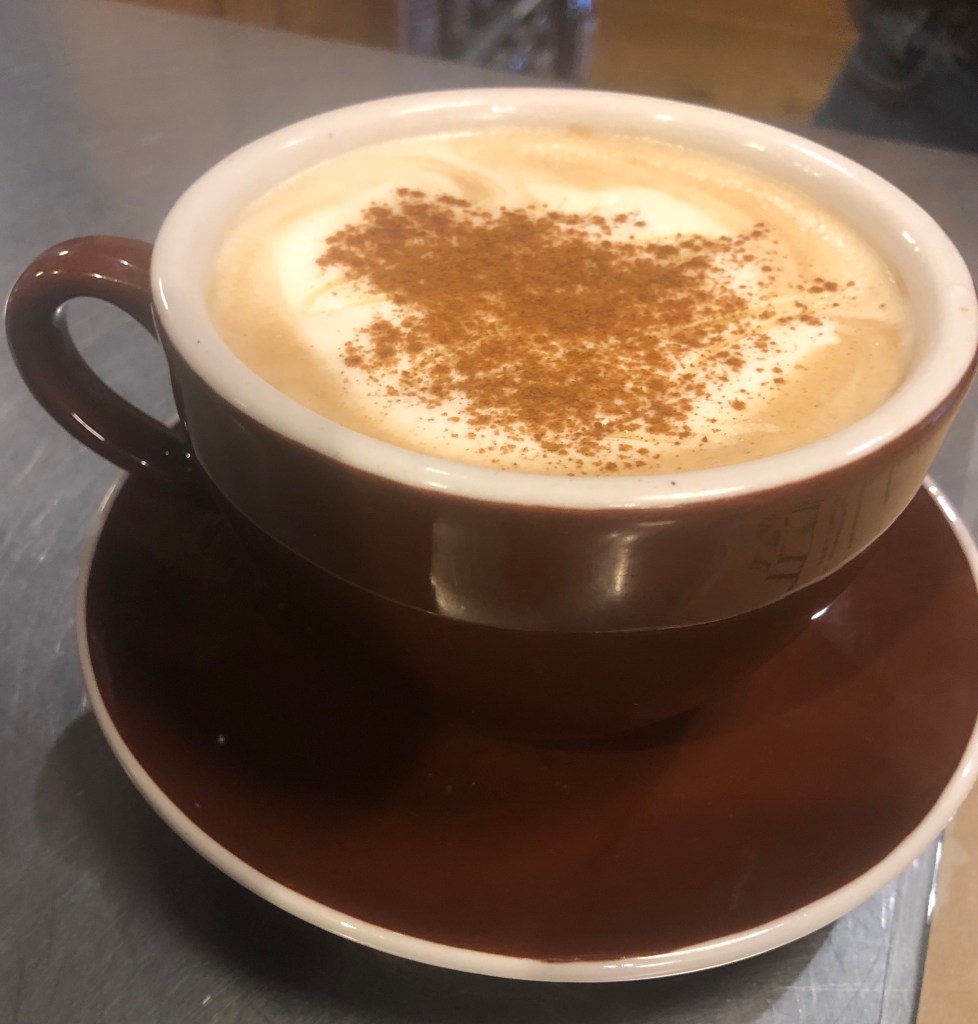
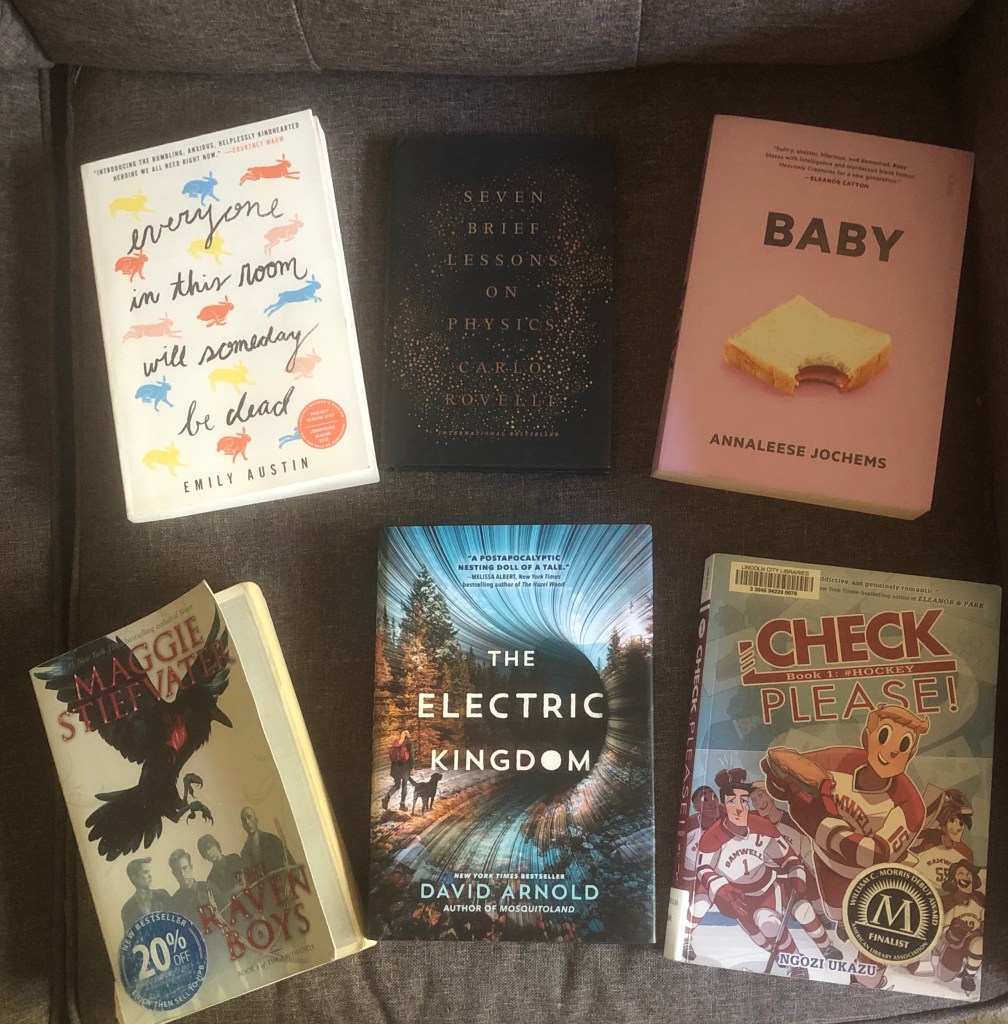

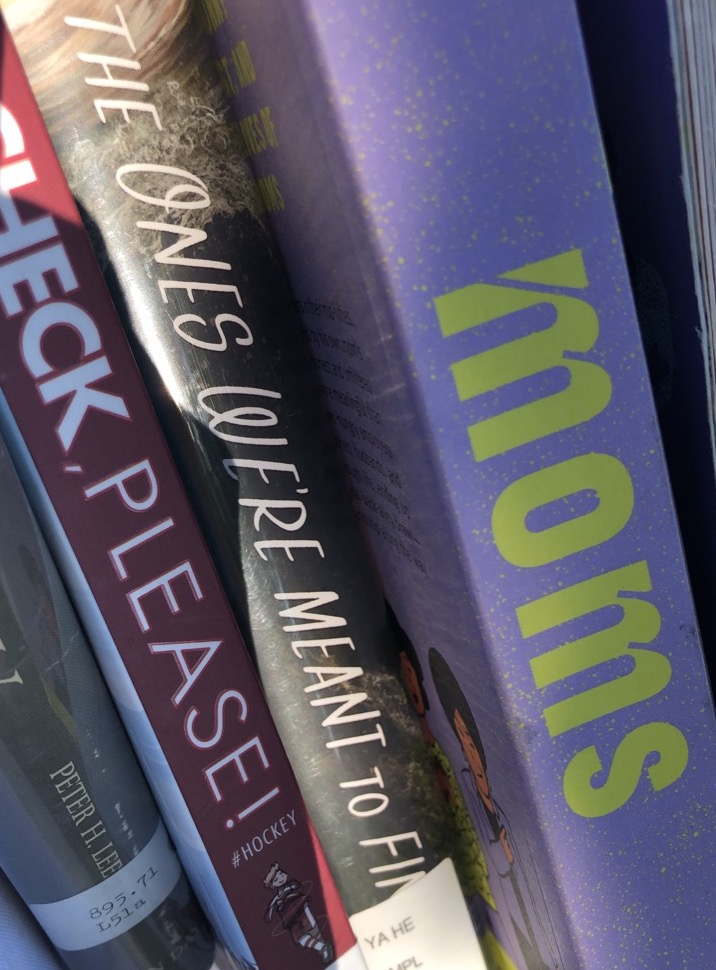
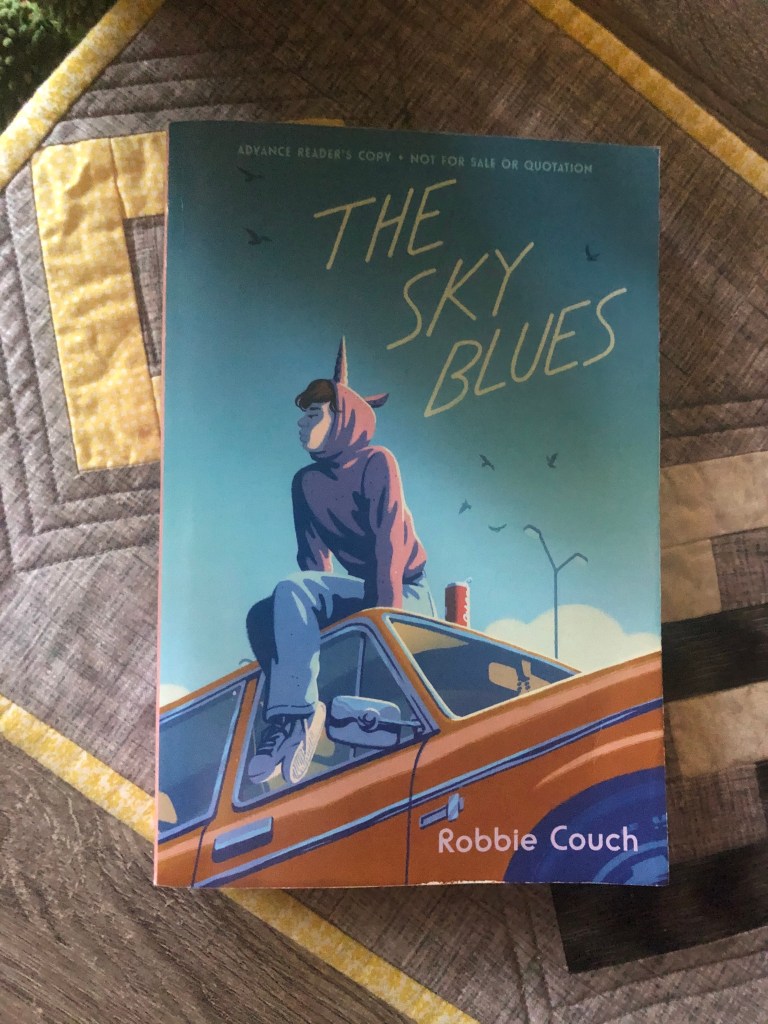
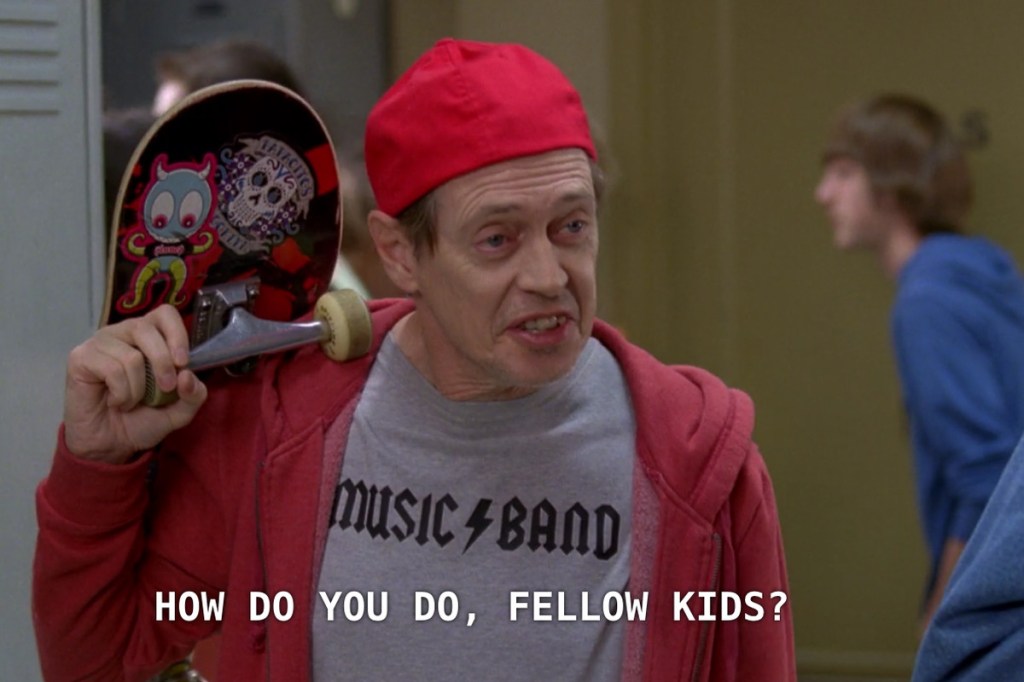
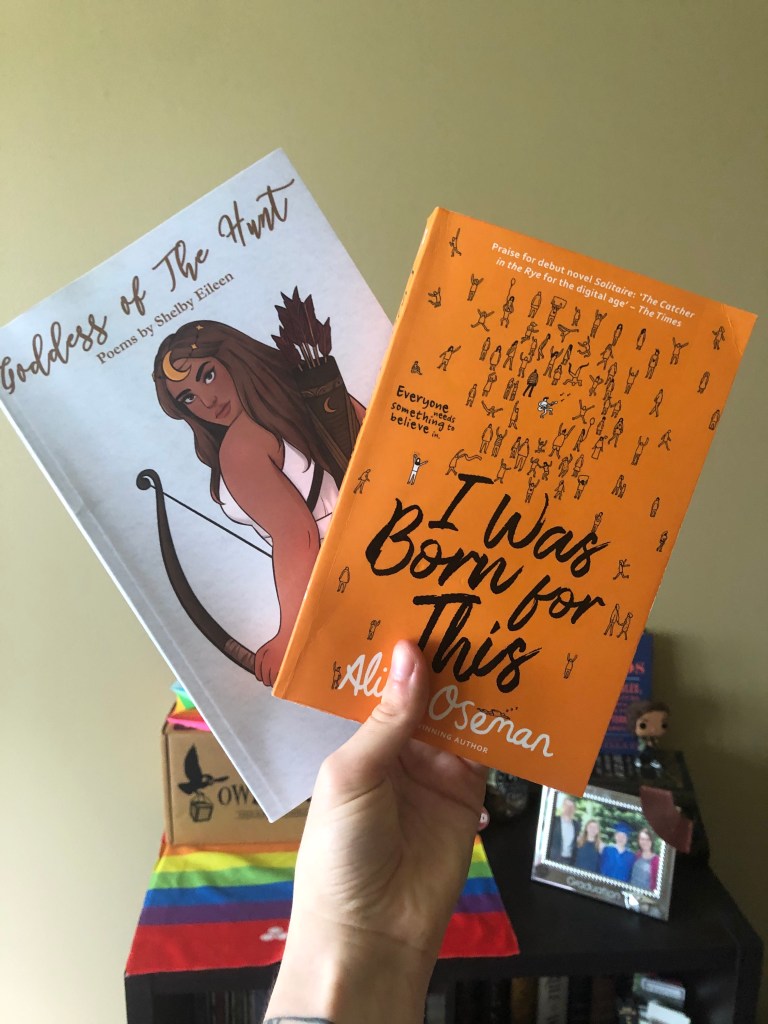



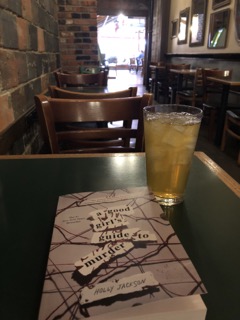

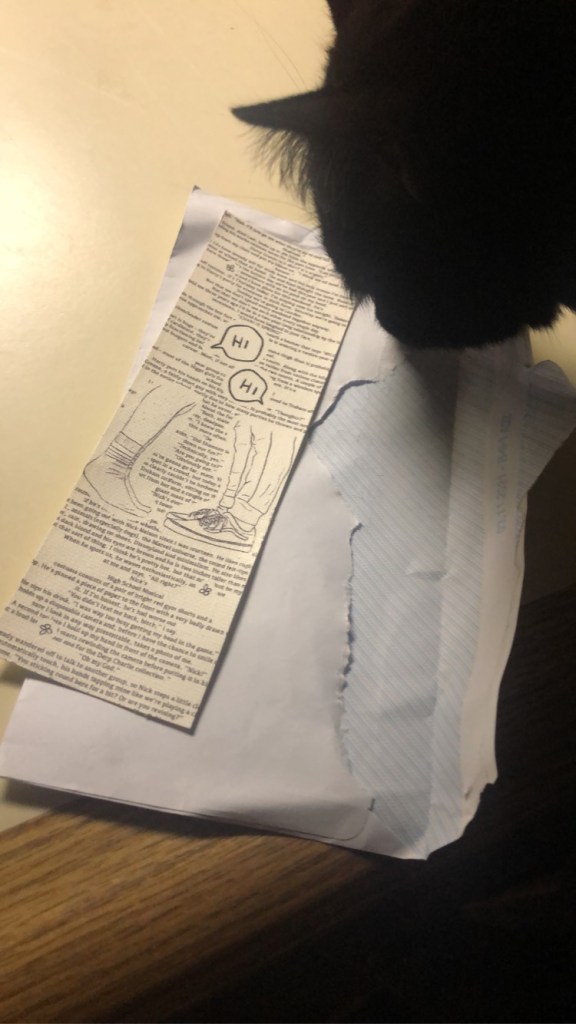

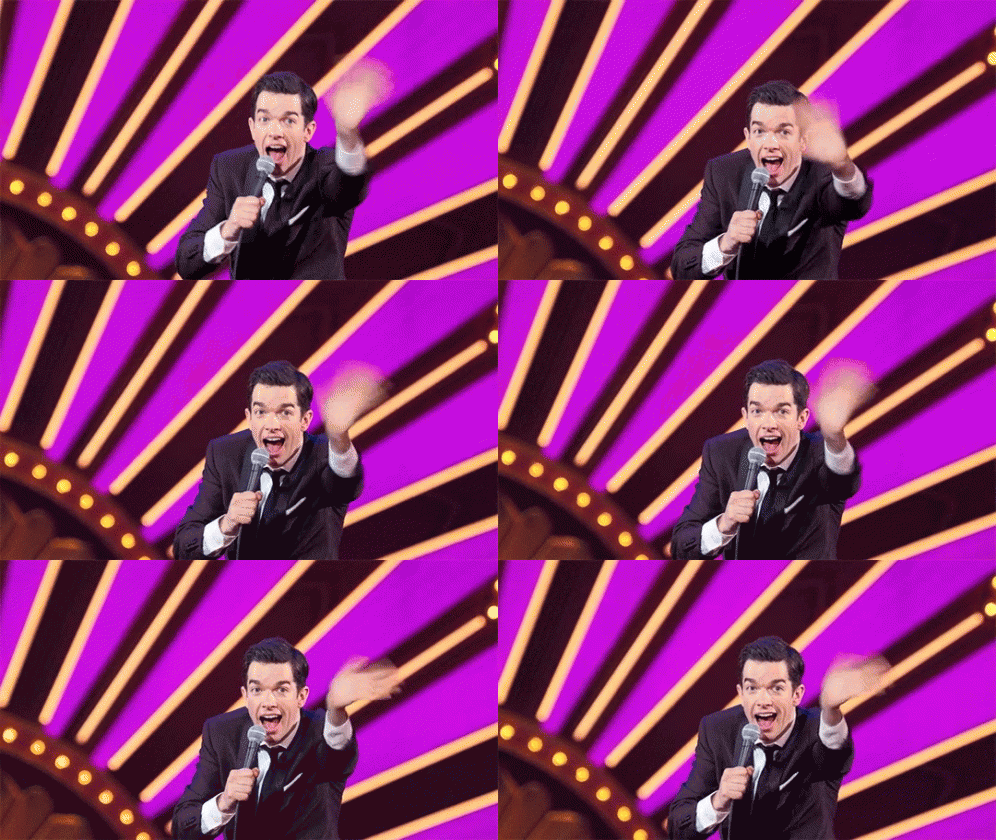



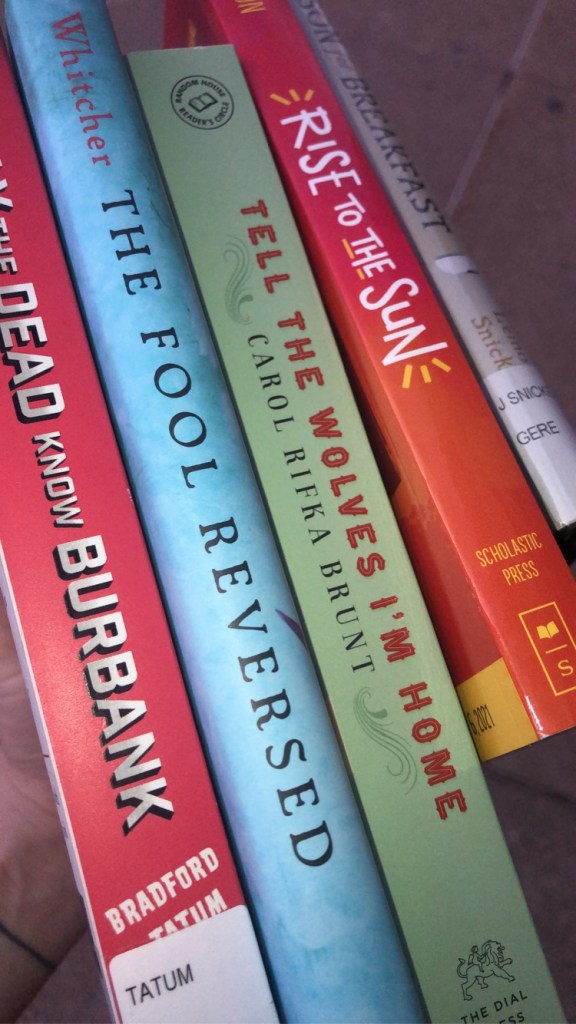
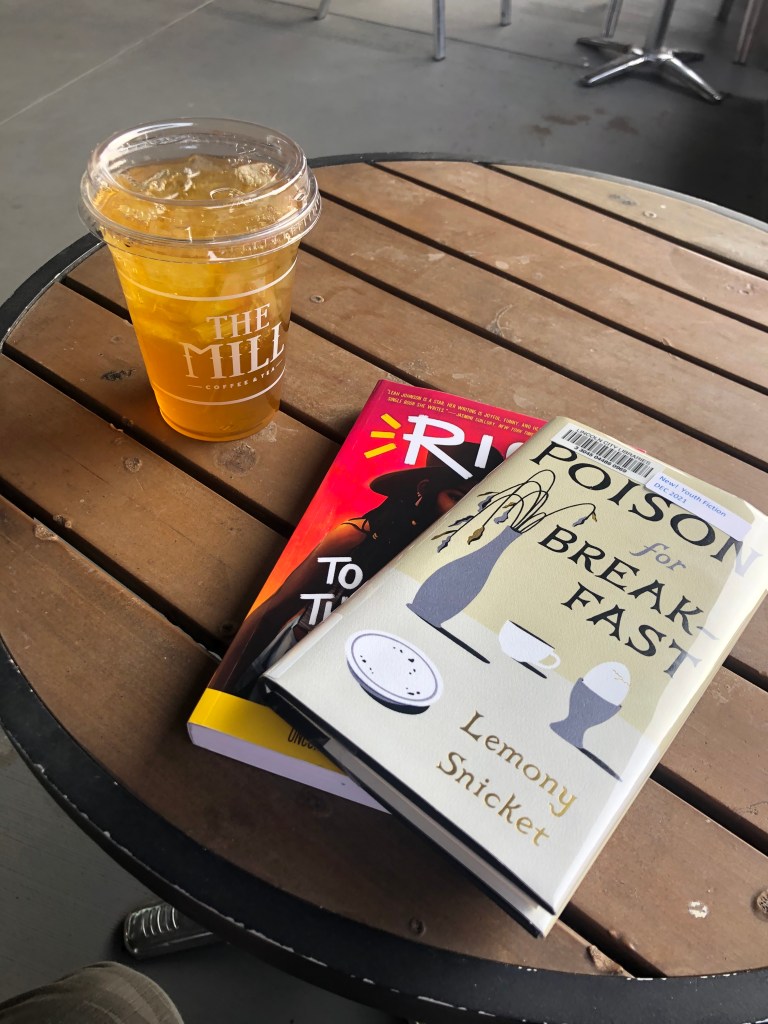
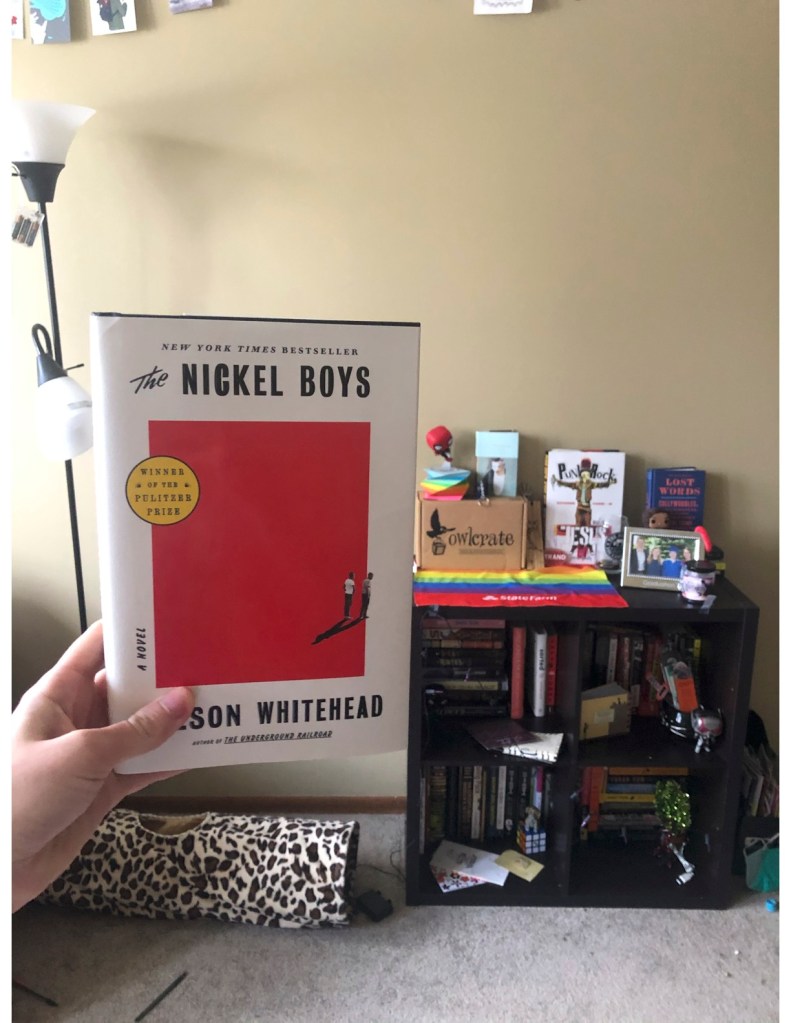
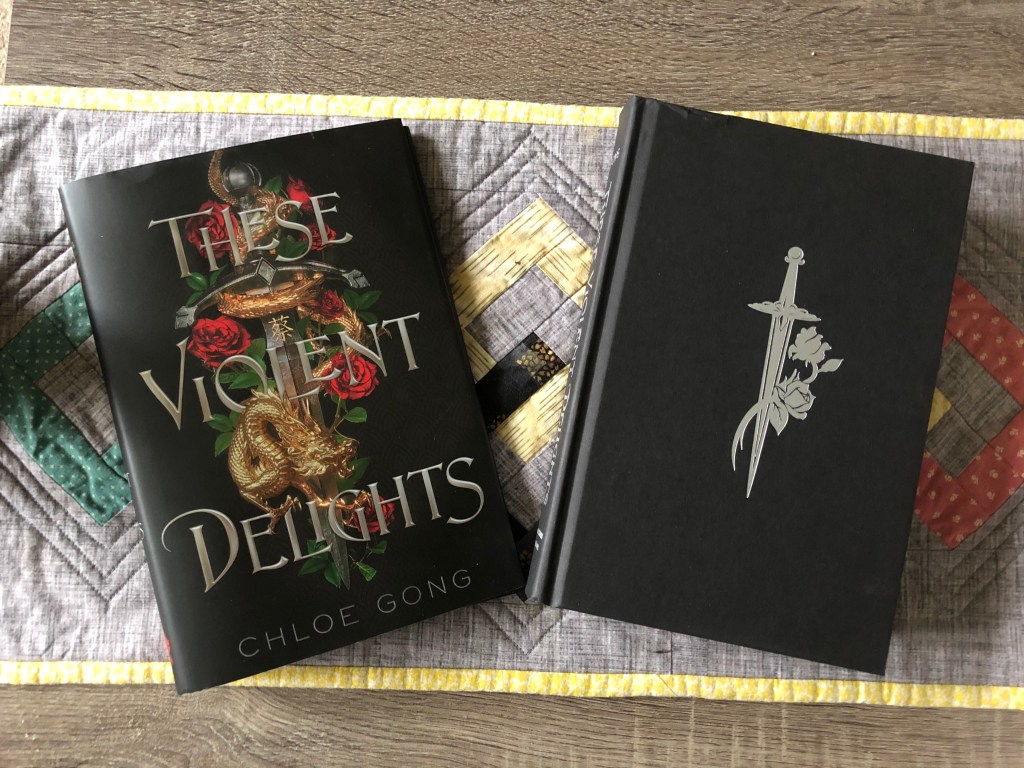

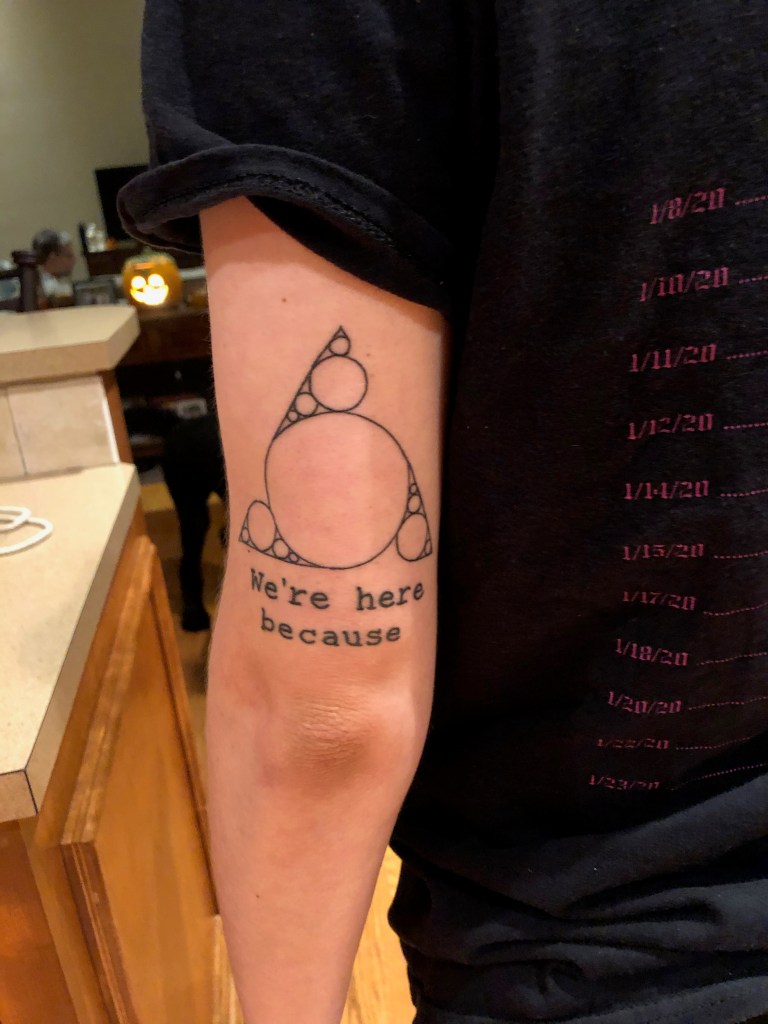
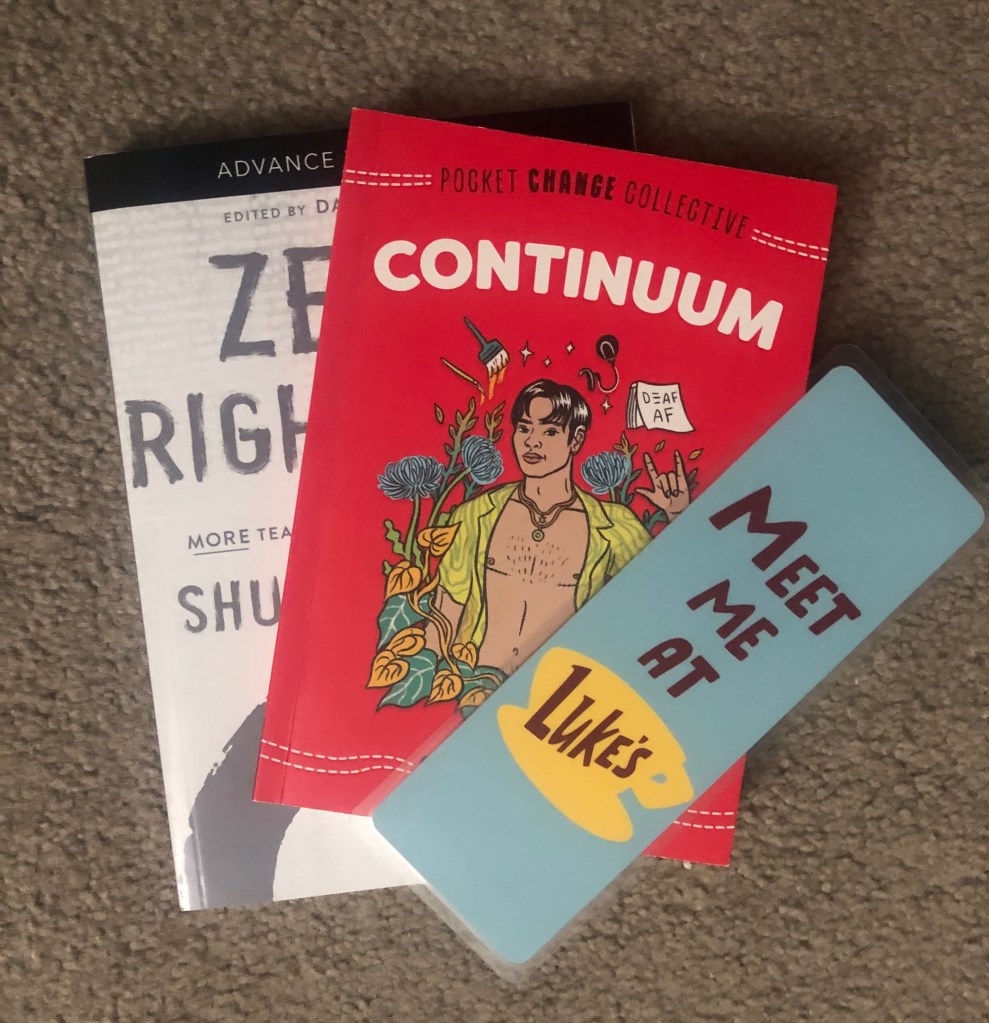
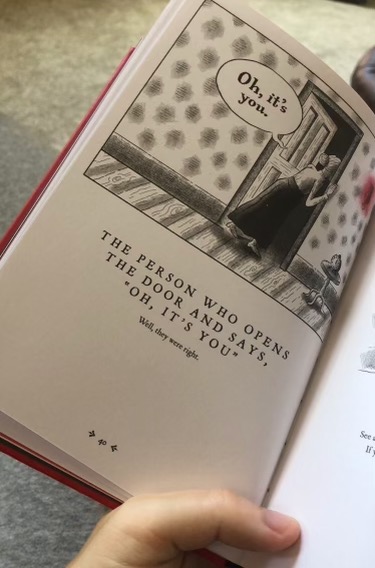
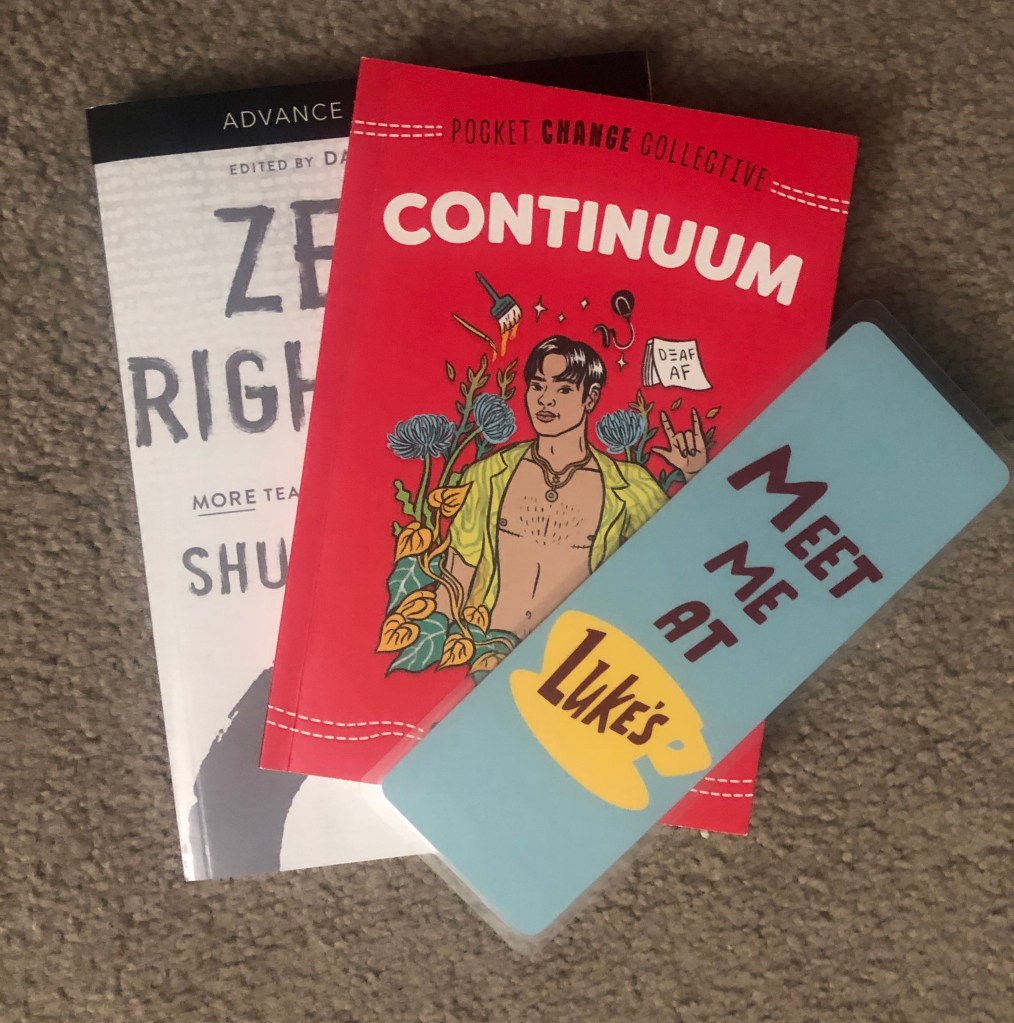
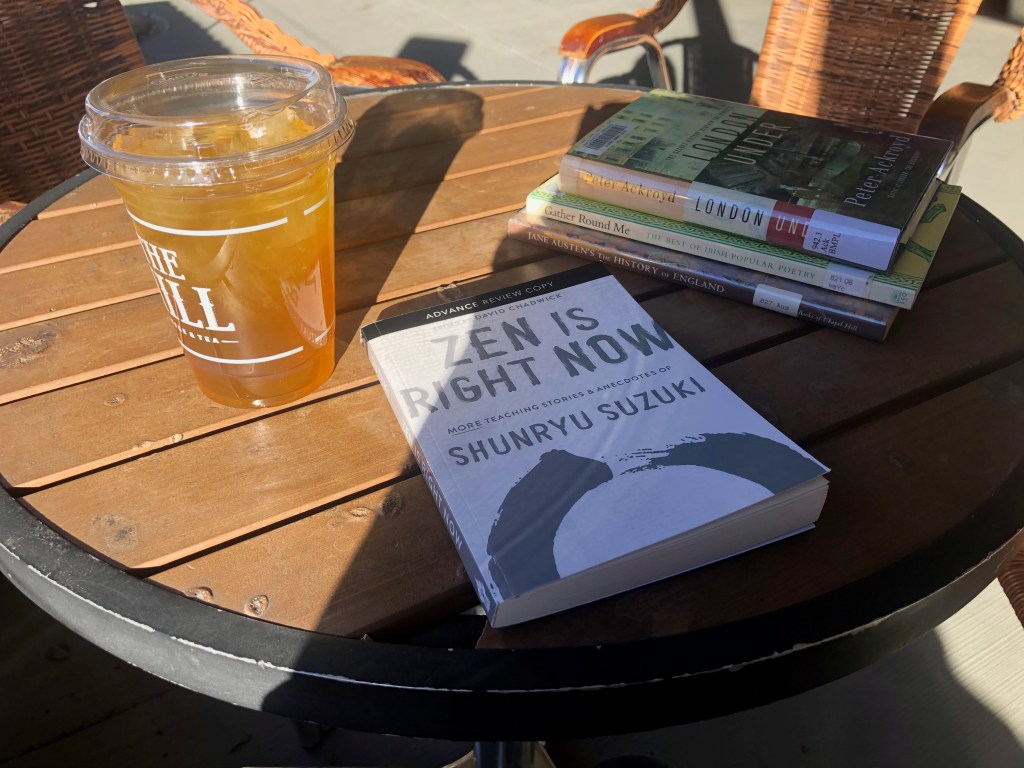

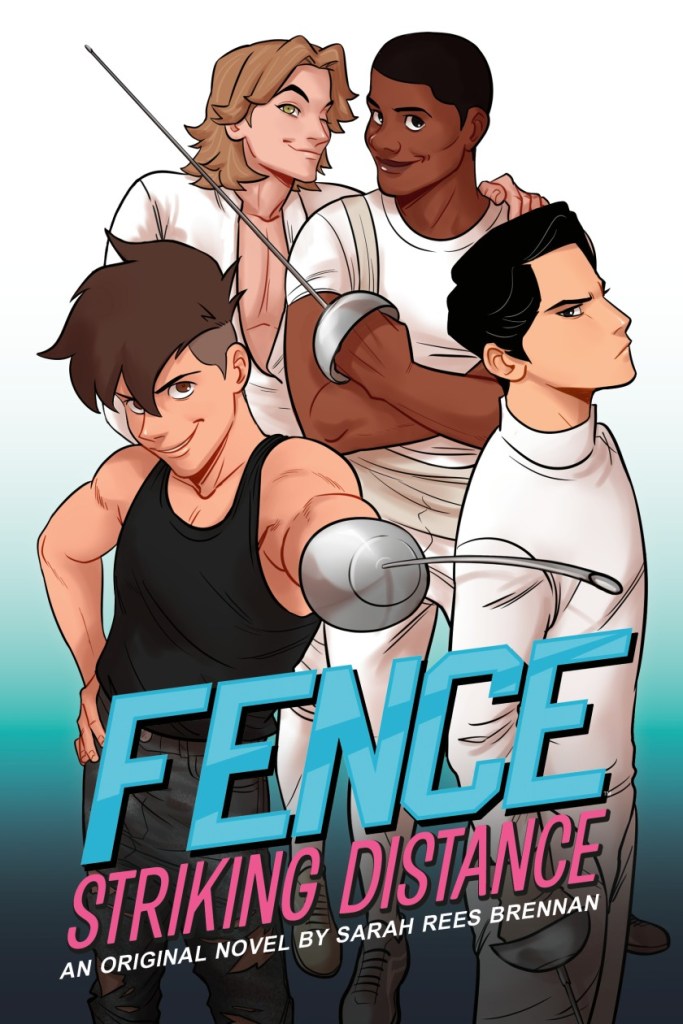

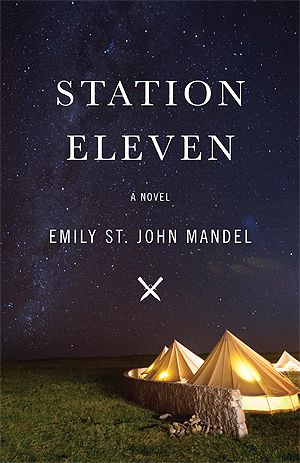
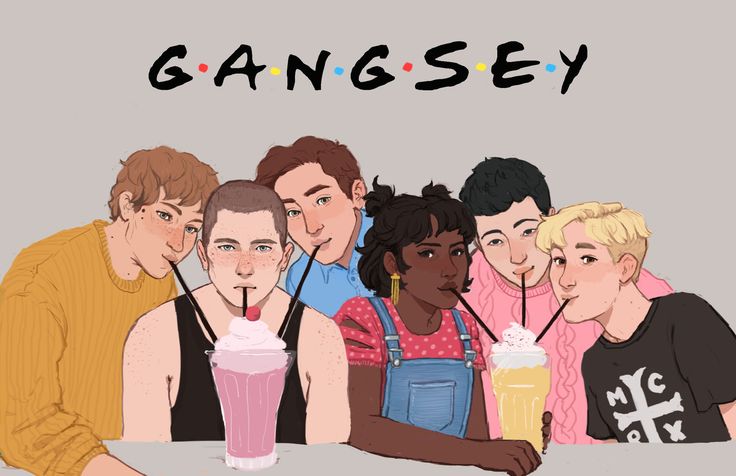
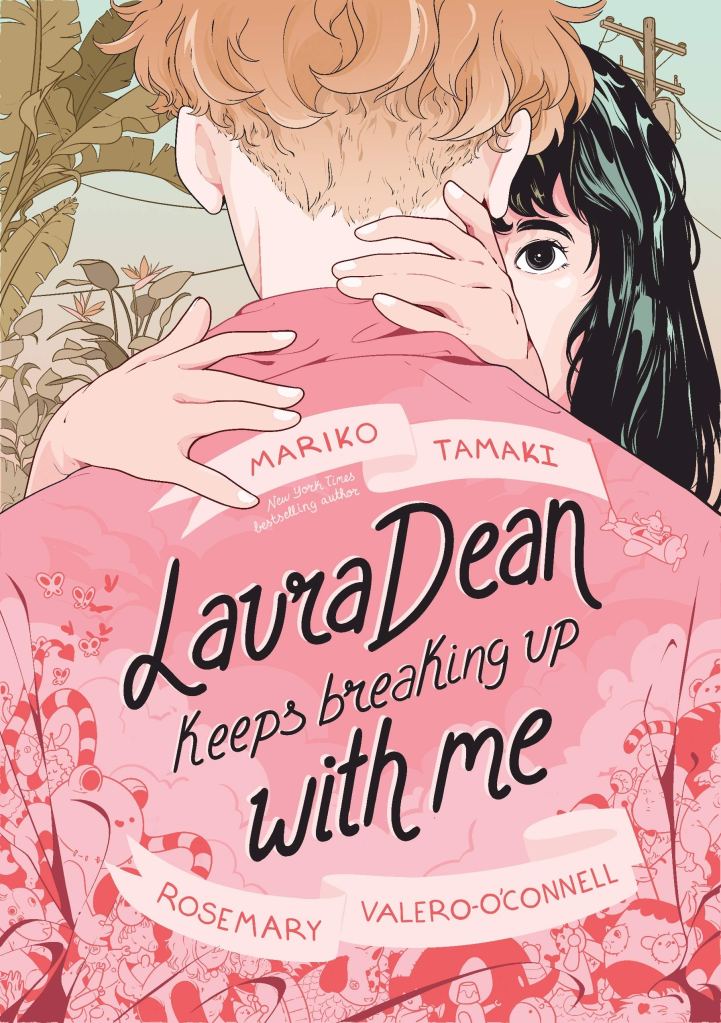
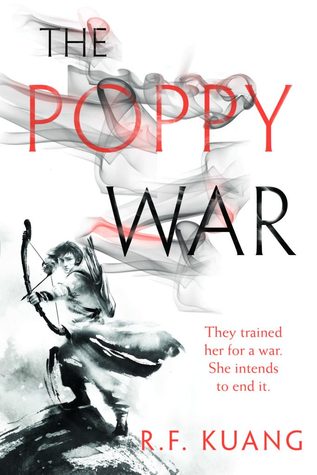
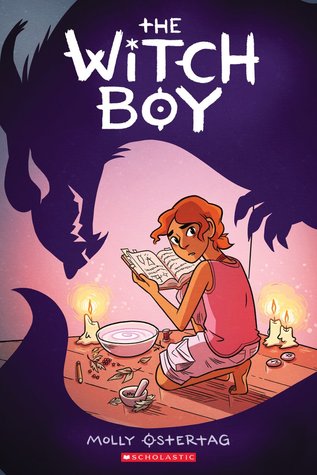
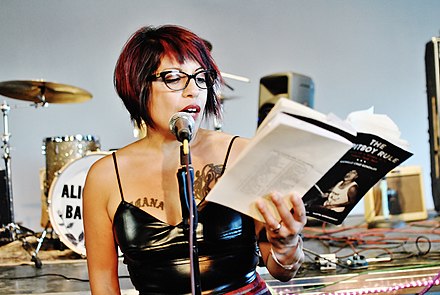
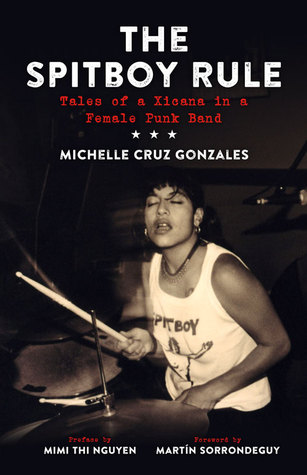


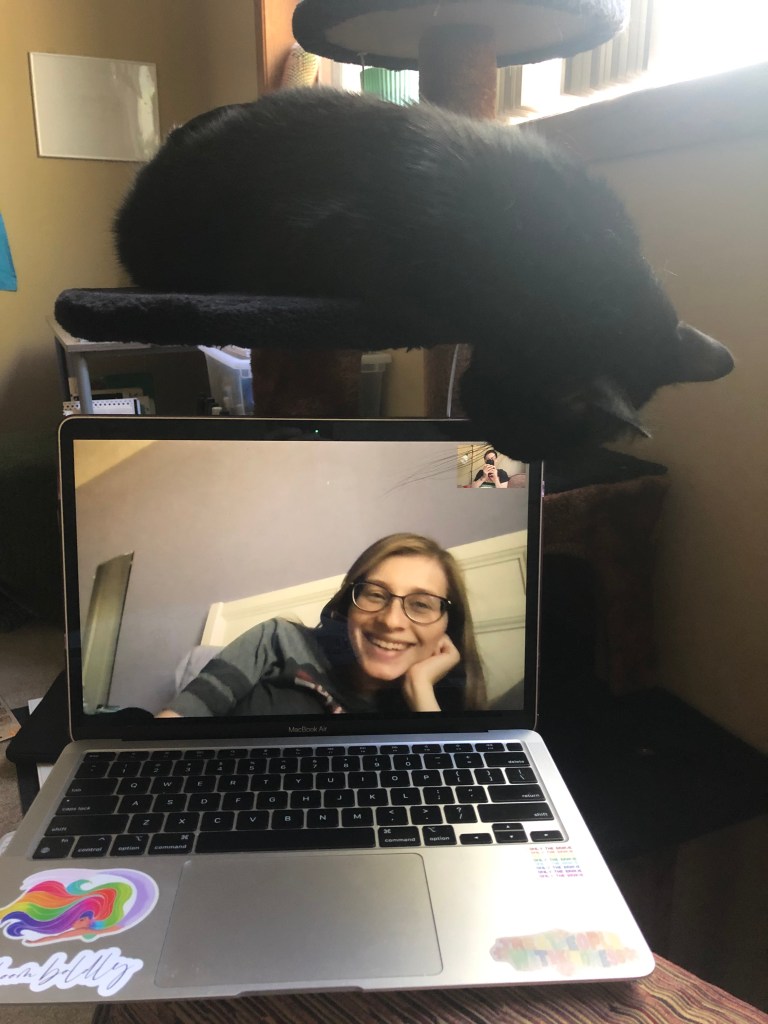
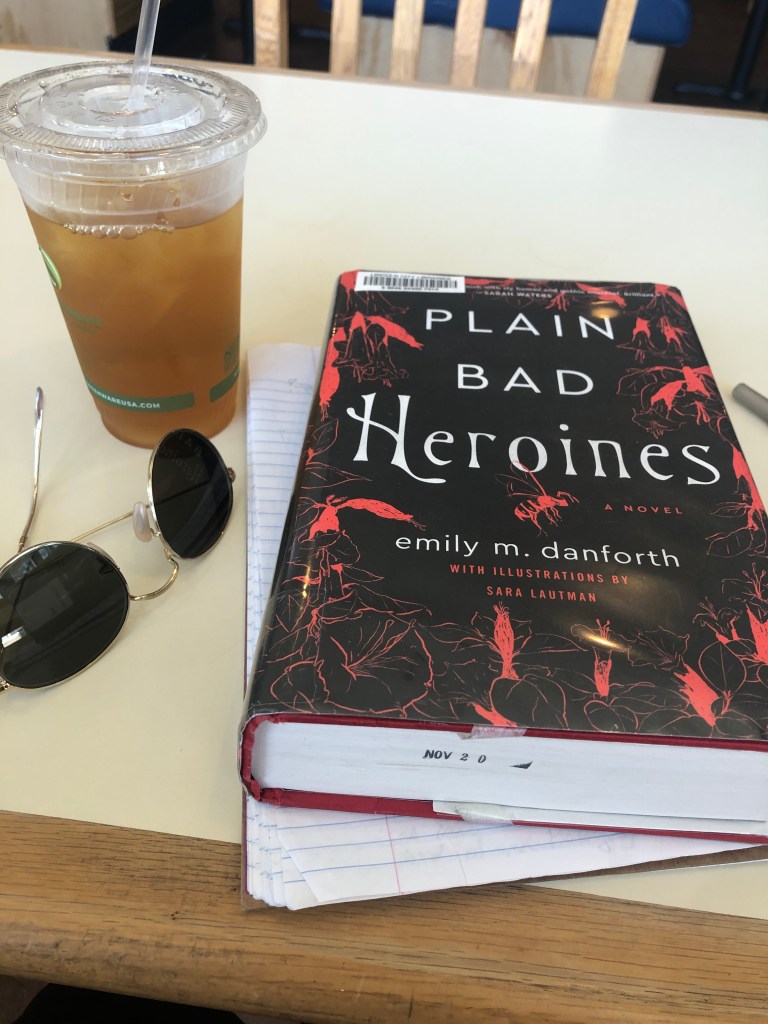


 As Cool As Mint Ice Cream