Beating the Cobra Kai: How I’m Attempting to Come Back from a Mental Breakdown

IMG_7489A massive anxiety attack and a few weeks of crippling depression were all it took for me to start taking my mental health seriously again. It’s an eye-opener when you literally can’t work or make phone calls or even get out of bed. It sucks. And now I’m dealing with the aftermath.

The guilt of being unemployed for the summer has been gnawing at me ever since I couldn’t pick up the damn phone and call the place I work. I am making no money, and I often feel like a bum who is mooching off their parents. I’m 20 years old; in my mind, that means I shouldn’t be sitting at home all day. I need more structure.

So I began applying to a bunch of volunteering opportunities, and a few paid gigs, too. (Panera, why won’t you hire me? I love bread!) That’s how I ended up volunteering at a public library not too far from my house. Sure, it’s only once a week. And, yeah, it’s not too difficult. (So far, I’ve played with a bunch of kids, taken a poll of people’s zip codes, and cut out paper shark teeth for a display.) But at least I’m forced to get out of bed and go somewhere every Thursday morning. I’m forced to interact and have a responsibility to someone other than myself. And if I have to be surrounded by books the whole time, well, it’s a sacrifice I’m willing to make. 😉

o

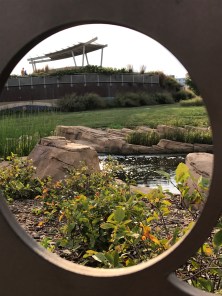
The library I volunteer at… isn’t it wonderful?

In order to keep my mind active, I enrolled in an online sociology class (yay, general education requirements) and have set myself the goal of reading Ulysses by James Joyce. Let me tell you, I am 400 pages in to Ulysses, and it’s still hard to read. But I am plugging along, 25 pages a day. Slow and steady finishes the book. And have you ever taken an online class? Busywork! It’s all busywork. I guess if an entire course is consolidated into four weeks, it makes sense that it would be a lot of work. Even if I end up learning very little about sociology, I will at least have gotten one of my college’s requirements fulfilled for an easier fall semester. (Which means more time to take care of my mental health. See how I’m starting to think ahead?)
IMG_7474

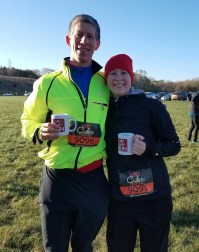
My dad and I after running a super cold race.

The third step in my attempt to manage my mental health better was to go back to exercising more than once a week. Two years ago, I would exercise five days a week. I used to lift weights, run super often, and occasionally try something new. But I fell off the wagon. I fell hard. Working out usually means running for me, and I was losing interest in running. My asthma has been bad and my motivation has been worse. No more excuses.

Running indoors makes me less inclined to actually run, so I’ve been running outdoors. (Even when it’s 98% humidity and I accidentally slept in, so, okay, it was more of a run-walk.) I tried out a super intense kickboxing class, which made me feel so powerful. My knuckles were bleeding afterward and my whole body hurt for three days, but oh boy, does punching a bag that weighs as much as you for an hour feel good. (Cross, jab, hook, uppercut!) I was like the Karate Kid! No can defense! (No can breathe, either.)

445708_1-1

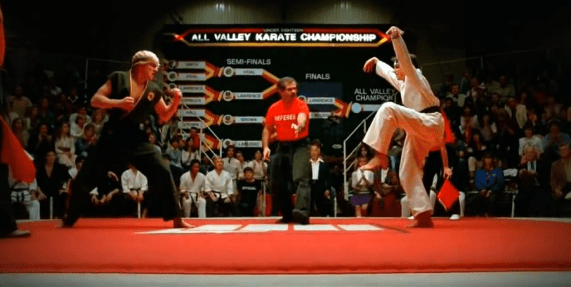
I would like to hire my own personal Mr. Miyagi.

If there’s anything I’ve learned from the Karate Kid movies, it’s that everyday activities can teach you valuable lessons. I mow my parents’ lawn to make my arms stronger and to get moving on days I feel blegh. It’s not quite “wax on, wax off” or “paint the fence,” but I still feel accomplished after I mow the lawn because I’m acting on an important value—responsibility (to myself, my parents, and the house I’m living in for free).

Unfortunately, the kickboxing classes are too expensive to keep up, but I will be continuing them when I am back on campus and get student rates for classes at our rec center. I haven’t given up yet, and at the very least, I can pat myself on the back for trying something new. Trying new things has to be a part of my life, otherwise I get lulled into routines and everything seems to lose its luster. Not to mention my anxiety over the unknown gets worse the longer I avoid new things.

stop-breath-300x300.png

Stop, Breathe, & Think (meditation app)

Other new things I’ve tried this summer: cooking a complicated recipe without my mom’s help, submitting writing to professional journals, dressing in a way that makes me comfortable in my body, meditating (okay, this isn’t new, but I stopped doing this for a long time), attending a Pride festival, and going to a psychiatrist.


Not all of these things have been successful, but I feel like I’ve accomplished something just by trying.

Johnny will not be putting me in a body bag. I’m gonna wax on and off until I beat the Cobra Kai! (Which is a great metaphor for my anxiety. I’m gonna kick its ass!)
karate-kid-crane-kick

Posted in mental health, new era | Tagged , , , , , , , | 1 Comment

A Hufflepuff in a Family of Ravenclaws: How I’m (Slowly) Coming to Terms with my Weirdness

51408msaHeL._SL500_AC_SS350_
A few months ago, I went to Harry Potter World with my dad (as I have already documented). While we were there, I of course had to figure out the Houses of my entire family, and I quickly learned that I am a Hufflepuff in a family of Ravenclaws. It’s like if a Weasley were sorted into any other House besides Gryffindor.

Now, I’ve known I am a Hufflepuff for a while now, and even though being Sorted into Hogwarts Houses may seem (and might be) arbitrary, this revelation was actually an enlightening one.

I often feel “different” and “not normal” because the rest of my family seems to like much different things than I do. I like tattoos (even my ukulele is “tattooed”) and piercings, I like looking masculine, my mental illnesses can be debilitating, and I’m a member of the LGBT+ community. Even when I was little, I was the kid that was always in their own world, never tuned all the way into the world my family was living in. (One of my many nicknames was “flower child.” I’ve always believed I am part hippie despite my constant anxiety.) Although I inherited my love for words and the

IMG_8290.JPG

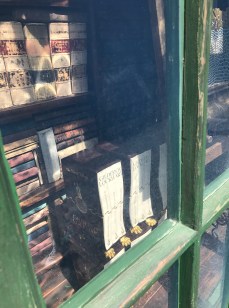
Books in HP World

English language from them, I’ve been obsessed with words on more levels than anyone else in my immediate family. I’m slightly off center.


When I told my family I was Sorted into Hufflepuff, they all said that I was more like a Ravenclaw. They said this like it was reassuring. While my family will always love me and support me, this just seemed evidence that they wanted to see me as more similar to them. They wanted me to fit in more than I felt that I really did.

For a long time, I’ve fluctuated between loving my uniqueness and hating it. I recently told my mom, after we had argued about my new haircut, that I felt like the black sheep of the family. I felt that I was just accepted instead of celebrated. Sometimes even just tolerated. And I’m not going to lie, it was hard coming home for the summer, because my friends don’t mind that I’m a Hufflepuff; they love me for all of my eccentricities.

This summer has already proved to be a struggle. I’ve had a mental breakdown, I can no longer work where I worked last summer, and I can’t quite love myself as much as I need to. So I’m on a mission to fix things (no matter how hard it might be to get out of bed).

IMG_8411

Reggie wearing my House colors

One step I have taken to accepting my Hufflepuff identity is making friends with other Hufflepuffs. Being surrounded by people who are like me in some ways and different in others makes me feel more normal, like I’m supposed to be this way. Though I will someday be able to get rid of my outdated ideas of “normal” and “weird,” for now I like the feeling of belonging somewhere. It’s exhausting to constantly be the weird one; so I’ve made some weird friends.

And now I’m going to try to take back my life while I’m at home, without my friends, because I need to learn to love who I am no matter who surrounds me. If I can’t love who I am in any situation, then I will crumble like a cookie at the first sign of difficulty. Which is my current method of dealing

IMG_8439

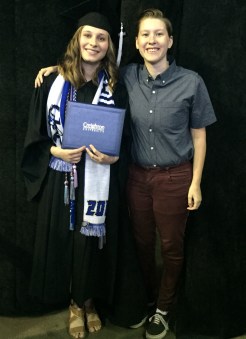
My lovely sister and I on her graduation day. (Ignore my horribly tucked-in shirt.)

with my problems. (Just a tip: It’s not a good method.)

I’m going to try kickboxing. I’m going to start meditating again. I’m going to get outside to move around as often as I can. I’m going to stay in touch with friends and try to get on better terms with my sister, who is my favorite person in the world. I’m going to continue playing instruments, writing, reading, and challenging myself with a summer class at a local college. And most importantly, I’m going to wear my Hufflepuff hat with pride.

Posted in mental health, new era | Tagged , , , , , , , | Leave a comment

The Hydra Monster Strikes Again: How Amateur Drag Night at the Gay Bar Helped with my Low Moods

A few nights ago, I was at the gay bar with my friends. One of my friends was performing in amateur drag night (what an amazing king) and I got to spend time with the people I was going to have to leave all summer. I had driven an hour back to campus just to spend time with them and support my friend. I was with people I wanted to be with at a place I wanted to be at; and I felt good. I could ignore the anxiousness poking incessantly at my consciousness and just have fun. I even danced to a Lady Gaga mashup—who

IMG_8423.JPG

Being outside makes me happy

knew I had it in me?

The next morning, my GI issues struck, I was tired, and I had to drive myself and an acquaintance an hour back home. I began dwelling on my mishaps from the night before. Was my dancing too awkward? Did everyone think I was dumb for accidentally running a red light? Was I going to get bed bugs from sleeping on an uncovered mattress? Why was that drunk lady telling me all about her son (“That’s my son! We’re Mexican-Americans from California!”)?

I went from feeling completely accepted, having fun despite usually hating crowds, to anxious, upset, and sick. I spent a lot of the day after wallowing in my misery by watching true crime documentaries and dog rescue videos. And I spent a lot of that time sick in the bathroom. (I didn’t drink, Mom. It was just my stomach problems rearing their ugly heads like a Hydra monster straight out of a Greek myth. And that Hydra monster was biting my stomach with all of its heads, let me tell ya.)

One symptom of my anxiety that I’ve always had trouble dealing with is that when I have a high, a low immediately follows. I’m not sure if everyone gets this, but I never seem

IMG_8410

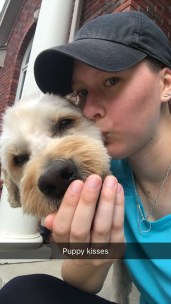
Puppy kisses make me happy

able to bask in the heights of my positive emotions for too long. The negative emotions come crashing down soon enough, and I end up hating the highs because they come with lows.

But after taking a nap and getting rid of that I-shouldn’t-have-stayed-up-until-2-a.m.-but-maybe-I-should-have-because-YOLO-right? feeling, I made a decision. I wasn’t going to let my low mood now ruin what had been an amazing night. Sure, I forgot to bring my leftovers home. And, yeah, I have to spend all summer away from my friends. But I had a fun night, and I can’t forget that.

Instead of continuing to be sad that it was over, I thought about other activities that make me a happier (or at least more stable) person. In doing so, I realized that I often live life for those highs in the future—a concert, a trip, a dinner date with my sister—and I need to start doing things now that give me more satisfaction. I need to read and write

IMG_8409

My new hair do (sorry for my poor selfie skillz)

creatively more; words have always been beautiful to me, and I should immerse myself in what I find beautiful. I need to play my instruments and spend more time outside. I need to dress how I want and do my hair how I like it.

Basically, what I’m trying to say is that I’ve been trying to add little things into my life that make me a better person and that help me be more content in the present instead of always living for that thrill in the future. Even if the highs do come with lows, the highs are wonderful, and if they come with a day or two of negative head space, it’s worth it.

Never give up the moments that make you happy just because you may be sad later.


Posted in LGBT+, mental health, new era | Tagged , , , , , , | Leave a comment

“I Just Wanted To Tell You You Look Pretty Today”: How I Flirted for the First Time

Yesterday, I told a girl she was pretty.

This may not seem like a big deal, but it was for me. Ever since I came out as bisexual, I’ve worried about dating. I never dated in high school, because I was a bi-pride-flag-stdlate bloomer when it came to a “sexual awakening.” People in eighth grade were obsessed with boys, and I just didn’t get it at all. Then I went to an all-girls high school, so boyfriends were distant. I often forgot that dating was a thing that people did, that there was a real reason we had the sex talk (albeit the un-informational Catholic version) in class.


But last year, my freshman year of college, I came out as bisexual because I finally felt ready for a romantic relationship. Yet here I am, one year later, still single. My main problem is that I haven’t tried too hard. I’m a romantic, but only in my head. I’m pretty oblivious when other people are flirting with me, and I am usually too anxious to initiate the flirting. Yesterday, however, I ignored the anxiety and tried my hat at it.

I was emotionally drained from shopping and dinner with some friends, and all I wanted was to spend the night finishing up some work I’d been avoiding. Or at least reading for fun. Then my friend texted me and asked if I would go to a

IMG_6110

Me on my first day of college classes

Spring Fling Dance with her. Because one of my goals for this year has been to be more social, I said yes. I showered to get rid of the sweat from the strangely warm weather, threw on a semi-nice outfit, and entered the fray of anawkwardly under-attended Honors Program dance.


At first, my friend and I stood by the food, eating popcorn (me) and M&Ms (her). I even drank some Sprite, and I rarely ever drink carbonated beverages. Then a song we all knew came on—who can say no to the “Cupid Shuffle” when in a group?—and more people flooded the middle of the room, including my friend and me. After a few more songs during which I began to feel a little bored, the girl walked in. I swear it was like a movie. Everyone stopped and started clapping when she entered with her friend. I knew they were clapping for her friend, but I was clapping for her. She was beautiful.

Turning to my friend, I hid my face (which I’m sure was extremely flushed) and gushed about how wonderful the girl looked. I was trying very hard not to be creepy, but it seemed that my eyes were pulled toward her the rest of the night. She smiled radiantly, she moved her hips fluidly when she danced, and she laughed with a carefree attitude. Every time we made eye contact across the circle of dancers, we both grinned. I kept thinking, “Is she flirting back? Or is she just a friendly girl?”

IMG_7371

A picture of spring-y weather, cuz I have no pics from yesterday…

And then after “the wobble,” my friend encouraged me to go tell the girl she was cute. My friend said to me, “It doesn’t matter if you never see her again. Go tell her she’s cute.” The first time she shoved me over, I walked right past the girl and out the door, pretending to go to the bathroom. I danced for one more song, unable to walk out during Taylor Swift’s “Shake It Off.”


T Swizzle gave me strength, and the dance was going to end soon. This was my last chance.

I took a deep breath and walked over to her, even though she was in her circle of friends. She was smiling and half-dancing to a weird song nobody knew. I touched her arm and faced the full force of her beauty. I leaned forward and said, “I’m about to leave, but I just wanted to tell you you look very pretty today.” My chest felt tight as I waited for a response.

“You’re pretty cute, too.”

And then, like the awkward idiot I can be, I said thanks and walked away.

I am still kicking myself for not asking for her number, but I’m also proud. I overcame a huge hurdle by telling her she was pretty. Dating seems slightly less daunting now that I know I really can show someone I’m interested, and they can also be interested in me. The whole idea of flirting with a woman has always

IMG_2274

Brendon Urie, my bisexual icon and another beautiful human, for your viewing pleasure

made me nervous. What if they get offended? What if they just think I’m being nice? What if I get turned down? What if I get judged for my sexuality?

Here’s the thing I realized yesterday: none of that matters. I didn’t expect to get arelationship out of this, and I didn’t expect to get as good of a response as I got. All I wanted was to tell her she was beautiful, because it would be a tragedy if she didn’t know. Taking away all of that pressure made it so much easier to just get over there and say it.

Hopefully, my confidence will continue to increase. Gaining more comfort around others won’t be easy, especially when I’m worried about judgment, but it will be worth it. And maybe someday soon, I’ll be walking down the street holding someone’s hand, or making out with them on my futon (sorry, Mom!). Maybe I’ll be loved in a way that I’ve never been loved before.

Update: I saw the pretty girl in the dining hall today and promptly walked the other direction. So maybe I’m not ready for a relationship yet, but that’s still okay. I’ll get there.

Posted in LGBT+, new era, stories | Tagged , , , , | Leave a comment

Accio Butterbeer!: How a Trip to Florida Helped Me (Partially) Overcome my Stomach-related Anxieties

I woke up at 3:15 a.m., rolled out of bed, and somehow stayed awake long enough to make it onto an airplane with my dad. (I say “somehow,” but what I really mean is that I chattered incessantly to my dad and stayed standing as

IMG_8360

Dad and I on the plane, super sleepy!

long as possible before getting on the plane.) And when I woke up again after a poor nap because of the plane noises and the annoying manspreader next to me, I was in Orlando, Florida!

That exclamation point is important. On any other vacation, I would have complained incessantly about waking up early, the dude taking up more space than necessary, and having travel mess up my stomach. But I didn’t. I was genuinely excited.

Day 1: Crocodiles, Sushi, and Patience

On our first day in Orlando, my dad and I scheduled an airboat tour of the swamp/marsh. What with miscommunications, boat malfunctions, and the Baginski early-bird tendency, we had a two-hour wait before we could get on the boat. I’ll admit, I was getting impatient, but it was the kind of impatient that I could joke around about. I was determined not to let anything ruin this vacation, even two hours under the sweltering sun.

We saw three full-sized crocodiles along with a cute, little baby croc. (One of the crocs was named Jimmy Buffet!) Unfortunately, crocodiles don’t photograph very well, but oh boy were the landscape shots of the marsh beautiful! I usually like to enjoy the sounds of nature when I’m on water, but

IMG_7979

Lily pads from the airboat tour.

the airboat was so frickin loud that we had to wear noise-cancelling headphones most of the time. We looked like a couple of damn fools, but we rocked that crazy-hair, gigundo-headphones look.

Afterward, we fought through the traffic for the Arnold Palmer golf tournament (someone please explain the appeal of watching golf to me) to a sushi place where we over-ate and were defeated by the rolls. For the first time ever, my dad left sushi on his plate. And for the first time ever, I didn’t let my digestive issues stop me from having a good time. That sushi was delicious, even if it did give me a stomach ache for the rest of the night. The pain didn’t even stop me from sleeping well. (That’s what a 3 a.m. wake-up call does to you!)

Day 2: Rockets, Free Beer, and a Worrisome Black Bean Burger

Many of the moments I find myself overcoming negativity are moments in which my stomach does not feel top notch. So when, after hours at the Kennedy Space Center, I was faced with a slightly smushed black bean burger, I was afraid my positive mood would finally break. We’d gone on a tour of the control rooms, my dad had “launched” a rocket, and we’d walked around a rocket garden that gave us both the cliché feeling of being so small in this world. Even though we had to sprint to our bus tour (my asthma did not like

IMG_8079

Old NASA control room.

me for that), I’d felt pretty interested and engaged all day. Again, not a common feeling for someone who is often in their own head.

And now I stared down a black bean burger that could ruin it all, because we wanted another hour to absorb NASA’s wonders. Oh, boy.

Well, I gotta say, the burger wasn’t the best. But it didn’t do anything bad to my stomach. I was even able to spend a relaxing afternoon and evening at the beach with my dad, enjoying some gummy bears.

Like many people in the world, swimsuits make me feel a little insecure. I don’t have a flat stomach, and because I have boobs, I have to buy more feminine bathing suits that don’t necessarily fit how I would like to present myself. And with a sub-par black bean burger probably causing some bloating, I was especially worried about how self-conscious I would feel. But I felt fine. We waded into the water, I got my hat wet, and we walked up and down the beach. Some kid kicked some sand onto me, and some idiot was feeding the pigeons popcorn, but I felt so relaxed. Neither my dad nor I got our books out, which is amazing for two people who always feel like they need to be doing something.

To top it all off, we found this on-the-beach restaurant that was super crowded, and my dad got free beer from the band for being nice to them. A lesson for everyone: move your table out of the way when musicians are cleaning up at restaurants, because you may

IMG_8113

Dad and I on the beach in our matching shirts.

just get a beer out of it. Another lesson: if you have dietary restrictions and can find very little on the menu that you can eat, get a bunch of appetizers and eat off your dad’s plate! I usually let limited menus annoy me or ruin my dining experience (where’s the meat-free, dairy-free stuff, people?), and crowds are overwhelming for me, but I survived. And I survived with a smile on my face. I thought it might be the sun and nice weather that was boosting my mood, because Nebraska had been gloomy and cold before we left. But even the chance of rain the next day couldn’t bring me down. Because the next day, I became a wizard.

Day 3: Wizards, Magic Spells, and Dairy-ful Butterbeer

I’m not gonna lie. This was the day I had been waiting for the most. I was about to enter Hogsmeade and Diagon Alley; I was about to ride the Hogwarts Express; I was about to step into a book in a much more immersive way than any movie. And it was everything

IMG_8341.jpg

The Hogwarts Express!

I’d hoped for.

My dad must’ve thought I was crazy. I was jumping up and down, dragged him into every single store (yes, Weasleys’ Wizard Wheezes is just as amazing as I imagined it), and made him go on every ride. We even waited in line for Ollivander to help me get paired with a wand, which I proceeded to spend an exorbitant amount of money on (it was interactive!). But this isn’t about my initiation into the wizarding world. This is about my stomach.

The one thing I wanted to try while at Harry Potter World was butterbeer. I’d been talking about it for months, and even though I knew there was a possibility there might be dairy in it, I was determined to try it anyway. (I have a mild dairy allergy, so I wouldn’t need emergency treatment if I had a little dairy.) I held out hope that Universal Studios would have sympathy for those of us with food allergies. So when we went up to the butterbeer cart and ordered two butterbeers, imagine my disappointment when the witch plopped some cream into the cup. I was really bummed as my dad voided my purchase and took his own butterbeer to go.

I refused to be defeated by my stomach. I told my dad I wanted to take a sip of his butterbeer, that I could deal with the gas and stomach cramps I would have later. It wouldn’t kill me, it wouldn’t ruin my day—I had to try it. So I took a sip.

IMG_8131

Butterbeer cart

It was heavenly. Butterscotch, cream, fizz, and a little mustache left over after I emerged. I wanted more, but I limited myself to one sip. I sort of creepily stared down my dad as he finished his butterbeer, just savoring the taste.

If you still haven’t realized how big of a deal this was to me, I’ll explain. I have had horrible anxiety since high school that has often been tied to the GI issues that worsened around the same time. When my stomach felt bad, my mind felt bad. And vice versa. So I avoid anything that will mess up my stomach at all costs, because I don’t want to trigger my anxiety.

But I tried butterbeer even though it had dairy in it. And even when my stomach hurt later, I ignored it and made myself remember the wonderful taste of butterbeer on my tongue. It was the first time in a long time that I really felt like my mind had overcome physical discomfort rather than succumbing.

Now, I feel a little less worried when I think about accidentally eating dairy. In the past, if that happened, I would have a panic attack, or at least cry. And I’m not super emotional. I would feel out of control because such a small thing would ruin my entire mood. And now I’ve taken some of that control back. One might even say that butterbeer worked some magic on me.

IMG_8373

A terribly taken selfie with the Hogwarts Express conductor.


Posted in stories | Tagged , , , , , , , | 2 Comments

A New Era

This blog has been a bit of a disaster for me, and I’d like to fix that. It’s on my bucket list to start and keep up a blog (because I love writing, but I need deadlines), and I’ve never crossed it off. Somewhere deep down inside me, I know that this blog hasn’t been something I can be proud of. I wrote one post explaining the title of this blog, and then I ignored it until I needed a blog for my Writing Center Theory class. And then writing center theory took over. Now, I’m taking the blog back.

I want this to be a place where I can write book reviews, test out scenes for stories I’m writing, rant about LGBTQ+ stuff, and just give thoughts on my life as it is. Basically, it’s still going to be a hodge podge, but hopefully a hodge podge I can be proud of. I’m only going to promise posts once a month (because I’m a busy bee) but they may come more frequently than that.

This is the start of a new era of Ryn. This Ryn wants to put their writing out into the world, even if only a few people read it. And soon, this blog will be as cool as mint ice cream.

Ciao for now!

Posted in new era | Tagged , | Leave a comment

Learn the Rules to Break the Rules: Race, Immigration, and Linguistics

CiDw0NbUgAIJ3FqTo start this off, I am a white, cis-female, bisexual, middle class undergraduate student. In case you didn’t notice, there’s a lot of privilege locked in those identities. The reason I feel the need to point this out is that I don’t often think about my inherent privileges, but I want to become more aware of how these privileges (and lack thereof) play out in my everyday experiences.

In Facing the Center, Harry C. Denny approaches racism from many angles. He tries to get at the complex dynamics that come from facing the question, “Which faces are permitted and tolerated and which ones face scrutiny, challenge or oppression?” (37). While Denny does go into many of these dynamics, and how we need to acknowledge and discuss them, the thing that really blew my mind was Denny’s discussion of immigration and American identity.

Denny discusses the “ethnicity” model, and how the ethnicity-assimilation model has its issues (especially because it offers a very falsely created binary). Then he comments that the “ethnicity model … has its roots in the study of voluntary or forced (slavery) immigration in European and American contexts” (39). Assimilation has led to identities merging together into one basic American identity. bowlandpot-f

When European or Asian immigrants have come into the United States, they have had the opportunity to be seen as fully American while also forming their own ethnic and cultural communities. The dominant majority have accepted these mainly European immigrants, allowed them to live peacefully without suspicion.

Buuuuut… By the 1950s, African immigrants had been living in the United States much longer than these European immigrants, and they’re still looked on with suspicion. “…African Americans, whose arrival predated most immigrants, still struggled to eke out any minimal sense of integration” (40). African Americans are still Othered, still discriminated against, still appropriated/imitated.

As someone coming from a place of privilege, I have never even thought about this fact. I just took it as a fact that because of slavery, racial tensions will never go away. I never thought about the implications of Eurocentric thinking in the sense of immigration in the 1950s.

Even more interesting than this is the idea that students should have a right to their own language (42). Most people develop “multiple literacies” in their life, one at home and one at school. Denny argues that classrooms (and writing centers) should create an awareness that “home and school aren’t in opposition, but are mutually supporting reservoirs” (43).

sharpen-snoopy-writingI have noticed, especially in my writing center work and in my English classrooms, that people are often worried about sounding a different way when they write rather than the way they really speak. Many people I know, including myself, write differently than they speak. I am lucky enough to be someone who speaks and writes extremely similarly because of my background, but others who have only known one vernacular their entire life, essentially have to learn an entirely new language at the college-level. I cannot imagine how frustrating this must be.

“Language use and rhetorical strategies clearly have cultural reference rooted in communities bounded by shared identity” (45), and therefore telling someone they cannot speak a certain way invalidates their identity.

I have always told myself that I want to try to be the least judgmental person I can be. Hkaud7f1However, there’s a joke in my family that I am a “Grammar Nazi” (or “Grammar Queen,” which I prefer because Nazis were/are horrible) because I used to correct everyone’s grammar OUT LOUD. (I know… I was that person. I’ve changed!) In my desire to be nonjudgmental, I forgot that correcting someone’s way of speaking is a way of invalidating them. This is something I NEVER wanted to do, and I’m glad my eyes have been opened.


I have since changed my tune. While I do think that “standard” academic English does have its place (probably just because of the institutions rampant in our society), I now understand the importance of different dialects and languages. The written word has always been beautiful to me, but only when I thought it was up to my own standards. Now, I’ve learned to look at it with an appreciation for everyone’s differences. I especially appreciate when “nonstandard” dialects are used to make a point. (Learn the rules to break them the right way is something I’ve learned from my dad, who was a bit of a rule-breaker. To clarify, I’m a goody two-shoes.)

11903-Pablo-Picasso-Quote-Learn-the-rules-like-a-pro-so-you-can-break

Denny speaks of “linguistic rights” (53) and “authentic language use” (48), which are both important ideas that I’ve never considered before. I now believe that every use of language is authentic as long as it comes from a place of honesty, but not everyone thinks this way. Minorities’ “linguistic rights” are being threatened daily, especially in the academic world. People invalidate certain linguistic codes, which inherently invalidates identities.

Because this blog post is a lot of me discovering my own thoughts (as they usually are), I feel I should end with the one little question that has been dangling around in my thoughts for a long, long time. It’s only now that I realize how much race, sexuality, and other identity politics complicate the answer. This burning question is:

Why can’t we all just get along?

Works Cited

Denny, Harry C. “Facing Race and Ethnicity in the Writing Center.” Facing the Center: Toward an Identity Politics of One-to-One Mentoring, Utah State University Press, 2010, pp. 32-56.

Posted in Uncategorized | 1 Comment

It’s All Relative: Time in the Writing Center

While working on my writing center homework, I have recently found myself being transported back to my Physics major days. How does physics relate to the writing center, you might ask? Apparently in lots of ways.

aHR0cDovL3d3dy5zcGFjZS5jb20vaW1hZ2VzL2kvMDAwLzAyMS84NTMvb3JpZ2luYWwvZ3Jhdml0eS1wcm9iZS1iLmpwZw==

Above is an illustration of a general relativity concept called the space-time field… Science!

Who needs a time machine? I’m a writing center consultant…

In chapter 3 of The Everyday Writing Center, when Geller, et. al suggested focusing on “time that is relational” (33), I had a flashback to learning about general relativity. The authors point out that “time is experienced differently by different cultures” (Geller, et al. 35), which means time truly is relative to one’s experiences and cultural norms. However, they are not suggesting that I look at relativity; they are suggesting that I learn how to speed up and slow down time by using it differently.

A5ampAt first, I was confused by the authors’ discussion of “slowness and speed” in a writing center consultation. I was confused as to how I should “expand and contract time in conferences…” (Geller, et al. 39). This isn’t Back to the Future or Doctor Who… How am I supposed to “perform time” (Geller, et al. 39)? I felt like I needed to grab a sci-fi novel to teach myself about time control, because I couldn’t imagine how expanding and contracting time would even be possible in reality!

Then I realized that I didn’t actually have to make twenty-five minutes last two hours; I had read the situation, make a split-second decision on what to do, and value the time I have. The authors discuss an example that completely illuminated this idea to me. It goes like this: In order to practice consulting, new tutors take twenty minutes to respond to each other’s writing. Then the veteran consultants reveal that, usually, they have an entire hour to do that work. “Shock and dismay wash over faces across the room. They can’t imagine, quite literally, how to talk about one paper for an hour. These same tutors, the next semester, will consistently need 70, 75, 90 minutes to do their work…” (Geller, et al. 41).

This example shows what the authors are advocating, that, despite the arbitrary dali-clock-500x500appointment time limits, “things take as long as they take” (Geller, et al. 39). Our society is so obsessed with speed and efficiency that we often forget to slow down and just let things happen. In the writing center, this means being aware of time constraints, but not letting them rule the consultation. We need to savor what time we have and appreciate what we can get done in that time (Geller, et al. 37). We also need to be aware of the intensity of an appointment, and how that may be affected by time and stress. Intensity can be much needed in an appointment, either because of a last-minute writing center consultation or because the writer works better in intense situations. However, it’s also okay to slow down and talk about a single sentence or idea for the entire twenty-five minutes.


What is time?

Looking at “writer time” vs. “clock time” was instructive in my understanding of time in the writing center. The clock is not our master. The writer’s needs are. “If we are contained by clock time and disconnected from writers’ time, our practices may end up contradicting our mission” (Geller, et al. 34). I have learned that, as a consultant, I need to be more in tune to the writer’s time needs.

I recently had a consultation that was supposed to last an hour, but the writer ended up getting what she needed in only twenty minutes. We discussed how to format and write an annotated bibliography, and she decided that twenty minutes was all she needed. At first, I felt bad about this, like I hadn’t used the time properly. Then I realized that it was okay to let the writer decide what worked best for her, and if twenty minutes was the time it took to learn how to write an annotated bibliography, then that was okay.

The authors describe several different types of time. One is “fungible time,” which is

65363-Black-Hippie-Dude-Wig-With-Headband-large

Hey, man.  I am your resident Writing Center Hippie.

sectioned off by units (seconds, minutes, hours, etc.). The other is “epochal time,” which is sectioned off by events (Geller, et al. 33). The idea that “time is in the events; the events do not occur in time” (Geller, et al. 33) completely blew my mind. Our systems of time measurement are completely arbitrary, as are our writing center consultation times. Instead of focusing on the measured time we experience every day, forcing ourselves into constraints that don’t really need to be there, we need to have more of a hippie mentality when it comes to getting things done. Things will happen as they happen, maaaannn. (Is that how hippies talk?)

body-clockEpochal time is also linked to people’s “internal rhythms” and “external social rhythms” (Geller, et al. 34). Time is literally controlled by our bodies and our circumstances. For example, “body time” means eating when you are hungry and sleeping when you are tired, not following prescribed notions of proper mealtimes

and sleep times (34). If we just let time flow naturally, it doesn’t have to be a burden.

Unfortunately, our school system does not allow for this type of event-based time very often. Everything has a set time-limit, and students are taught to expect extremely structured lives. But that is a rant for another time.

What I think we’ve really learned today, is that Albert Einstein would’ve totally loved writing center theory. 😉

896944195679_Digimedia_EinsteinBirthdayProject_DELIVERY_TXTD.00_00_53_12.Still001


Work Cited

Geller, Anne Ellen, Michele Eodice, Frankie Condon, Meg Carroll, and Elizabeth H. Boquet. “Beat (Not) the (Poor) Clock.” The Everyday Writing Center, Utah State University Press, 2007, pp. 32-47.

Posted in Uncategorized | 1 Comment

The Other Side: Visiting the Writing Center as a Writer

Can I be frank with you? I did not use the writing center last year. I was pretty confident in my writing abilities, and most of the classes I took were science/math-based or easy frankNametag_danglingwriting/lit classes. The only class that challenged me composition-wise was my Intro to Fiction Writing class, in which I made friends that would look over my writing (and still do). I didn’t think the writing center would give me anything that I would need. I think I almost went to the writing center with a final copy of my Fiction Writing short story, but I backed out because I get nervous in new social situations.

Now that I work at the writing center and know exactly what we do, I still feel awkward going to consultations! I tumblr_mgsy4vDbcR1qddn2jo5_250sometimes doubt how qualified I am to talk to people about their writing, and then end up distrusting other consultants OR I think that as a consultant I shouldn’t need to go to the writing center for help. Now, I cognitively know that these assumptions are WRONG and that I should just be grateful for another reader of my boring close-reading analyses


and stuffed two-page Brit lit essays.

At this point in the semester, I have gone to the writing center twice. The first time, I went to a consultant I have known for a long time (we used to be childhood neighbors) and asked her to help me with a two-page MAXIMUM paper for my Brit lit class. (Who makes two pages a maximum? Why would you torture me like that?) Anyway, Anne had already taken a class with this professor and generally knew what to look for. We ended up having a long discussion about places I could focus in on more and what she thought

13929001321392900123height-1.jpg

On the right is my tiny two-page paper staring at a regular-length paper.

were my most interesting points. She reassured me that what I had was written well, as I was worried about my ideas sounding choppy with such a limited space.


In the long run, I didn’t end up changing much about my short essay. I was intimidated by the page limit and didn’t want to make any changes that might possibly push it past two pages. But Anne’s advice was very encouraging and uplifting. I wish I would have taken more time to focus on the more interesting aspects of the paper rather than what I thought the professor wanted to hear, which was what Anne was trying to get me to do. Anne is someone I am comfortable talking with, and she creates a very space to discuss writing.

My second appointment took place earlier today. I brought in a six-page close-reading analysis of a short story and picked a consultant that I didn’t know very well, in order to get into the mind of a writer who was coming to the writing center not knowing anyone. I explained to the consultant that I was worried that I repeated the writersame point over and over again, but after reading some of my paper, she thought it would be better to focus more on my analysis of the textual evidence.

Kathryn said that she wanted to read in her head, because she thought reading aloud wouldn’t do much in the vein of wanting to look over the entire paper. Right after she finished my intro, she gave me a compliment on how well-written it was. Even though I know this is a tactic to encourage writers, I was glad that someone told me I wrote well. (Especially intros, which can be bitches.)

6a05b19728cc2296ca73074044514992.pngShe also complimented some of my better-written paragraphs, making sure to say why these paragraphs were well-written so I could use those tactics in the future. For me, that is more helpful than just saying I’ve written it well. I intend to use this tactic in the future, as I often compliment at least one thing in a writer’s work, but I sometimes fail to explain WHY I am giving that compliment.
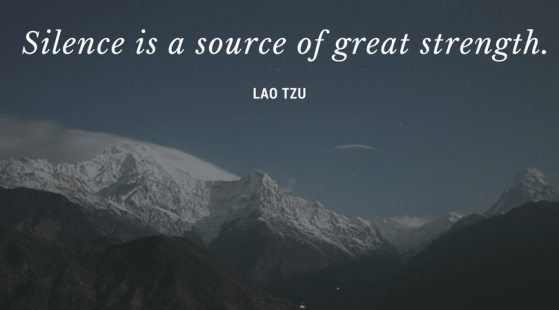

I was surprised at how much of the consultation was spent in silence. This was either because Kathryn was reading a paragraph or sentence, or she or I were thinking about something. At first, the silence made me uncomfortable, but then I realized that silence is necessary for progress. Silence doesn’t mean nothing is happening, which is something I have had to tell myself over and over again during my own consultations. 1.12.17+-+Silence!.png

Kathryn asked me some very good leading questions about my topic, like why I thought the author uses a particular analogy. (My paper focused on a machine paralleling how the patriarchy works, but I had never really thought about WHY the author used this comparison, only how it works.) She also pointed out places where I could expand on my analysis or make direct tie-ins to the quotes I had used. This was helpful to me because, even though I’m bad at thinking of things on the fly, I could mark certain places to go back to later.

Kathryn was very willing to answer all of my random questions, like if a certain sentence sounded weird or if my conclusion had a good enough “so what.”

Going into the writing center as a writer this time around was much more helpful, and I intend to actually make changes to my paper based on what we discussed. I felt like Kathryn was very nice about pointing out what she thought might be more important to Setting.look at rather than what I thought was the problem. In consultations, I always tell myself that I want to help the writer reach their own goals, but Kathryn showed me that sometimes it’s okay to point out more pertinent issues with a piece of writing.


I also felt surprised that some of the writing center tactics I myself have been taught worked on me, even as I knew what the consultant was doing. Every writer needs someone to help them if they are struggling, even if that person works at the writing center as a consultant.

Asking for help doesn’t mean I am a bad writer; it just means that I am an ordinary, flawed human being who is doing the best she can. 

And so is everyone else.

6686c1c5f820baccf2c6fd9222ab6c2f--flaws-and-all-pottery

Works Cited

**personal experience!!

Pictures

http://frankitchangekit.com/about_blog/erp-title-transformation

http://confessionsofamindlessrebel.blogspot.com/2013/08/film-reel-3-pitch-perfect.html

http://qi.com/infocloud/height

Writer Intention vs. Reader Interpretation

https://www.enkirelations.com/compliment-words.html

https://www.jtellison.com/tao-of-jt/11217-silence1112017

https://financialengines.com/education-center/short-term-goals/

Posted in Uncategorized | Leave a comment

A Socially Just Writing Center: Differences are Beautiful, Not “Wrong”

imagesMany writing centers laud themselves for being rebellious, going against the norm, and supporting social justice. Writing centers do this in many different ways, some of which are not entirely possible for every writing center. As we all know, all writing centers are not created equal. Below, I describe a socially just writing center that is hopefully plausible for all types of writing centers, even those that consist only of mobile carts that move around.

In my opinion, social justice starts at the individual level. Then one can work on gathering forces and changing long-standing institutions. In the writing center, this means taking social justice down to the one-on-one consultations. Consultants should acknowledge the big picture at play in these conversations, especially as it pertains to writing.

social-justice-youth-camp-find-your-voice

Every language and dialect comes with its own rhetoric and ideology, some of which can change with each person. As Victor Villanueva says in his article Blind: Talking About the New Racism, “…our assumptions about how the world works are influenced by—might even be created by—the language we receive and use” (5). Instead of pointing out language differences as errors, writing centers should teach consultants how to approach these differences in culturally accepting ways. Consultants should explain the expectations of typical American professors, and give students the choice to keep their own language or to conform to the accepted standards. By giving students this choice, consultants are being sensitive to the different backgrounds writers bring to their work. Language is a part of identity, and no one wants to be told their identity is wrong just because it is not the culturally accepted norm.

In all consultations, not just ones that pose social justice issues, consultants should be focused on helping the writer achieve their goals, whether that means getting an A or challenging the university norms. I once had a multilingual writer come in and ask me to help him sound more like a native American speaker on paper. At first, I felt guilty about AAEAAQAAAAAAAAJ0AAAAJGE2ZDgwZTZlLTJlODYtNDU0YS05NmRkLWVmNzU4MzcxNDQ3OQerasing his unique voice. Then I realized that this is the writer’s choice. The writer gets to choose what kind of language he/she/they use in their work. My job is to help them reach their goals in any way I can.


Consultants should also be aware of the larger cultural contexts surrounding their university and country. Consultants need to learn and use “the art of conversation, of civil discourse handled civilly” (Villanueva 18). Training should exist that teaches consultants how to interact those from different cultures, how to take on the challenge of incorporating many cultures into the dominant culture, and how to “offer more compel
ling and more socially just visions of literacy” (Nancy Grimm in Villanueva 18). When consultants learn about ways in which language can be used to gain privilege, they can disseminate this information to writers that may feel disadvantaged by this system as well as to writers who may benefit unknowingly from this system.

The idea that we “need a ‘standard,’ even if one does not actually exist, to avoid chaos” (Wilson 189) is not entirely wrong. Yes, we need standards by which to judge, but we also need to look at these standards objectively and wonder if they should be different. Instead of accepting these arbitrary standards blindly, the writing center should push the idea that different people have different standards, and that standards should be more603609950_1804815
about content and clarity than perfection. (To quote Hannah Montana once again, “Nobody’s perfect. [We’ve] gotta work it.”)

Instead of ignoring the big picture, writing centers should acknowledge their places in that picture. While most of this post has focused on the one-on-one situations and consultant training, I do believe writing centers need to be proactive in some ways. In the UNL English department’s building, screens display messages that often contain social justice opinions and bold statements. I’ve always admired the English department for taking such strong stances on contentious issues, like DACA, LGBTQA+ rights, and immigration.

These types of public statements are important to social justice work. If the writing center feels strongly about a certain social justice issue, they should say something about that! Especially now that most writing centers have their own websites, they have the means to reach a wider audience than just those who come into the center. Openly sharing opinions that create a more accepting university environment is a responsibility of being university-affiliated. Writing centers have a duty to their institutions to create an open, accepting, comfortable environment both within and without the physical center space.

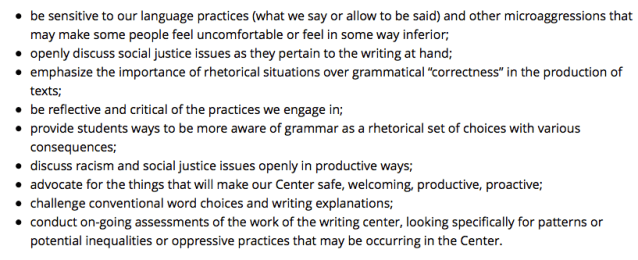
When I read the University of Washington-Tacoma writing center’s “Statement on Antiracist and Social Justice Work in the Writing Center,” I wanted to give them a standing ovation. They talk about the “systemic racism” of disseminating the idea of a “standard English,” and then commit themselves to being socially just in their practices. Below are the promises the UW-Tacoma writing center has made:

Screen Shot 2017-10-22 at 4.03.37 PM

All of these practices are essential to having a socially just writing center, along with the ability to be critical of current writing center practices as they might hurt other people.

8793779_orig

Social justice work in the writing center is difficult because we are not a big institution. We are a smaller group that helps students directly. We don’t deal a lot with the administration unless it is to get funding or understand what we are required to do. The best way for writing centers to be socially just is to just be sensitive to all different backgrounds and levels of English and to face cultural differences head on. Writing is incredibly vulnerable, especially when writing in a language that is close to one’s identity, and everyone who works with writing should be aware of this. Everyone deserves to be heard, no matter how they speak or write.

Works Cited

“Statement on Antiracist and Social Justice Work in the Writing Center.” University of Washington-Tacoma University Writing Program, https://www.tacoma.uw.edu/university-writing-program/writing-center.

Villanueva, Victor. “Blind: Talking about the New Racism.” The Writing Center Journal, vol. 26, no. 1, 2006, pp. 3-19.

Wilson, Nancy Effinger. “Bias in the Writing Center: Tutor Perceptions of African American Language.” Writing Centers and the New Racism, pp. 177-191.

Posted in writing center | Tagged , , | Leave a comment