What I got:
- Parable of the Sower by Octavia E. Butler
What I read:
- City of Night by John Rechy
- The Mariposa Club by Rigoberto González
- The Miseducation of Cameron Post by Emily M. Danforth
- An Orchestra of Minorities (audiobook) by Chigozie Obioma
- Next Year in Havana by Chanel Cleeton
- High Fidelity (re-read) by Nick Hornby
- Paul Takes the Form of a Mortal Girl by Andrea Lawlor
- The Strokes: The First Ten Years by Cody Smyth
- Legend (re-read) by Marie Lu
Welcome back to a normal monthly wrap-up! Since times are crazy, I thought writing a regular old book-related blog post would help add a sense of normalcy back into my life. So here we go!
Let’s start with books I’ve read for class. City of Night by John Rechy was a trip. This is a book about the 1960s male hustling scene, following a nameless narrator who talks about the people he meets along the way and involving a lot of identity exploration and criticism of American society. Everyone has a favorite character who the narrator comes across, and mine is cowboy Chuck. He’s just so chill about everything and takes life as it comes. He’s the laziest character the narrator meets, but he’s also super likable and unconcerned about what others think of him. City of Night was a difficult read in the sense that Rechy does not follow conventional story or sentence structures, but also in the sense that the narrator is emotionally detached because he experiences so much negativity. Perhaps if I re-read it at some point, I’ll be able to look into the language and story more deeply, but this first read is just a lot to take in.
The Mariposa Club is about a group of gay teenage guys who call themselves the Fierce Foursome and their last year of high school. They try to start an LGBT club at their school, and three of the four boys are Mexican. This book really only touches the story on a surface level, but its representation and exploration of intersectional identities and different types of queerness are important for young queer teens to see.
One book that I was hoping to absolutely love was Paul Takes the Form of a Mortal Girl. But it was just kinda meh. Paul is a gender-bending shapeshifter who sometimes identifies and presents as a lesbian and sometimes identifies and presents as a gay man. This is the one book that we are reading in my LGBT lit course that tackles transgender identities, and while it does dive deep into discussions of gender and sexuality, I just did not care about Paul and his sexual exploits. The one thing I did care about—the nature of his shapeshifting—never got resolved or explained. I don’t mind that his gender was never really determined, because no one needs to have a firmly identified gender, but it’s really only about Paul ditching his life, having sex with people, and then sort of pulling it back together. I wish the transgender novel we read in class would have been more rooted in reality, because Paul is so “other” that very few people will be able to connect to him.
The only thing I’m going to say about An Orchestra of Minorities is that I didn’t like it, had to listen to it on audiobook to get through it, and was disappointed with the ending. Objectively, the language is really lyrical, but that’s where my compliments end.
The Miseducation of Cameron Post was supposed to be the Queer Lit Club book for March, but we obviously weren’t able to meet, so I didn’t actually get to discuss it with others. The book wasn’t as sad as I thought it was going to be until I hit the ending, but I really enjoyed the experience of reading it. Lots of shitty things happen to Cameron, but she’s a strong character who, even though society tells her to keep her identity a secret, doesn’t try to change herself. Even at conversion camp, she makes friends with others who don’t follow, and don’t want to follow, the norm.
The other book club book I read in March was Next Year in Havana, the book I read with my sister. Luckily, we ended up quarantining together, so we could discuss the book in person. We went to the Starbucks drive-thru with our dog and then sat on her bed and chatted over coffee. While I didn’t love this book as much as my sister did, I did enjoy diving back into Cuban-American literature several semesters after taking a Cuban-American lit course. Chanel Cleeton shows what happens to those who stayed in Cuba when the revolution was happening and those who left. She discusses questions of identity, love, loss, home, memory, loyalty, and family. Anyone who can pack so much into one book without making the reader feel overwhelmed is a skilled writer. And while the plot and characters didn’t quite hit me as hard as I would have hoped, I am still planning to read Cleeton’s sequel to this one, When We Left Cuba, because of her skill and the fact that it’s about my favorite character, Beatriz.
And now, the re-reads!
I re-read High Fidelity in preparation to watch the miniseries on Hulu (which I still haven’t gotten to even though I can’t go anywhere… oops…) and also because I went through a phase when I read all of Nick Hornby’s novels. I think I liked this book the first time I read it, but Hornby is so good at writing stories about fuck-ups. His characters are usually men in their thirties with subpar jobs, not a lot of ambitions, and poor love lives. But I care about them… Any scene in the record shop that the main character owns becomes a favorite, because his coworkers are so ridiculous but believable.
My re-read of Legend just happened because I was at home with all of my old favorite books and I knew Marie Lu had recently released a fourth book in the series. For some reason, I completely blocked out that plagues are a huge plot point in this series, but I am gonna keep on reading them, anyway! I loved these books in high school and I am having so much fun re-discovering the characters and the plot. There are so many cliches in Legend, but I can tell why I liked it when I read them. And the pure nostalgia is really making me love them all over again!
For everyone as anxious as I am right now: I hope you find some joy in familiar favorites or new favorites, whether movies or books or TV shows or music or anything else. I’m taking this time at home to explore things that I once loved and how I have evolved as a person since those times. I’m hoping that reconnecting with my past self will give me more momentum to move forward with my writing and my reading and my life in general.
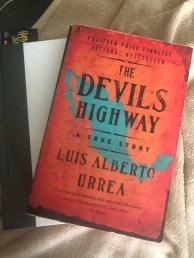 The Devil’s Highway
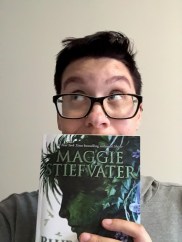
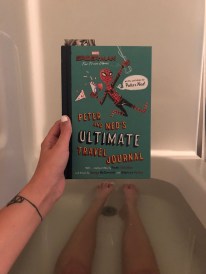
 Before you freak out about the amount of books I read while having a concussion, just take a closer look at the list. It is almost entirely graphic novels and audiobooks. Like last month, I’m going to focus on the books I have the most thoughts on since the list is so long and neither you nor I want to be sitting in front of the computer forever.
 cute graphic novel is Bloom, which is a romantic love story instead of a friendship story. There is baking, flirting, two boys in love, family love, and deciding what to do in the future.
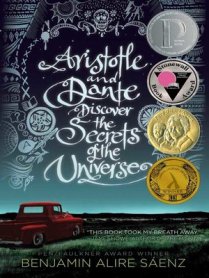 playwright and actor extraordinaire. His narration added a whole new dimension to the story. I read this book a few years ago and just felt meh about it. But this go-around, I actually cried a few times and fell in love with Dante through Lin-Manuel Miranda’s portrayal of him. I even found Ari, the narrator, less annoying. The only issue with listening to an audiobook narrated by someone with such a soothing voice is that I found myself just relaxing into the lull of his voice. Boy, am I glad I already knew the plot!
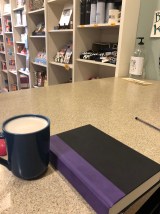 It was advertised to me as a found family story, but that was not the main focus of the story. Sure, the main character was an orphan and, sure, she had to find her own family. But it felt more like a coming of age story, her realizing that the world is not how she thought it was. And while this does sound like a fantastic idea for a story and people have been raving about this book, there were a few too many clichés for me to be able to ignore them. Full of striking imagery and lovable characters, I would still recommend this novel, but I can’t say for sure whether I want to continue with the story.
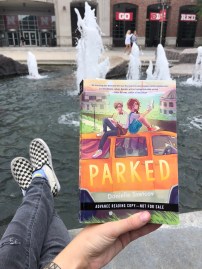 project. This story is also about the San Francisco housing crisis and how homelessness affects kids, making friendships with people outside your socioeconomic class, and how to give/accept help from others. I can’t wait for kids to read this and internalize the important message that you need to listen and act on what you hear and see in order to be really helpful.
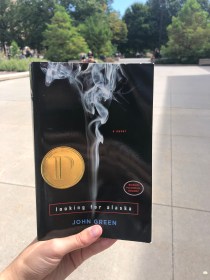 John Green and the movies based on his books haven’t disappointed me yet, so let’s keep the streak going!
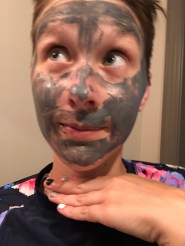
 I used to strongly dislike baths. Since I started showering in, like, middle school, I’ve always found showers more relaxing than baths. But then I fell in the shower. And showers make me ever so slightly anxious at the moment, even with a bath mat that is supposed to keep me from slipping again. So I bought bath bombs, face masks, and bath tea made of essential oils. I put on a swimsuit (because I dislike being in the bath for so long naked; it’s a weird thing that bothers me) and played music or an audiobook. Then I just sat and soaked in warm water, which after a couple of temperature tries, has become quite relaxing. When everything was sore, the warmth helped soothe my muscles. It’s just nice to sit and do nothing but still feel like you are taking care of yourself.
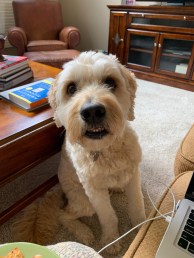 significant others. But I love snuggling with my dog.)
 letting my brain heal. It’s okay to be those things when letting your emotions heal. It’s okay to be those things when you just need time. I’m working on this one!
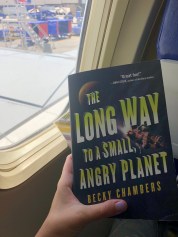 the time in high school. Her books in the Wayfarers trilogy (all of which are listed above because I read them all this month) offer so many characters that are easy to care about. She makes me question what my definition of a sentient person is, shows me how xenophobia can be worse in isolated communities, and offers many different answers to the big question of “What’s the point?” The first book, surprisingly, is my least favorite in the series, but it is still super amazing. This is the one that made me challenge my ideas of “normal” and how different societies can only be judged through the lens of that society’s norms. It made me care about aliens and humans and an AI. They found a family in each other, and getting a peek into that family was absolutely worth my time.
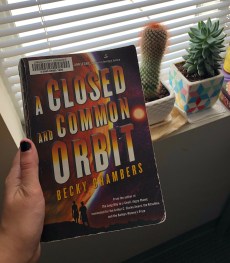 about the future of AI, I realized I was the only one who wasn’t scared that AI could become sentient. Because if they are, they’re going to be people. And people are both good and bad. If the AIs take over, it is because a small group of them were bad or were taken advantage of by humans. Basically, I am all for introducing new types of people (even artificial ones) into the groups I spend time with.
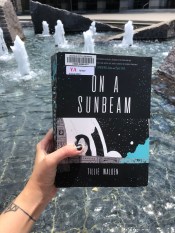 Another Timeline by Annalee Newitz, and The Luminous Dead by Caitlin Starling.
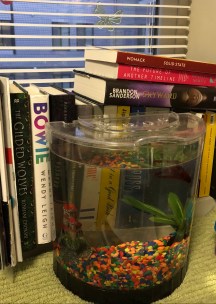
 person also can pump the caver’s body full of drugs and hormones whenever they want. I don’t want to spoil anything, so I won’t say why it gets thrilling, but believe me when I say I will not being looking at caves the same way anytime soon. They creep me out now, and I almost stayed up super late one night to get through it. (Thirty more pages! I finished it right when I woke up.) I was looking for a change from the heartwarming stories I was reading and I definitely got it (even if the ending was still a little bit cheesy).
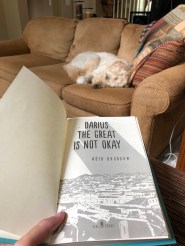 sometimes felt thin, I’m so glad this book exists because it will show teens (and even adults) that having depression or other mental illnesses doesn’t have to be your entire life. It’s okay to need medication to stay alive and functional. Because many books focus on the struggles of mental illness rather than what we can do to combat it, this is an important message. The ending of this book almost made me cry, but in the best way. It was a realistic but hopeful ending. My favorite kind.
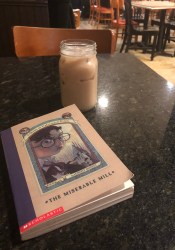 see the humanity of drunk drivers as well as the humanity of their victims beyond just numbers. 50 Queers Who Changed the World was good but not great; there was lots of deadnaming, but I also loved learning about some amazing queer people I had never heard of (and some I already knew). The Miserable Mill was miserable for the Baudelaires but entertaining for me. I learned that old Spider-Man comics are super heckin’ cheesy. (One was sponsored by a toothpaste company and had several scenes set at the dentist’s office… I guess even Doc Ock and Spider-Man need to take care of their teeth?)