
Introduction
Recently, while flipping through a book of writing prompts, I came across one that asked, “What is your second favorite bridge?” Surprisingly, I had an easy answer to this one. I have my second favorite bridge tattooed on my body. Then I started thinking about my favorite and least favorite bridges, too. Again, these were surprisingly easy to determine.
Until I read this prompt, I hadn’t noticed that bridges have played a big role in a few big parts of my life. Though these three bridges are certainly not the most impressive or good-looking feats of construction, I’ve attached a lot of emotions and memories to them. They are more than just steel, concrete, and careful engineering.
Second Favorite: Tappan Zee Bridge

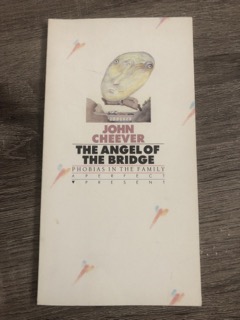
During my first couple years of college, I went to A Novel Idea, which would soon become my favorite bookstore in the world, and bought a tiny book with an ugly cover.
In The Angel of the Bridge by John Cheever, the narrator is embarrassed by two of his family members. His elderly mother likes to ice skate while dressed “like a shopgirl,” along with having a phobia of planes. His brother, who seems to have a better life than the narrator, is intensely afraid of riding in elevators. The narrator, while sympathetic to his family members’ struggles, thinks these phobias are ridiculous. That is, until he experiences a panic attack while crossing a bridge during a storm. From then on, he can’t drive across bridges without expecting the bridge to crumble beneath him.
Then, while preparing to cross the Tappan Zee Bridge, a hitchhiking folk singer with a harp gets in his car. She talks and distracts him enough to assuage his anxiety. They cross. Then she gets out of the car. The narrator considers telling his brother about this in case “there was also an angel of the elevator banks,” but fears he’ll also be seen as crazy.
This long-winded synopsis has a point, I promise!
This short story was the first time, as an adult, that I read something that described what it feels like (for me, at least) to have fears/phobias that you cognitively know are unfounded but still can’t shake. It put words to many thoughts and experiences I’d had before, and it made me feel seen. Which, considering the narrator is a middle-aged businessman living in New York, is impressive.
I was so affected by this story that I got a bracelet version of the Tappan Zee Bridge tattooed on my wrist. This tattoo reminds me that I’m not alone, and that mental health issues have been extant throughout time and literature. It reminds me that we sometimes have to “hack” our brains to get through the day, and that’s okay. If I have to do things a little differently in order to live a fulfilling life, then I will. There is always a bridge to cross, even if it’s a bit inconvenient.
Unfortunately, the Tappan Zee Bridge doesn’t exist anymore. It was replaced in the 2010s by the cumbersomely named Governor Mario M. Cuomo Bridge because the cost of repairs and maintenance was too high. Still, the Tappan Zee is forever immortalized in the annals of NYC’s history, and less impressively, in ink on my arm.
Least Favorite: Indigo Bridge
This is not a real bridge but rather the idea of a bridge. I won’t go too into detail because it will make me upset, but Indigo Bridge is a place I used to work. My stint there ended poorly. Despite the job itself being perfect for me, I was fired by a racist, emotionally abusive rich lady because I called her out on her racism. Not only that, but my friend who I was defending was also fired.
The reason I count this as an important “bridge” in my life is because this job has had a big impact on me. I think about it a lot. I got that job at a time when I was extremely depressed and not particularly excited about continuing to be alive, so in a sense, that job gave me a purpose.
Then my mental health started deteriorating thanks to my boss and the environment she cultivated, and I ended up getting fired for actually speaking up for once. This experience left me extremely bitter and hurt. The emotional and financial abuse and their consequences still haven’t completely left me even though I’m not as consumed by them as I used to be.
In short, Indigo Bridge is the anti-Tappan Zee Bridge in my metaphorical brain map. Instead of feeling seen, I felt erased. To make matters worse, the bridge that made me feel horrible is still standing, and the bridge that made me feel better has been torn down.
Favorite: Mormon Bridge
During my childhood (and even now), my extended family lived in places scattered around the U.S. South and Midwest. Most summers, my nuclear family would go on a roadtrip to visit as many of them as we could in one go. These car trips were pretty fun. My sister and I would drink Bug Juice from gas stations (remember Bug Juice? That shit was addicting…), I would get lots of reading and sometimes writing done, and we would watch a movie on the tiny TV anchored to the center console (or later, on the small TVs that were strapped to the front seats’ headrests).

But the thing I remember most vividly from these car trips is crossing through the Mormon Bridge. The geometric shadows of green metal bars would break up the early morning or late afternoon sun, and we would emerge in a new state. When we were leaving, this bridge signified our official departure from Nebraska. When coming home, it signified that our trip was almost over.
While traveling is stressful and not always fun, these trips represent to me a more innocent time in my life. When I thought everyone in my family was a perfectly good person. When I could live in my head for hours without having any negative thoughts. Whether we were going to the lake in Wisconsin, to my uncle’s apartment in Minnesota, to my grandma’s house in the suburbs of Chicago, or back home to my own bed, I always knew there was something to look forward to when I got out of the car on the other side of that bridge.
The Mormon Bridge is still there in 2024, but its look is a little different. The bridge’s faded green lead paint was carefully removed and replaced by a safer and fresher blue paint. Even though the blue paint is less dangerous and much prettier, I still miss the old green paint. If I put on my rose-colored glasses, the green paint is beautiful, too.
Conclusion
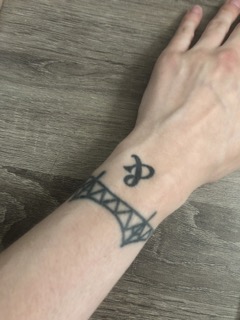
A little while ago, I added an ampersand (&) below the bridge tattoo on my wrist. There are several reasons I wanted this tattoo that have nothing to do with the bridge, but the placement of it underneath the bridge was intentional. After I came to terms with everything that happened at Indigo Bridge, I realized that every bridge I’ve had to cross in my life (whether literal or metaphorical) has led to something more. And I’m finally excited for that something more. I’m excited that there will be an “and” even after negative experiences. Even if that “and” includes negative experiences.
Whether for a job, a road trip, or a mental health journey, I will have to cross many more bridges in my life. One day, I’ll cross a bridge to find that the grass really is greener on the other side.
-Ryn PB
 As Cool As Mint Ice Cream
Pingback: 27 Books for 27 Years: Ryn’s Reading History (Part 2) | As Cool As Mint Ice Cream