
What I Got:
- I Was Born for This by Alice Oseman
- This Winter by Alice Oseman
- Nick and Charlie by Alice Oseman
- Heartstopper, Vol. 1, 2, & 4 by Alice Oseman
- Solitaire by Alice Oseman
- I Want to Die but I Want to Eat Tteokbokki by Baek Sehee
- The Old Curiosity Shop by Charles Dickens
- Less by Andrew Sean Greer
- At Swim-Two-Birds by Flann O’Brien
- Dear Leader by Jang Jin-Sung
What I Read:
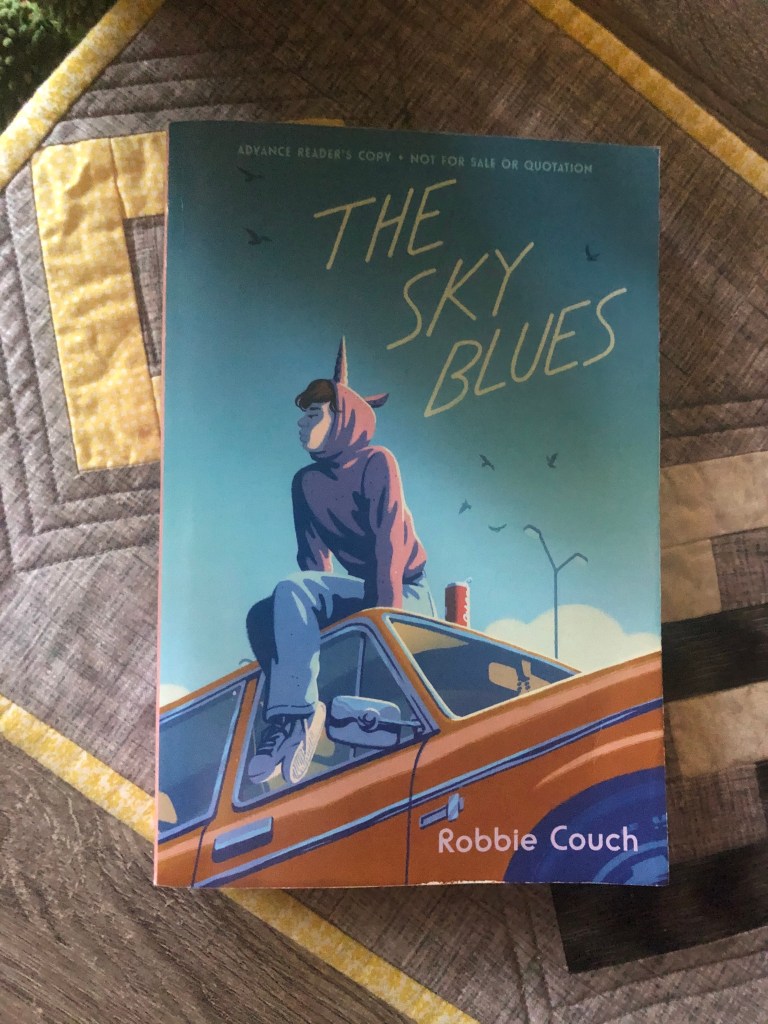
- The Sky Blues (ARC) by Robbie Couch
- A Snake Falls to Earth (audio) by Darcie Little Badger
- I Was Born for This by Alice Oseman
- Goddess of the Hunt by Shelby Eileen
- Tinderbox by Robert W. Fieseler
- Heartstopper, Vol. 1 & 2 by Alice Oseman
- Ana on the Edge (ARC) by A.J. Sass
- The Crash Palace by Andrew Wedderburn
- I Want to Die but I Want to Eat Tteokbokki by Baek Sehee & translated by Anton Hur
- Solitaire by Alice Oseman
- She Memes Well (ARC) by Quinta Brunson
My motivation crash-landed into the month of July for some reason (okay, the reason is that COVID wiped me out for two weeks), so I’m sorry for the delay in getting this post out there! I’m still excited to talk to you about the queer lit I read during Pride Month as well as the few books I was able to get through in July. So buckle up for a long ride, because I still managed to read a little even though my brain was as smoggy as the Los Angeles atmosphere.
I did my own version of the Queer Lit Readathon like I do every year, meaning that I completed all the prompts over the whole month instead of the actual week of the readathon. It’s just not fun for me to cram all my reading into a few days, and I figured I would read queer lit all month anyway, so why not complete the challenges?
During June, I wasn’t the best at writing down my thoughts during and after reading these books. Maybe my motivation was already crashing… So I hope my reviews aren’t too scrambled, because my brain definitely feels a tiny bit scrambled still.
Now, onto the list! Let’s get it!
1. The Sky Blues (ARC) by Robbie Couch: New-to-you author
I saw that this book was compared to I Wish You All the Best by Mason Deaver, which is one of my favorite queer YA books, so I think I hyped it up a bit too much. Nonetheless, it was a fun read.
Sky Baker is planning a big ol’ gay promposal to his crush Ali, which is a huge statement in his small town, but these plans get leaked in a homophobic and Islamophobic schoolwide email. A book that seems like it’ll be a romance then turns into a friendship and community story, plus a little bit of a mystery in finding who sent the email.
I didn’t really like this story in the first two chapters because the writing style felt like it was trying to sound “teen” too hard (a la the “how do you do, fellow kids” meme). But the turn of this story from a promposal story to a story of friendship and acceptance and not-just-romance completely changed my opinion. I love that Sky doesn’t end up with the crush that started all of this, but he still has a happy ending. And I love that the small town in this book, though still very backwards and prejudiced, has a pocket of accepting and liberal people. Robbie Couch makes a point to show that, even in small towns where you might feel alone, there are more people on your side than you think.
This book is a great example of how many different issues can be explored in an organic way rather than feeling forced.
I also like that the whole plot didn’t revolve around figuring out who sent out the racist and homophobic email blast. Sure, it was part of it, but the focus was definitely on community and friendship and moving forward. They start a whole T-shirt stunt with the thought of revenge, but it ends up becoming something that brings people together and makes people more comfortable being themselves in many different ways. *Queues up “Stick to the Status Quo” from HSM.*
Plus, I have a soft spot for high school journalism classes in stories, because that was one of the few parts of high school I can look back on fondly.
Anyway, this is a great story that I’m excited to see exists in the world for teens who are grappling with identity and trauma in their many different forms.
2. A Snake Falls to Earth (audio) by Darcie Little Badger: Indigenous main character, science fantasy
I think I would have liked this book better in written form, though this was no fault of the narrators. In fact, they were both great. I just had a hard time focusing. The pacing is interesting; it meanders rather than walking at a steady pace.
It was really cool following Nina as she learns about Lipan mythology and searches for the truth behind these stories, but Oli’s story was more interesting. Oli is a shapeshifter who literally lives in an alternate world, and he is surrounded by fun characters. I did feel like the connection between Nina’s and Oli’s stories was a little tenuous, and the side characters didn’t get enough time in the limelight. This may have been by design, because of the mythological storytelling, but the coyote sisters and Oli’s frog friend made the story so much better for me.
This is a coming-of-age story like I’ve never read, because Nina and Oli come of age in such different ways despite the parallels. Oli’s POV was my favorite, and once I pick a favorite POV in a multiple-POV story, that’s usually not a great sign. Oli and his friends are funny and run into serious but humorous situations. Nina’s story just felt ignored and unnecessary except for certain plot points. Though the climate change problem that they need Nina’s help with is something I totally didn’t see coming but made complete sense (a.k.a. the best kind of plot twist).
3. I Was Born for This by Alice Oseman: Messy queers, neurodivergent main character
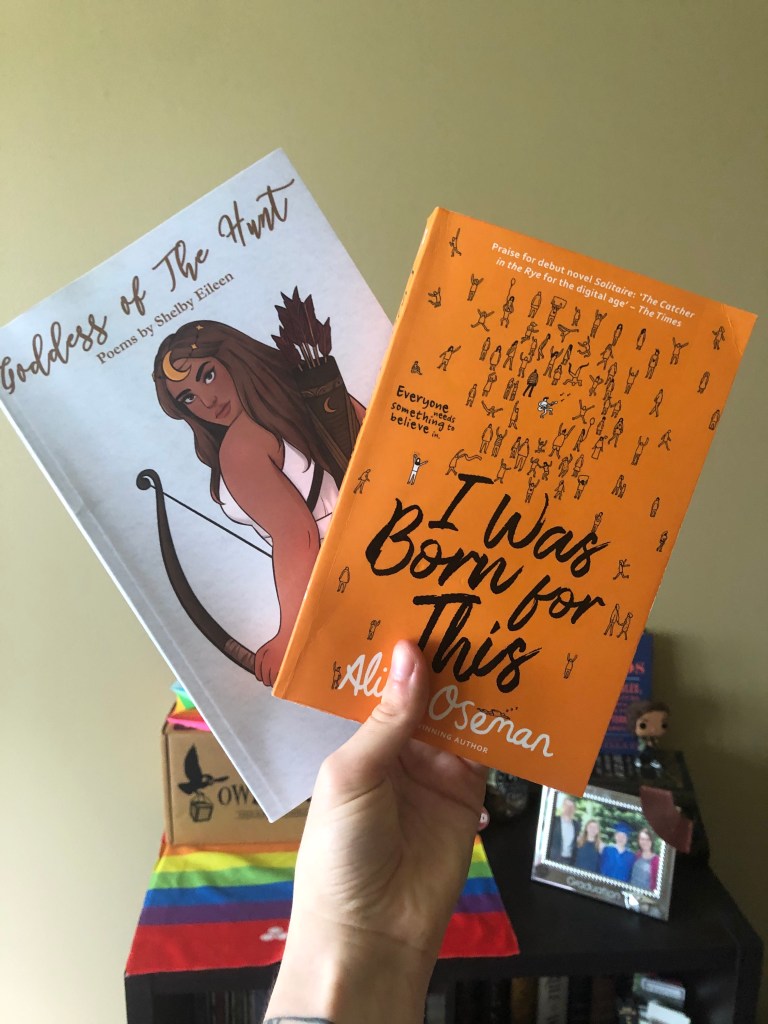
All I wrote on The StoryGraph for my review of this book was “Well hot damn that was amazing.” That about sums up my thoughts on the book.
This book explores the toxicity on both sides of a parasocial relationship involving a boy band and their hardcore fans. This book doesn’t ignore the good sides of this type of relationship—comfort, fulfillment, joy, friendships—but it mainly focuses on the darker aspects of intense fandom behavior.
This is kind of an unpopular opinion because of the popularity of Radio Silence, but this is now my favorite Alice Oseman novel. It’s got that “diverse but it feels natural instead of forced” feel that Alice Oseman is so good at. They have a note at the end of the story talking about the beta readers they had for the Muslim and trans guy rep (for the two POV characters).
Angel’s story is all about meeting her online friend for the first time in order to go to a concert for their favorite band, The Ark, together. Jimmy’s story is all about how his role as The Ark’s frontman, though it was his dream, has turned into something overwhelming and miserable. Both characters deal with the collision between the ideal and the real.
This book goes to some incredibly dark places, and it’s one of those books that has a difficult-to-describe plot, but the character development is incredible. The characters themselves are incredible. They’re all so real and well-rounded, even the side characters.
Alice Oseman doesn’t ignore any of the issues with parasocial relationships, including how they affect personal relationships, mental health, self-worth, decision-making skills, personal freedom, etc. Angel feels like The Ark is the only good thing in her life, that her future isn’t bright and her parents don’t understand her. She almost ruins her friendship with her online friend by focusing exclusively on this band instead of paying attention to what’s going on around her. Jimmy feels like The Ark is no longer a good thing in his life—their new contract will be too overwhelming, his paranoia is increasing as their popularity increases, and revealing his identity as an out queer trans man in the public eye was not entirely his choice even if it’s something he’s proud of. Tl;dr, something idealized turns into something a little bit harmful despite all the positive it has done (and might continue to do).
Side note: I absolutely love the relationship Jimmy has with his grandpa. It’s very wholesome and is important to quite a few plot points, which adds weight to its presence in the story.
This is a book I can’t wait to reread and learn from again and again in the future.
4. Goddess of the Hunt by Shelby Eileen: Asexual/aromantic main character, poetry, retelling
I knew I liked Artemis for a reason… Her choice to remain celibate always resonated with me as an empowering choice rather than a sacrifice, and this poetry collection explores that idea with nuance and emotion.
The integration of different goddesses’ points of view on and advice to Artemis add more layers to this character study. When reading a character study like this, I like seeing external points of view, because we all know that internally judging one’s own character is often not the most accurate portrayal of one’s personality and worth. Though Artemis seems pretty self-aware, I have to say.
“Artemis was a beauty, a terror, a force that nature bowed to, but only because she had bowed to nature first.” This poetry collection also explores the idea of mutual respect between nature and people, between people and people, between gods and people, etc. One of my mom’s biggest things growing up was being respectful in order to gain respect, and it’s definitely one of those lessons that I’ve carried with me into adulthood. Seems like Artemis got to that conclusion before the both of us.
Shelby Eileen’s poetry emphasizes the magic of nature and how a relationship with nature should be mutually beneficial rather than one-sided. It reminds me a little of how nature is portrayed in The Raven Cycle.
5. Tinderbox by Robert W. Fieseler: Group read, nonfiction, LGBTQ+ history
Damn. This is an emotionally difficult book to read, but also a necessary one. Tragedy often precedes progress, unless that tragedy is buried under other stories. I think it’s important to note that this book was written in the context of the Pulse shooting in Orlando in 2016, which was a similar tragedy to this fire but one that the entire nation talked about instead of ignoring.
This story is rife with injustice and all sorts of tragedies. I like that everyone is humanized in this story, even the probable fire starter, which is not always the case in journalism. This book’s criticism of the media coverage’s purposeful ambiguity is proof of that.
It’s really disheartening to see that the world today (and in 2016) has so much in common with the world in the 1970s. Though different things are taboo now, there are still a lot of the same things people don’t and won’t talk about. And if they do, it’s usually in a roundabout and/or dehumanizing way.
The way this book is put together reminds a bit of The Library Book by Susan Orlean in that everyone and everything relevant get a backstory full of details, but the common thread of the story always comes back to the main theme, in this case the fire. It makes the history more engaging than a textbook-style, just-the-facts and no storyline book.
6. Heartstopper, Vol. 1 & 2 by Alice Oseman: Reread (choose your own category), graphic novel, seasonal vibes, romance, queer sports
I don’t usually talk about rereads unless I have something new to say, so this will be pretty short. I really enjoyed rereading these after watching the Netflix adaptation and seeing what they changed. I made it a game for myself to try to figure out why those changes were made and what they might mean for future seasons. And the bowling scene is always gonna be my favorite, no matter how many times I read these books!
7. Ana on the Edge (ARC) by A.J. Sass: just an extra book I read in June
A middle grade about a kid just starting to question their gender? Yes, please! So many stories are about kids who have things figured out but just aren’t accepted by others or open about their identity yet. It’s important for younger readers to see that it’s okay not to have everything figured out.

Ana gets mistaken for a boy by a trans boy who takes lessons at the same ice skating rink, and Ana doesn’t entirely hate it. Ana spends time figuring out what feels comfortable, even after finding that the term “nonbinary” feels right. By the end of this book, Ana is still figuring these things out, but that does not make Ana any less nonbinary.
I love Ana’s friendship with Hayden. He allows Ana to explore a more masculine side while Ana’s skating program becomes intensely gendered. It even makes the story better when Hayden gets upset with Ana for not “lying.” Just because another person is trans or gender nonconforming, doesn’t mean they’ll immediately get what you’re going through. Everyone’s experience with gender is different, which can lead to miscommunication, but the two friends put in the effort to explain things to and support each other.
A.J. Sass shows how important it is to give someone space to figure their shit out, not to assume someone’s identity, to communicate even when it’s uncomfortable. This is the perfect example of a middle grade book providing nuance without feeling overly obvious or too complicated.
Plus, I love a good exploration of gender in sports, and I haven’t read anything that does this specifically with ice skating.
8. The Crash Palace by Andrew Wedderburn: July read
I started this book before I got COVID and finished it while I was sick. And I’m pretty sure that’s the only reason I got through it. My brain was too foggy to focus on how bad the book was, so I was able to power through.
This book is so obviously about a woman written by a man. Not the stereotypical way in which some cis men don’t really know how the female body works, but the way the character approaches her relationship with men doesn’t scream “this is my experience” or even “when I talk to women, I listen to them.”
There’s some (assumedly) unintended repetition and poor development editing, like when a character’s habit is described before that person does that action rather than just showing them doing it. The characters are 2D and everything is a bit too vague, except for random stupid details about settings that have nothing to do with anything. For something that feels like it should be a character study, there’s no character development or resolution or meaningful sort of ending. The idea (I think) was to make the story into a loop—everything repeats itself and whatnot—but it didn’t land.
I did like the link between music and geography, though. It’s pretty neat and is one of the actually interesting parts of the main character’s personality. She breaks up distances by time and time by songs, which gives an insight into her love of driving and the music she likes to listen to. I’m a sucker for music in books for some reason; this and the fact that the most responsible character was called “the Skinny Cowboy” were the most enjoyable parts to read.

9. I Want to Die but I Want to Eat Tteokbokki by Baek Sehee & translated by Anton Hur: July read
This was a pleasant surprise, like picking up a dollar bill off the ground and finding that it’s actually ten dollars. That is to say, I randomly ordered this book when I bought Solitaire because I want to read more translated literature, and luckily I ended up loving it.
The amount of vulnerability and honesty it takes to write a book like this is extraordinary. Baek Sehee transcribes parts of her recorded therapy sessions and then expands on them. She even has her therapist write a little comment at the end of the book, which I thought was really cool.
This book found me at the right time; it is refreshingly honest and allows the reader to see into someone’s insecurities and issues and traumas while that person is dealing with them. She offers insight and bares her imperfections without making excuses.
This is a quick but impactful read. Highly recommend!
10. Solitaire by Alice Oseman: July read
Yes, there’s more Alice Oseman on this list. What can I say? She’s super talented at writing angsty teen characters I want to read about.
So this is one of those books that I love but hit so close to home that I don’t have much to say unless I discuss my personal trauma, and I really don’t want to do that. It’s hard to see someone struggle with thoughts and issues you’ve had (or similar ones) when you’ve already reached the point in your life when you know that it’s just your brain lying to you and that those problems are temporary.
Solitaire is super well-written—there are a lot of moments when I could see how carefully Alice Oseman chose the words they use. But it’s a difficult book to read because of the heavy topics. Tori’s derealization makes you feel disconnected from the story a lot of the time, which is a testament to Alice Oseman’s writing but can also distance the reader from the plot and make books like this polarizing. Because Tori feels separate from what’s happening around her, it’s easy to feel like that as a reader, too. And if that’s not something you’ve experienced, then it can be off-putting.
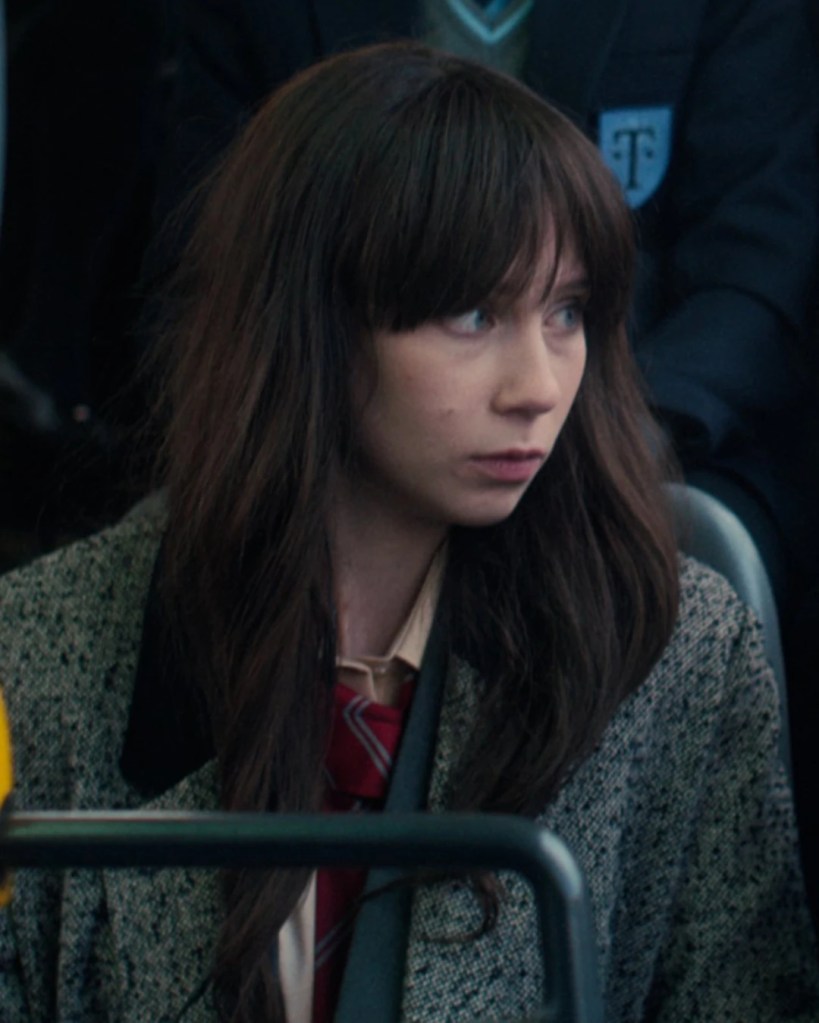
It’s an accurate portrayal of the mind of a struggling teenager who feels like her problems are not as important as her sibling’s. The references to The Catcher in the Rye were not veiled but also came completely naturally (minus one of the characters having the last name Holden).
I read the version that Alice Oseman revised a little bit after some of the Heartstopper comics came out (the main characters of which are side characters in this book), so I found some of the mentions of Charlie and Nick a bit jarring. Mainly in the way they were introduced—kind of like Alice added in extra details just to give more (or a different) backstory after creating the full story through the comics. Just a couple moments were strange.
In true Alice Oseman fashion, though, this book is diverse in a way that feels natural instead of forced. The side characters, though not as fully fleshed out as Alice’s other works, are fairly well-rounded.
This is not a book I would recommend to just anyone, so please look up content warnings if you think you’ll need them!
11. She Memes Well (ARC) by Quinta Brunson: July read
This book, unfortunately, was just okay. Quinta Brunson is hilarious and badass and emotionally intelligent, and the writing has nothing particularly wrong with it; I just wasn’t pulled in by her voice or story.
Part of this is because, in contrast to I Want to Die but I Want to Eat Tteokbokki, I read this book at the wrong time. A lot of the book is Quinta giving advice on making it in a creative industry based on her experiences doing just that. And as someone who would like to make it (at least a little bit) in a creative industry, someone who has been feeling stuck and uninspired and unmotivated lately, I just found the advice frustrating. Especially because a lot of it had to do with creating a community around you, which is a difficult thing for me to do even without a seemingly never-ending pandemic going on. So you can imagine how difficult it is now that there is a pandemic.
It’s aggravating to read about advice that you wish you could follow, but because you’re not the same kind of person or in a similar situation, you just can’t.

The parts I liked best are the chapters titled “Quinta’s Classics,” which discuss pop culture artifacts that have made Quinta who she is or remind her of formative moments/people. I love discussing how pop culture moments and items shape people and society, and since I’m not in school anymore, I don’t get a lot of opportunities to have these conversations. So these were the most interesting parts for me to read. She talks about Mario Kart and movies and music and other cultural outputs. I could’ve read a whole book of essays like this!
Maybe I would’ve liked it better as an audiobook, but alas, I read it with my eyeballs. Even though I found her memoir just okay, I still think Quinta Brunson is a hilarious and thoughtful creator.
Whew! We made it to the end! I would like to thank Gilmore Girls for providing background noise when I needed it, my cat for breaking my Wi-Fi router, and Jack Edwards for inspiring me to read more translated lit. Honorable mention to BTS for making me pick the book translated from Korean that turned out to be awesome. (Apparently COVID changed my music taste along with my food taste, and now I like K-pop…)
Stay healthy if you can, my friends, and make sure to look out for your fellow human beings when you can.
 As Cool As Mint Ice Cream