
I’m back with another Repeat Rewind Tag! After doing that first one, I’ve been pairing songs and books together in my head all the time. It’s so fun! So I decided to give myself another challenge and let Spotify choose the songs for me.
1. “Problematic” by Bo Burnham: Juliet Takes a Breath by Gabby Rivera*
White characters who are problematic in the way this song describes are definitely not hard to find, but the first one I could think of that has this particular brand of performative progressiveness was Harlowe Brisbane. She literally wrote the “book of white lady feminism.” In Bo’s words, she “wrote offensive shit, and [she] said it.” She doubles down on her book Raging Flower despite its obvious shortcomings. Plus, a lot of the book takes place in Portland, land of performative allyship.

In the letter that Juliet writes to Harlowe, she gets straight to the point when she says, “Can a badass white lady like you make room for me?” Juliet shouldn’t have to ask this of Harlowe, or any white person for that matter. Throughout the book, Juliet has small moments of self-reflection when she realizes, “Shit, I’ve been complicit” both in her own ignorance and her own exploitation, but she also realizes that Harlowe made her think she had no choice but to participate. Juliet just never had the words or ideas she needed to understand her role in validating a feminism that doesn’t take people of color into account.
Harlowe takes a bunch of ideas from different alternative cultures (many of which were established by POC) and melds them together into something she claims as her own philosophy. Even as she claims to include trans women and POC, Harlowe is constantly talking about “pussy power” and indulges in microaggressions like touching Juliet’s hair without asking (among other things). She uses her hippie-esque philosophy to give her carte blanche when it comes to appropriation of others’ stories and invasions of privacy. Bo knows that dressing up as Aladdin “feels weird in hindsight” despite the fact that he “did not darken [his] skin,” but Harlowe is still at the point where she’s wearing a traditional Native American headdress and saying it’s a celebration of their culture (or worse, that she’s, like, 1/24 Cherokee).
Just like Bo sings about in this song, Harlowe eventually has a small moment of reckoning when Juliet leaves during a reading she gives while telling the audience that Juliet is basically a stereotypical Latina from the Bronx. But when Juliet comes back to Portland, she is no longer afraid to call out Harlowe’s hypocrisy and to forgive her and move on. She no longer feels responsible for answering questions of ignorance like “is burning [an Aladdin costume] bad? What should I do with it?” It’s not her job to educate Harlowe on how not to be racist.
When Bo sings, “I’ve done a lot of self-reflecting since I started singing this song / I was totally wrong when I said it / …for I did not realize what I did / Or that I’d live to regret it,” it makes me think of how Harlowe’s only sorry for being called out on her bigotry. She wants to have the high ground, and if apologizing is the way to stay there, she’ll do it. But she expects others to keep her accountable rather than doing the work on herself. And if she “did not realize what [she] did,” can she really be at fault? Isn’t is the fault of the people around her?
If these lyrics don’t describe Harlowe Brisbane, I don’t what does: “Times are changing and I’m getting old / …Isn’t anybody gonna hold me accountable?”
*Quotes from first edition.
2. “Just Like You” by Louis Tomlinson: Fence: Striking Distance by Sarah Rees Brennan and the Fence series by CS Pacat & Johanna the Mad
The chorus of this song could have been written by Seiji Katayama if he had the ability to put his feelings into words. All of the boys on the fencing team see Seiji as this untouchable talent—except for Nicholas. Nicholas finds it obvious that Seiji feels the “same stress, same shit” as everyone else, even if his “problems look nothing like [theirs] do.”
I’m going to take my quotes from the YA novelization of this comics series, because the main theme of the book is that we don’t always know what’s going on in someone else’s life to make them the way they are; we “only get half of the story.” No one knows why Seiji decided not to join Jesse Coste’s team; no one knows what he goes through as someone who seems larger than life, who has a bunch of expectations and perceived failures weighing on him.
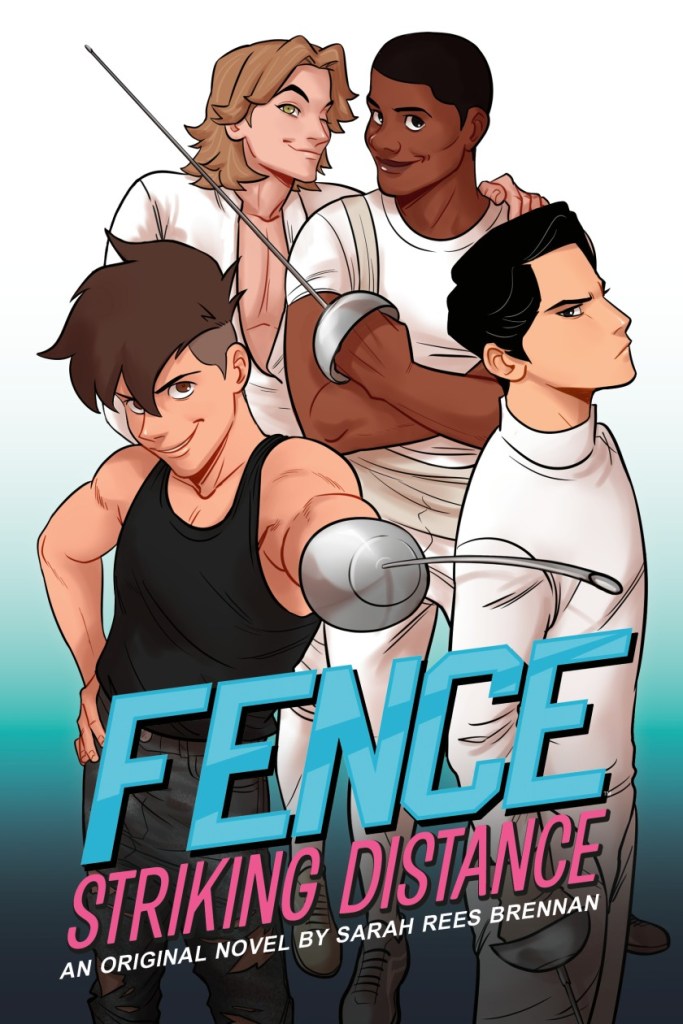
At first, Seiji feels superior to the team, but through Coach’s endeavors to make the team bond and Nicholas’s refusal to treat Seiji any differently (“Nicholas walked back to their dormitory, bumping shoulders with Seiji companionably in the way nobody else ever did”), he eventually begins to feel like his team members are also his friends—especially Nicholas.
“Seiji couldn’t talk to just anyone, but Nicholas had said they were friends.” Nicholas saves Seiji a seat at breakfast and teases him like other members of the team, eventually gaining his trust because he never holds Seiji’s aloofness against him. He has a different value system that surprisingly aligns well with Seiji’s. He lets Seiji be a teenage boy with faults and worries like anyone else. He even goes so far as to pull a “prank” to get revenge for Nicholas after some boys spread rumors because of his scholarship status.
Nicholas listens to Seiji talk about his fencing relationship with Jesse Coste, and Nicholas assuages his fears that he’s only good because he’s Jesse’s mirror by pointing out, “Being rivals shouldn’t be about being someone’s mirror. Both of you get to be real.” Nicholas sees that “when [Seiji’s] down [he] need[s] somebody to talk to.” He sees Seiji as a person, not just a fencer.
I also think that Aiden fits this song well, because people see him as a shallow, pretty boy who doesn’t feel anything deeply for the boys he goes out with. People see his man-whorish ways, “the cash, and the cards, and the glory” of his wealthy background, but they don’t see that he does this to hide his loneliness. “The long line of guys wasn’t just to have fun but tied up in the cold, huge manor where Aiden had spent his childhood.” He learned early that “nobody cares when you’re boring” and, on the advice of one of his stepmothers whom his father treated terribly, decides never to care about anyone but his best friend Harvard.
As Aiden’s façade of indifference crumbles under the weight of scrutiny, he wants to “stay in these days” and “lay where [Harvard] lays.” It may seem like he has the “whole world in [his] left hand,” but he doesn’t have a regular relationship (or a regular life) with the person he loves.
3. “Truly Madly Deeply” by One Direction: Counting Down with You by Tashie Bhuiyan
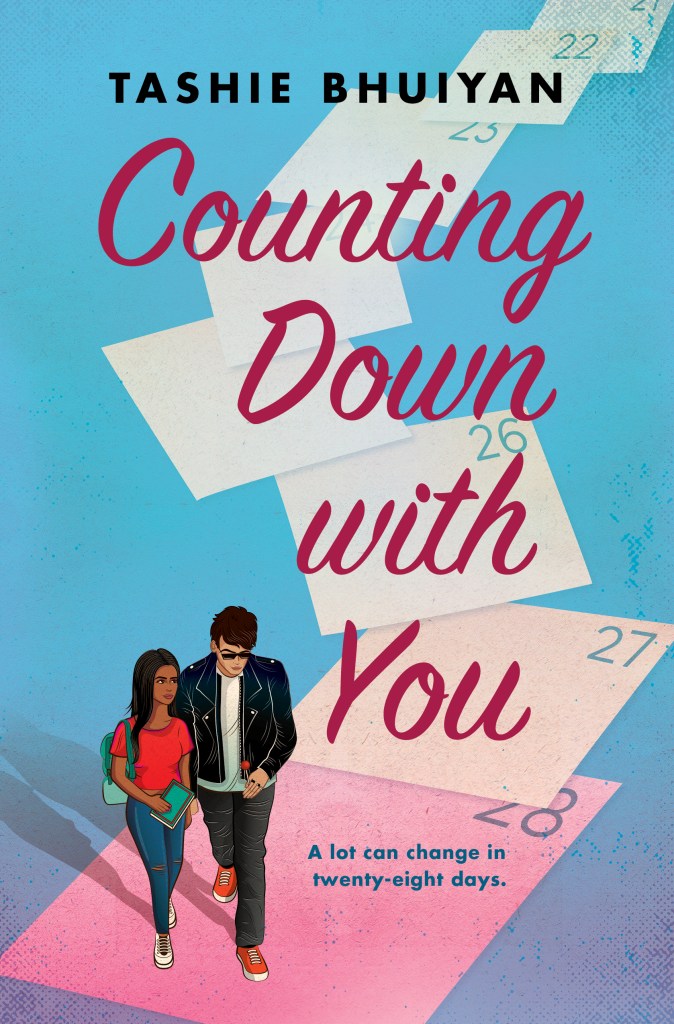
Okay, so I’ve become a bit of a One Direction fan during Quarantine 2.0. And I’ve also fallen even more in love with YA romances. This romance is of the “fake dating” variety, which is why the main characters having feelings for each other is a bit foolish. Both of them, especially Karina, feel like they are “Truly, madly, deeply … Foolishly, completely falling.” Karina knows (or thinks she knows) that Ace is only faking this relationship to keep up appearances in front of his brother, but as her two best friends point out, she is falling for him anyway.
And Ace falls for her, too. He literally writes her a song on the piano. Ace is always pushing Karina to go outside of her comfort zone (to a point), and he encourages her to do what she wants. The more time they spend together and the more they share with each other, the more Karina realizes “somehow [he] kicked all [her] walls in.” He’s always doing really cute things for her, like some of the gestures described in this song, and doesn’t “act so cool like it was no big deal” despite his reputation as a “bad boy.”
For most of the book, it is understood that their relationship is a temporary thing, even once it becomes official. Like the 1D boys in the song wondering, “Am I asleep, am I awake, or somewhere in between?”, they spend a lot of time wondering if their relationship is real, fake, or something in between.
One of my favorite parts of this story is that Ace and Karina make each other better rather than relying heavily on the other’s love to validate their self-esteem. They build each other up and have conversations about boundaries, even if Ace doesn’t always understand the cultural implications of Karina’s boundaries. Karina and Ace acknowledge their incredibly different life circumstances and address them instead of pretending they have no bearing on their relationship at all. However, Karina is still risking much more than Ace for this relationship. “May not mean that much to you / But to me it’s everything” is literal for her.

But Karina is his “lionheart” and her happiness is worth the risk, so after some moments of hopelessness, she declares, “I don’t want to give up on us. I choose this. I choose us. I choose you,” and Ace replies, “Then I’m here to stay.” She is “lightning” and he is “thunder. I’ll follow you wherever you go.”
Alright, I’ll stop just including adorable quotes here, but I’m trying to hammer home the idea that this story and this love song are equally as cheesy and emotional and lovely. Both depict devoted partners who are brave and vulnerable despite the threats to their own well-being.
4. “Big Cat Judgement Day” by With Confidence: Station Eleven by Emily St. John Mandel
The most obvious link between this song and book are that they are both about an apocalypse and its aftermath on the surface level. The phrase “If we suddenly expired / Would we get some peace and quiet?” is the part of the song that made me think of Station Eleven. “Big Cat Judgment Day” imagines what might happen if everyone died—streets full of tigers or maybe peace and quiet. Station Eleven’s post-pandemic world has both quietness and wildness. Years after the sickness makes its debut, the world, which has largely been reclaimed by nature, “was for the most part tranquil now.” There is even the prophet character to link with the idea of a judgment day, though the judgment comes from a delusional man rather than wild cats. To be fair, neither is a great option.
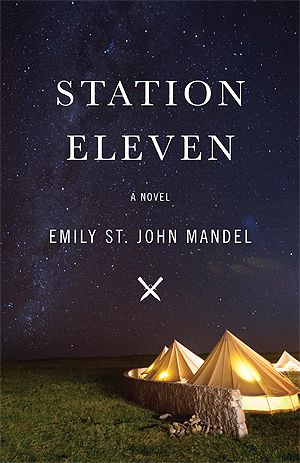
When the Georgia Flu hits the world in Station Eleven, people assume it is temporary and count time by days. But then days become months become years until a new normal settles in. In the song, there’s a subtle difference between two similar lines in which the singer says, “I’ve been waiting for at least four days” which then changes to “at least five days,” just like everyone is stuck waiting longer than they expected for life to go back to normal.
Kirsten and August are part of The Traveling Symphony, a Shakespeare troupe, and this poem that August writes for Kirsten is also reminiscent of this song with the idea that two people would be willing to follow each other even past judgment and death: “A fragment for my friend— / If your soul left this earth I would follow and find you / Silent, my starship suspended in night.”
Kirsten spends a lot of time in the past, as does part of the narrative, and is always searching for little things to remind her of that life such as celebrity magazines about the man she saw die of the Georgia Flu. She also holds on to a paperweight—a “souvenir for [her] darkest day”—that a woman gave her to soothe her during that first death. Not to mention the titular comics that she holds onto.
In these comics, Miranda (the creator) recreates a dinner that she tried to slip away from and fictionalizes the people in her life. This along with the existence of the traveling actors makes the lyric “All I need is a read through / Not a redo” even more apropos.
Like the lyrics in this song, the characters in this book move on from longing for a bygone era to recognizing the good in their current lives. They are all “overflowing with reasons why / [They]’d hit the rewind,” but by the end of the book, you get the sense that life is returning to a new normal. They can reminisce about this former life, but it’s better to move on.
5. “The Outside” by twenty one pilots: The Dream Thieves by Maggie Stiefvater *SPOILERS
I know I talked a bit about this book in my last Repeat Rewind post, but I’m planning to reread The Raven Cycle soon, so is it any wonder that a book from this series was at the front of my mind? The lyrics of “The Outside” fit Ronan’s specific journey in this book surprisingly well. Ronan often appears bored with the world, going through the motions, when he’s really harboring a secret that makes him very different from everyone else—a.k.a. on “the outside.”
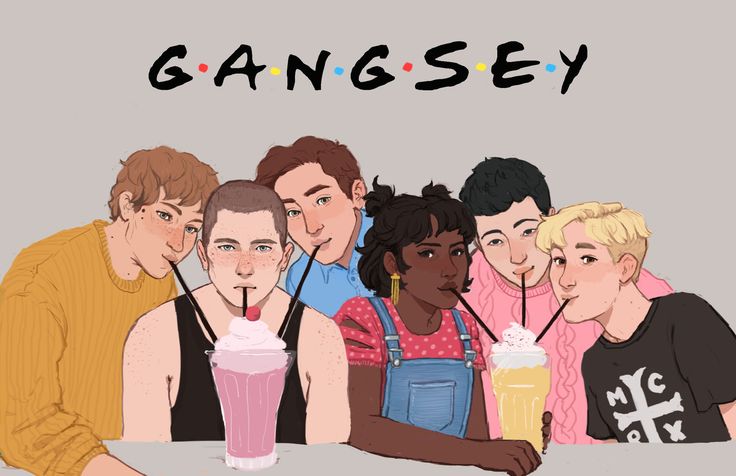
I mean, everyone in the Gangsey feels that way sometimes, too, despite also feeling an incredible sense of belonging. That weird mixture of belonging to the outcasts and feeling left out of ordinary life is a common theme between The Raven Cycle and much of twenty one pilots’ discography.
One moment on which the plot hinges is when Ronan returns to the Barns for the first time. Ronan suffers from insomnia, and when he does dream, he dreams about the drive to his former home “again and again … But in his sleep he never made it home,” which connects to the lyric referencing a “long drive” during which the narrator will “tape my eyes / So I don’t fall asleep again.” Driving is something that makes Ronan feel alive, and by driving back to his home, he is able to connect that past Ronan with current Ronan.
Another big part of the book’s plot involves Ronan’s relationship with Kavinsky, another dreamer. Kavinsky ends up being the one who shows Ronan how to perfect his dreaming and the one to try to destroy him for that power. In the lyrics “I am a Megalodon, ocean’s feeling like a pond / … Meteoric rise … Now that meteor is coming,” Kavinsky is both the one who causes the meteoric rise and the meteor coming to destroy the world. Literally destroy the world, might I add. He sees himself as a historic and larger-than-life creature, and he expects Ronan to feel obligated to him for sharing this feeling. But Ronan is “Megatron,” who might sometimes be running “on fumes” but still belongs to the world of the future.
Through the events in this book, Ronan realizes that he is not always on the outside, especially when it comes to his core friend group. In order to keep this group, Ronan chooses to be on the outside of the duo Kavinsky wants to create with him—a destructive, godlike duo. Like Gansey says, “The difference between us and Kavinsky … is we matter.” Though Kavinsky could never see it, Ronan realizes he matters outside of his ability to dream. What matters is something he gets to decide for himself, just like the realness of his dreams.
Bonus: The lines “Everybody stand in line / One by one, take a hit, join the club / … / Or am I on the outside?” remind me of Gansey and Blue being at Kavinsky’s wild Fourth of July party and looking totally out of place.
6. “Easier” by 5 Seconds of Summer: Laura Dean Keeps Breaking Up with Me by Mariko Tamaki & Rosemary Valero-O’Connell
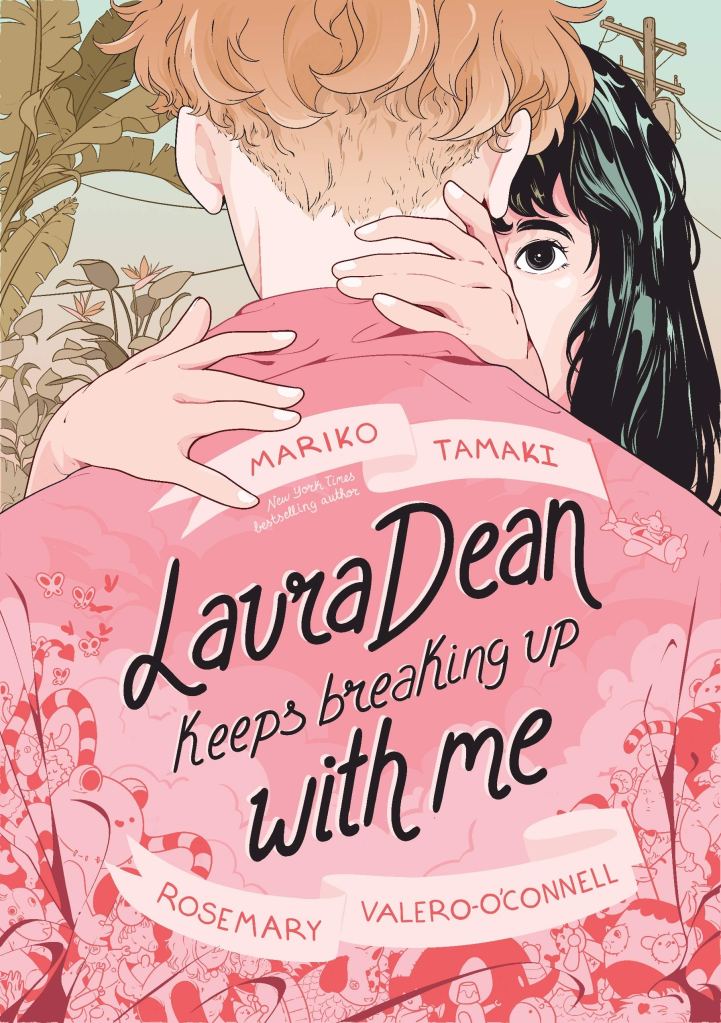
Laura Dean Keeps Breaking Up with Me is about an on-and-off couple, and on-and-off relationships are practically 5SOS’s specialty.
Laura Dean is the popular, charming girl, but isn’t the greatest girlfriend to Freddy. Laura Dean manipulates Freddy for her own gain, making Freddy doubt herself and her worth. “Every time you say you’re gonna leave / That’s when you get the very best of me” basically the reason Laura Dean screws with Freddy. Freddy is an easy target, and even when Freddy recognizes this manipulation and that Laura Dean “doesn’t want it any other way,” it’s still difficult for her to parse out the hate from the love in her relationship. It’s hard for her to see that Laura Dean isn’t going to change, and even if Laura assumes Freddy won’t either, she eventually builds up the confidence to endure the messiness of a clean break.
5SOS sing about how the ex in question is “hard to blame” because they’re “so damn beautiful.” Laura Dean’s charm and desirability keep Freddy from realizing she’s ignoring her friends and defaulting to this relationship because it’s easy. Like the narrator of the song’s lyrics, Freddy doesn’t want to explore if it’s “easier to stay” or “easier to go,” because she knows the answer deep down. She knows staying on as a passive participant is easier but eventually comes to the conclusion that they’re “only built to fall.”
A lot of 5SOS’s songs explore the idea that love and hate are not mutually exclusive. Relationships and breakups aren’t as clear cut as they might seem. This quote from Laura Dean could be a summary of several 5SOS songs: “It’s … true that you can break up with someone you still love. Because those two things are not distinct territories: love and not loving anymore.” Watching a relationship fall apart after so much emotion can be bittersweet, even if it might seem obvious to an outsider that this relationship isn’t making you happy. “…[B]eing in love and breaking up have a lot in common,” and no one expresses this better than boy bands.
7. “I’m Just a Kid” by Simple Plan: The Perks of Being a Wallflower by Stephen Chbosky
I can’t be the only one who has made this connection, right? These have the same brand of 1990s/2000s teenage boy angst that I know and love. Pierre Bouvier sings, “What the hell is wrong with me? / Don’t fit in with anybody / How did this happen to me?” which is basically the question Charlie is trying answer through his letters. He writes, “Something really is wrong with me. And I don’t know what it is.” That something is wrong with him is an idea he repeats throughout this book, especially when he accidentally hurts his friends or thinks about his now deceased aunt Helen.
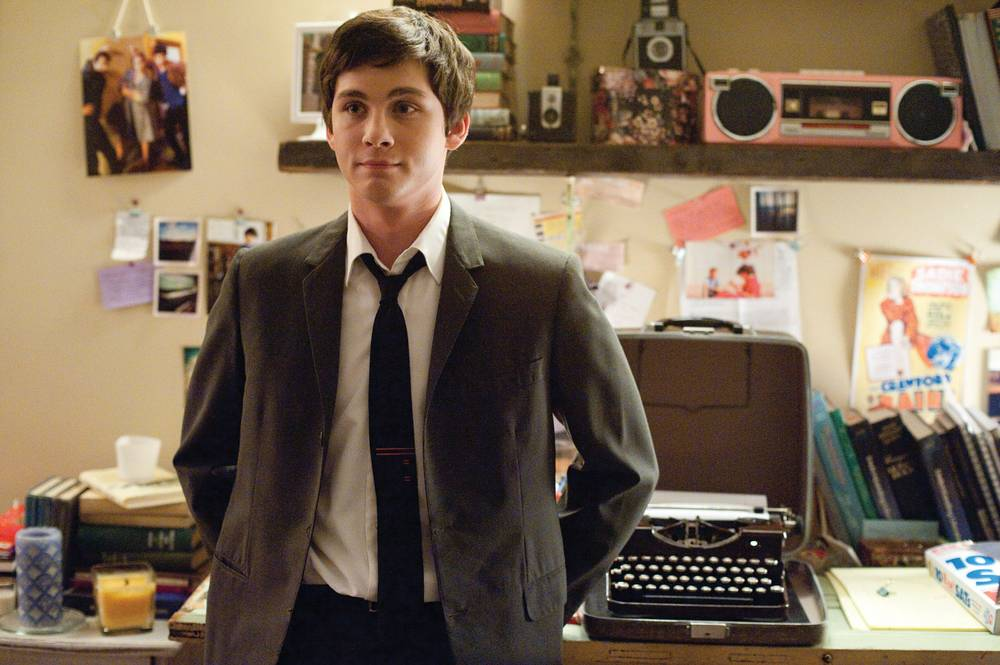
Although I don’t think Charlie would like this song very much, if he just read the lyrics as a poem he would connect to them on a deep level. Charlie spends a lot of his time observing rather than participating in life even when with people he considers his friends. When his friends are going through graduation and all that entails, he writes, “It all feels very exciting. I wish it were happening to me.” He knows he’s losing his friends, and right after he begins to feel like he belongs, he feels “alone” and like “the world is having more fun than [him]” yet again.
Before feeling that new sense of belonging, Charlie tries to “think about the last time [he] had a good time,” which often manifests in memories of Aunt Helen. He feels that his life turned into “a nightmare” when she died, that all of his issues started from that one moment. When overwhelmed emotionally, he often lays in bed with his head under his pillow, trying to drown out the world around him and pretend everything is okay. Until he can’t ignore it anymore.
Simple Plan, on the other hand, face the nightmare of reality head on and express their frustration that “it’s not fair” but there’s nothing they can do about it. They write this song to express their angst. When Charlie starts to feel like he “wanted to sleep for a thousand years. Or just not exist. Or just not be aware that [he] do[es] exist,” he begins to write notes to a friend. “I’m Just a Kid” sounds like the diary entry of an upset teenager, which is a bit like shouting into the void. Charlie’s letters are a kind of diary for him, and we never truly know as readers if Charlie’s letters reach their destination.
8. “Teenagers” by My Chemical Romance: Crooked Kingdom by Leigh Bardugo *SPOILERS
Here’s the teenage angst from the perspective of mainstream society, or as Jack Black puts it in School of Rock, “the man.” I paired these two together not only because the Crows are teenagers who are constantly butting their way into “impossible” situations and thwarting adults’ plans, but also because the very last chapter is literally from the perspective of the man Kaz Brekker (one of the most terrifying teenagers in Ketterdam, which is saying something) has vowed to ruin “brick by brick.” Pekka Rollins hurts Kaz beyond repair, but as MCR say, “if you’re troubled and hurt / What you got under your shirt / Will make them pay for the things that they did.” And Kaz certainly wants to make Pekka Rollins pay for what he’s done.
Everything seems to go wrong for Kaz throughout this book, but by the end, he still manages to weasel his way into Pekka Rollins’s head and ruin not only his businesses, but also his peace of mind. Kaz smashes Pekka’s feelings of comfort and safety, especially in terms of his son’s wellbeing. “Pekka had … worn a thousand different faces. But Kaz Brekker had found him. He’d come for his revenge. If one of those fools could find him, why not another, and another?”
One could argue it’s an understatement to say that “teenagers scare the living shit out of” Pekka Rollins. Maybe not all teenagers, but certainly Kaz and all the teenagers now coming of age on the streets of Ketterdam. MCR make clear in “Teenagers” that adults have played their part in making teenagers the way they are, which is a realization Pekka has after coming face to face with the consequences of his actions. “The problem was that the creatures who had managed to survive the city he’d made were … a fearless breed, hard-eyed and feral, hungrier for vengeance than for gold.” The next generation responds to what your generation has done to and left for them. The problems created and ignored by one generation shape the world for the next.
Kaz isn’t the only teenager this song could apply to, nor is Pekka Rollins the only man of society who learns to fear those he underestimates. Jesper and Wylan (with Kaz’s help) swindle Wylan’s Grade A Douchebag of a father out of his money. With her incredible stealth and intelligence, Inej has the wonderful ability to make shamelessly unethical men fear her. Threatening to cut out their heart doesn’t hurt, either.
These men represent a society that screws over the innocent and turns them into something to be afraid of, something stronger. After these agents of society “rip up … [their] aspirations to shreds” and use their “methods of keeping [them] clean,” the next generation find their own power and create a “new kind of misery entirely.”
9. “Talking to Myself” by Sleeping with Sirens: The Poppy War by R.F. Kuang
As someone who reads YA as an adult, it’s no surprise that I’m a fan of the particular genre of angst that teenagers cultivate, but having three songs in a row be so angsty just feels like Spotify is mocking me. However, in a twist, I’ve paired this song with an adult fantasy instead of a YA (though I think this series might be marketed as YA sometimes).
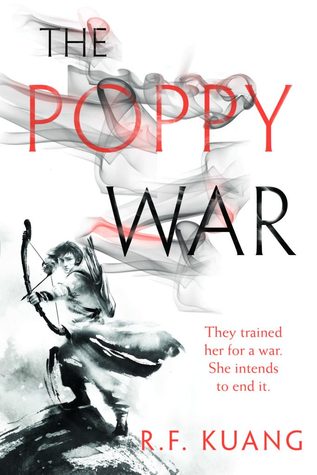
This is the most tenuous link on this list, but I think these fit together because they both describe feeling trapped by your own terrible thoughts and actions. The ones you can’t go back and change. I mean, Rin is the embodiment of the phrase “I’m not depressed, no I’m just pissed.” (As is Altan, but if I bring him into this comparison too much, this will be another one with spoilers.)
As Rin arrives at Sinegard (the military school), she immediately realizes that most of these other teenagers have never been through that hell that she’s been through. At first, she tries to control her anger—if only to succeed in classes. Her tendency to fight still lands her in hot water quite a few times, which is why her teacher Jiang tries to teach her, “It’s easy to be brave. Harder to know when not to fight.”
Rin feels trapped by the limits of her mind, body, and reality. “My head’s in a cage, I’m locked in a cell” describes Rin’s mindset until Jiang shares the secrets of shamanism with her, helping her become “a mortal who has woken up.” While still endeavoring to take his lessons to heart, Rin attempts to convince herself and others, “I’m not talking shit / I’m just talking to myself.” She’s trying not to start petty fights. And one might argue that her meditation and the conversations she has with gods are a literal form of talking to herself.
These secrets expand her reality, but she becomes disillusioned with Jiang’s imposed limits and reaches too far. To keep it vague, she seizes power that she doesn’t quite understand and that fuels her rage. With this power, she commits atrocities during war that almost rip the humanity out of her. “People looking up while I’m looking down / Middle finger to the sky with my head on the ground / I want to take it back,” but Rin can’t reverse what she’s done. She doesn’t always want to, either. “She could not abide the terrible guilt of it, so she closed her mind off to the reality. She burned away the part of her that would have felt remorse…” Rin takes a “fuck you” attitude in almost everything, revenge and violence feeding the power inside her, but when she stops to think about what she’s done, it’s all too much.
“I have everything I want, but I’m barely alive” ends up being true for Rin in both a literal and figurative sense. She burns away her humanity until there’s only a little left, and seizing this power during war has almost killed her many times.
I want to leave you with this quote from The Poppy War that reminds me of a main theme of this song—knowing people won’t understand who you are and why you do what you do; it’s something that I also connect to as someone with mental illnesses: “We are not madmen. But how can we convince anyone of this, when the rest of the world believes it so?”
10. “Lights Up” by Harry Styles: The Witch Boy by Molly Knox Ostertag
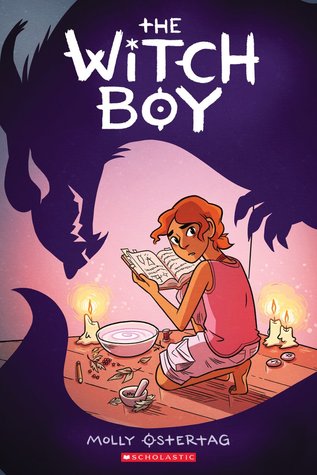
My interpretation of this really vague song is: screw other people’s expectations, this is who I am and what makes me happy. More specifically with Harry Styles, it seems to be about him eschewing gender roles and industry expectations. Aster goes through this same “step into the light” moment in The Witch Boy by showing his family that he wants to be a witch, even though traditionally, witchcraft is reserved for girls.
Until Aster meets his friend Charlie, “all the lights” he feels from studying witchcraft “couldn’t put out the dark / Runnin’ through [his] heart.” Hiding who he is dulls the light inside him as well as the light he can give to others, and the more time goes on, the more he realizes that his talent for witchcraft is something to be celebrated even if it will be hard. Even if “it’d be so sweet if things just stayed the same.”
There’s a double meaning in the lyric “so bright sometimes” that also fits with Aster’s journey to witch-hood. The first meaning is the more obvious one—being yourself makes you shine brighter and more brilliantly. The second is that stepping into the light can be overwhelming at times, too bright. Stepping into the light means being visible, and that’s tough, especially when you’re still trying to prove to yourself that it’s okay to be who you are and how you want.
You can still be figuring yourself out when you show people your true self. It doesn’t make you any less genuine. “Lights up and they know who you are / Know who you are / Do you know who you are?” This is also Harry Styles asking the listener if they know who they are, especially as it ends the song. He’s saying, I’m myself and I’m okay, but if you haven’t pursued the things you love, do you truly know yourself? Can you really judge me for breaking society’s rules just because you find it uncomfortable?
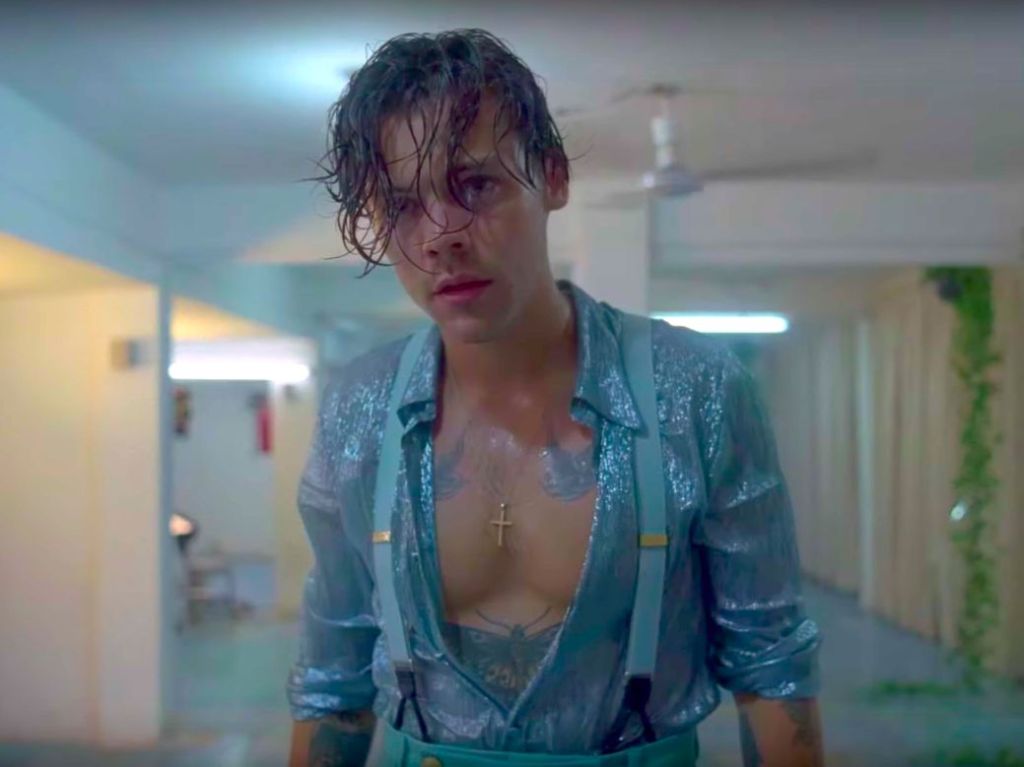
I’m sure Harry Styles has helped people become more comfortable with themselves just by pursuing things that make him happy, and Aster finds that pursuing witchcraft can help the people he cares about, too. He can be a role model for people in his family who might want to pursue something out of the ordinary, like his cousin wanting to go to a regular school. He can also do a lot of good with his talents. When his loved ones are threatened, Aster knows he can’t hide it anymore. He believes his family is “never coming around,” but he steps into the light anyway. And he’s “not ever going back.”
It’s clear from this list that quarantine has changed my music taste a bit. I still love me some angsty pop punk, as I always have, but this new appreciation for Harry Styles and One Direction is definitely a product of too much alone time. Before quarantine, I would have never said I liked One Direction’s music. I would admit to liking a few songs that were popular during my high school days and being a fan of Harry Styles’ solo music, but nothing more.
When a lot of the things you enjoy are no longer available, you realize that there’s no point in feeling guilty or embarrassed about anything that brings you even a bit of joy. I would encourage everyone to get rid of the “guilty” in “guilty pleasures” and just like what you like. If that happens to be a boy band from the 2010s, don’t let anyone drag you down. Your joy is what makes you beautiful. Now go have a dance party to the best song ever! (One Direction puns are my new passion…)
Honorable Mentions (a.k.a. 5 book-song pairings I cut out so this post wasn’t a mile long)
11. “Way Less Sad” by AJR: Dancing at the Pity Party by Tyler Feder
12. “7 Minutes in Heaven (Atavan Halen)” by Fall Out Boy: Long Way Down by Nick Hornby (cw: suicide, suicidal ideation)
13. “Blue Romance” by Make Out Monday: The Great Gatsby by F. Scott Fitzgerald
14. “Me & You Together Song” by The 1975: The Girl from the Sea by Molly Knox Ostertag
15. “I Think We’re Alone Now” cover by Billie Joe Armstrong: Séance Tea Party by Reimena Yee
 As Cool As Mint Ice Cream