
What I Got:
- To Be Taught, If Fortunate by Becky Chambers
- Death Note: Black Edition, Vol. 2 by Tsugumi Ohba and Takeshi Obata
- Clap When You Land by Elizabeth Acevedo
- The Deep by Rivers Solomon
- Quitter: A Memoir of Drinking, Relapse, and Recovery (ARC) by Erica C. Barnett
- Timestamp: Musings of an Introverted Black Boy by Marcus Granderson
- The Terror of the Unforeseen by Henry Giroux
- The Essential Rumi by Rumi, translated by Coleman Barks
- Dearly: New Poems (ARC) by Margaret Atwood
- Hamilton and the Law (ARC) by Lisa A. Tucker
- The War of the Worlds by H.G. Wells
- Born a Crime by Trevor Noah
- Patron Saints of Nothing by Randy Ribay
- Call Me By Your Name by André Aciman
- The Elements of Style by William Strunk Jr. and E.B. White
- Percy Jackson series #1-3 by Rick Riordan
What I Read:
- Daisy Jones & the Six (audiobook; reread) by Taylor Jenkins Reid
- The Tea Dragon Society (reread) by Katie O’Neill
- The Tea Dragon Festival by Katie O’Neill
- Scythe by Neal Shusterman
- Nimona by Noelle Stevenson
- Homie by Danez Smith
- The rest of How to Drag a Body and Other Safety Tips You Hope to Never Need by Judith Matloff
- Are You Listening? by Tillie Walden
- I Am Not Okay with This by Charles Forsman
- The Library Book (audiobook) by Susan Orlean
- The Black Mage by Daniel Barnes
- The Lion, the Witch, and the Wardrobe by C.S. Lewis
- To Be Taught, If Fortunate by Becky Chambers
- Death Note: Black Edition, Vol. 1 by Tsugumi Ohba and Takeshi Obata
- Death Note: Black Edition, Vol. 2 by Tsugumi Ohba and Takeshi Obata
- The Wanderers by Meg Howrey
- Born a Crime by Trevor Noah
- Gmorning, Gnight!: Little Pep Talks for Me & You by Lin-Manuel Miranda and Jonny Sun
- Everyone’s a Aliebn When Ur a Aliebn Too by Jomny Sun
- Sherlock Unlocked: Little-known Facts About the World’s Greatest Detective by Daniel Smith
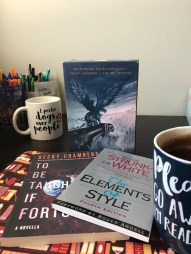 Those lists are a bit long this month, aren’t they? Well, the first list suffered from “my bookstore is closing and I have a discount” disease, and the second list involves lots of graphic novels or illustrated, easy-to-read books, like Jonny Sun’s book and Lin-Manuel Miranda’s pep talks. Also, I’ve been super stressed out this month because I moved to a new place and had a bunch of car problems. The written word has gotten me through this month more than any other month during this pandemic. I took part in Camp NaNoWriMo (and I’m super pumped about the story I’m writing) as well as a couple readathons, which kept me busy during the time I wasn’t applying for jobs or worrying about the state of things.
But you have no cause to worry about the length of those lists, because I’m only going to discuss a select few books in order to keep this post manageable for both you and me.
First off, let’s discuss the Daisy Jones full-cast audiobook, which everyone raves about. Warning: unpopular opinion time. I liked reading it with my eyeballs more than listening to it. The audiobook was enjoyable, and it was fun to hear the voices of the characters, but some of the characters sounded too similar. Also, I’ve always loved reading “oral history” written down. The first time I read the book, I kept forgetting it was fictional, but for some reason, the cast of voice actors made it harder for me to place the story in reality. Almost like I was watching a movie without a visual, which takes away a vital aspect of the storytelling medium. I’m pretty sure this is just a me thing, because so many people have loved the audiobook, but at least for this one, I’m going to stick to the physical copy.
Another audiobook I think I would have liked better in print was The Library Book by Susan Orlean. I was able to flip through a physical copy to see the pictures, which led me to believe I would have liked it better on the page. Plus, this would have been

Inside of a library… remember when we could go there?
a great book to annotate so I could go back and do further research of my own. The amount of work that went into it is incredible, and any library or book lover will find something that fascinates them in this book, as it covers the story of the Los Angeles Central Library fire from all angles.
Scythe is the first Neal Shusterman book I’ve ever read, and it was a roaring success. In a society that has conquered death, the scythes are the ones who “glean” souls to prevent overpopulation. Shusterman’s narrative follows two scythe trainees who are competing with one another to become a taker of lives. Seeing the bureaucracy and politics behind what is supposed to be a sacred institution was fascinating, especially for someone who grew up in the Catholic Church and can make comparisons. Plus, I really did not expect the direction the story took about midway; it was awesome and complex and riveting. I can’t wait to pick up the rest of the trilogy when I can get my hands on them!
I read one poetry collection this month, Homie by Danez Smith. It offers a beautiful, heartfelt, and honest look at blackness, queerness, and aliveness. This is the second of Smith’s collections I’ve read, and I was once again in awe of their skill with language. The phrase “the body too is a garment” from “waiting on you to die so I can be myself” struck a chord with me, as well as many of the other poems and phrases. The kind of honesty that they convey in their poems is admirable, and something I am slowly working myself up to in my own writing.
A fitting read for a pandemic and police brutality protests, How to Drag a Body offers advice on extreme situations without catastrophizing about the world. While the advice was good, I have some problems with the things that Matloff leaves out. She doesn’t address neurodivergence when talking about mental and emotional resilience except for a few pages on PTSD. There’s a lot of biology = gender reasoning. She only hints at the fact that trans people exist more than 200 pages in with a comment about how cis women wouldn’t want to wear a mask with a “gendered mustache.” It just seemed like a throwaway comment so she didn’t get criticized for her cis-centered advice. And she often gave advice in a way that condescends to readers younger than 30 and makes a lot of assumptions about the
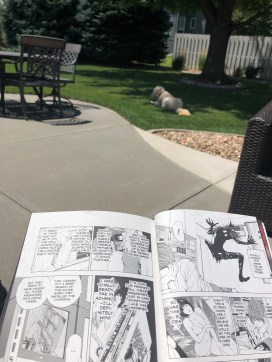
Reading with the Reg
digital literacy of certain age groups. I gained helpful knowledge and skills, because Matloff clearly knows what she’s talking about, but it was a book primarily aimed toward cis women and generally did not take into account that people like me exist.
I’m only going to briefly touch on I Am Not Okay With This because it was one of the worst books I’ve ever read. Not only is it poorly written and illustrated, it also deals with suicide and mental illness in extremely problematic ways. The fifteen-year-old girl who narrates the story sounds nothing like a fifteen-year-old girl, because the author is a fully grown man who was clearly trying to cover all of the hot button topics (LGBT community, rape, abortion, body image, suicide, mental illness, domestic abuse). AND he covered it all horribly. All of the characters were flat and uninteresting, leaving the story very surface level, with no nuance or conversations surrounding these difficult topics. Then he had the audacity to put suicide prevention resources at the end even though he glorifies suicide in the narrative. I do not understand why this is popular at all. (Okay, so maybe that wasn’t so brief. But everyone needs a rant once in a while!)
The Black Mage, on the other hand, deals with institutionalized racism in a very nuanced way. This graphic novel is basically an anti-racist version of Harry Potter. While simple in narrative and real-life comparisons, this is an enjoyable and deep read. Also, Harriet Tubman, Frederick Douglass, and Henry James appear as ghost mages… yes, please!
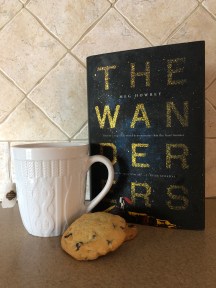 All three sci-fi books I read this month gave me a healthy dose of existentialism, which is a quality I look for in this genre. To Be Taught, If Fortunate is another work of genius by Becky Chambers, the queen of queer, relationship-based space stories. Through the story of a crew on a mission to explore livable planets in deep space, Chambers explores the reasons why humanity should reach beyond Earth, whether astronauts have an obligation to make more discoveries or do what humanity wants them to. She also sprinkles in the relationship between the body and one’s self-identity by allowing characters to genetically modify their bodies to more easily survive on different planets. Another humans-going-to-space story, The Wanderers follows three astronauts training to be the first to go to Mars. All the while, Meg Howrey layers the story with themes of different types of love and the real vs. the fake. The astronauts enter a Mars simulation, and they wonder whether knowing something is real or fake makes a difference if they impact you the same way. Unfortunately, it’s not a new favorite, because there were too many perspectives and a too-distant narrative voice, but still a valuable read! Jonny Sun’s little narrated book is a reverse of the other two narratives—aliens come to Earth, rather than humans going to space. It was very cute and very existential, with a sprinkle of hope on top.
The last book I want to discuss in depth is Trevor Noah’s memoir, the sibling book club book of July! I have never watched any of Trevor Noah’s material, but I absolutely loved this book. The little sections that gave background on apartheid were perfect for people like me who only know the vague facts. Noah’s voice throughout this memoir is very friendly and matter-of-fact, even when dealing with difficult topics like racism, class disparity, and domestic abuse. The unchronological structure makes it feel even more like he’s just telling you stories over dinner. It’s an incredibly intelligent narrative, weaving in facts about the experience of racism and poverty without making the reader consciously aware that they are learning. Not to mention that his mother is a badass who bucked the system at every chance with extreme confidence and bravery. Her faith in Jesus and her stubbornness was so strong that she felt she could do anything she wanted to do in life, despite being a black woman in an institutionally racist society. Of all the books I read this month, this is the one I would recommend the most highly.
Well, hopefully August ends up with a shorter list of books I’ve gotten, although, as a booklover, I can’t say I’m mad about the long list of books I’ve read. As ever, I hope everyone is finding some joy despite the disheartening state of the world, especially in the U.S. If you find that joy in books like I do, happy reading!
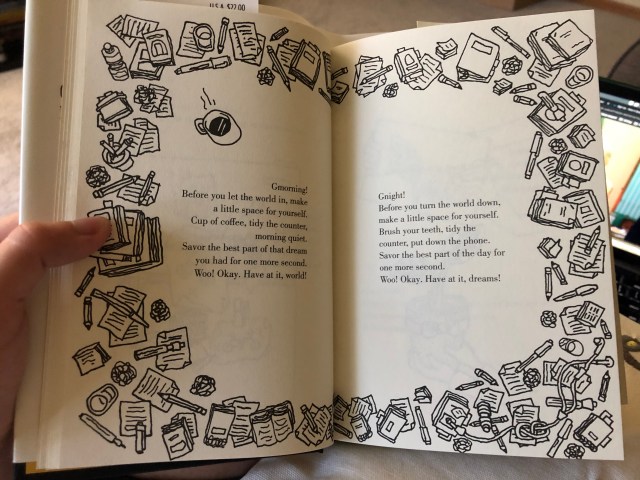
 As Cool As Mint Ice Cream